Nous utilisons des cookies essentiels au fonctionnement du site. Nous aimerions aussi déposer des cookies de mesure d’audience et des cookies publicitaires, uniquement avec votre accord. Vous pouvez choisir séparément pour chacun. Lire notre politique relative aux cookies

Loading
Recettes
Parcourez les archives par pays, par plat et par temps de cuisson.
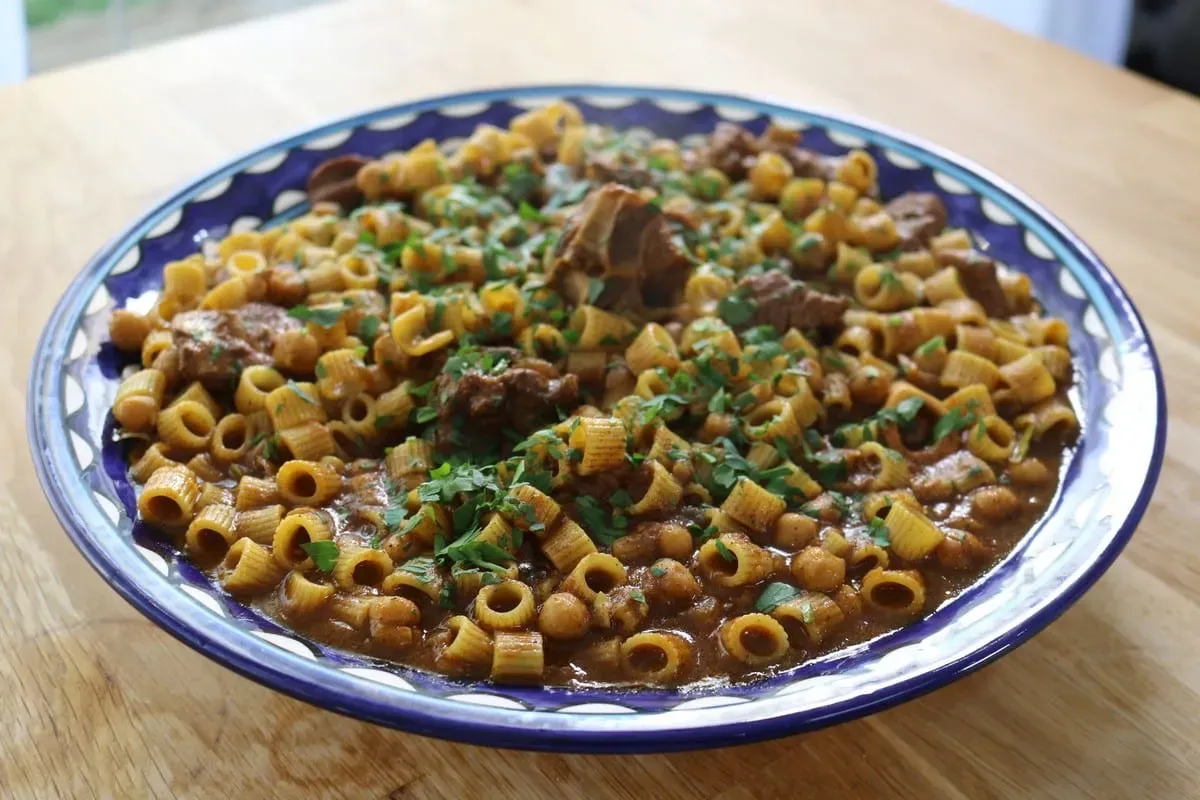
Mbakbaka, also written imbakbaka, is Libya's one pot pasta stew and it is a direct product of Italian colonisation. Italy occupied Libya from 1911 to 1943, pasta arrived with the occupation, and Libyan cooks absorbed it into a North African spice framework rather than adopting Italian technique alongside it.
The result is a pasta dish that no Italian would recognise. Turmeric, ginger, curry powder, chilli and mixed spices go into a tomato base with lamb or beef, and the pasta cooks directly in that liquid rather than being cooked separately and sauced afterwards. Potatoes go in too. Cooking the pasta in the sauce is the defining decision: the starch thickens the liquid and the pasta absorbs the spice, which is what makes it a stew rather than pasta with sauce on it.
Macaroni elbows are the traditional shape, and ditalini, gemelli and other small pastas all suit it for the same reason: the tubes and twists hold the sauce. Harissa is a common addition for heat. The comparison people reach for is minestrone, which captures the one pot logic and misses the spicing entirely. It is winter food and family food, and it is eaten across Libya and among the Libyan diaspora.
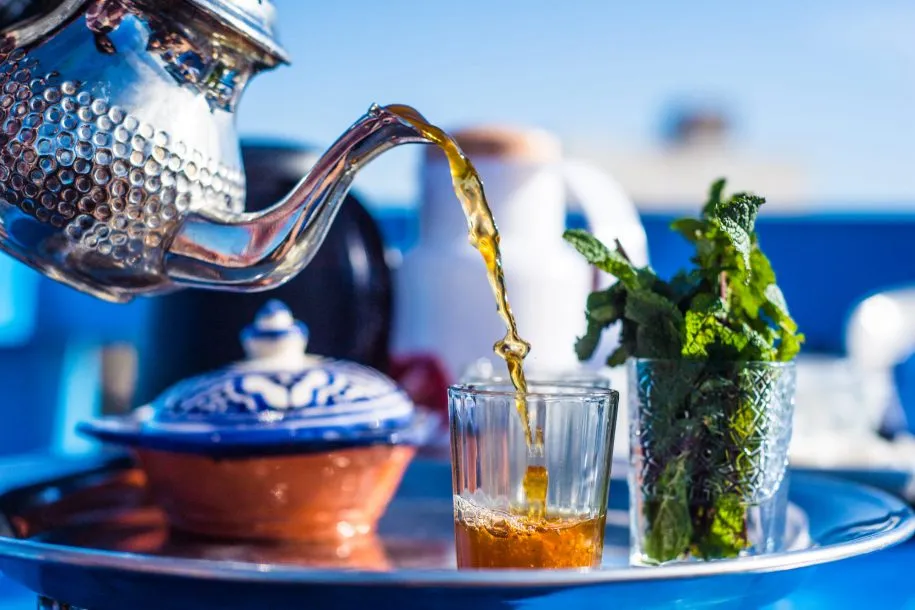
Moroccan mint tea is green tea infused with spearmint and heavily sweetened, and in Morocco it is not simply a drink. It is a sign of hospitality and friendship, served all day, after every meal and through every conversation, and Moroccans take enough pride in it to argue over who among their friends makes the best cup.
Its history is more recent and more accidental than most people expect. Tea reached Morocco in quantity through the Crimean War in the 1850s, when the British East India Company diverted shipments intended for the Baltic states and found itself with a surplus of Chinese tea to sell. Moroccans were the first to infuse it with mint, as a way of countering the bitterness of gunpowder green tea, and the combination stuck.
It is drunk across Morocco, Algeria, Tunisia, Libya and Mauritania, and in parts of the Near and Middle East. It is called shai bi na'na' in classical Arabic and atay or latay in Maghrebi Arabic. The method here involves two rinses of the tea leaves before the tea is made, one of which is kept as the essence and returned to the pot, and one discarded. That step is what removes the harshest bitterness while keeping the strength.
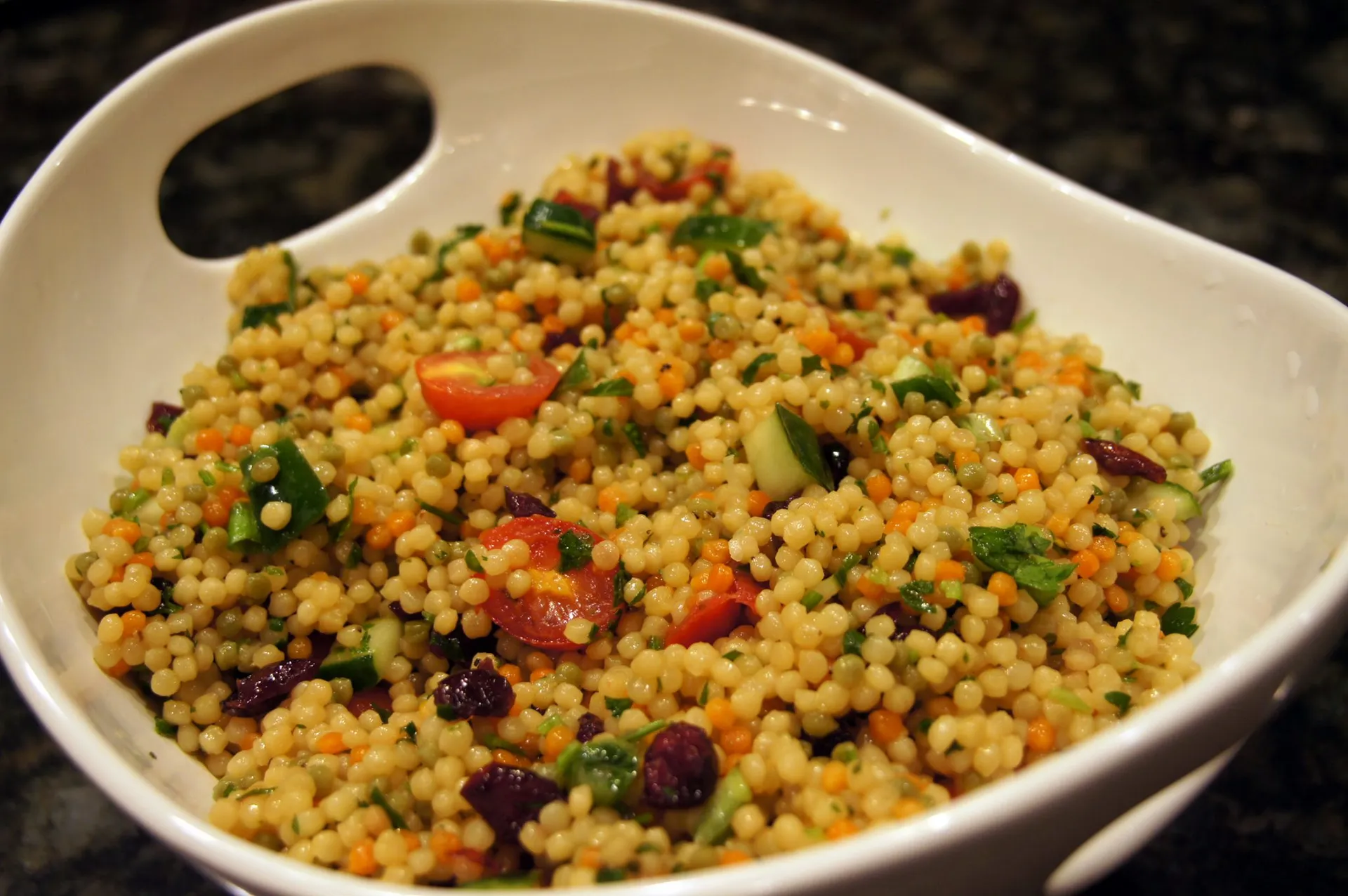
How to prepare instant couscous: boiling water or stock poured over, covered, left to steam, then fluffed. This is a technique page for a staple ingredient rather than a recipe for a dish, and it is filed as such.
Couscous is North African, specifically Berber in origin, and it is a staple across Morocco, Algeria, Tunisia and Libya. Its status was recognised by UNESCO in 2020, when the knowledge and practices around couscous were inscribed on the Representative List of the Intangible Cultural Heritage of Humanity in a joint submission by Algeria, Mauritania, Morocco and Tunisia.
It is not a grain, despite looking like one. Couscous is pasta, durum wheat semolina moistened, rolled into tiny granules and dried. Three sizes are common: Moroccan, the smallest; Israeli or pearl couscous, about the size of peppercorns; and Lebanese, the largest.
The traditional method has nothing to do with pouring boiling water on. Couscous is steamed, usually more than once, in the upper chamber of a couscoussier over a stew whose vapours flavour it as it cooks. That is how it is made for a proper meal in North Africa and the results are much lighter.
Almost all couscous sold in supermarkets is pre-steamed and dried, which is why the rehydration method here works.