Nous utilisons des cookies essentiels au fonctionnement du site. Nous aimerions aussi déposer des cookies de mesure d’audience et des cookies publicitaires, uniquement avec votre accord. Vous pouvez choisir séparément pour chacun. Lire notre politique relative aux cookies
Loading
Recettes
Parcourez les archives par pays, par plat et par temps de cuisson.
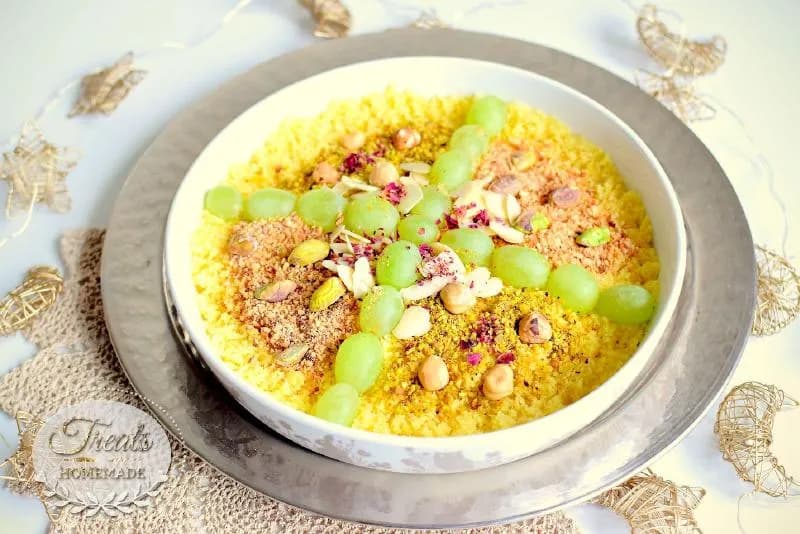
Masfouf is steamed couscous sweetened with milk and honey and mixed with dates, raisins, nuts and banana, layered with a vanilla custard. It is Tunisian and it belongs to Ramadan.
It is the sweet counterpart to Tunisian couscous, which is otherwise a savoury dish, and that inversion is the whole idea, the same grain, the same steaming technique, turned into a dessert or a breakfast. During Ramadan it appears at suhoor, the meal before dawn, because it is filling and sustaining, and at iftar as a sweet.
Geranium water is the ingredient that places it. Distilled from scented geranium leaves, it is used across Tunisian sweets in the way rose water and orange blossom water are used further east, and it has a green, faintly citrus perfume that neither of those reproduces. Middle Eastern and North African grocers stock it.
Steaming the couscous properly rather than pouring boiling water over it is what the recipe asks for, and it is the difference between light separate grains and a claggy mass. This is a dessert made from properly cooked couscous rather than instant.
**It contains almonds and walnuts, which the title gives no indication of.**
The source's ingredient list repeats milk, honey and geranium water without indicating that the second set belongs to the custard.
Beetroot pancakes are ordinary pancakes with cooked beetroot blended into the batter, which turns them deep pink and adds an earthy sweetness.
The beetroot does two things. It colours the batter dramatically, which is most of the appeal and the main reason the recipe exists for children. And it contributes moisture and a mild natural sweetness, so the pancakes need less sugar than a plain batter would.
They are made in the ordinary way, blended, rested briefly, cooked on a moderately hot pan, and the technique holds no surprises. Cooking them slightly slower than plain pancakes helps, because the extra moisture from the beetroot means the middle needs a little longer while the outside is already colouring.
Served with fresh fruit or berries on top, which is the usual suggestion, they make a breakfast that looks considerably more elaborate than it is.
**Filed as Worldwide**, the source describes it as a Continental recipe, and it makes no African claim. The page is kept and reclassified rather than removed.
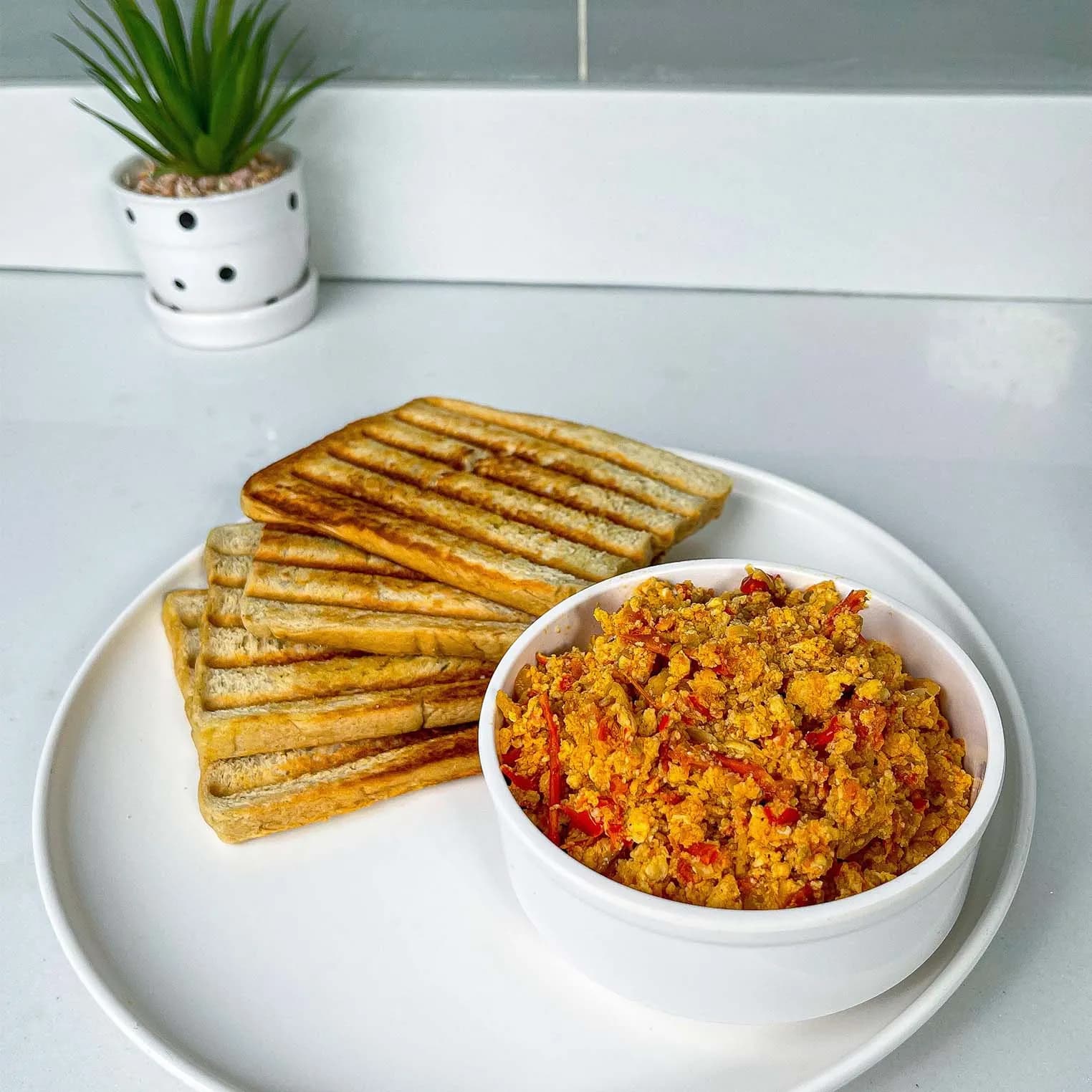
Eggs poached in a spiced tomato and pepper sauce, cooked and served in the same pan. It is North African, most strongly associated with Tunisia, and no single country is claimed.
The origin is genuinely contested rather than merely unclear. Tunisia has the strongest claim and the name is Tunisian Arabic, shakshuka means something like a mixture or a jumble. Some food historians argue for Yemen instead. What is not in dispute is the route it took afterwards: North African Jewish immigrants, particularly Tunisians, brought it to Israel in the mid-twentieth century, where it became a national breakfast staple and from where it spread internationally. Most people outside the region encountered it through Israeli restaurants rather than Tunisian ones.
The technique that matters is making wells for the eggs. Cracking eggs onto the surface of a sauce gives you eggs sitting on top; digging a shallow well with a spoon and easing each egg into it means the whites are supported by the sauce on all sides and set evenly while the yolk stays soft.
Two related pages exist here. Ojja is the Tunisian version built on harissa and caraway; taktouka and matbucha are the eggless cooked pepper salads that shakshuka resembles.
Cook the eggs through if you are avoiding runny yolks.
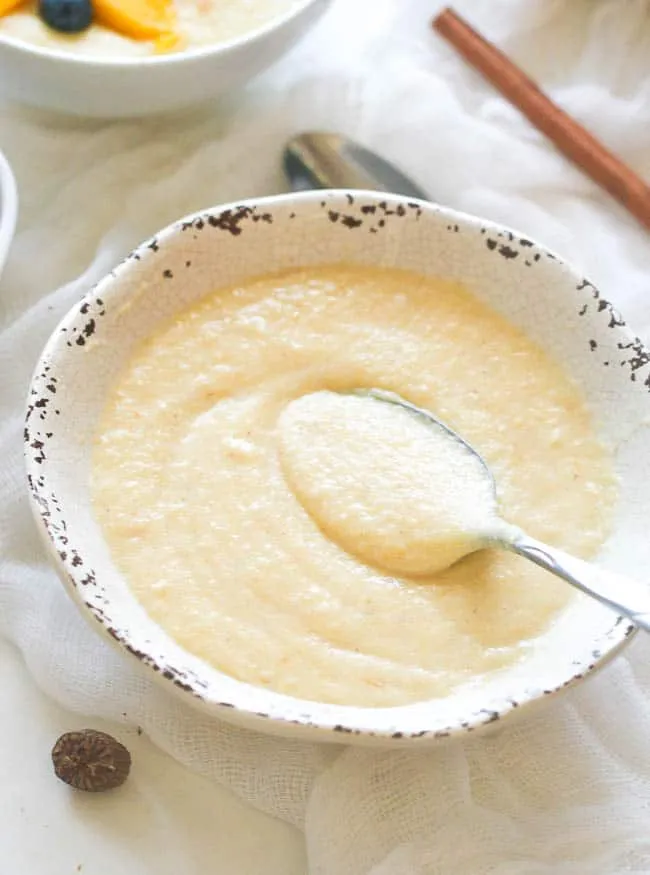
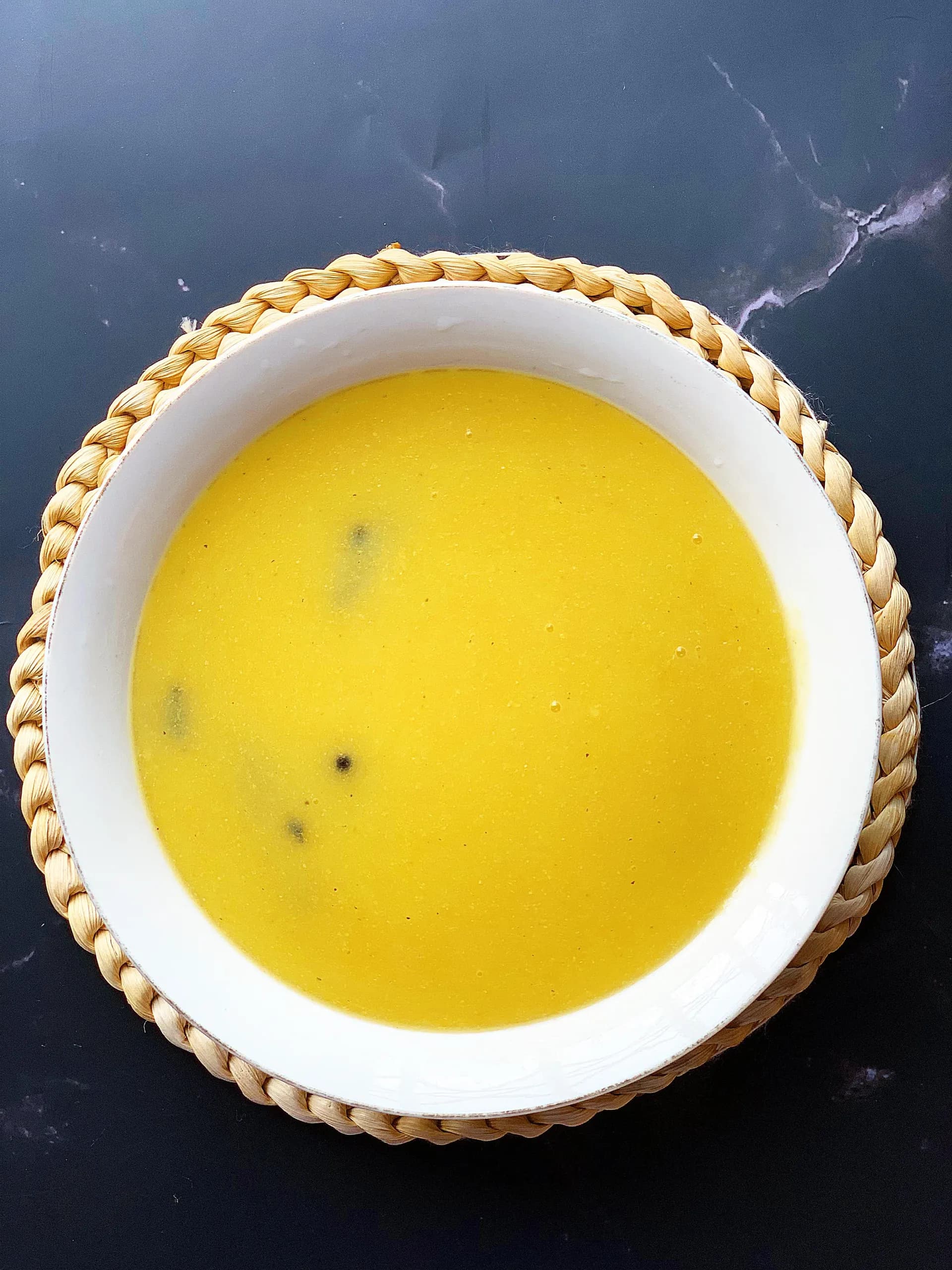
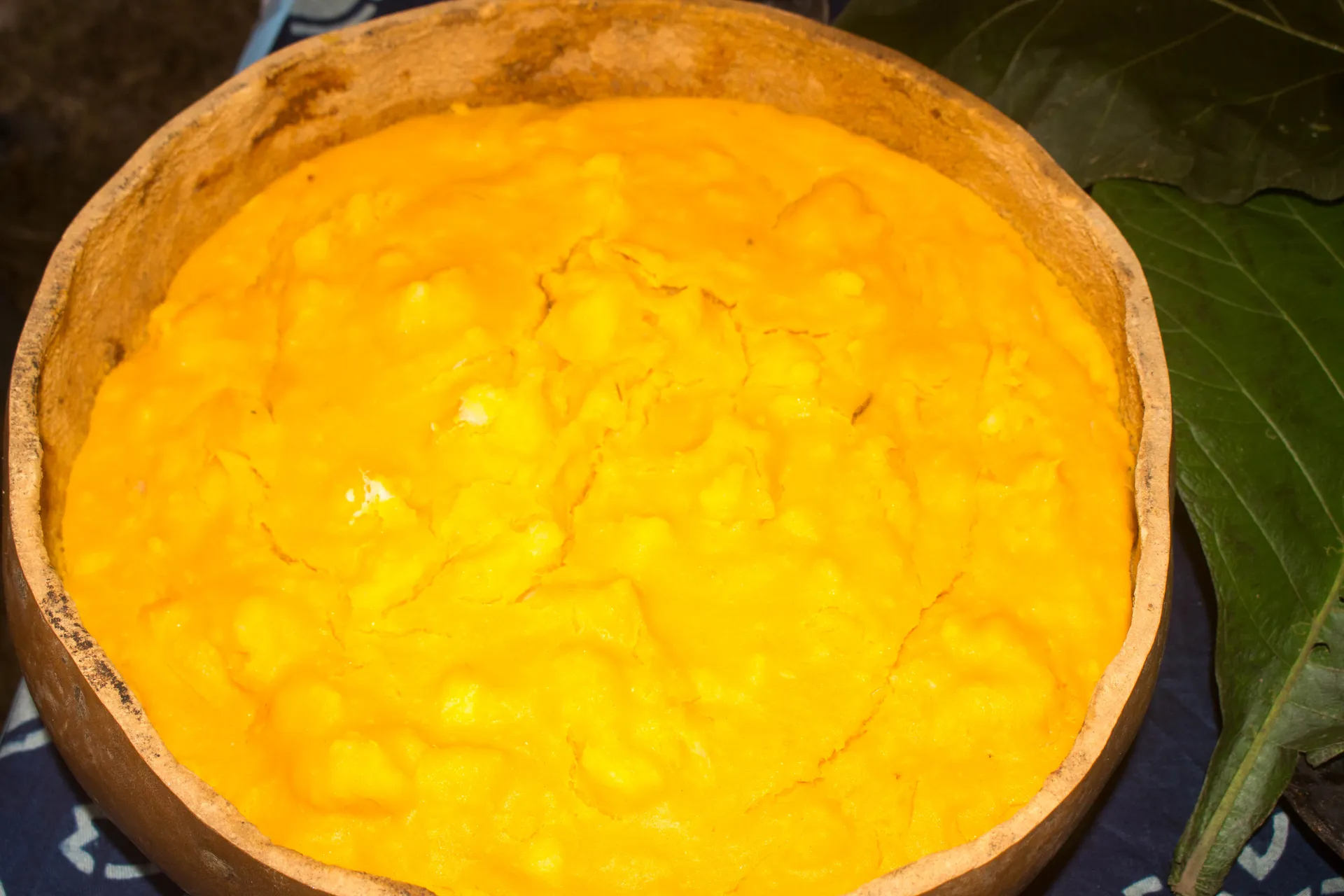
Ogi is fermented cereal porridge, sour, smooth and pale, and it is among the first things most Nigerians ever eat. It is called akamu in Igbo and pap in English, and it is made from maize, sorghum or millet steeped in water for up to three days, wet milled, sieved to remove the husks, and then fermented for several more days until it turns distinctly sour.
That sourness is the point and it is what separates ogi from any other cereal porridge. It also does real work: fermentation makes the grain more digestible and gives ogi a probiotic character, which is a large part of why it has been the standard weaning food for Nigerian infants for generations and why it is given to people who are unwell or recovering.
The same base goes in two directions. Thinned and cooked, it is the porridge eaten at breakfast with akara, moin moin, fried plantain or bread. Cooked much thicker and left to set, it becomes agidi or eko, sliced and eaten with pepper soup or stew. Across the region the names change without the thing changing much: koko in Ghana, uji in Kenya, where it is more often made from millet and sorghum. Three grains are used in Nigeria, and white corn, yellow corn and guinea corn each give a slightly different result.