Nous utilisons des cookies essentiels au fonctionnement du site. Nous aimerions aussi déposer des cookies de mesure d’audience et des cookies publicitaires, uniquement avec votre accord. Vous pouvez choisir séparément pour chacun. Lire notre politique relative aux cookies

Loading
Recettes
Parcourez les archives par pays, par plat et par temps de cuisson.
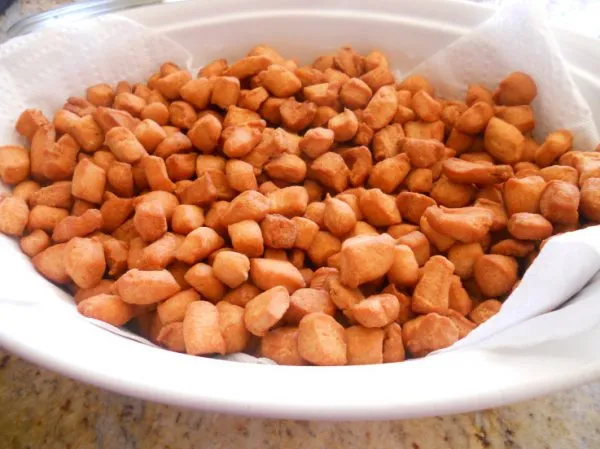
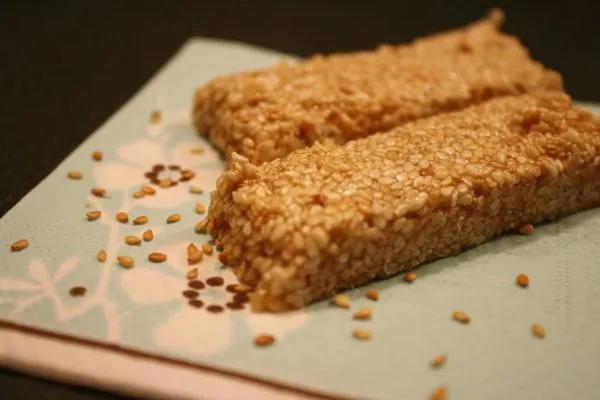
Nigerian buns are fried dough balls with a crunchy outer crust and a soft, cake like interior. They sit alongside puff puff and chin chin in the small group of fried snacks that account for most of what Nigerians eat between meals, and the differences between the three are understood precisely by anyone who grew up with them.
Buns are the rich one. Where puff puff is yeast raised and made from almost nothing, buns use baking powder for lift and include egg, butter and milk, which produces a denser, sweeter, more substantial thing with a genuinely crunchy shell. They also absorb less oil in the frying, which is a real practical advantage and a point people make in their favour.
They are everywhere: sold from roadside trays and by hawkers, made at home for children after school, brought to parties and picnics, and eaten with tea at breakfast. The flavouring is open, with nutmeg the most common and cinnamon and vanilla both standard, and every household has a version that is slightly sweeter or slightly denser than the next. They are best hot and are still good at room temperature, which is most of what a snack needs to be.
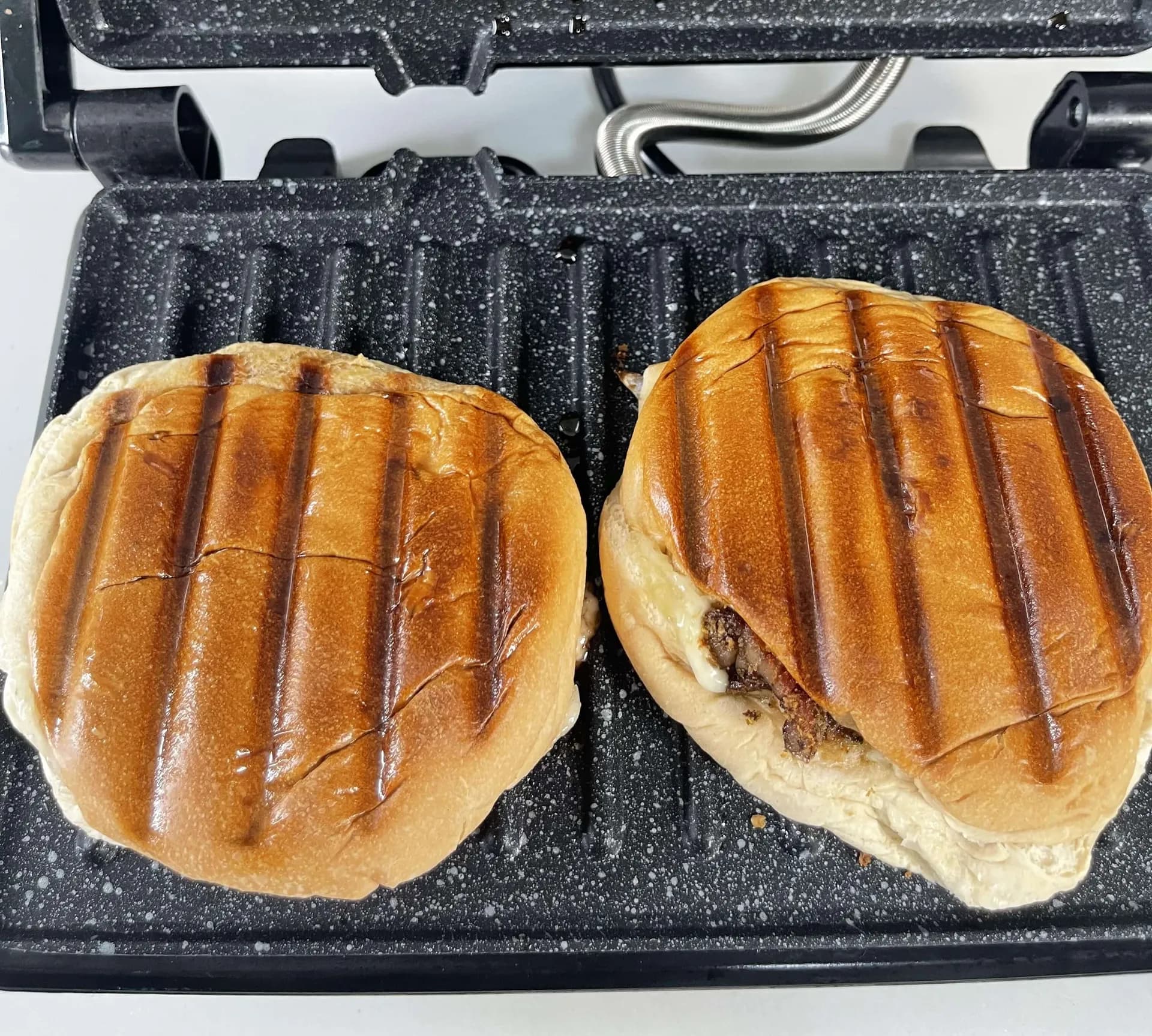
The thick, risen pancake is a North American and British form rather than an African one, and the source for this recipe says so directly: it describes itself as a basic UK recipe. It is included here as a plain reference version, not as a dish with a claim on the continent.
That distinction matters because Africa has its own pancakes and they are not this. The Nigerian pancake, known colloquially as diet, is thin, dense and deliberately savoury, carrying onion and ground pepper in the batter alongside the sugar. Hausa masa is a fermented rice cake, spongy and slightly sour, cooked in a pan of round wells. Ethiopian injera is a fermented teff flatbread that functions as a plate. Each of those is a distinct thing with its own technique and its own place at a table.
What this recipe offers is the baking powder raised, egg and milk enriched, butter cooked pancake that most of the world now recognises from breakfast menus. It is genuinely good and genuinely simple, and there is no reason not to make it. There is also no reason to describe it as African cooking, and the honest position is to present it as what it is.
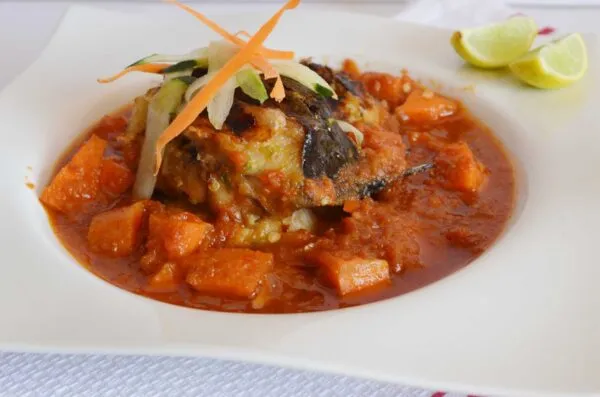
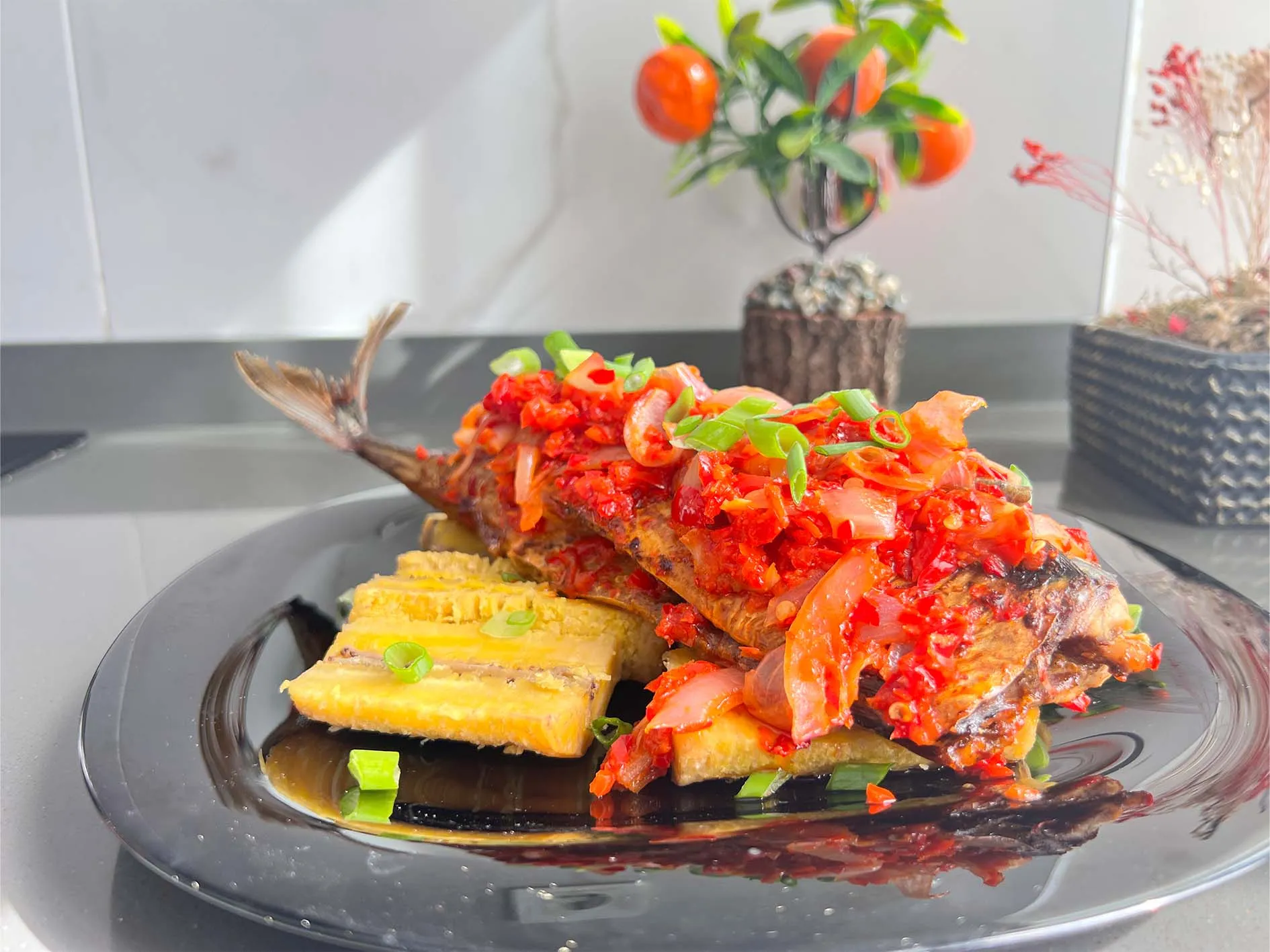
Whole mackerel is seasoned and grilled, then folded into a fried pepper and onion sauce. It is a Nigerian everyday dish, quick enough for a weeknight and substantial enough to stand as the main event, usually served with plantain, yam or rice.
The structure is the familiar Nigerian one: tatashe, the sweet red bell pepper that provides colour and body, and scotch bonnet, which provides the heat, fried down in oil with onion until the raw edge is gone. What makes this version specific is that the fish is grilled separately rather than stewed in the sauce. Grilling firms mackerel up and gives it colour and a smoky edge, and folding it in at the very end keeps it in recognisable pieces instead of breaking it apart through a long cook.
Mackerel is an oily fish, which is why it suits this treatment. It holds together under direct heat, it does not dry out the way a lean white fish would, and its strong flavour stands up to scotch bonnet and Cameroon pepper rather than disappearing under them. Cameroon pepper, dried, ground scotch bonnet, is the marker of West African rather than generic pepper cooking here.
The source's weight-loss framing has not been carried across.
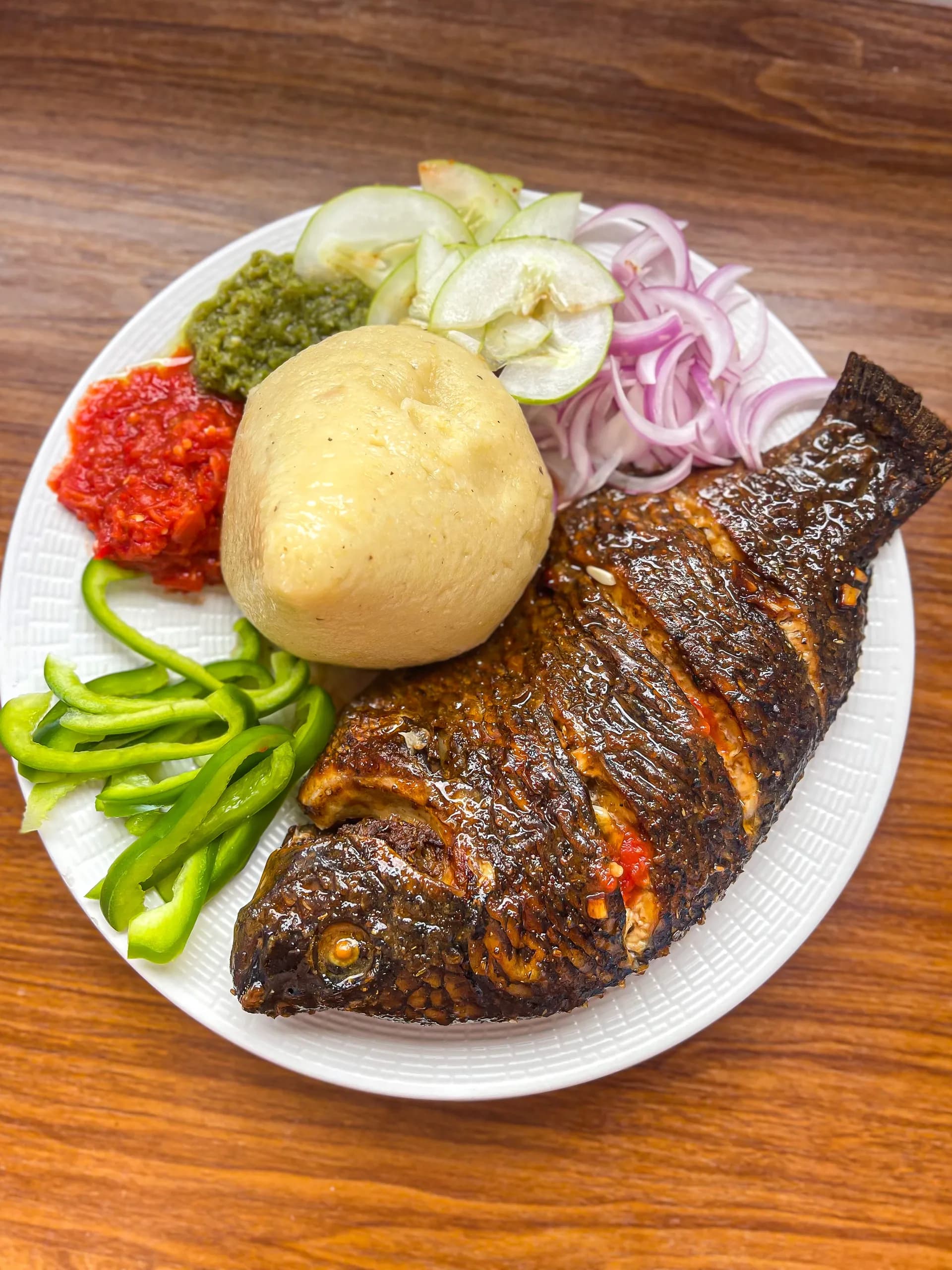
Whole tilapia scored, marinated in an oil-based spice mixture, oven-grilled, then coated in a fresh green pepper base and returned to the heat. The two-stage seasoning is what makes it, and it is a West African approach rather than a simple marinade.
The first stage is a dry-spice oil: vegetable oil with fish seasoning, white and black pepper, ginger, garlic, onion powder and lemon juice, worked into the cuts. The second is a green pepper base built in a food processor from green and red scotch bonnets, bell peppers, spinach, dill, coriander, ginger, garlic and onion, fried briefly in oil and then smeared over the part-cooked fish.
That green base is the interesting part. Blending leafy greens and fresh herbs into a pepper sauce is characteristic of Ghanaian and wider West African fish cookery, and it gives colour and a fresh, sharp finish that a marinade applied only at the start cannot. The scoring is not decorative either: two or three cuts on each side let both stages of seasoning reach the flesh rather than sitting on the skin. Tilapia is native to African fresh waters and is the fish most associated with Ghanaian grilling, usually eaten with banku.