Nous utilisons des cookies essentiels au fonctionnement du site. Nous aimerions aussi déposer des cookies de mesure d’audience et des cookies publicitaires, uniquement avec votre accord. Vous pouvez choisir séparément pour chacun. Lire notre politique relative aux cookies
Loading
Recettes
Parcourez les archives par pays, par plat et par temps de cuisson.

Beetroot pancakes are ordinary pancakes with cooked beetroot blended into the batter, which turns them deep pink and adds an earthy sweetness.
The beetroot does two things. It colours the batter dramatically, which is most of the appeal and the main reason the recipe exists for children. And it contributes moisture and a mild natural sweetness, so the pancakes need less sugar than a plain batter would.
They are made in the ordinary way, blended, rested briefly, cooked on a moderately hot pan, and the technique holds no surprises. Cooking them slightly slower than plain pancakes helps, because the extra moisture from the beetroot means the middle needs a little longer while the outside is already colouring.
Served with fresh fruit or berries on top, which is the usual suggestion, they make a breakfast that looks considerably more elaborate than it is.
**Filed as Worldwide**, the source describes it as a Continental recipe, and it makes no African claim. The page is kept and reclassified rather than removed.
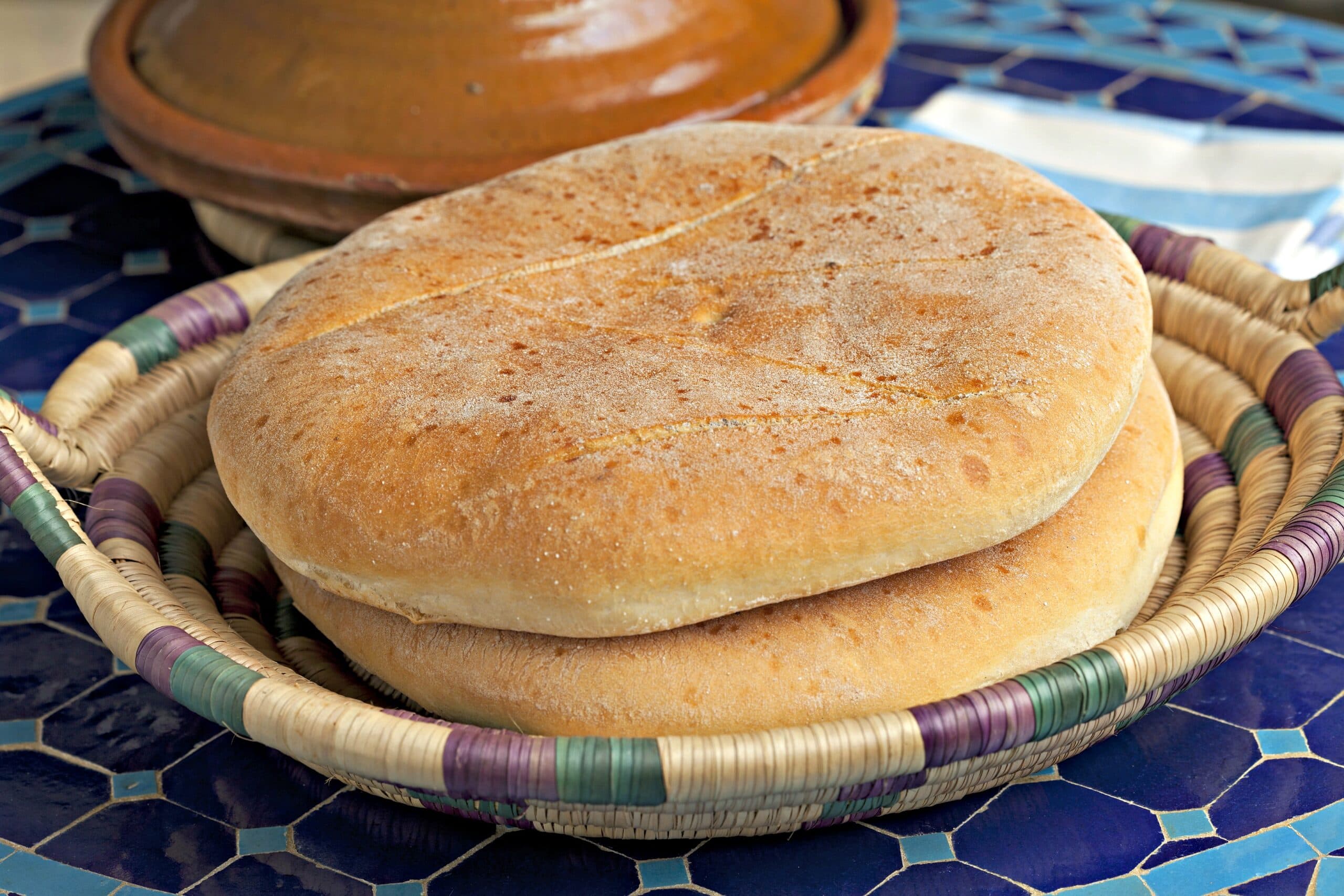
Moroccan Khobz is the daily bread of Morocco, a slightly leavened, round flatbread topped with sesame seeds and sometimes nigella seeds, baked until the crust is firm and golden and the interior is soft and chewy. It is present at every Moroccan meal from breakfast to dinner, used to scoop tagines, dip into olive oil, and accompany cooked vegetable salads. Moroccan families traditionally made their Khobz daily at home and took it to the communal neighbourhood baker (farran) to bake. This tradition persists in many Moroccan cities and villages, and the quality of local farran bread remains a point of neighbourhood pride. The bread's neutral, slightly wheaty flavour and sturdy texture make it the ideal vehicle for Moroccan food.
Ka'ak is a ring-shaped bread, crisp outside and soft within, scattered with sesame seeds. It is Libyan in this version, and made across a wide stretch of the Arabic-speaking world, Egypt, Iraq, Iran, Jordan, Lebanon, Palestine and Syria all have their own.
The shape is what defines it. Ka'ak is formed into a large ring, bigger and thinner than a bagel, which is why street vendors across the region can carry stacks of them on a pole or a cart. In Libya it is eaten at breakfast alongside hummus and falafel, and it comes in savoury and sweet versions.
The name travels further than the shape does. Ka'ak, sometimes kahk or kahqa, covers a whole family of baked goods across the Arabic-speaking world, from this ring bread to the small filled Egyptian cookies eaten at Eid, which are a completely different thing. The word means something closer to "baked good" than to any specific item.
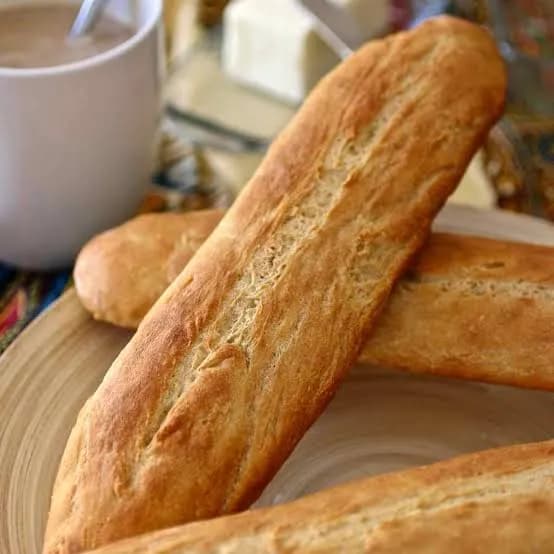
One technique in this recipe is worth borrowing for other breads. A tray of water is placed in the bottom of the oven while it heats, so the loaves bake in a steamy environment. Steam keeps the crust soft for the first minutes, letting the bread rise fully before the surface sets, and then produces a thin, crisp finish.
A plain chocolate muffin batter: dry ingredients in one bowl, wet in another, combined quickly and baked. No country is claimed. Muffins in this sense are American, and the method is the standard muffin method.
That method is the only thing that matters here, and the source is right to shout about it. Mixing the wet and dry ingredients separately and then combining them with as few strokes as possible is not a shortcut, it is the technique. Every stroke after the flour is wetted develops gluten, and developed gluten in a muffin gives you a tough, rubbery crumb full of long tunnels instead of a tender open one. A properly mixed muffin batter still has visible lumps and streaks of flour in it. That is what it should look like.
This is also why muffins are quick. There is no creaming stage, no aeration to build, nothing that rewards patience. The raising agent does the work and the oven does the rest.
The recipe as written is fairly lean, no butter, no chocolate chips, no sugar beyond half a cup, which makes it closer to a breakfast muffin than a dessert. The source's own description mentions chocolate chips that appear nowhere in the ingredients. Adding a handful is an easy improvement.