Nous utilisons des cookies essentiels au fonctionnement du site. Nous aimerions aussi déposer des cookies de mesure d’audience et des cookies publicitaires, uniquement avec votre accord. Vous pouvez choisir séparément pour chacun. Lire notre politique relative aux cookies
Loading
Recettes
Parcourez les archives par pays, par plat et par temps de cuisson.
Pilau is the spiced rice of the East African coast: rice cooked with cumin, cardamom, cloves, cinnamon and turmeric until every grain carries the spice. It is celebration food across Kenya, Tanzania, Uganda and Zanzibar, made for weddings, for Eid, and whenever a guest of consequence arrives.
It reached the Swahili coast through centuries of Indian Ocean trade, and the family it belongs to runs from Persian polow through Central Asian plov to South Asian pulao. The East African version is milder than the Indian one and does not use curry, which is the distinction the source draws and it is a fair one. The defining spice mix has its own name, pilau masala, and there is a recipe for it on this site.
An important note about this page. Its written description is of a full pilau: caramelised beef, potatoes, tomatoes and pilau masala simmered in meat stock. The recipe card attached to it is something else entirely, a plain spiced rice with no meat, no potatoes and no stock. The recipe below follows the card, since that is the actual recipe on the page, and the result is a good vegetarian side dish. It is not, however, the celebratory beef pilau the description promises.
Browning the onions properly is the step that matters most in either version.
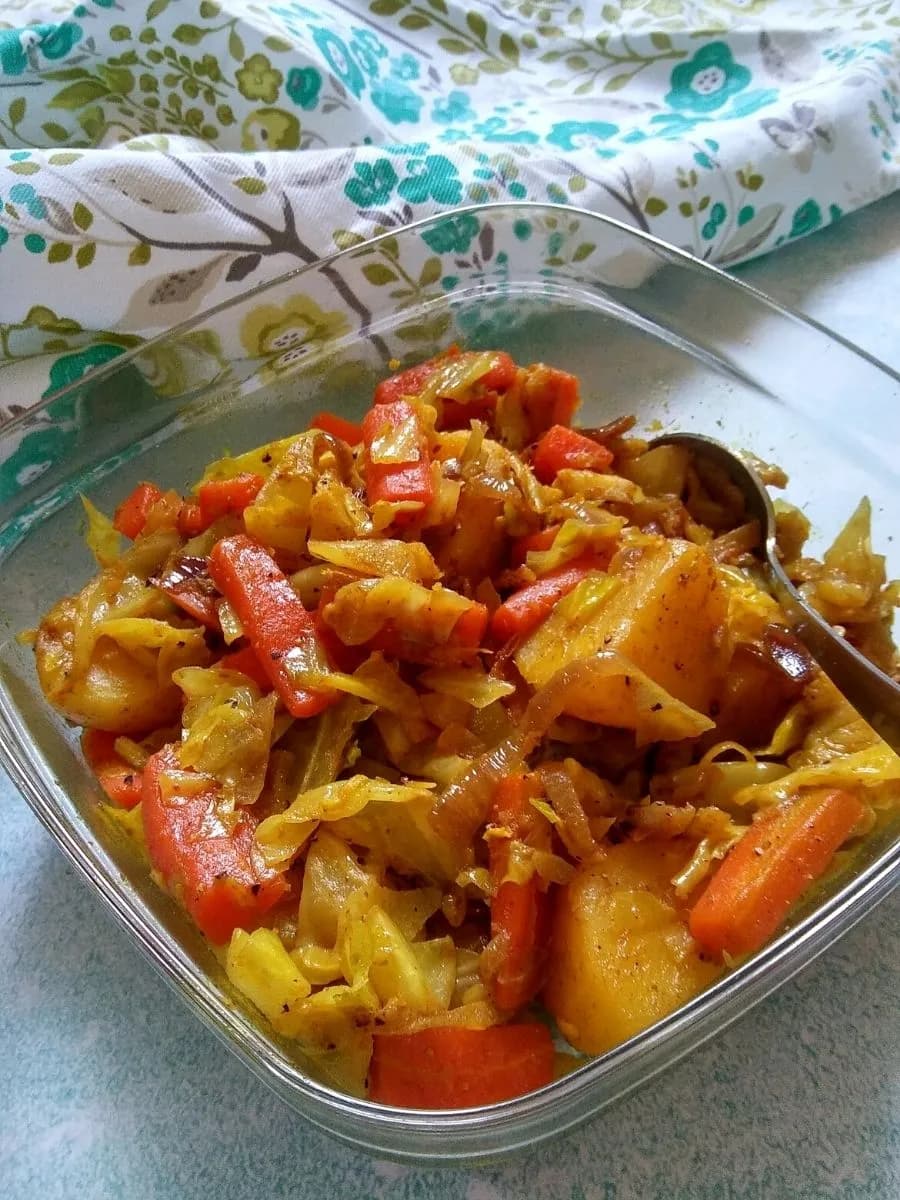
Atakilt wat is the vegetable stew of the Ethiopian table: cabbage, carrot and potato cooked down with onion, garlic and spice until they are tender without collapsing. The name is Amharic, atakilt for vegetable and wat for stew, which describes it exactly.
Its place is on the shared injera platter rather than on a plate of its own. An Ethiopian meal is served as several dishes arranged together on a single round of injera, and atakilt wat is almost always among them, providing a mild, sweet counterweight to the sharper and hotter wat alongside it. It is the dish that gives the platter its balance.
That role also makes it central to fasting. The Ethiopian Orthodox calendar includes many days on which no animal products are eaten, and the country's vegan cooking is consequently deep and long practised rather than recent. Atakilt wat contains nothing animal at any point, which is why it appears as reliably during fasting periods as outside them. Berbere, the chilli and spice blend built on chilli, garlic, ginger, fenugreek and a long list of aromatics, is what carries it, though this version keeps the quantity modest so the vegetables stay forward.
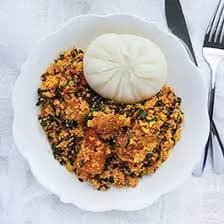
Semovita is one of Nigeria's swallows: the family of smooth, firm starch preparations that are pinched off by hand, rolled between the fingers and used to lift soup from a bowl. The swallow is not a side dish. In Nigerian eating it is the vehicle and the soup is the flavour, and a meal is understood as the pairing of the two.
It is made from semolina, the coarse milling of durum wheat, and it belongs to the wheat based end of the swallow spectrum rather than the cassava, yam or maize end. That places it alongside amala, eba, fufu, pounded yam and starch as one option among several, chosen by household preference and by what the soup is. Semovita is smoother and milder than most of the alternatives, which is a large part of its appeal.
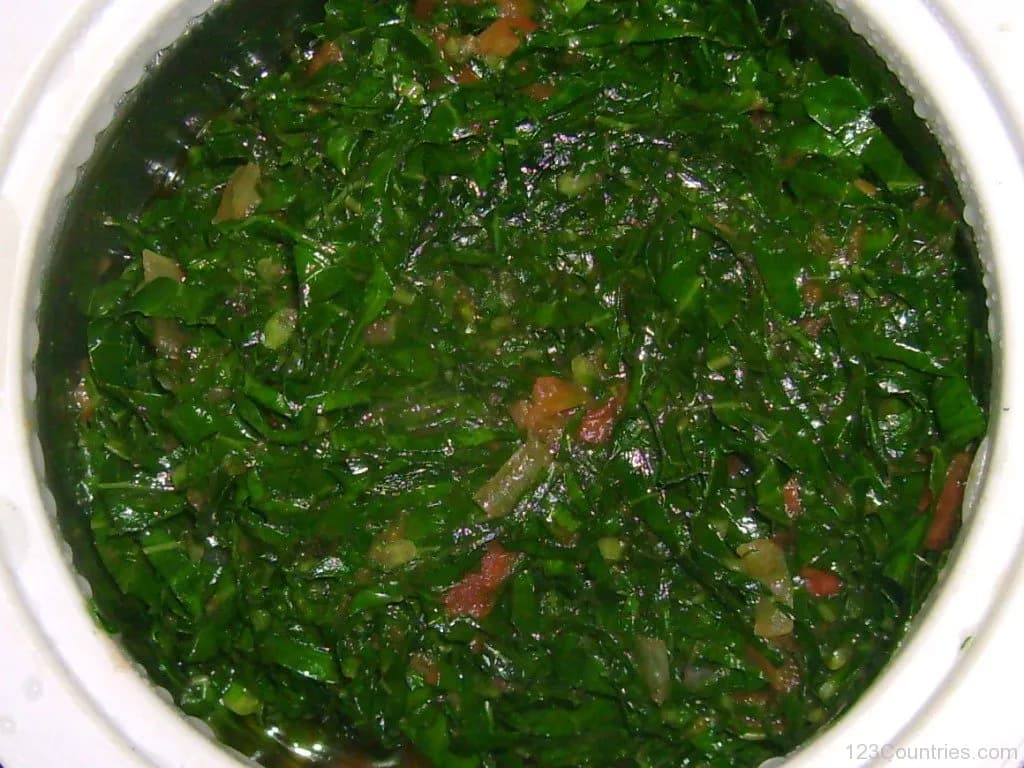
Its status is worth stating plainly: Semovita is a brand name that has become the general term for the product, in the way a number of household names have. The dish is Nigerian, industrially produced and comparatively recent, and it earned its place at the table on texture rather than on history. It is eaten with ogbono, okra, efo riro, egusi and every other Nigerian soup.
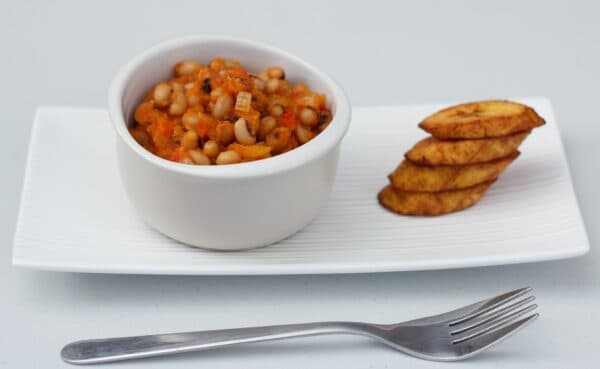
Red red is a Ghanaian black-eyed pea stew, and the name is a plain description of what it looks like. The beans are cooked in red palm oil, zomi, with tomato, and both give the dish the deep rust colour it is named for.
It is usually vegetarian, which is worth noting because it is unusual among West African stews in being so by default rather than by adaptation. The beans carry it, and the palm oil provides the richness that meat would otherwise supply. Some households add fish or meat, but the standard version does not need it.
Zomi is not interchangeable with ordinary red palm oil. It is palm oil that has been heated and infused, and it carries a deeper, slightly smoky flavour that is much of what makes red red taste Ghanaian rather than generically bean-stewed.
The classic accompaniment is fried plantain, and the pairing is close to inseparable, the sweetness of ripe plantain against the savoury, oily beans is the whole balance of the meal. Gari is often served alongside too.
It is cheap, filling and slow-cooked, and it is street food as much as home food across Ghana. Black-eyed peas are the usual bean, but the dish tolerates others without complaint.
Les mentions alimentaires sont fournies par les contributeurs à titre indicatif. Elles ne sont pas vérifiées par AFN et dépendent des produits que vous achetez. En cas d’allergie grave, vérifiez vous-même chaque ingrédient. Cuisine, allergies et votre propre jugement