Nous utilisons des cookies essentiels au fonctionnement du site. Nous aimerions aussi déposer des cookies de mesure d’audience et des cookies publicitaires, uniquement avec votre accord. Vous pouvez choisir séparément pour chacun. Lire notre politique relative aux cookies

Loading
Recettes
Parcourez les archives par pays, par plat et par temps de cuisson.
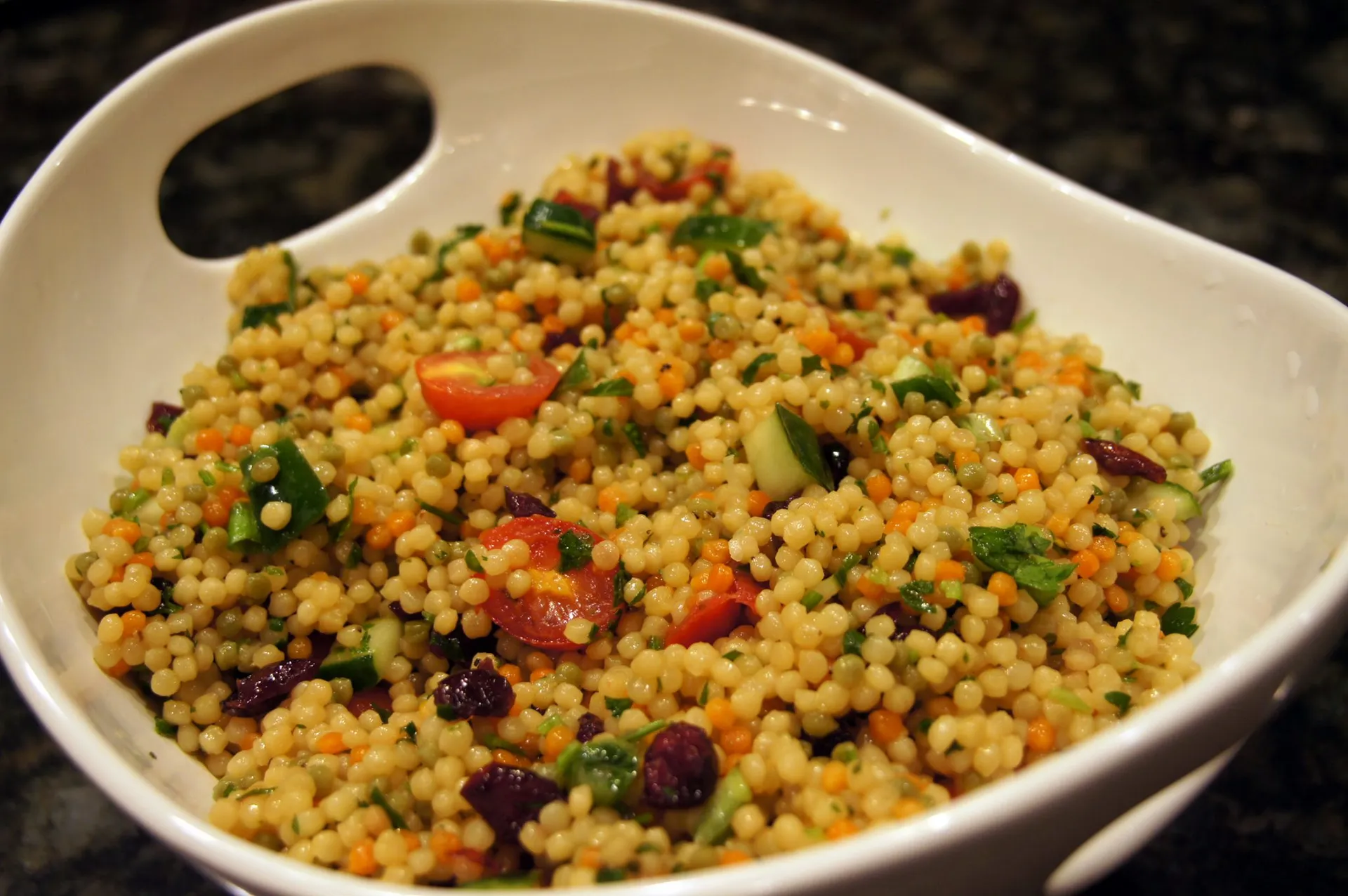
How to prepare instant couscous: boiling water or stock poured over, covered, left to steam, then fluffed. This is a technique page for a staple ingredient rather than a recipe for a dish, and it is filed as such.
Couscous is North African, specifically Berber in origin, and it is a staple across Morocco, Algeria, Tunisia and Libya. Its status was recognised by UNESCO in 2020, when the knowledge and practices around couscous were inscribed on the Representative List of the Intangible Cultural Heritage of Humanity in a joint submission by Algeria, Mauritania, Morocco and Tunisia.
It is not a grain, despite looking like one. Couscous is pasta, durum wheat semolina moistened, rolled into tiny granules and dried. Three sizes are common: Moroccan, the smallest; Israeli or pearl couscous, about the size of peppercorns; and Lebanese, the largest.
The traditional method has nothing to do with pouring boiling water on. Couscous is steamed, usually more than once, in the upper chamber of a couscoussier over a stew whose vapours flavour it as it cooks. That is how it is made for a proper meal in North Africa and the results are much lighter.
Almost all couscous sold in supermarkets is pre-steamed and dried, which is why the rehydration method here works.
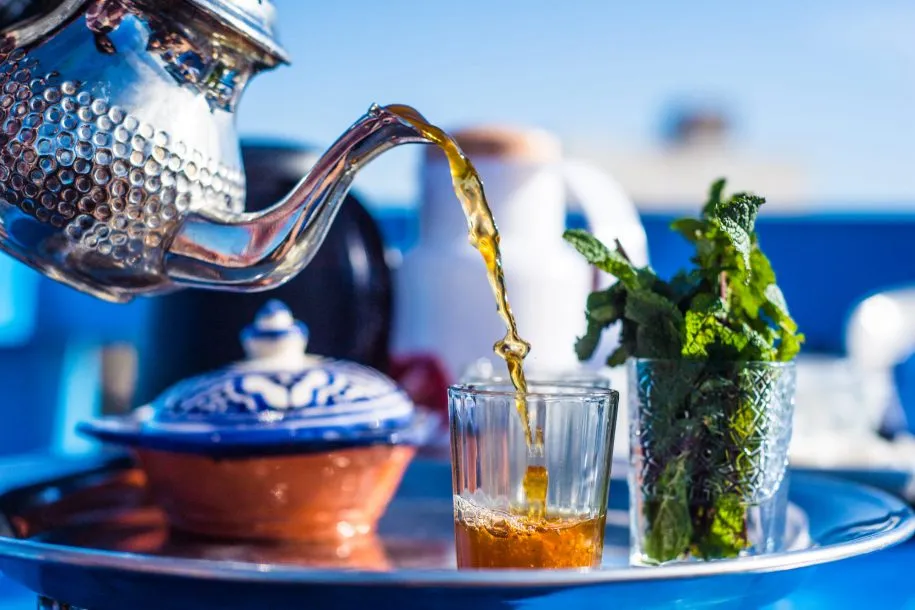
Moroccan mint tea is green tea infused with spearmint and heavily sweetened, and in Morocco it is not simply a drink. It is a sign of hospitality and friendship, served all day, after every meal and through every conversation, and Moroccans take enough pride in it to argue over who among their friends makes the best cup.
Its history is more recent and more accidental than most people expect. Tea reached Morocco in quantity through the Crimean War in the 1850s, when the British East India Company diverted shipments intended for the Baltic states and found itself with a surplus of Chinese tea to sell. Moroccans were the first to infuse it with mint, as a way of countering the bitterness of gunpowder green tea, and the combination stuck.
It is drunk across Morocco, Algeria, Tunisia, Libya and Mauritania, and in parts of the Near and Middle East. It is called shai bi na'na' in classical Arabic and atay or latay in Maghrebi Arabic. The method here involves two rinses of the tea leaves before the tea is made, one of which is kept as the essence and returned to the pot, and one discarded. That step is what removes the harshest bitterness while keeping the strength.
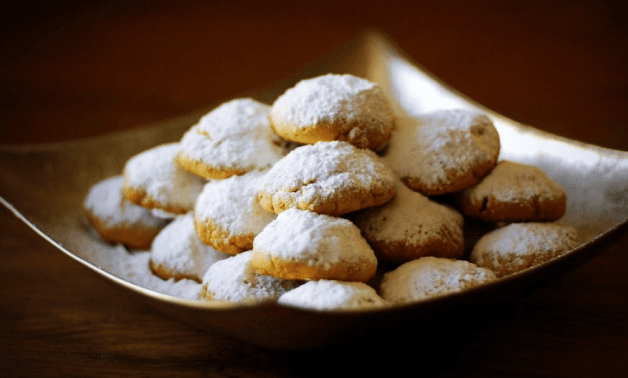
Kahk are round Egyptian shortbread-style cookies, buttery and crumbly, buried under a heavy layer of icing sugar, and made for Eid.
Their history is unusually well documented for a biscuit. Kahk is believed to date to Ancient Egypt: carvings showing people making it have been found in temple ruins at Memphis and Thebes, and a recipe was recorded in the Great Pyramid of Khufu at Giza. Few foods anyone still eats have that kind of paper trail.
They are made in enormous quantity in the weeks before Eid al-Fitr, and the making is social, families and neighbours gathering to shape trays of them together, which is as much the tradition as the eating.
Fillings vary. Plain kahk is common, but so are versions stuffed with agameya, a paste of honey, ghee, flour and nuts; with dates; with pistachio or walnut; or with lokum.
The texture is what people judge them on: a proper kahk should collapse in the mouth rather than snap. That comes from ghee and from not overworking the dough.
The icing sugar is not a garnish, it is applied generously and is part of the thing.
Mazagran is strong coffee poured over ice with lemon and sugar, and it has a fair claim to being the original iced coffee. It takes its name from Mazagran in Algeria, and it is Algerian in origin even though it is now far better known in Portugal.
The lemon has a practical history. It was added to improve the flavour of low quality coffee beans, which is a origin story shared by a good many drinks, and it turned out to make something worth drinking in its own right. The combination of citrus acidity against the bitterness of strong coffee is what the drink is, and good beans are not wasted on it.
It is traditionally served in a tall narrow glass, and there is an eponymous porcelain or clay vessel of the same name. The Portuguese version is the one most people encounter, sometimes made with espresso and lemon, sometimes with rum added. The recipe here is a Nespresso-branded version, which is worth noting: it specifies particular capsules, and any strong espresso or very strong brewed coffee substitutes. What it does not include, oddly, is the lemon that the article itself identifies as the defining ingredient.
Les mentions alimentaires sont fournies par les contributeurs à titre indicatif. Elles ne sont pas vérifiées par AFN et dépendent des produits que vous achetez. En cas d’allergie grave, vérifiez vous-même chaque ingrédient. Cuisine, allergies et votre propre jugement