Nous utilisons des cookies essentiels au fonctionnement du site. Nous aimerions aussi déposer des cookies de mesure d’audience et des cookies publicitaires, uniquement avec votre accord. Vous pouvez choisir séparément pour chacun. Lire notre politique relative aux cookies

Loading
Recettes
Parcourez les archives par pays, par plat et par temps de cuisson.
Feteer meshaltet is an Egyptian pastry made by stretching dough until it is almost transparent, brushing it with butter, folding it, and repeating until it consists of a great many paper-thin layers. It is baked in a very hot oven and eaten either plain with honey, molasses and tahini, or filled with anything from cheese to minced meat to custard.
The name means something like flattened or stretched pie, and that describes the method exactly. The dough is not rolled, it is stretched by hand until the surface below is visible through it, then folded with butter between every layer. What produces the texture is the butter turning to steam between the layers in a very hot oven and forcing them apart, which is the same physics as puff pastry arrived at by a completely different route.
The oven temperature the source calls for looks like an error and is not, it is far above ordinary baking heat. Feteer needs that to puff before the layers set, and Egyptian bakeries use wood-fired ovens hotter still. A domestic oven at its maximum with the broiler finishing the top is the practical approximation.
It has a long and reasonably well-attested history, the source traces it to ancient Egypt, where a version was offered in temples. Its claim that feteer became the croissant in Europe is repeated widely but not established, and it has been recorded here as a claim rather than a fact.
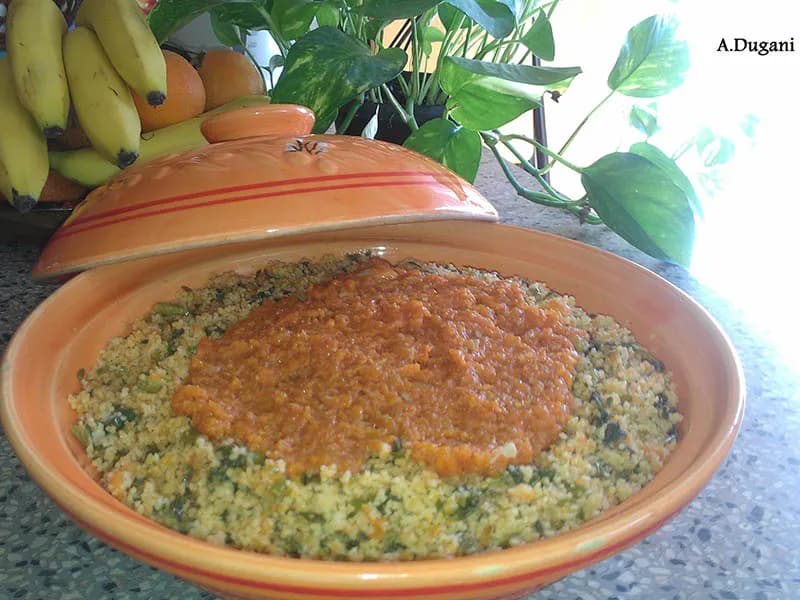
Aslooz is a Libyan couscous dish named after a plant, and the plant is the reason it belongs to a season rather than to a calendar. Aslooz is a wild weed that grows across the countryside and the mountain regions of western Libya, gathered rather than farmed, and harvested in a narrow window through January and February.
It is picked from roadsides and hillsides in the Nafusa mountains and the western districts, and only the tender twigs and flowering branches are used. Because it grows wild and its season is short, aslooz has never been a commercial crop, and it is effectively unavailable outside Libya. Libyan families abroad substitute, most often asparagus with dill, sometimes carrot with cumin leaves, and this recipe is written that way.
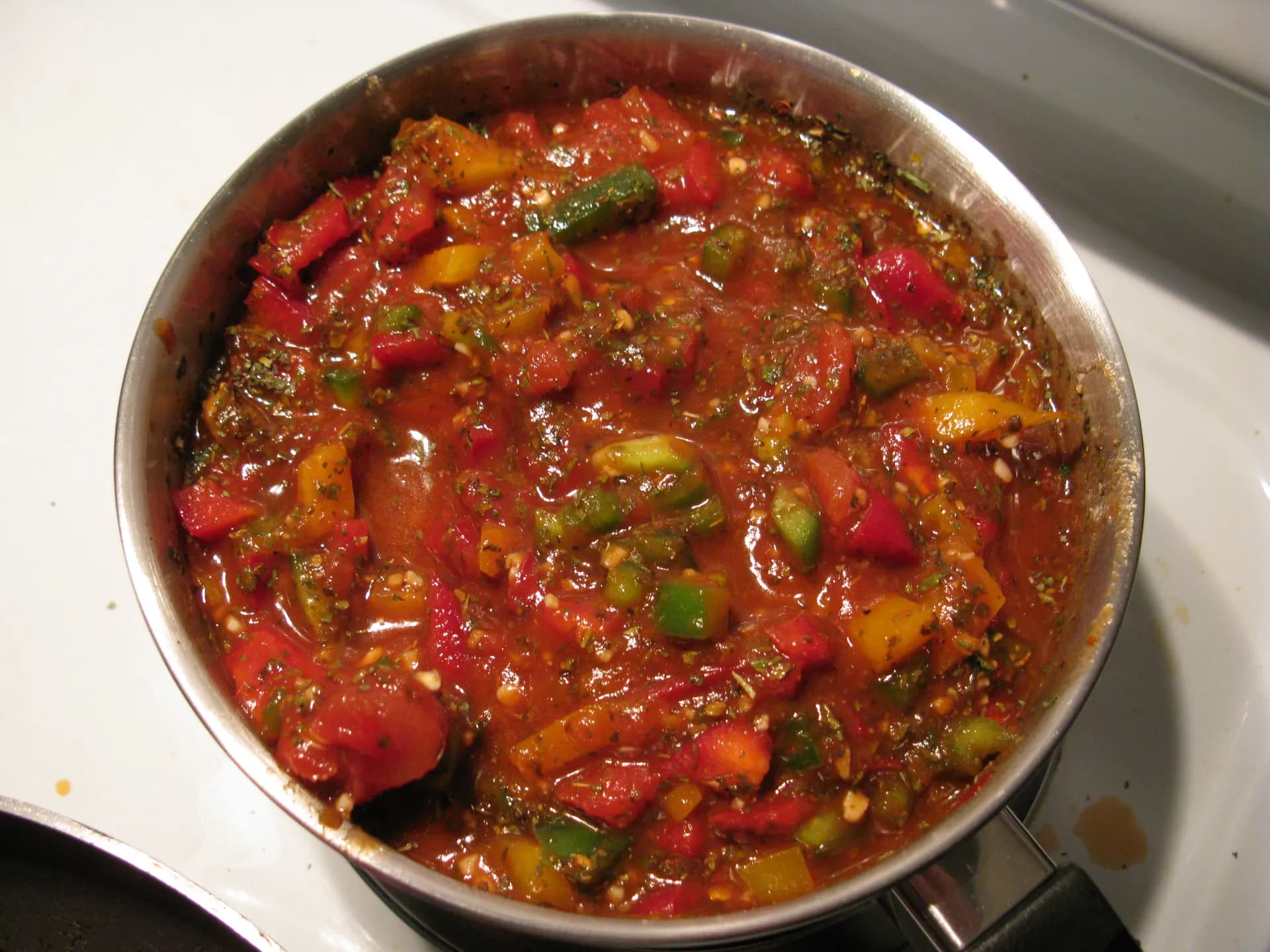
Everything about it is plain: steamed couscous, a tomato base, a wild green and a carrot sauce sharpened with lemon and chilli. Libyans describe it as cheap and cheerful and treat it as a family dish, made and eaten together rather than served to guests. The couscous is steamed over the greens so it takes their flavour from below, which is the technique that separates it from a couscous simply mixed with vegetables, and it is what a Libyan cook would notice first if it were skipped.
Ka'ak is a ring-shaped bread, crisp outside and soft within, scattered with sesame seeds. It is Libyan in this version, and made across a wide stretch of the Arabic-speaking world, Egypt, Iraq, Iran, Jordan, Lebanon, Palestine and Syria all have their own.
The shape is what defines it. Ka'ak is formed into a large ring, bigger and thinner than a bagel, which is why street vendors across the region can carry stacks of them on a pole or a cart. In Libya it is eaten at breakfast alongside hummus and falafel, and it comes in savoury and sweet versions.
The name travels further than the shape does. Ka'ak, sometimes kahk or kahqa, covers a whole family of baked goods across the Arabic-speaking world, from this ring bread to the small filled Egyptian cookies eaten at Eid, which are a completely different thing. The word means something closer to "baked good" than to any specific item.
One technique in this recipe is worth borrowing for other breads. A tray of water is placed in the bottom of the oven while it heats, so the loaves bake in a steamy environment. Steam keeps the crust soft for the first minutes, letting the bread rise fully before the surface sets, and then produces a thin, crisp finish.
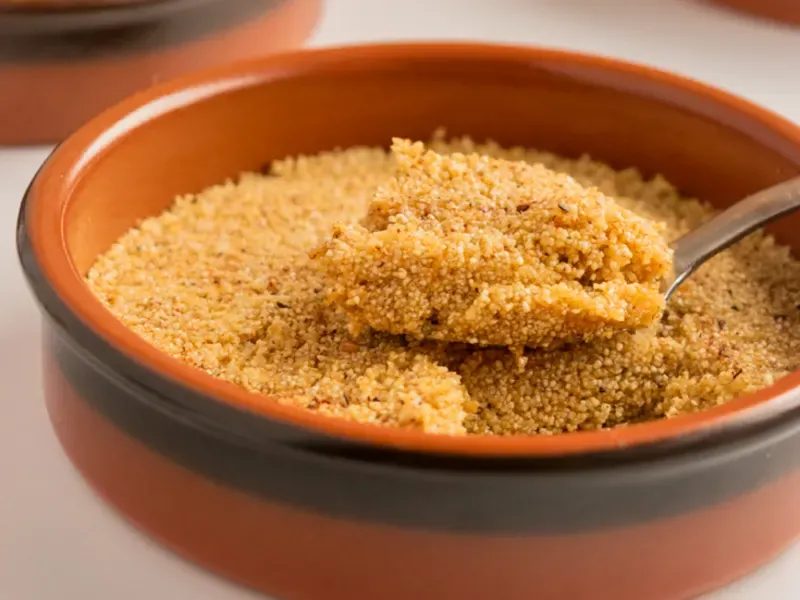
How to prepare instant couscous: boiling water or stock poured over, covered, left to steam, then fluffed. This is a technique page for a staple ingredient rather than a recipe for a dish, and it is filed as such.
Couscous is North African, specifically Berber in origin, and it is a staple across Morocco, Algeria, Tunisia and Libya. Its status was recognised by UNESCO in 2020, when the knowledge and practices around couscous were inscribed on the Representative List of the Intangible Cultural Heritage of Humanity in a joint submission by Algeria, Mauritania, Morocco and Tunisia.
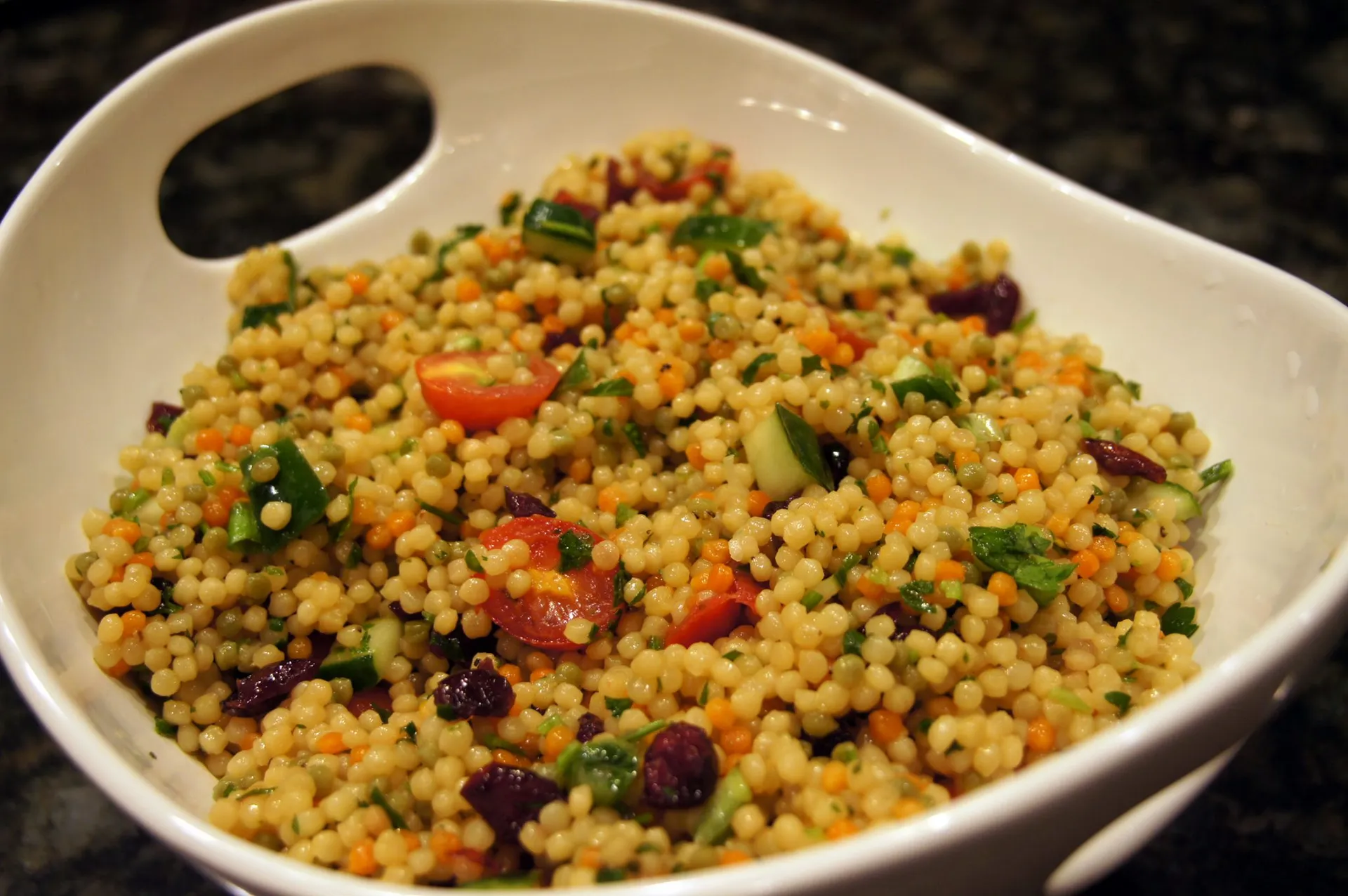
It is not a grain, despite looking like one. Couscous is pasta, durum wheat semolina moistened, rolled into tiny granules and dried. Three sizes are common: Moroccan, the smallest; Israeli or pearl couscous, about the size of peppercorns; and Lebanese, the largest.
The traditional method has nothing to do with pouring boiling water on. Couscous is steamed, usually more than once, in the upper chamber of a couscoussier over a stew whose vapours flavour it as it cooks. That is how it is made for a proper meal in North Africa and the results are much lighter.
Almost all couscous sold in supermarkets is pre-steamed and dried, which is why the rehydration method here works.
Les mentions alimentaires sont fournies par les contributeurs à titre indicatif. Elles ne sont pas vérifiées par AFN et dépendent des produits que vous achetez. En cas d’allergie grave, vérifiez vous-même chaque ingrédient. Cuisine, allergies et votre propre jugement