Nous utilisons des cookies essentiels au fonctionnement du site. Nous aimerions aussi déposer des cookies de mesure d’audience et des cookies publicitaires, uniquement avec votre accord. Vous pouvez choisir séparément pour chacun. Lire notre politique relative aux cookies
Loading
Recettes
Parcourez les archives par pays, par plat et par temps de cuisson.
Pilau is the spiced rice of the East African coast: rice cooked with cumin, cardamom, cloves, cinnamon and turmeric until every grain carries the spice. It is celebration food across Kenya, Tanzania, Uganda and Zanzibar, made for weddings, for Eid, and whenever a guest of consequence arrives.
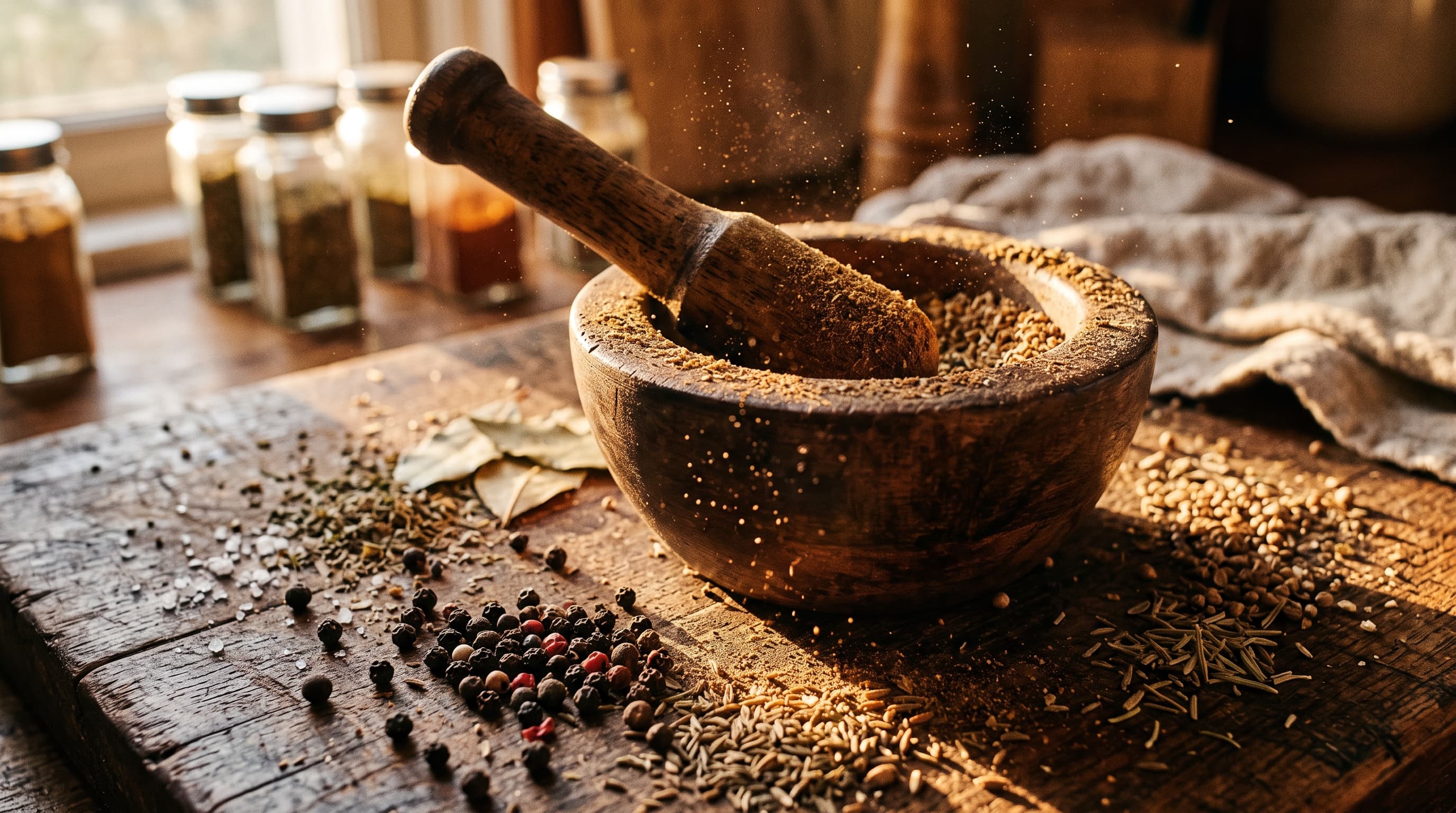
It reached the Swahili coast through centuries of Indian Ocean trade, and the family it belongs to runs from Persian polow through Central Asian plov to South Asian pulao. The East African version is milder than the Indian one and does not use curry, which is the distinction the source draws and it is a fair one. The defining spice mix has its own name, pilau masala, and there is a recipe for it on this site.
An important note about this page. Its written description is of a full pilau: caramelised beef, potatoes, tomatoes and pilau masala simmered in meat stock. The recipe card attached to it is something else entirely, a plain spiced rice with no meat, no potatoes and no stock. The recipe below follows the card, since that is the actual recipe on the page, and the result is a good vegetarian side dish. It is not, however, the celebratory beef pilau the description promises.
Browning the onions properly is the step that matters most in either version.
Overripe bananas mashed with grated cassava, seasoned with salt and deep-fried into small golden balls. In Cameroon it is street food sold nationwide, and it is also celebration food, a fixture at Christmas parties and weddings.
What sets it apart from the many other West African banana fritters is the starch. Most versions bind mashed banana with wheat flour, rice flour or cornmeal; this one uses grated cassava, which is why it is also called accra cassava. Cassava is worked into an enormous number of forms in Cameroonian cooking, fufu, garri, bobolo sticks, and this is one more. The result is chewier and denser than a flour-based fritter, with the cassava's faint sourness cutting the sweetness of the fruit.
Overripe bananas are not a compromise here, they are the requirement. A firm banana has neither the sweetness nor the softness the mixture needs, and the dish exists partly as a way of using fruit that has gone too far to eat out of hand.
The usual accompaniment is African pepper sauce, which is worth taking seriously: the contrast between a sweet fried fritter and a fierce chilli sauce is the whole point of eating them together.
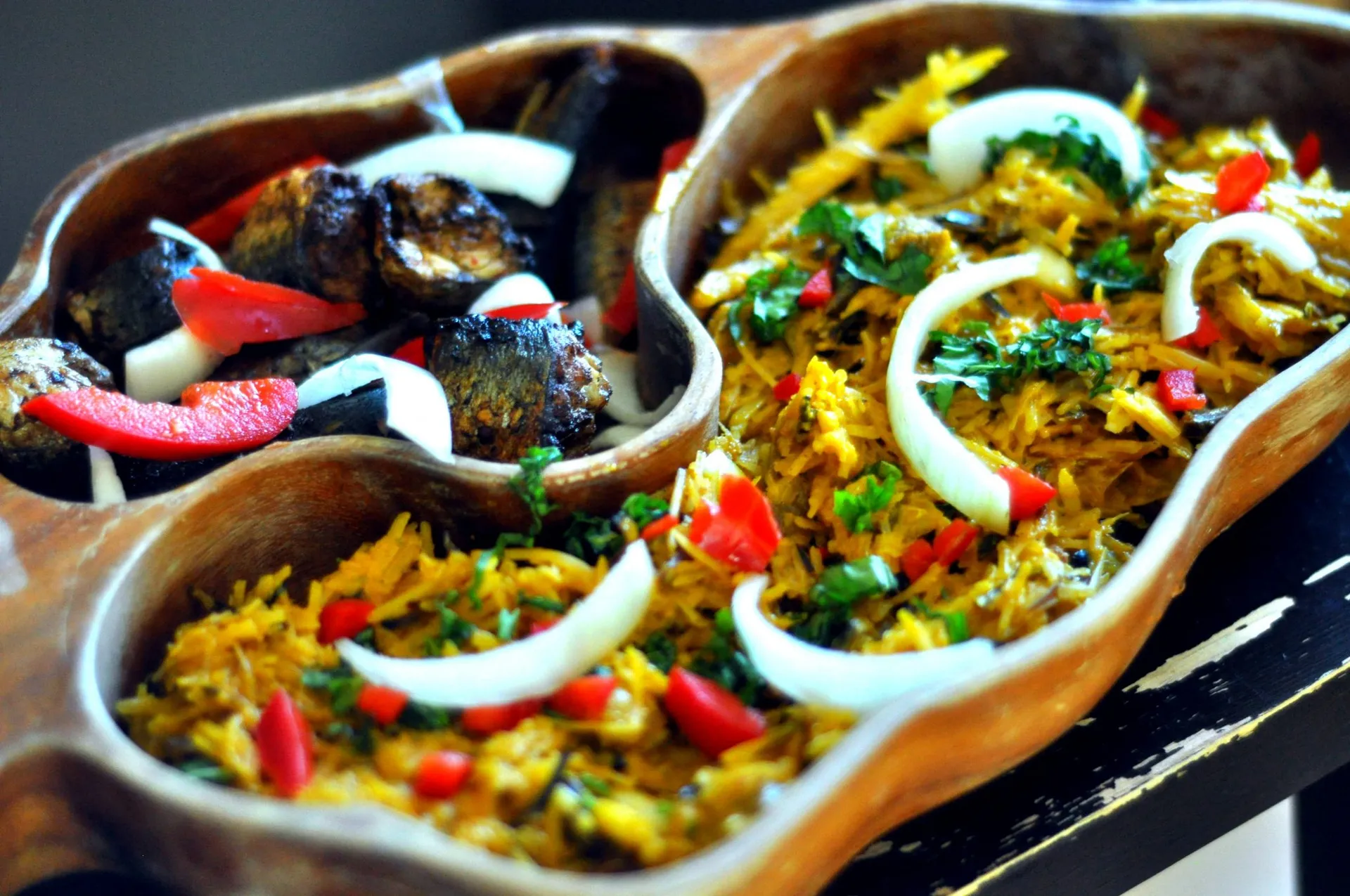
African salad is the Igbo dish of abacha and ugba, and it is a salad only in the loosest sense. Abacha is cassava that has been cooked, shredded on a special grater, soaked overnight, rinsed and dried in the sun. Ugba is fermented oil bean seed, cooked for hours, sliced, rinsed and left to ferment. Neither is cooked when the dish is assembled.
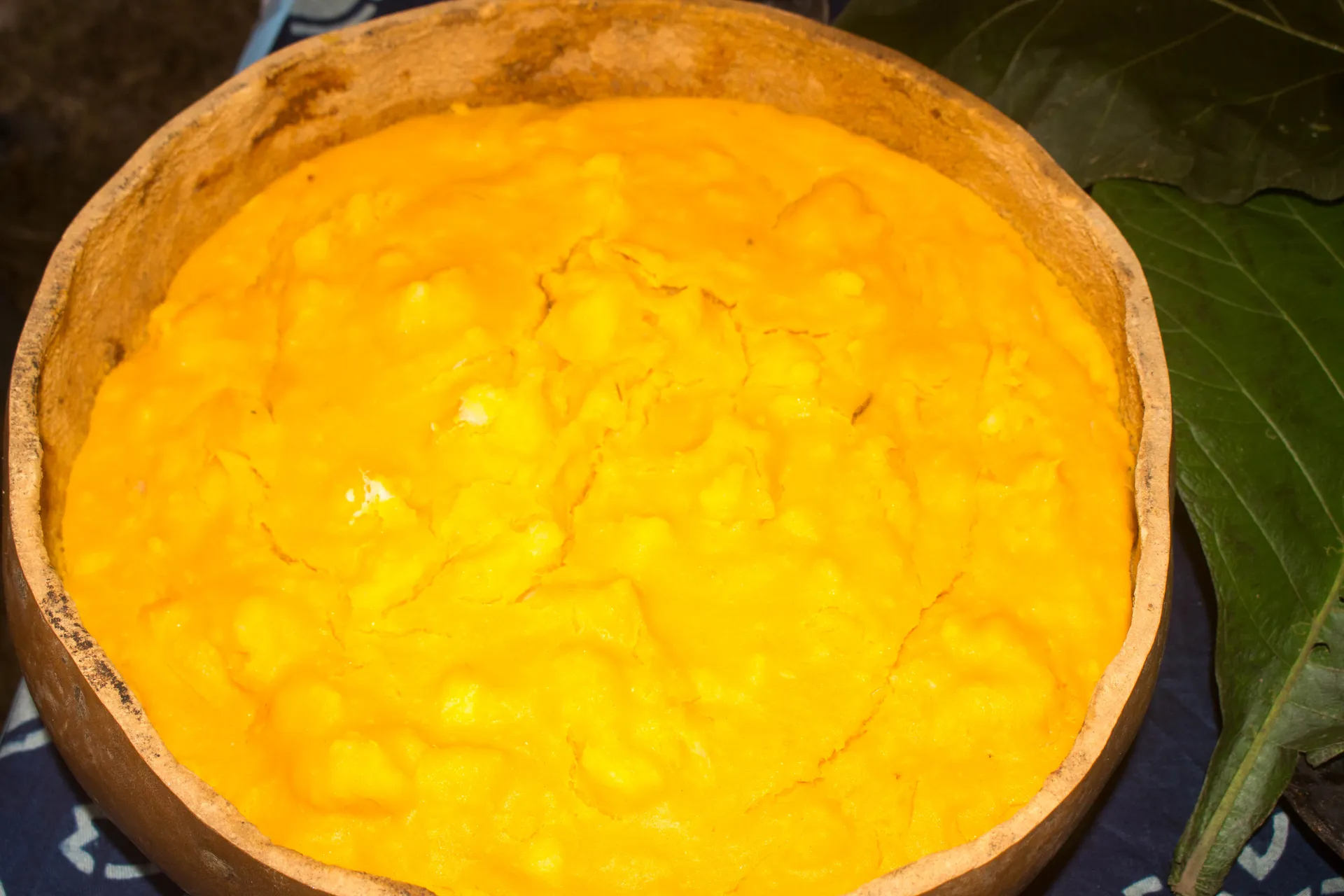
That is the striking thing about it: almost the entire preparation happens off the stove. Palm oil is turned into a thick yellow paste by working it with potash solution, and everything else is folded into that paste in sequence. The order matters, and Igbo cooks are firm about it, because the components will not distribute evenly if they all go in together.
It belongs to ceremony. At an Igbo wedding, abacha is reserved for the important guests, and it is served with chilled palm wine, which is the pairing anyone from the region will name. Despite being filling enough to be a meal, it is treated as a snack rather than a main course. It can be served cold or warmed briefly, and the choice between the two is a matter of household preference rather than correctness.
Yam is not simply a staple crop among the Igbo of south-eastern Nigeria. It is the crop, tied to land, status and the agricultural calendar in a way no other food is, and the yam that goes into this porridge carries that weight into an ordinary weekday meal.
Yam porridge is the most direct way to eat it. Slices are cooked until they begin to break down and thicken their own liquid, so the dish is both the yam and the sauce it makes. What marks the version out as Igbo rather than as one of the several other Nigerian yam pottages is the seasoning: ogiri, the fermented seasoning made from oil bean or melon seed, and uziza leaves, whose peppery aroma goes in at the very end. Palm oil supplies the colour and the richness, crayfish the savoury base.
Ogiri is the ingredient that decides the dish. Its fermented depth is what separates an Igbo yam porridge from a Yoruba or Hausa preparation of the same root, and households that leave it out are making something else. The porridge is eaten at breakfast and as a light lunch, and it belongs to ordinary domestic cooking rather than to any occasion.
Les mentions alimentaires sont fournies par les contributeurs à titre indicatif. Elles ne sont pas vérifiées par AFN et dépendent des produits que vous achetez. En cas d’allergie grave, vérifiez vous-même chaque ingrédient. Cuisine, allergies et votre propre jugement