Nous utilisons des cookies essentiels au fonctionnement du site. Nous aimerions aussi déposer des cookies de mesure d’audience et des cookies publicitaires, uniquement avec votre accord. Vous pouvez choisir séparément pour chacun. Lire notre politique relative aux cookies

Loading
Recettes
Parcourez les archives par pays, par plat et par temps de cuisson.
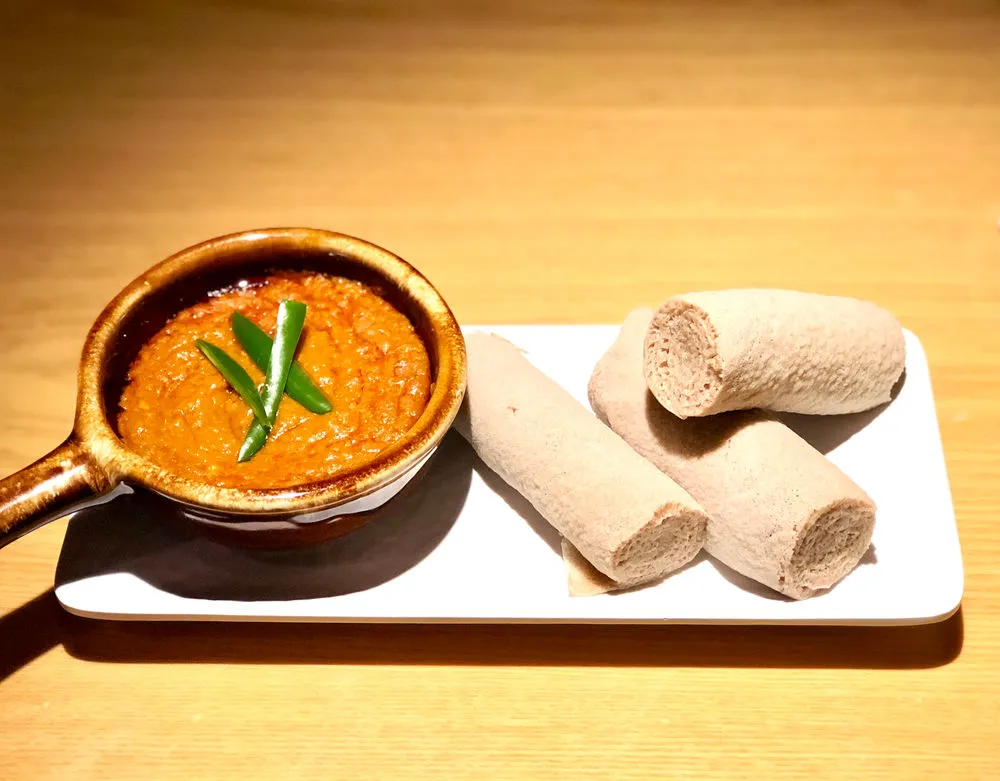
Shiro wat is ground chickpea stew, and it is among the most eaten dishes in Ethiopia and Eritrea. Onion, garlic, tomato and berbere are cooked down in oil, chickpea flour is whisked in, and the result thickens to something between a thick gravy and a puree, smooth enough to spread and eaten with injera.
Its position has a great deal to do with the religious calendar. Ethiopian Orthodox practice includes a very large number of fasting days, on which no meat, eggs or dairy are eaten, and shiro contains none of them. It is standard on Wednesdays and Fridays, through the eight weeks of Tsom, the Great Lent, and it is eaten during Ramadan by Ethiopian and Eritrean Muslims too. That is a dish serving two religions in one country without modification.
It is also cheap and quick, which explains the rest of its reach. Shiro powder, sold ready mixed with the spices already in it, is available across Ethiopia and increasingly abroad, in two kinds: mitten shiro, which is red and carries berbere, and netch shiro, which is white and mild. The dish takes different forms by consistency and name: shiro fessess is runny and served over injera with chillies, shiro tegamino is thick and cooked in an earthenware pot until it bubbles and caramelises at the base, and shiro fit fit shreds injera through it for breakfast.
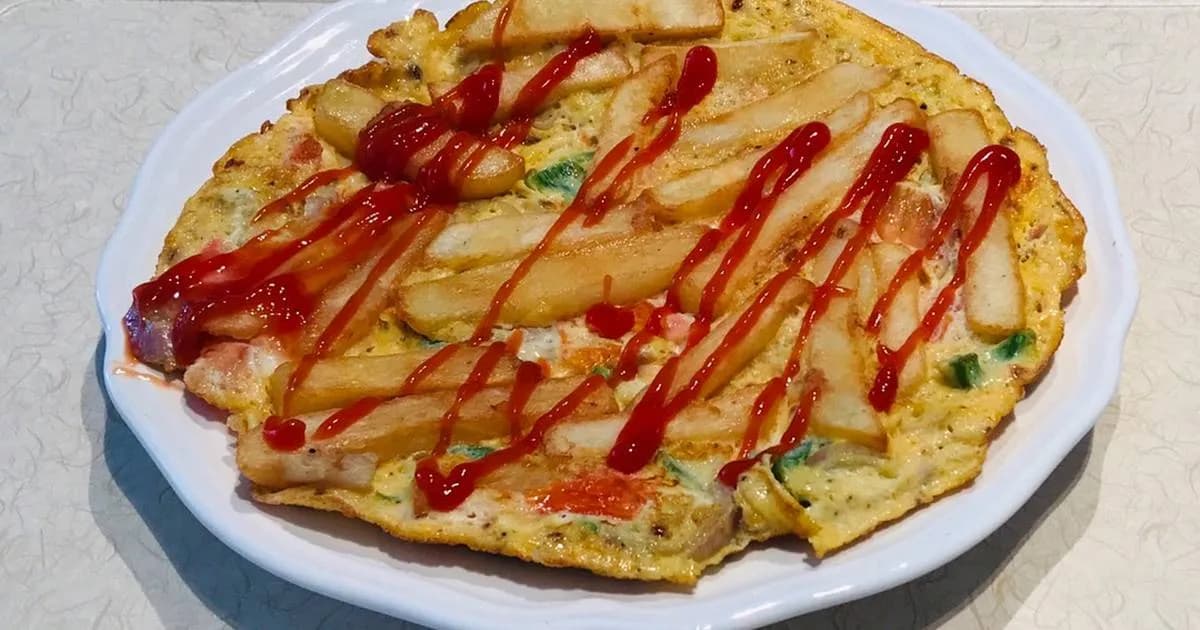
Chips mayai is chips set into an omelette and cooked as a single flat cake. The name is literal, chipsi is chips, mayai is eggs in Swahili, and it is one of the defining Tanzanian street foods, also known as zege.
It is sold from stalls across the country and cooked to order: fries already made, eggs beaten with chopped onion, tomato, green pepper and coriander, the two combined in a hot pan and turned once. Minced meat goes in where a heartier version is wanted. It arrives with kachumbari, the East African tomato and onion salad, and tomato sauce.
The comparison the source draws with Spanish tortilla is apt and worth thinking about, because the difference is instructive. A tortilla española uses potato sliced thin and cooked gently in oil until soft, folded into egg and set slowly into something dense and custardy. Chips mayai uses chips, already fried, already crisp, and cooks fast, so the potato keeps some of its structure and the egg stays lighter. Same two ingredients, entirely different results, and the potato cut is what does it.
It is eaten at any hour: breakfast, a late-night meal after drinking, or a snack in between. Nothing about it is formal.
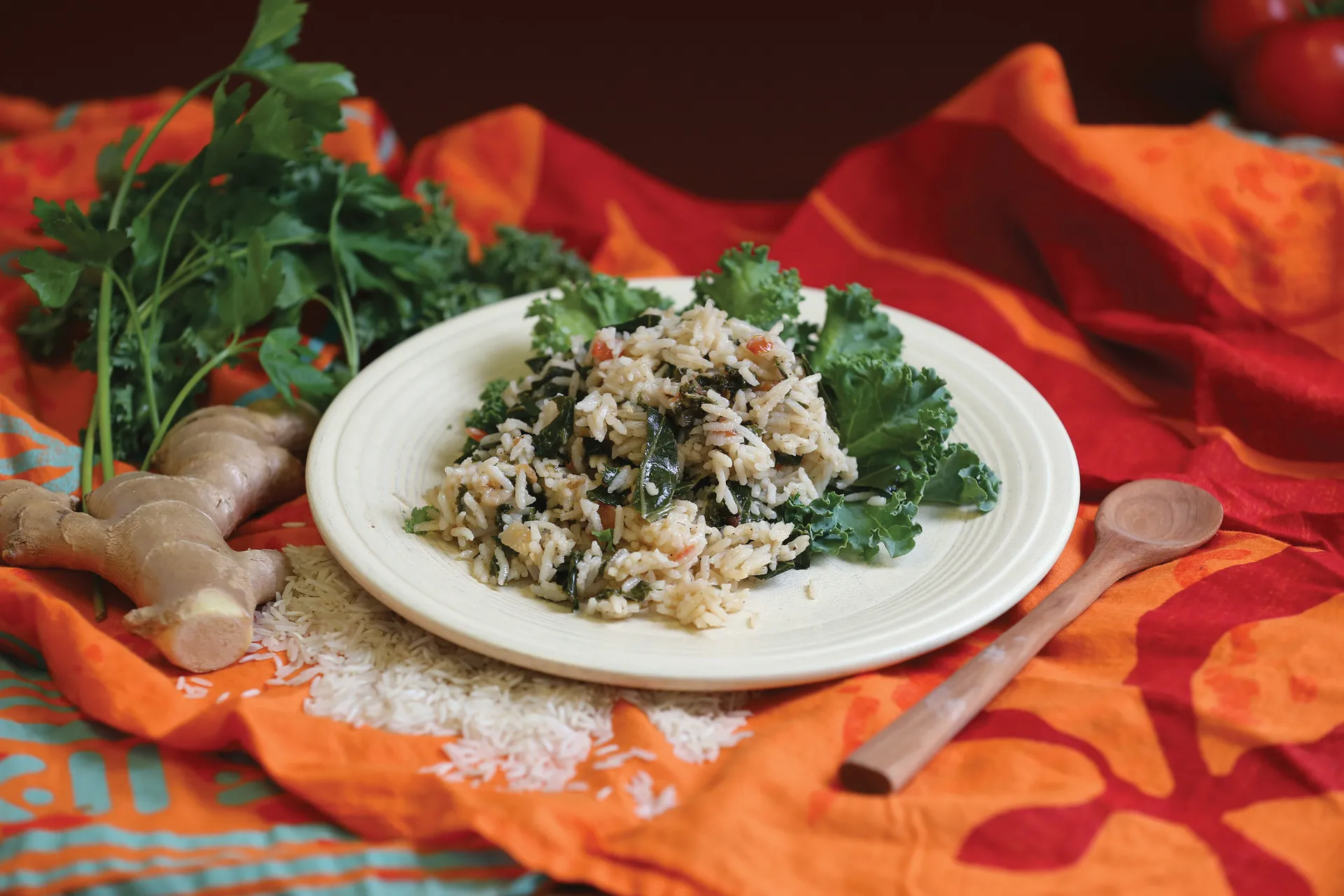
Vary amin'anana is rice cooked together with greens, tomatoes, onion and ginger until it becomes a thick, soupy porridge. It is Malagasy, and the name says exactly what it is: vary is rice, anana is greens.
It is everyday food in the most literal sense. Rice is eaten at nearly every meal in Madagascar, and vary amin'anana is one of the most common ways of preparing it, cheap, filling, made from whatever leaves are available, and eaten at any hour including breakfast. Brèdes is the Malagasy term for the family of edible greens it uses, which covers everything from mustard greens to watercress to cassava leaves depending on the season.
Ginger is the note that makes it Malagasy rather than generically green. It goes in early with the tomatoes and onions and runs through the whole dish.
Two things about this particular version. It uses brown rice, which is unusual, white rice is standard in Madagascar, and it has been converted to a slow cooker, which is not a Malagasy method. The source explains why: it was adapted so it could be transported to a fundraiser. That provenance is worth recording, since it explains both oddities.
The proportions are worth reading: twelve cups of water to five cups of rice gives something soupy rather than fluffy, which is correct.
Les mentions alimentaires sont fournies par les contributeurs à titre indicatif. Elles ne sont pas vérifiées par AFN et dépendent des produits que vous achetez. En cas d’allergie grave, vérifiez vous-même chaque ingrédient. Cuisine, allergies et votre propre jugement