Nous utilisons des cookies essentiels au fonctionnement du site. Nous aimerions aussi déposer des cookies de mesure d’audience et des cookies publicitaires, uniquement avec votre accord. Vous pouvez choisir séparément pour chacun. Lire notre politique relative aux cookies
Loading
Recettes
Parcourez les archives par pays, par plat et par temps de cuisson.
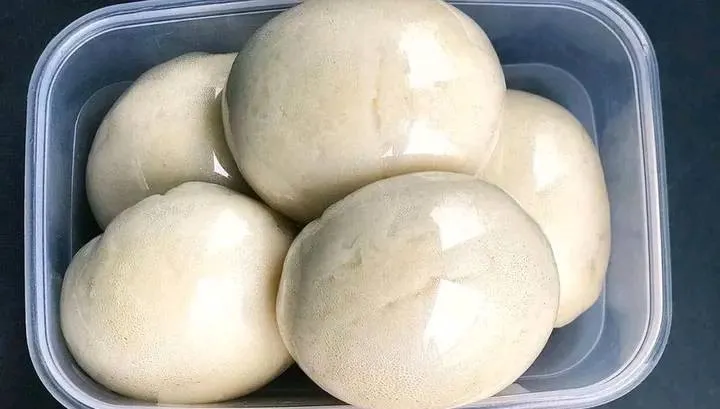
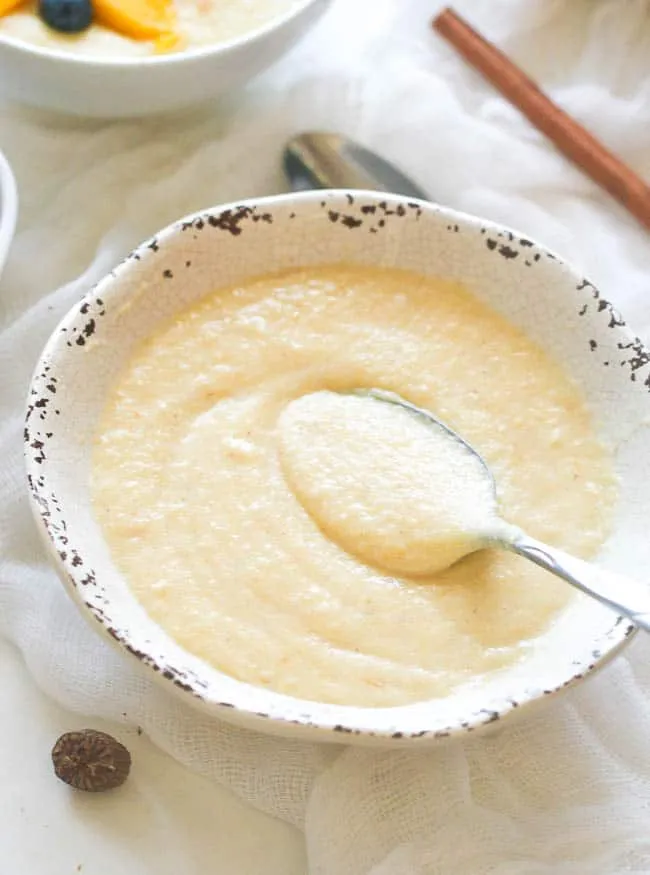
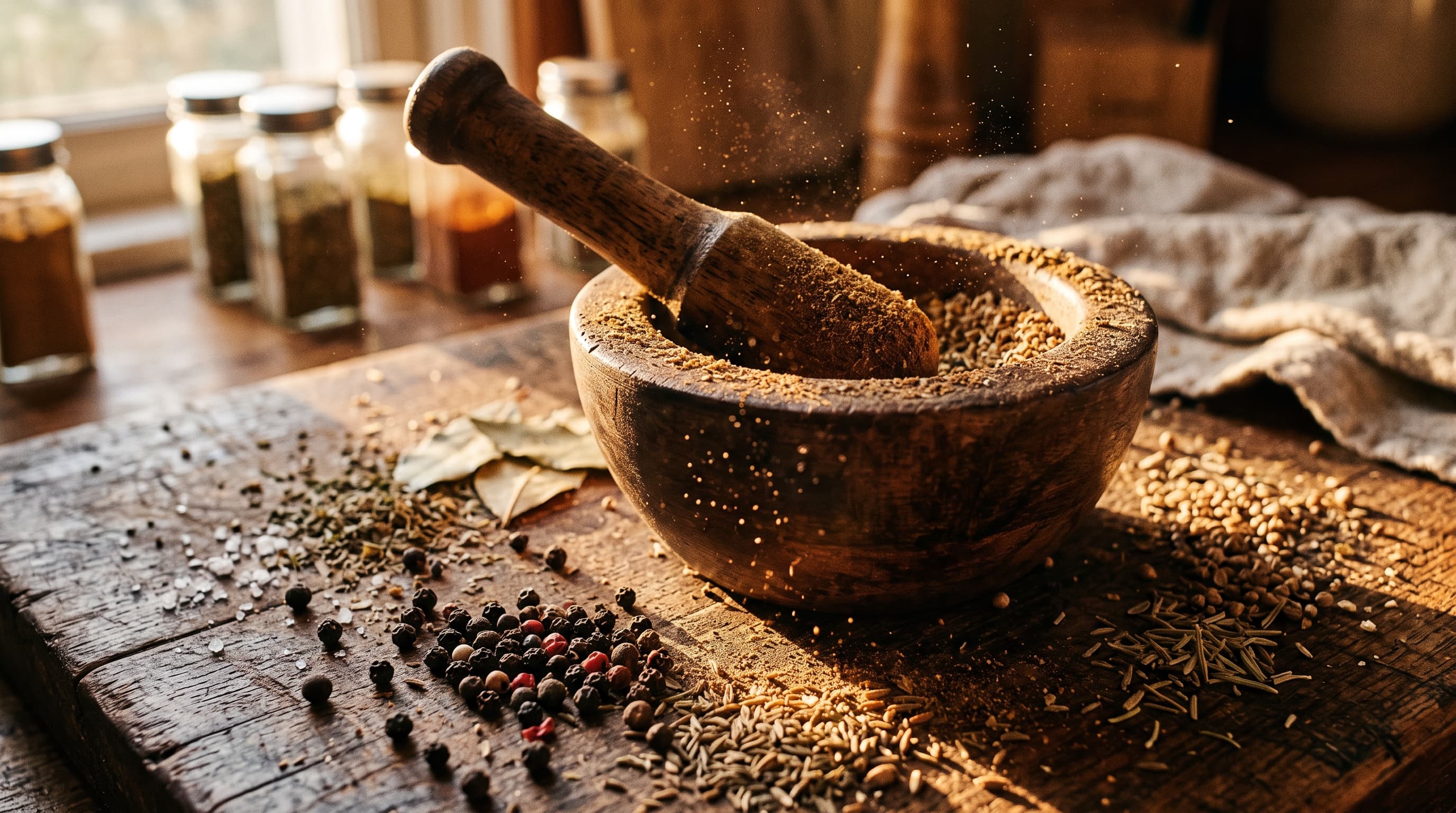
Fufu is starch pounded to a smooth elastic mass, and it is among the most widely eaten things in West and Central Africa. The word comes from Twi, spoken in Ghana and Côte d'Ivoire, where it means to mash or to combine, and the sound of a mortar and pestle working in rhythm is the sound of fufu being made.
What goes into it depends entirely on where you are. West Africa favours white yam, sometimes with plantain. Central Africa favours cassava. Plantain, cocoyam, semolina, rice and combinations of flours all appear, and each gives a different texture and a slightly different name. That variability is why fufu is better understood as a category than a recipe.
It crossed the Atlantic with enslaved West Africans and survived. Foo foo and fou fou in the Caribbean are made with plantain or cornmeal, coocoo in Barbados is the same idea, and Cuban, Jamaican and Puerto Rican versions carry sweet plantain and pork fat. Whatever the base, it is eaten the same way: a piece is pulled off with the fingers, an indentation is pressed in with the thumb, and it is used to scoop soup or stew. It is never eaten alone, and its slightly tangy, near neutral flavour is what lets a heavily seasoned soup do the talking.
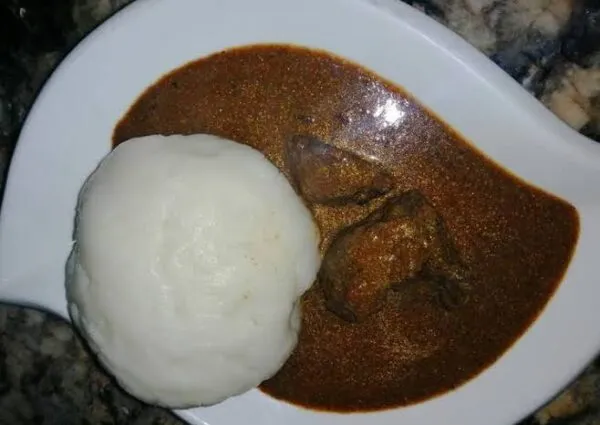
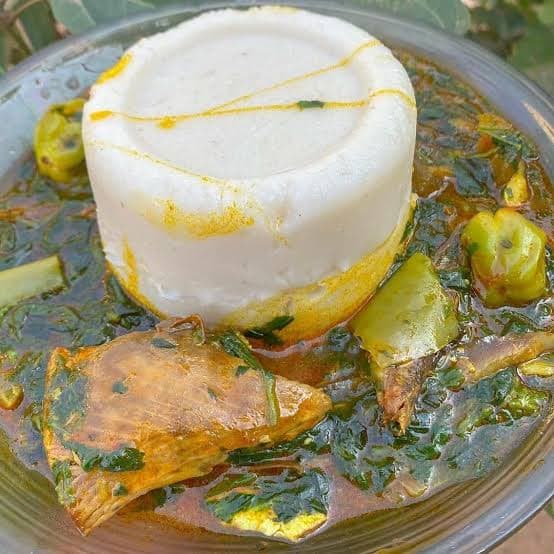
Akume (also written Akple) is the Ewe corn dough swallow from the Volta Region of Ghana, served with Ademe, a rich, slippery okra sauce cooked with smoked fish, palm oil, and tomatoes. Together they form one of the most complete and culturally significant meals in Ewe culinary tradition. Akume is made by cooking corn flour in boiling water and stirring vigorously until a smooth, firm dough forms, similar in technique to pounded yam or eba. The Ademe sauce is what makes the combination exceptional: okra cooked down with smoked fish and palm oil into a thick, draw-textured sauce that coats the corn dough perfectly. It is a meal that tastes of the Volta Region, earthy, smoky, and deeply satisfying.
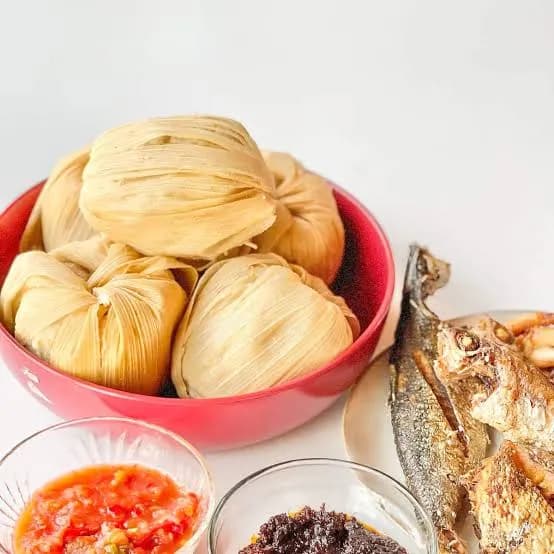
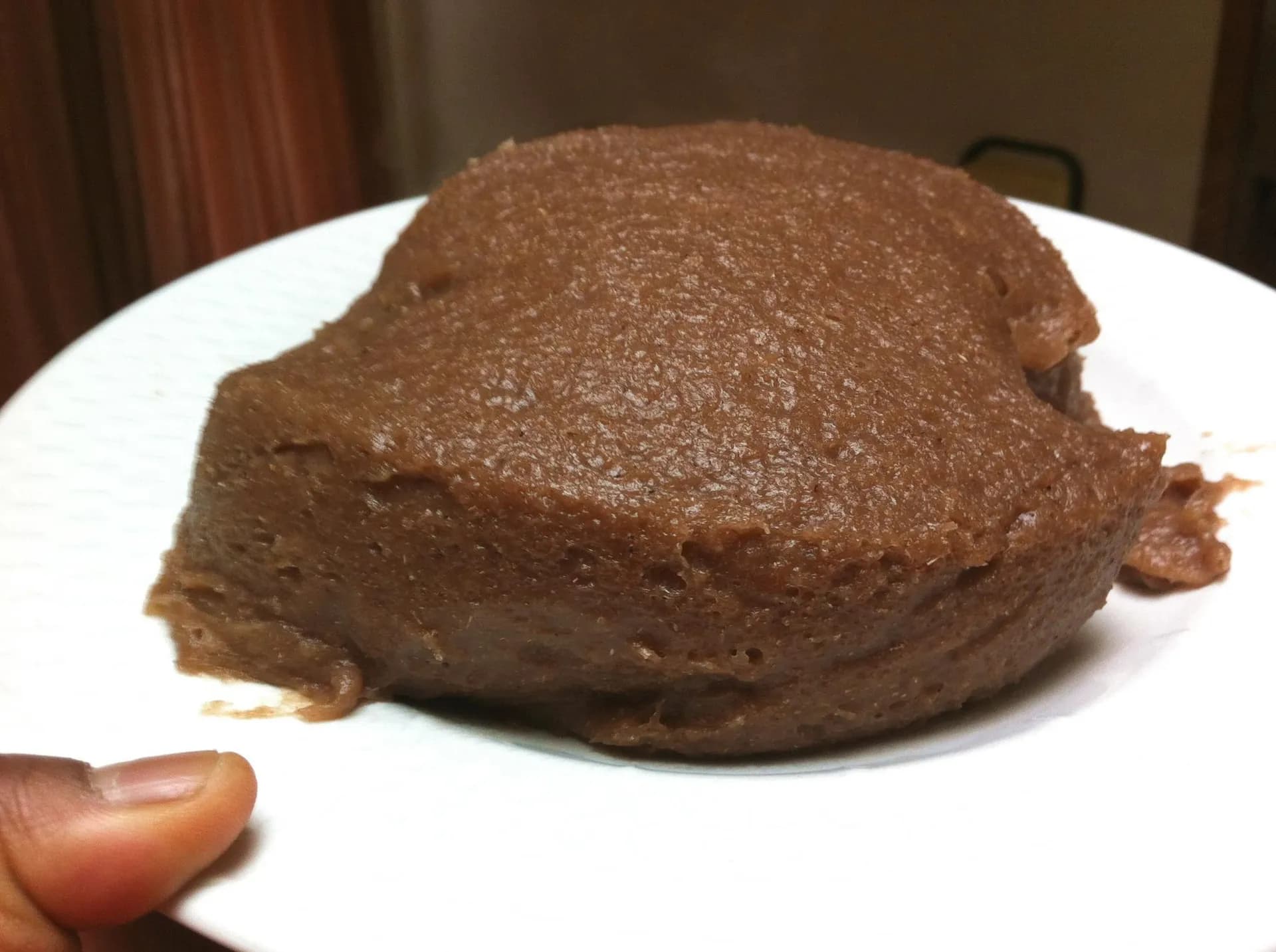
Kenkey is fermented maize dough, wrapped in banana leaf or corn husk and steamed into firm parcels. It is sour, and the sourness is the whole character of it. The fermentation runs one to three days before anything is cooked, and a kenkey that has been rushed is immediately identifiable to anyone who eats it regularly.
It comes from the Ga people of Accra and the surrounding coast, who have been making it for centuries, and it has spread across Ghana without losing that origin. Ga kenkey and Fante kenkey are recognised as distinct: the wrapping differs, and so does the ratio of fermented to fresh dough, which changes how sour the finished parcel is.
Kenkey is street food in the most functional sense. It is bought in its wrapping, which serves as the plate, and eaten with fried fish, shito and a raw pepper and tomato grind, standing up or sitting on a bench. The wrapping is not presentation; it is what the dough is steamed in and what keeps it for days without refrigeration. That combination of sour dough, hot pepper and fried fish is one of the most recognisable plates in West Africa.
Tuwon dawa is guinea corn swallow, and its pairing with miyan kuka is one of the fixed combinations of Northern Nigerian eating. The tuwo is stiff, plain and pale; the soup is dark green, drawing and sharply flavoured. Neither is eaten without something like the other.
Guinea corn is sorghum, and sorghum is the older grain of the Sahel. It was the staple of Northern Nigeria long before maize arrived from across the Atlantic, and it holds ground in the north that maize has taken elsewhere on the continent because it tolerates the heat and the short rains better. Tuwon dawa is what that grain becomes on a plate: milled, stirred into boiling water and worked to a smooth firm mass.
The word tuwo covers a family rather than a single dish. Tuwon dawa is the guinea corn version, tuwon masara the maize one, tuwon shinkafa the rice one, and Hausa households distinguish between them by texture and by which soup they suit. Miyan kuka, made from ground baobab leaf, is the partner most associated with the guinea corn version, and the two together are among the most recognisable plates in the north.
Les mentions alimentaires sont fournies par les contributeurs à titre indicatif. Elles ne sont pas vérifiées par AFN et dépendent des produits que vous achetez. En cas d’allergie grave, vérifiez vous-même chaque ingrédient. Cuisine, allergies et votre propre jugement