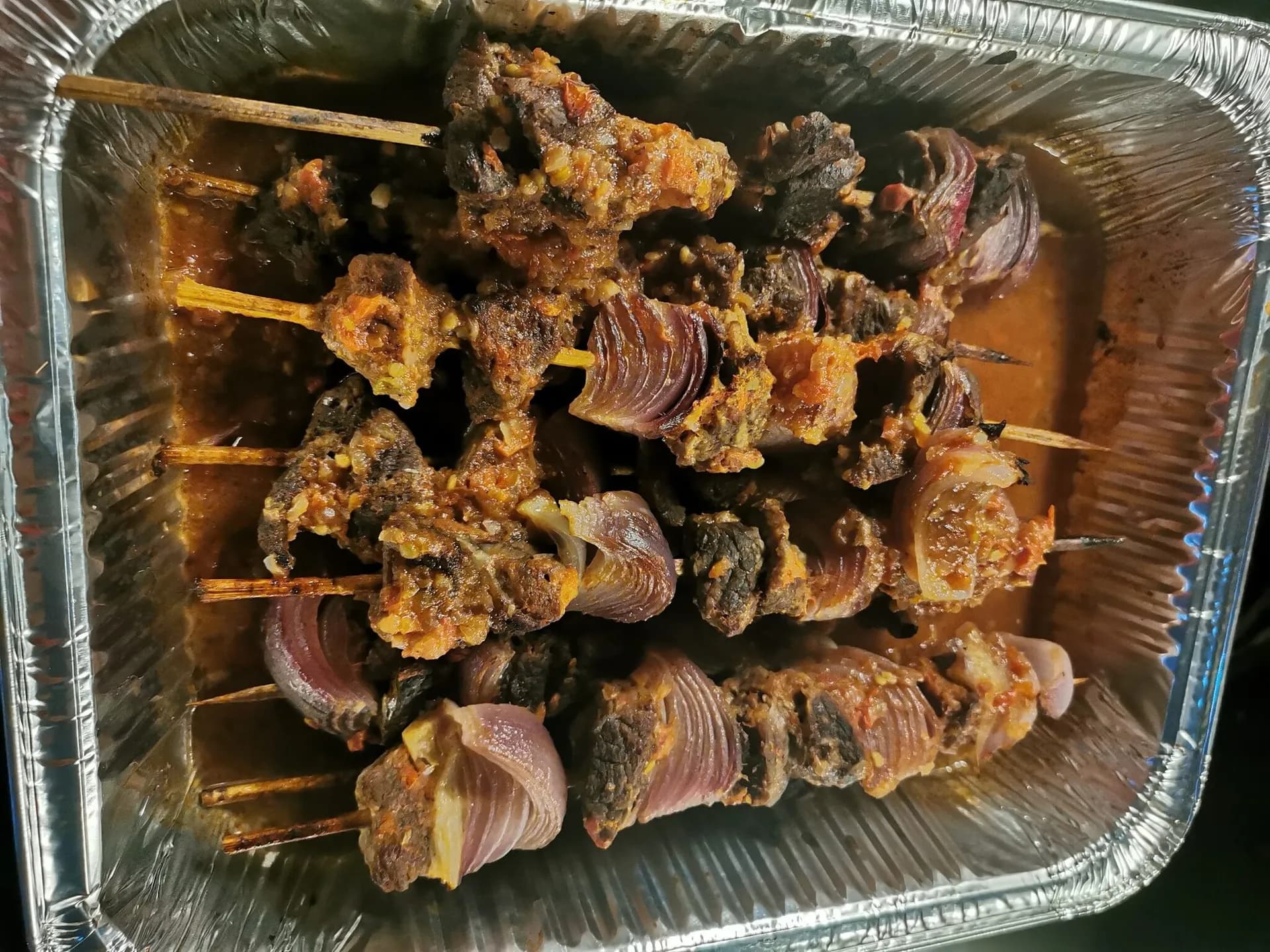
Rwandan Brochettes (Grilled Meat Skewers)
4.74.67 out of 5, 3 ratings55 min


Cookies sur African Food Network
Nous utilisons des cookies essentiels au fonctionnement du site. Nous aimerions aussi déposer des cookies de mesure d’audience et des cookies publicitaires, uniquement avec votre accord. Vous pouvez choisir séparément pour chacun. Lire notre politique relative aux cookies
Parcourez les archives par pays, par plat et par temps de cuisson.
Brochettes are skewered grilled meat, and in Rwanda they are the food most reliably present wherever people gather in the evening. Goat is the usual choice, threaded onto skewers with onion, grilled over charcoal, and eaten standing at a bar, sitting in a restaurant, or bought from a street vendor on the way somewhere else. The word is French, meaning skewer, and its presence in Rwandan usage is a plain marker of the colonial period. What the word describes is entirely Rwandan: a particular cut, a particular char, and a particular way of eating, with grilled or fried plantain, potatoes and a fresh salad alongside. They are not heavily spiced, which distinguishes them sharply from the grilled meat traditions further west. Where Nigerian suya is built on a dry spice coating and West African peppered goat is aggressively hot, a Rwandan brochette is seasoned simply and relies on the meat and the fire. Heat, when it is wanted, arrives separately at the table as akabanga, the thin orange Rwandan chilli oil that is sold in small bottles and used a drop at a time. That separation of meat and heat is a matter of preference in Rwanda rather than an absence of one.
Les mieux notées
55 minEasyRwanda
Recette de Debby · Africook
Rien ici pour le moment
Tout effacer