Nous utilisons des cookies essentiels au fonctionnement du site. Nous aimerions aussi déposer des cookies de mesure d’audience et des cookies publicitaires, uniquement avec votre accord. Vous pouvez choisir séparément pour chacun. Lire notre politique relative aux cookies
Loading
Recettes
Parcourez les archives par pays, par plat et par temps de cuisson.
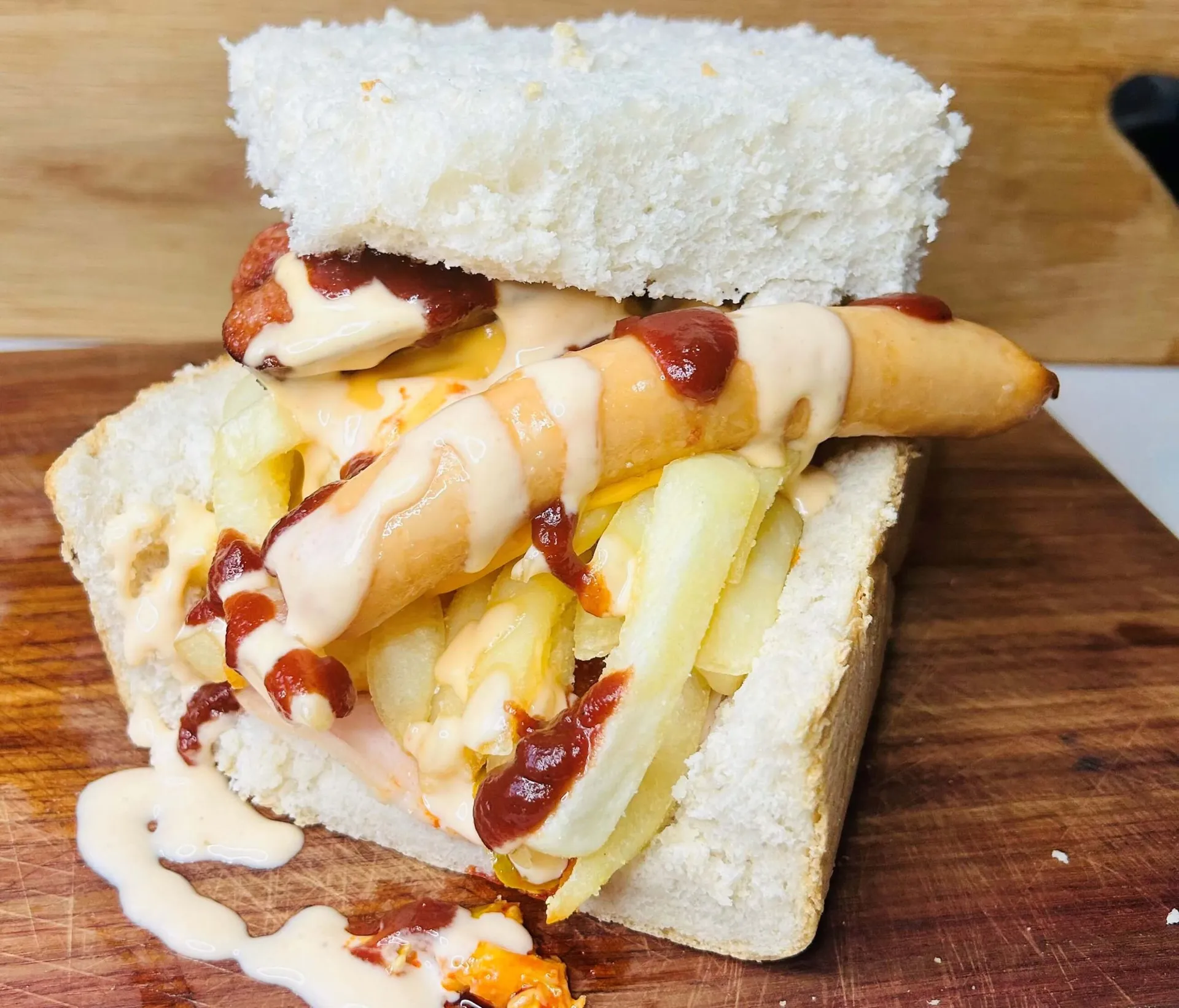
A kota is a quarter loaf of bread, hollowed out and packed with fried food. The word is township English for quarter, and that is the whole description: bread cut in four, the soft centre pulled out, and the cavity filled with chips, polony, russians, viennas, cheese, egg, atchar and sauce, then capped with the bread that was removed.
It belongs to the townships of Gauteng, where it is sold from small takeaway windows and eaten in the hand without a plate. Kota shops compete on what they will fit into a quarter loaf, and the size of the fill is a large part of the reputation. It is cheap, it is a complete meal, and it is built for people who need to eat between one thing and the next.
Atchar is what makes it South African rather than generically stuffed bread. The pickled green mango relish, oily and sour and hot, came to South Africa through Indian indenture and cuts the fried starch that dominates everything else in the cavity. Kota is often described as a version of bunny chow, and the two are related without being the same: bunny chow is Durban Indian, a hollowed loaf filled with curry, and kota is a Gauteng township form filled with fried items. They share an ancestor and are not interchangeable.
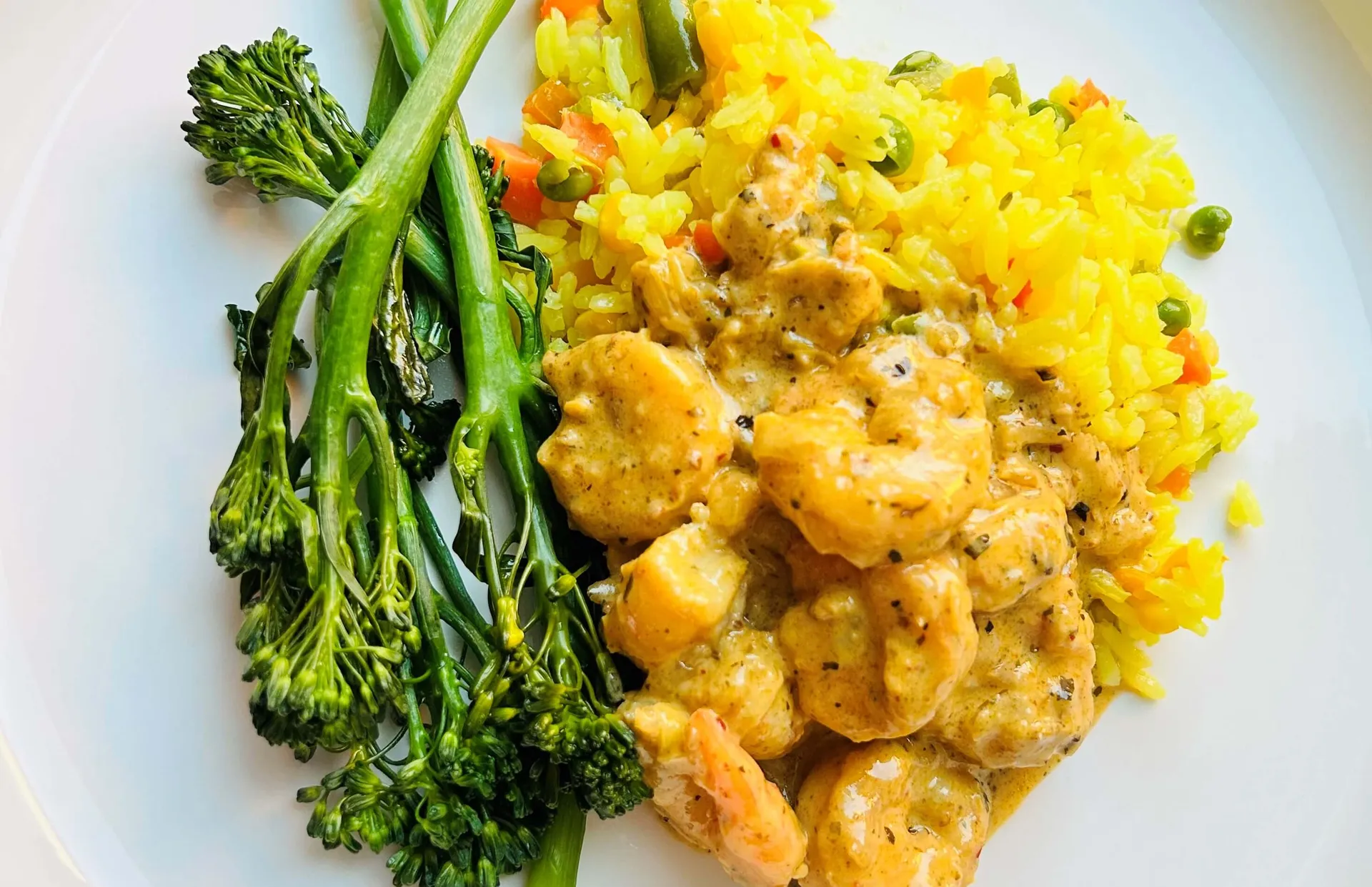
Cold cooked rice fried with shrimp, peas, egg, garlic, ginger and soy sauce. No country is claimed, and the page sits in Worldwide Recipes.
That classification needs explaining, because the source disagrees with it. It is filed under Southern African Recipes and asserts that "the method of preparation for this African shrimp fried rice is absolutely different from any other variety including that of the Chinese people." The ingredient list does not bear that out. Soy sauce, ginger, garlic, peas and scrambled egg folded through cold rice is a standard Chinese-style fried rice, there is no palm oil, no bouillon cube, no scotch bonnet, no fried rice spice, none of the markers that make Nigerian or Ghanaian fried rice genuinely distinct. Those dishes exist and are on this site; this is not one of them.
What the source gets right is the technique, and it is the only thing that really matters in fried rice. Cold leftover rice has dried out at the surface and lost the moisture that makes fresh rice clump. Fresh rice, however good, fries up mushy.
The other correct instruction is cooking the egg first and setting it aside. Scrambled into the rice it disappears; cooked separately and folded back in, it stays in distinct pieces.
Vetkoek is fried bread, and the two names it carries in South Africa tell you most of what you need to know about it. Vetkoek is Afrikaans and means fat cake. Amagwinya is isiZulu, and the same round of dough is sold under that name from township stands and street corners across the country. One food, two languages, one of the clearest examples of a dish that belongs to everybody in South Africa.
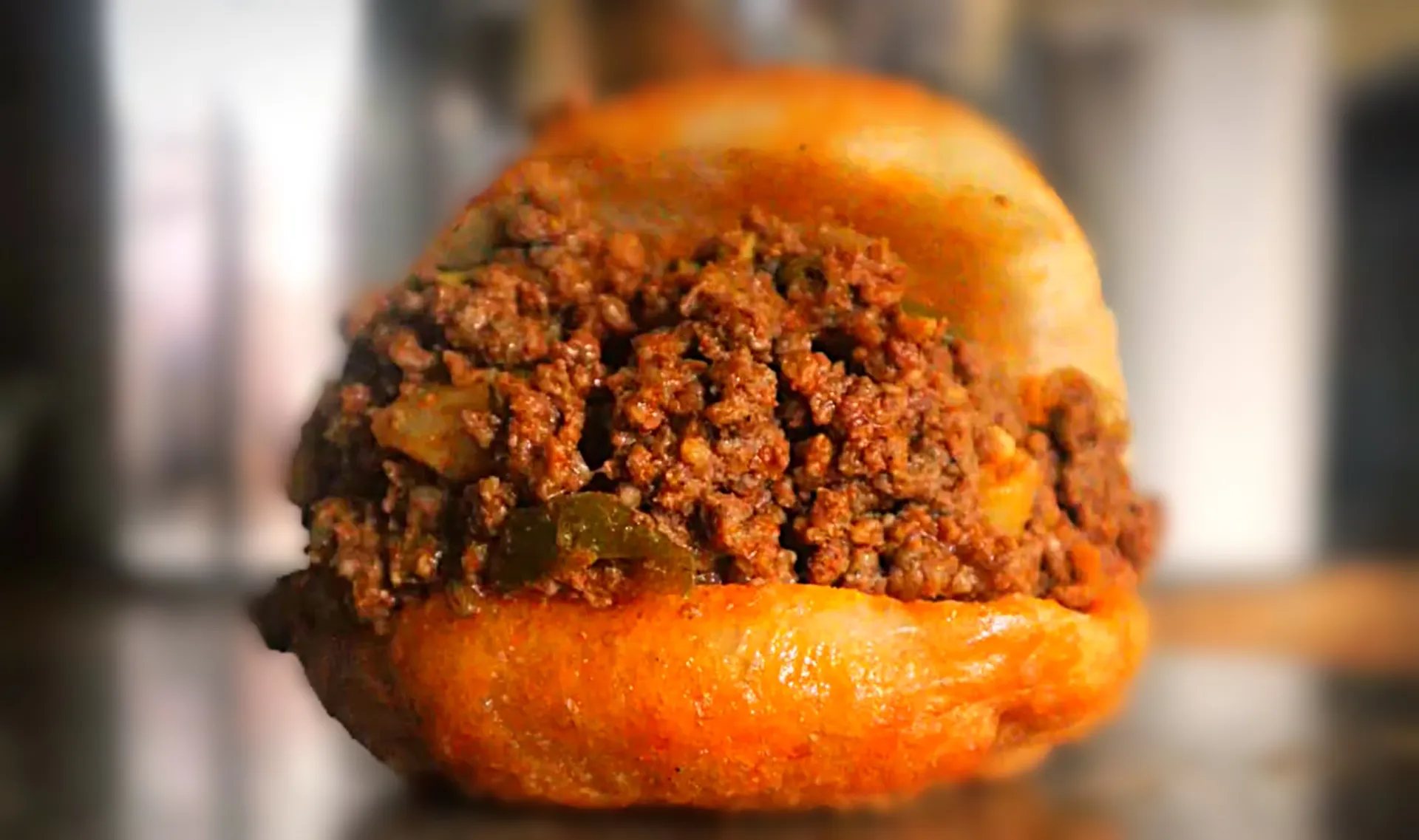
Its origins are Dutch and Afrikaner, in the tradition of frying a simple yeast dough that arrived at the Cape and spread inland. What it became is entirely South African. It is split and filled, most often with a curried mince, and eaten in the hand as a complete cheap meal, which puts it in the same category as the kota and the bunny chow: bread as a container for something hot.
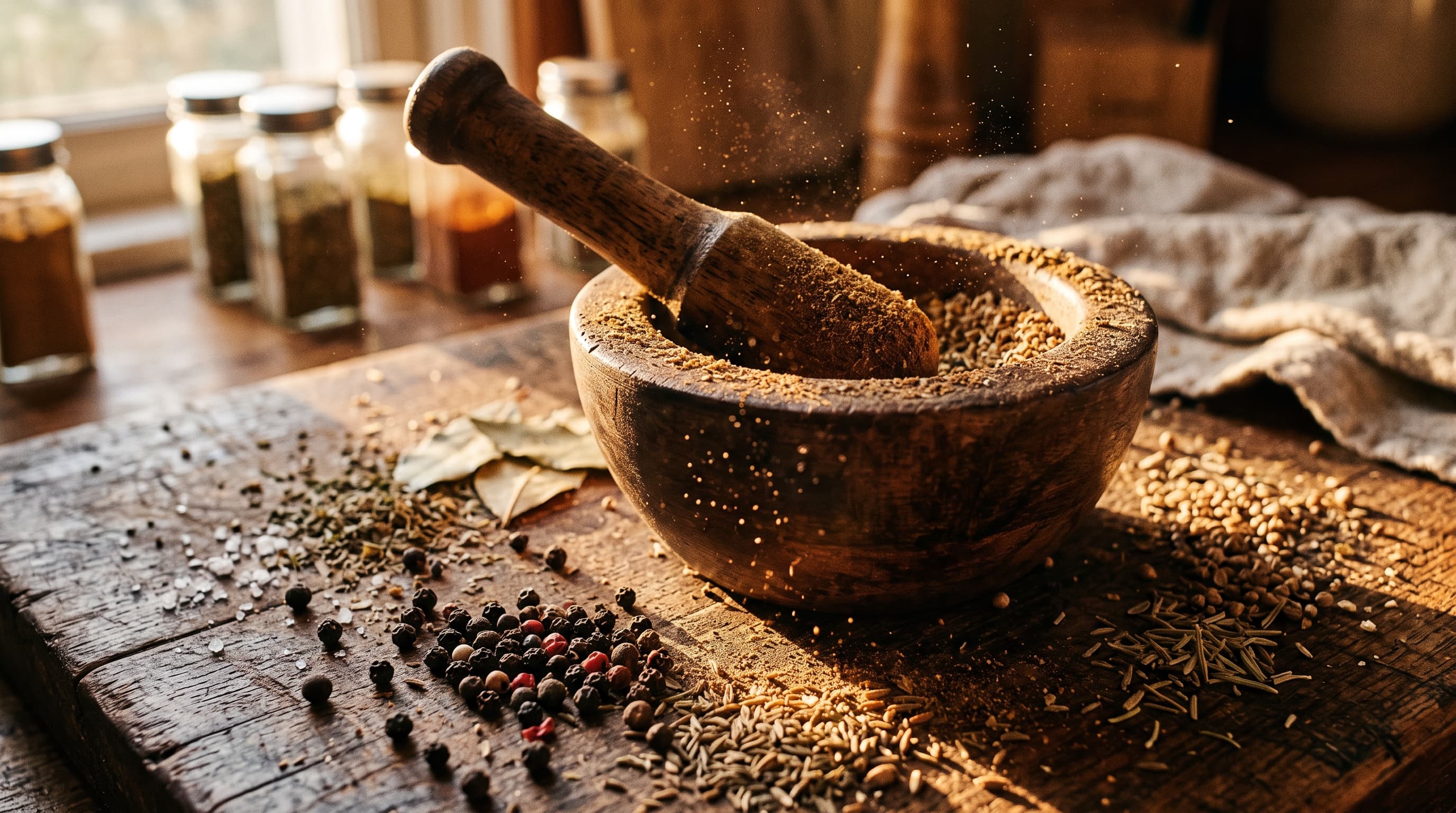
The mince curry inside is its own piece of South African history. Cardamom, cloves, cumin, coriander, turmeric, fenugreek and fennel in a beef mince is not a Dutch spice profile; it comes from the Cape Malay and Indian South African kitchens that shaped the country's food. Vetkoek filled with curried mince is therefore a Dutch fried bread holding an Indian Ocean filling, sold under a Zulu name, and nobody in South Africa finds that combination remarkable.
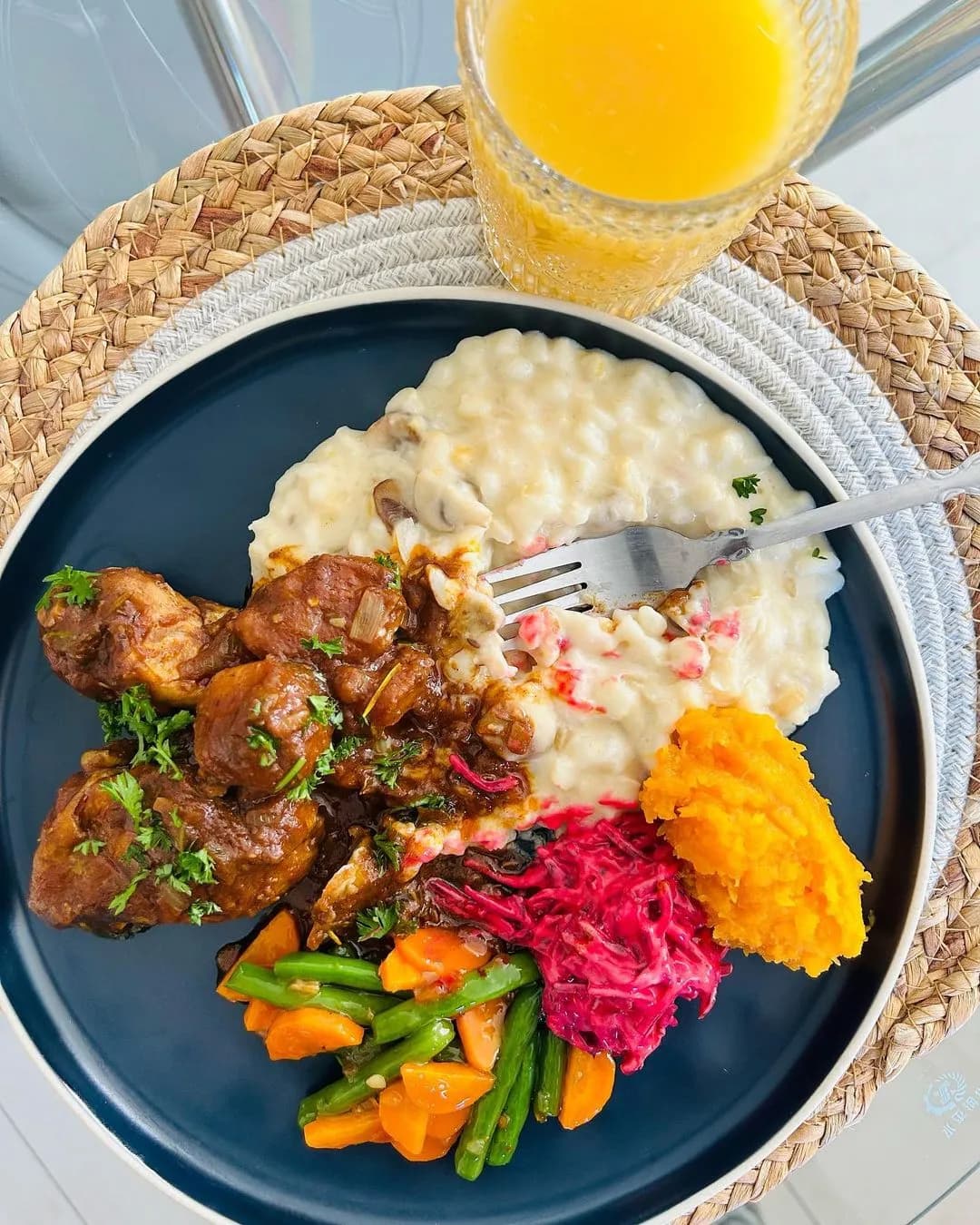
Cape Malay cooking is the food of a community formed by force. From the 17th century the Dutch East India Company brought enslaved people and political exiles to the Cape from Indonesia, Malaysia, Bengal, India and Madagascar, and what they built at the southern tip of Africa, working with local ingredients and their own inherited techniques, became one of South Africa's defining cuisines.
The chicken curry shows the method clearly. Cape Malay curries use whole spices dropped into the pot rather than the ground masalas of most Indian cooking, and those spices, cinnamon stick, cardamom, fennel and cumin seed, are often lifted out before serving. That produces a curry that is aromatic rather than thick and heavy, and it is one of the clearest technical differences between the two traditions.
Sweetness is the other Cape Malay signature. Mango chutney and a little sugar go in near the end, and that sweet note against the chilli and the spice is what people recognise. It is served with Cape Malay yellow rice, coloured with turmeric and studded with raisins, along with roti and a fresh sambal of tomato, onion and cucumber. The community's food is now eaten across every South African community, which is a legacy no one who was brought to the Cape in chains could have chosen or predicted.