Nous utilisons des cookies essentiels au fonctionnement du site. Nous aimerions aussi déposer des cookies de mesure d’audience et des cookies publicitaires, uniquement avec votre accord. Vous pouvez choisir séparément pour chacun. Lire notre politique relative aux cookies
Loading
Recettes
Parcourez les archives par pays, par plat et par temps de cuisson.
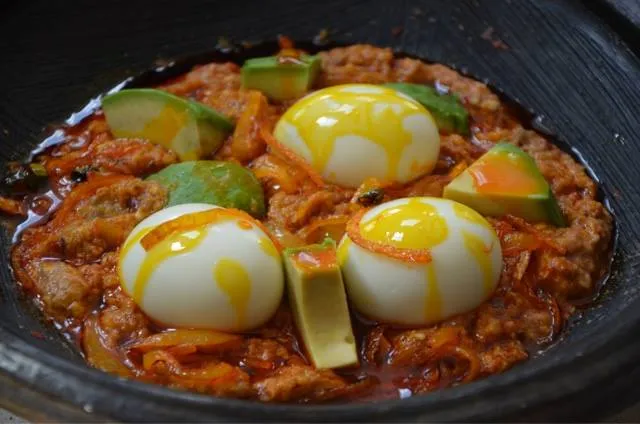
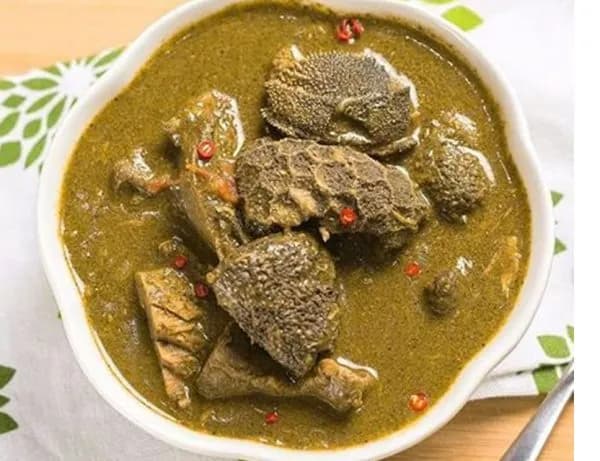
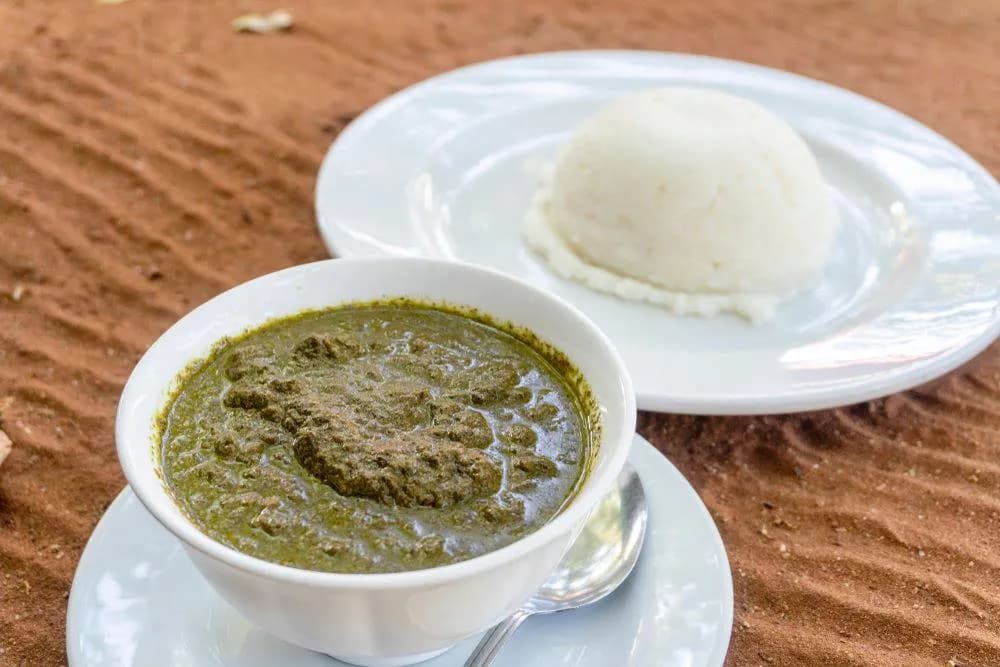
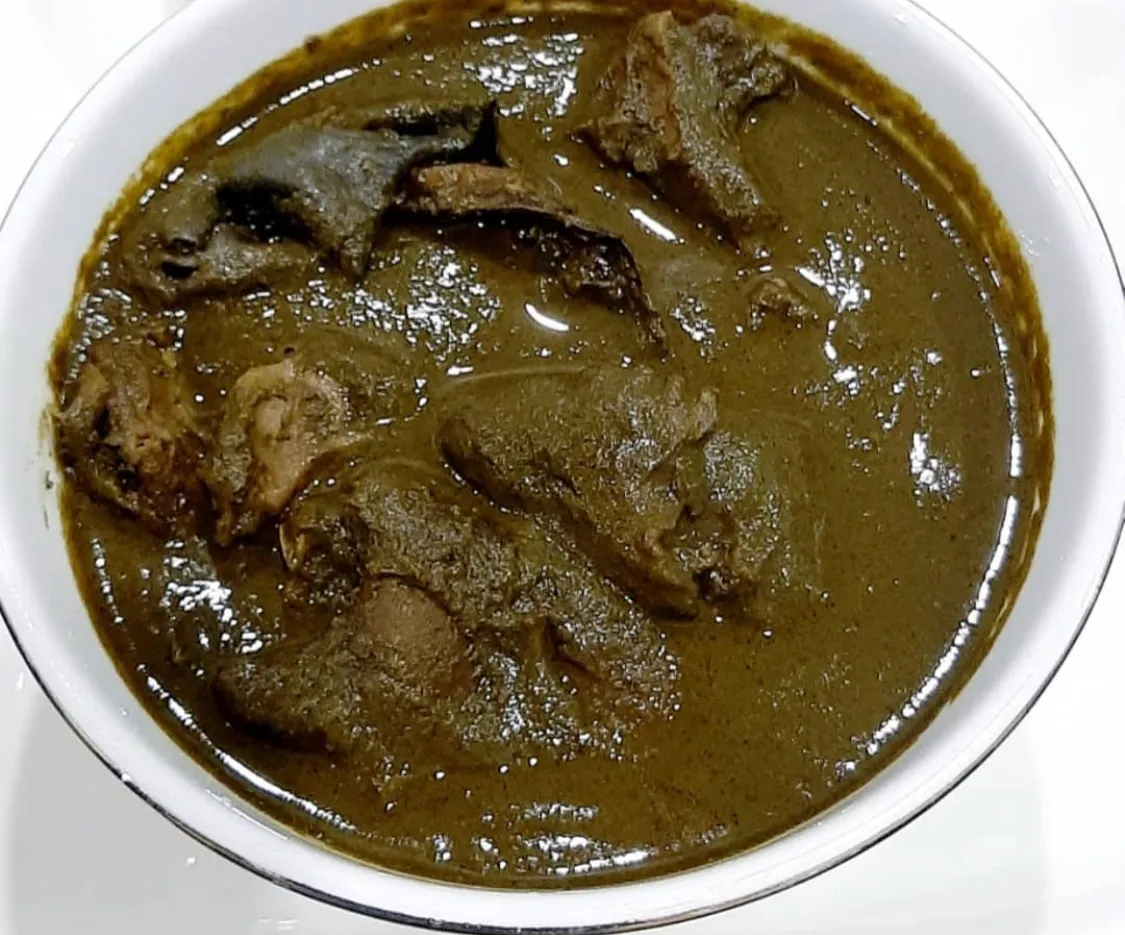
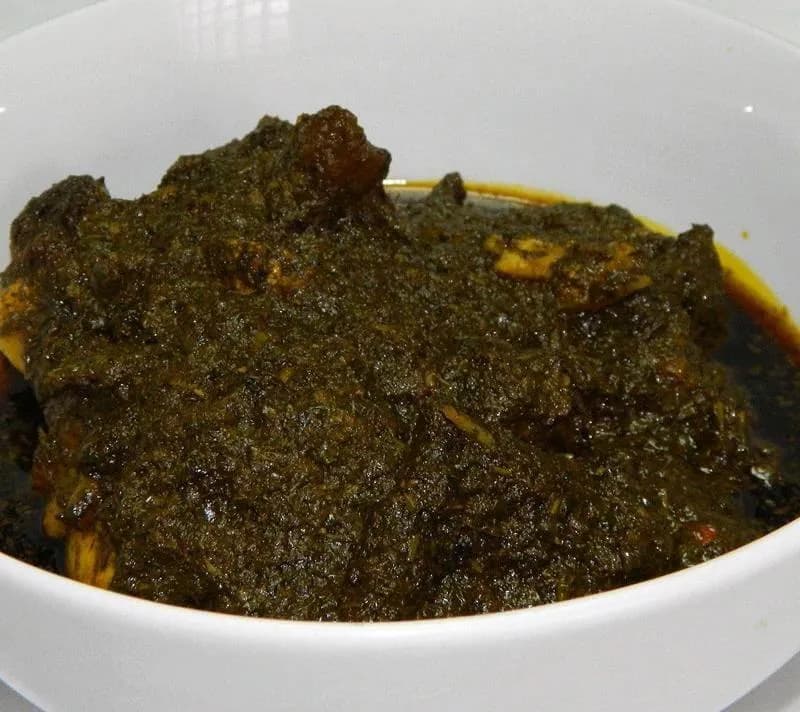
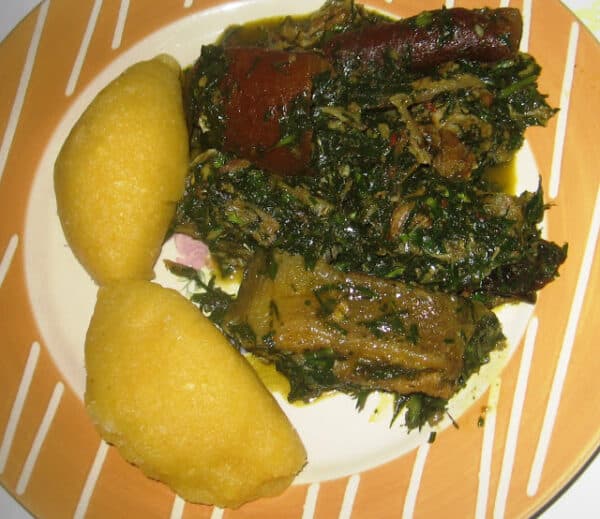
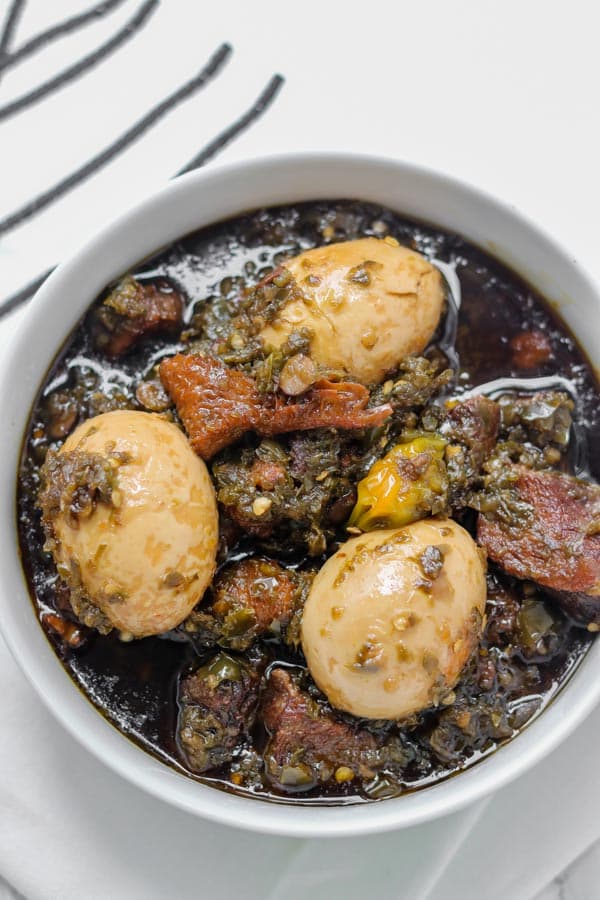
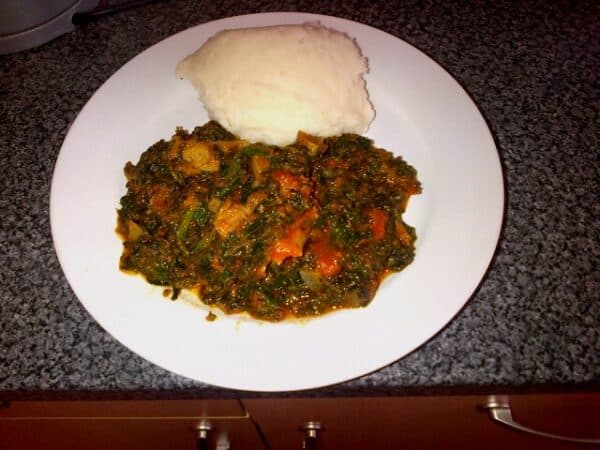
Abom, written abomu here, is the simpler of the two main Ghanaian cocoyam leaf preparations. Where the tomato based kontomire stew is thickened with ground melon seed and cooked in a pot, abom is steamed leaves ground in an asanka with onion, pepper and ginger, finished with hot palm oil poured over the top. It is closer to a relish than to a stew.
The asanka is the tool that defines it. The ridged earthenware bowl grinds rather than purees, and everything in an abom passes through it: the aromatics first, then the salted fish, then the greens, each stage mashed into the last. That produces a coarse, uneven texture that a blender cannot reproduce and that Ghanaians would notice immediately.
It is Asante food particularly, and it is assembled rather than cooked in the ordinary sense. Plantain, egg, avocado and several kinds of fish, koobi, kakro, smoked mackerel and smoked turkey, go onto the plate around the greens, and hot palm oil is ladled over at the end. Kontomire is the proper leaf. Ghanaians abroad substitute spinach, which the source acknowledges directly, and the result is milder and softer than the cocoyam leaf gives.
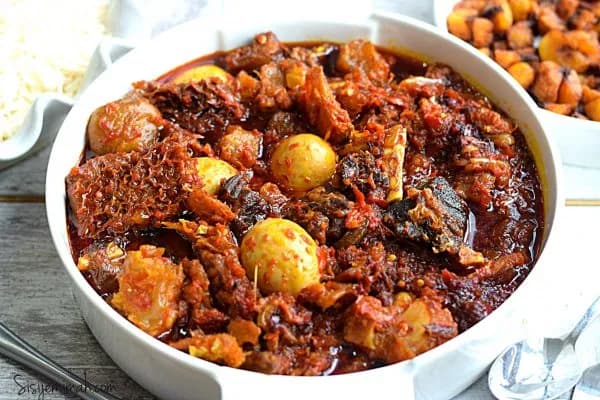
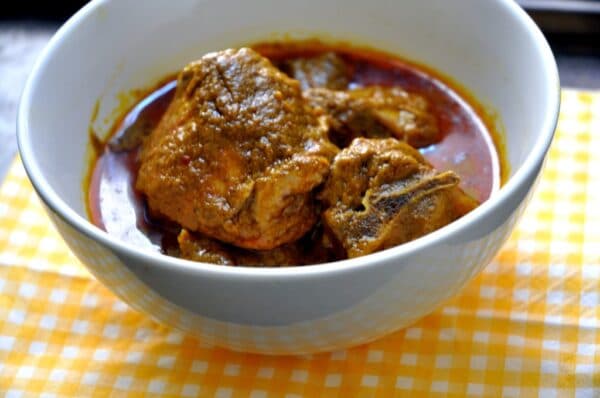
Tomato bredie, called tamatiebredie in Afrikaans, is the best known of the South African bredies and the one most people mean when they use the word without qualification. It is lamb or mutton stewed slowly with a large quantity of tomato until the tomato collapses entirely into a thick, rich, deep red gravy.
Bredie is an old Cape word for a dish of meat and vegetables stewed together until the flavours merge, and the form is defined by its restraint with liquid. Very little stock goes in. The gravy comes from the tomatoes and from meat carrying a fair amount of bone and fat, dredged in flour and browned hard before anything else joins it. That flour and that browning are what produce the body.
Bredies are named for the vegetable rather than the meat, which makes tomato bredie one of a family that includes waterblommetjiebredie made with Cape wetland flowers, green bean bredie and cabbage bredie. Like most of them it is better the day after it is made, and South African cooks routinely make it ahead for exactly that reason. If you are refrigerating it overnight, the potatoes are best left out and added when reheating.
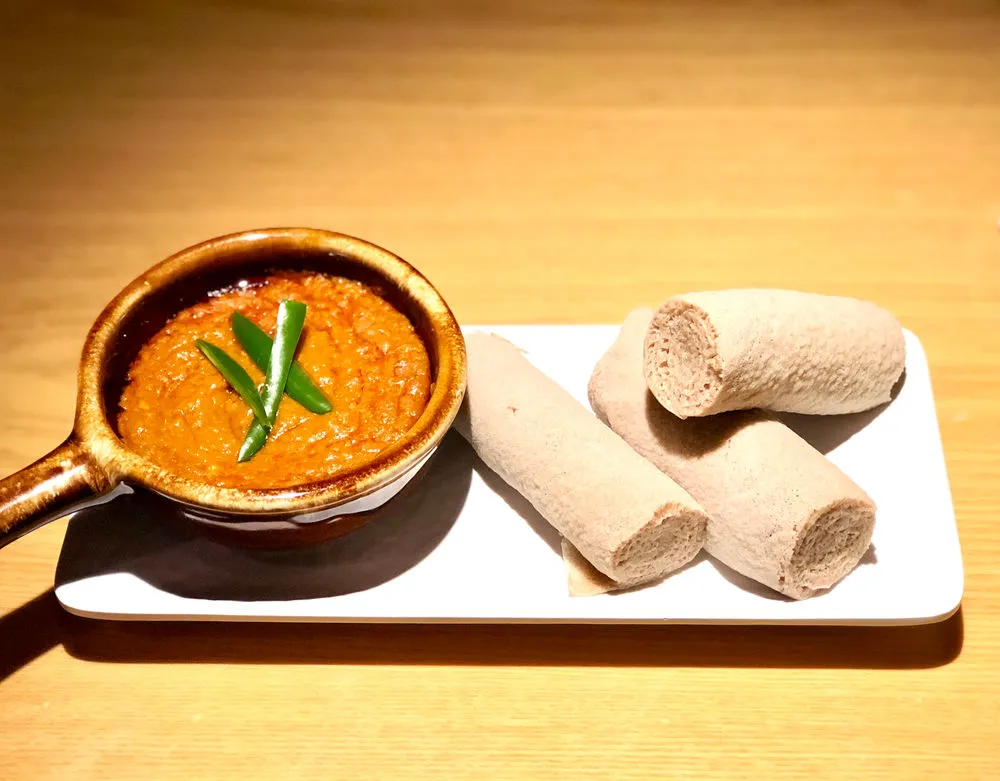
Shiro wat is ground chickpea stew, and it is among the most eaten dishes in Ethiopia and Eritrea. Onion, garlic, tomato and berbere are cooked down in oil, chickpea flour is whisked in, and the result thickens to something between a thick gravy and a puree, smooth enough to spread and eaten with injera.
Its position has a great deal to do with the religious calendar. Ethiopian Orthodox practice includes a very large number of fasting days, on which no meat, eggs or dairy are eaten, and shiro contains none of them. It is standard on Wednesdays and Fridays, through the eight weeks of Tsom, the Great Lent, and it is eaten during Ramadan by Ethiopian and Eritrean Muslims too. That is a dish serving two religions in one country without modification.
It is also cheap and quick, which explains the rest of its reach. Shiro powder, sold ready mixed with the spices already in it, is available across Ethiopia and increasingly abroad, in two kinds: mitten shiro, which is red and carries berbere, and netch shiro, which is white and mild. The dish takes different forms by consistency and name: shiro fessess is runny and served over injera with chillies, shiro tegamino is thick and cooked in an earthenware pot until it bubbles and caramelises at the base, and shiro fit fit shreds injera through it for breakfast.
Cape Malay cooking is the food of a community formed by force. From the 17th century the Dutch East India Company brought enslaved people and political exiles to the Cape from Indonesia, Malaysia, Bengal, India and Madagascar, and what they built at the southern tip of Africa, working with local ingredients and their own inherited techniques, became one of South Africa's defining cuisines.
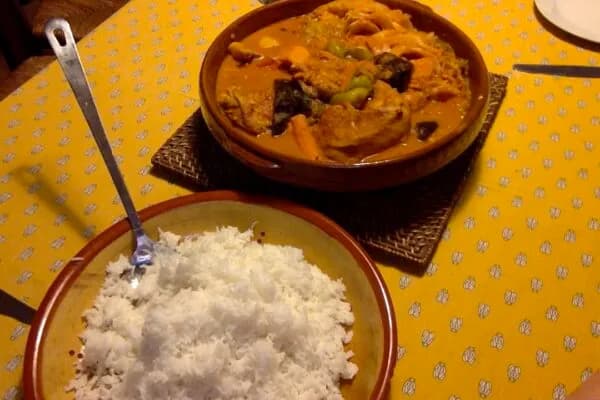
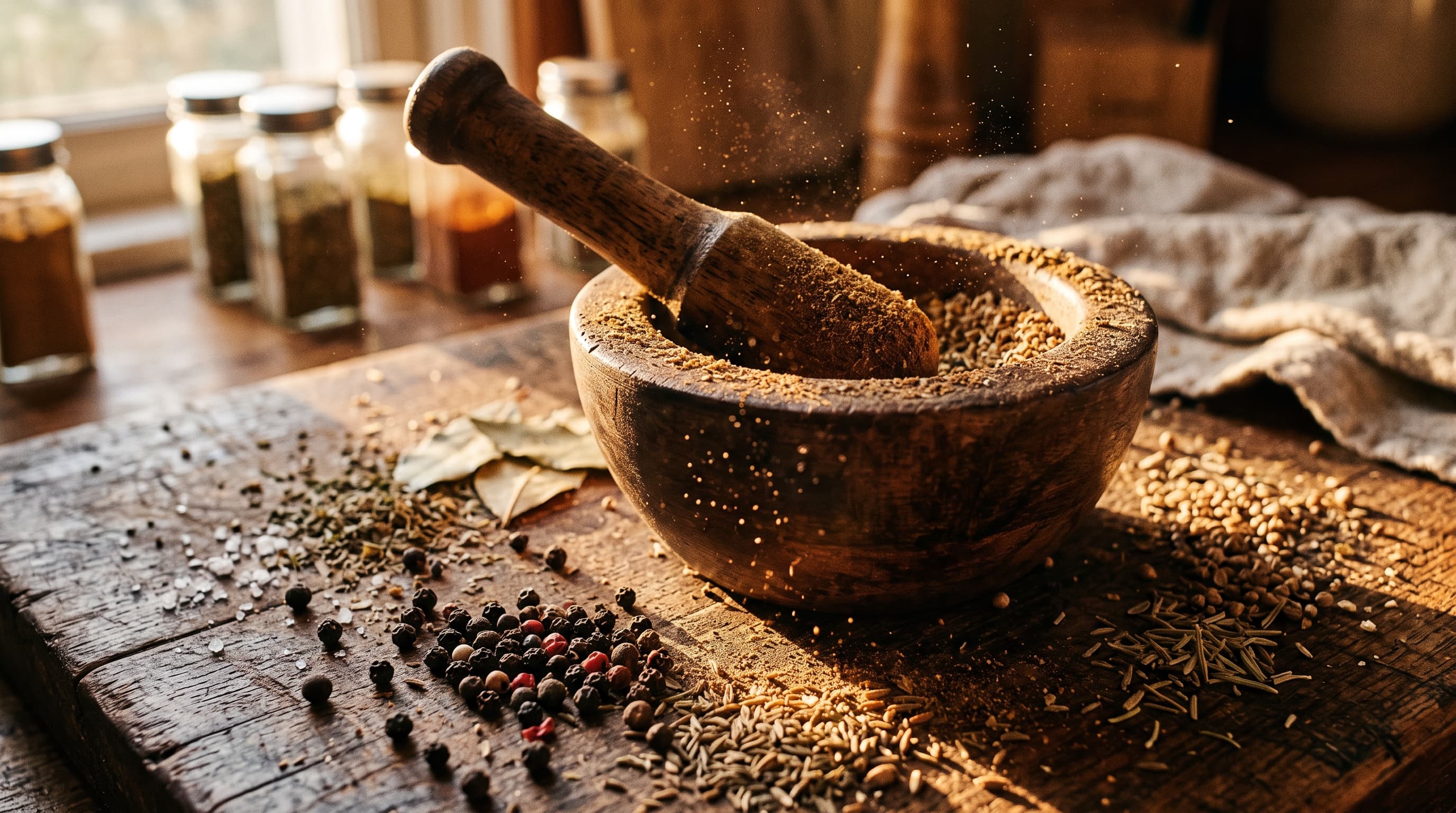
The chicken curry shows the method clearly. Cape Malay curries use whole spices dropped into the pot rather than the ground masalas of most Indian cooking, and those spices, cinnamon stick, cardamom, fennel and cumin seed, are often lifted out before serving. That produces a curry that is aromatic rather than thick and heavy, and it is one of the clearest technical differences between the two traditions.
Sweetness is the other Cape Malay signature. Mango chutney and a little sugar go in near the end, and that sweet note against the chilli and the spice is what people recognise. It is served with Cape Malay yellow rice, coloured with turmeric and studded with raisins, along with roti and a fresh sambal of tomato, onion and cucumber. The community's food is now eaten across every South African community, which is a legacy no one who was brought to the Cape in chains could have chosen or predicted.