Nous utilisons des cookies essentiels au fonctionnement du site. Nous aimerions aussi déposer des cookies de mesure d’audience et des cookies publicitaires, uniquement avec votre accord. Vous pouvez choisir séparément pour chacun. Lire notre politique relative aux cookies
Loading
Recettes
Parcourez les archives par pays, par plat et par temps de cuisson.
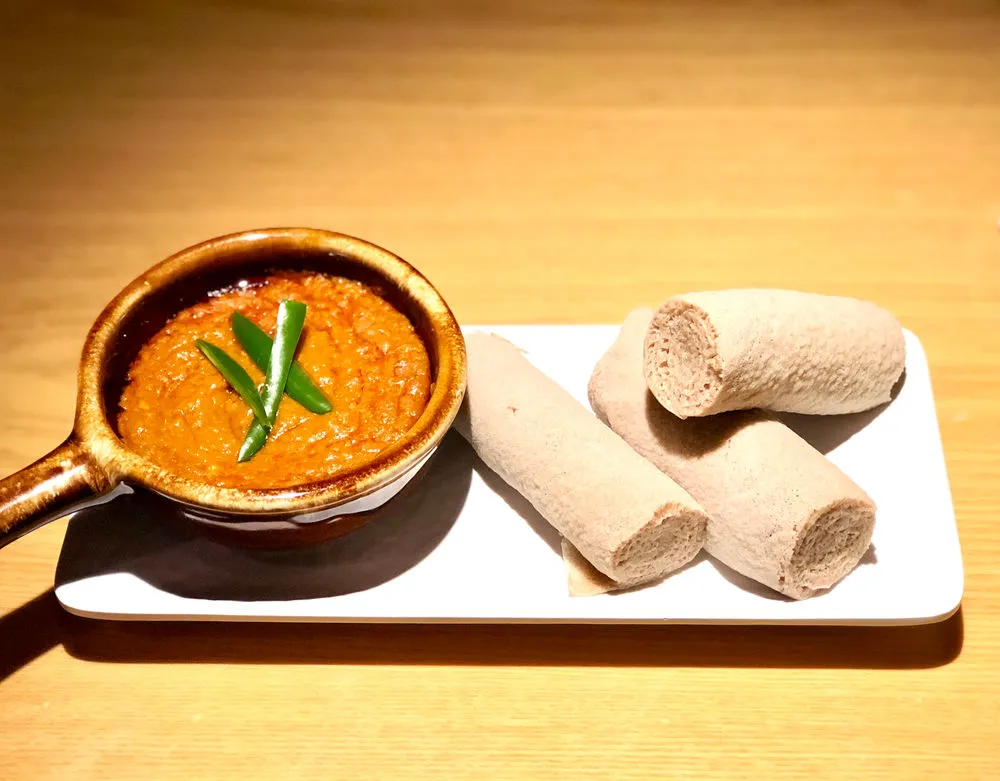
Shiro wat is ground chickpea stew, and it is among the most eaten dishes in Ethiopia and Eritrea. Onion, garlic, tomato and berbere are cooked down in oil, chickpea flour is whisked in, and the result thickens to something between a thick gravy and a puree, smooth enough to spread and eaten with injera.
Its position has a great deal to do with the religious calendar. Ethiopian Orthodox practice includes a very large number of fasting days, on which no meat, eggs or dairy are eaten, and shiro contains none of them. It is standard on Wednesdays and Fridays, through the eight weeks of Tsom, the Great Lent, and it is eaten during Ramadan by Ethiopian and Eritrean Muslims too. That is a dish serving two religions in one country without modification.
It is also cheap and quick, which explains the rest of its reach. Shiro powder, sold ready mixed with the spices already in it, is available across Ethiopia and increasingly abroad, in two kinds: mitten shiro, which is red and carries berbere, and netch shiro, which is white and mild. The dish takes different forms by consistency and name: shiro fessess is runny and served over injera with chillies, shiro tegamino is thick and cooked in an earthenware pot until it bubbles and caramelises at the base, and shiro fit fit shreds injera through it for breakfast.
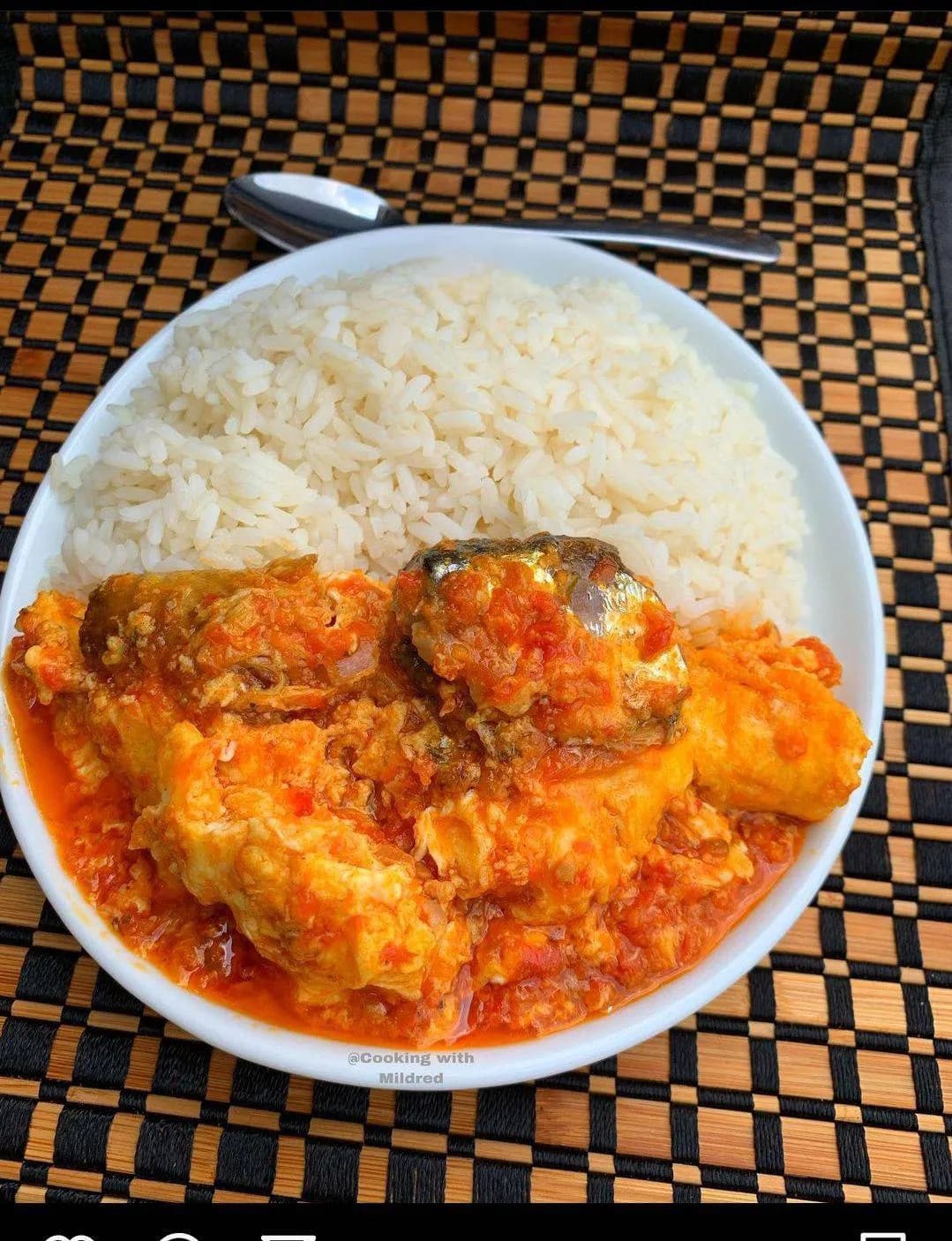
Egg stew is tomatoes, onions and eggs cooked down together with pepper, and it is made across West Africa as a fast breakfast or light meal. This version carries two additions that place it more precisely: kobi and sardines.
Kobi is salted, dried tilapia, a Ghanaian staple that is fried at the start so its salt and savour go into the oil before anything else joins it. It is one of the preserved fish that West African cooking relies on, alongside stockfish, smoked mackerel and dried prawn, and it gives a depth that fresh fish does not. Tinned sardines going in at the end is a common and thoroughly modern addition.
The source names no country, and the kobi points to Ghana without settling it, so none is attributed here. What the dish is depends on how the eggs are treated: added and left mostly alone they set in curds through the tomato base; stirred continuously they disperse and the stew turns uniform. Both are made. It is eaten with bread, yam or plantain, and it is genuinely quick, which is much of the point of it.
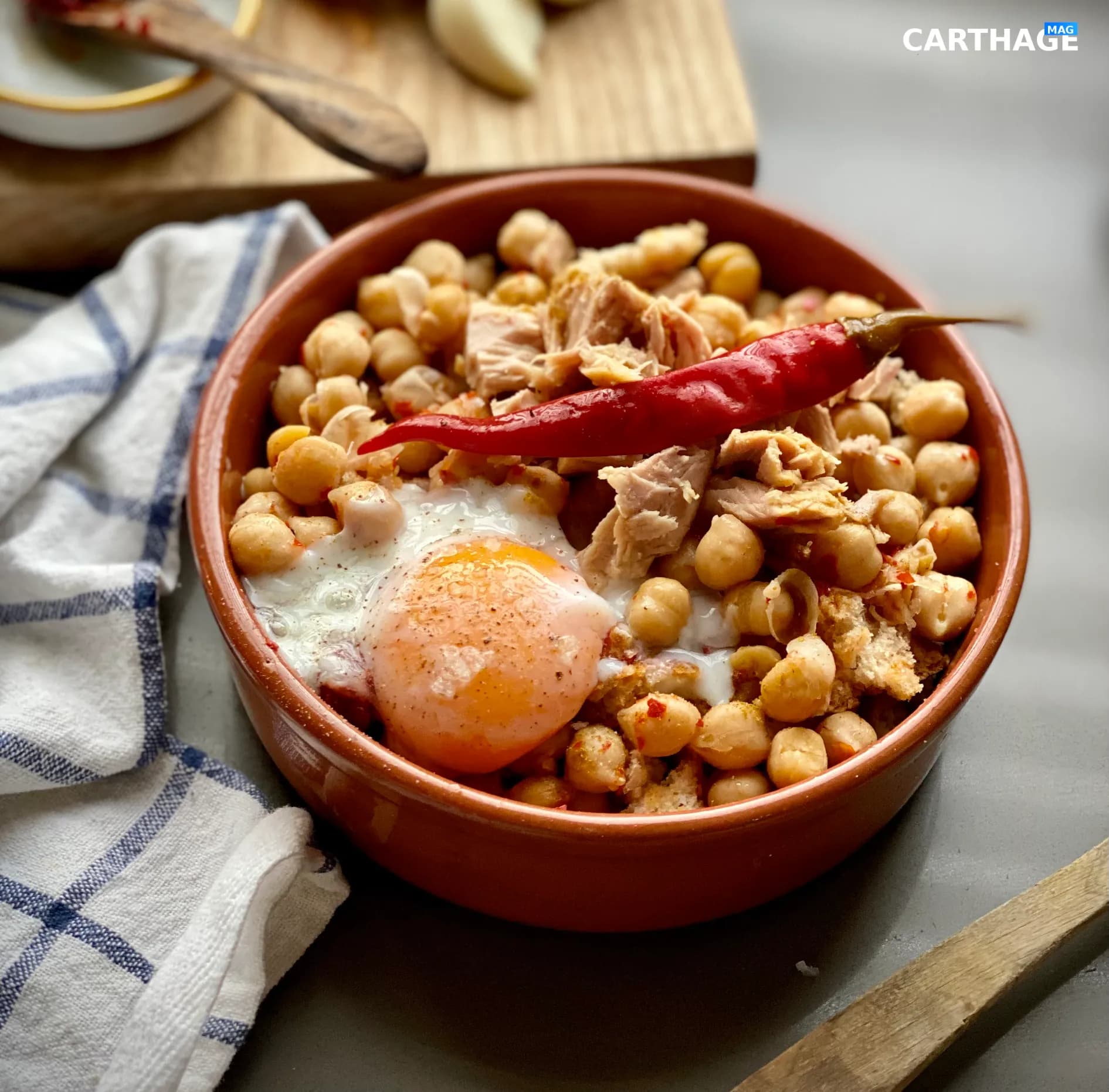
Lablabi is Tunisia's chickpea breakfast: a thin, heavily spiced chickpea broth ladled over torn stale bread, finished with a soft egg, tuna, olives, harissa, cumin, lemon and olive oil. It is served in casual counter-service places across the country and eaten with two spoons, mashing the bread down into the broth as you go.
It is frugal food by design. Stale bread and dried chickpeas are the base, and everything else is a topping. The broth is not thickened or enriched, the flavour comes from cooking the chickpeas slowly in their own water with cumin, caraway and harissa, and that cooking liquid is the dish. This is the reason the source insists on dried chickpeas rather than tinned: the broth is a by-product you cannot buy. If you do use tinned chickpeas, stock in place of water is the compensation.
The name travels. There is an Assyrian chickpea dish also called lablabi, an Iraqi version finished with lemon juice, and the Turkish nohut çorbası, which is made with lamb. The Tunisian one is distinguished by harissa and by the bread at the bottom of the bowl.
Traditionally it is breakfast, eaten to start a cold morning. It is now eaten at any hour, and the modern habit of piling on colourful toppings has made it considerably more photogenic than it used to be.