Nous utilisons des cookies essentiels au fonctionnement du site. Nous aimerions aussi déposer des cookies de mesure d’audience et des cookies publicitaires, uniquement avec votre accord. Vous pouvez choisir séparément pour chacun. Lire notre politique relative aux cookies
Loading
Recettes
Parcourez les archives par pays, par plat et par temps de cuisson.
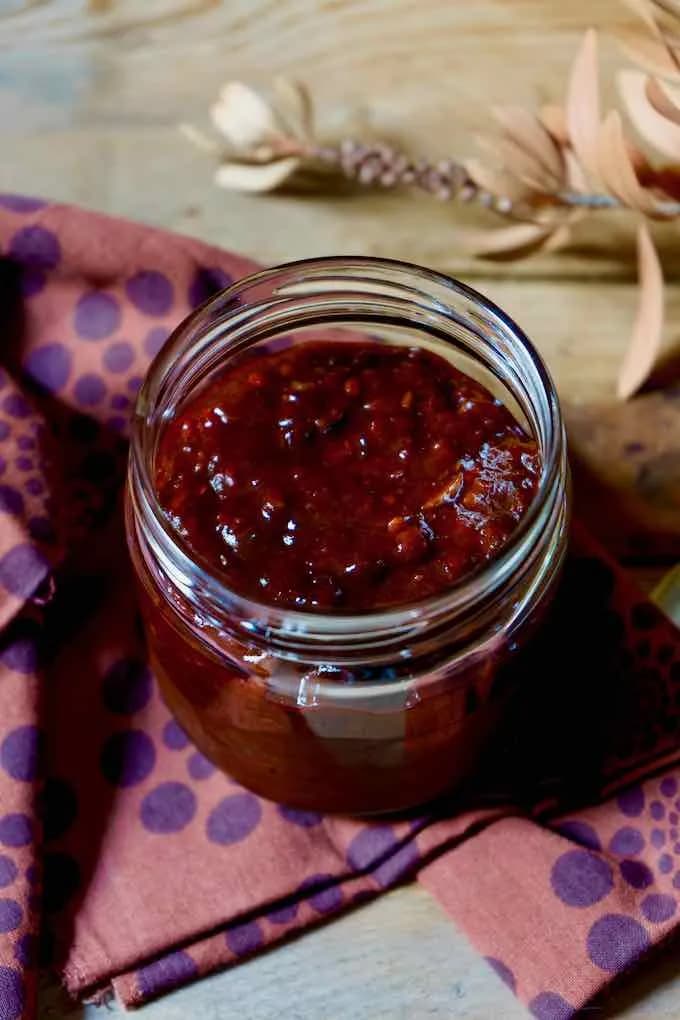
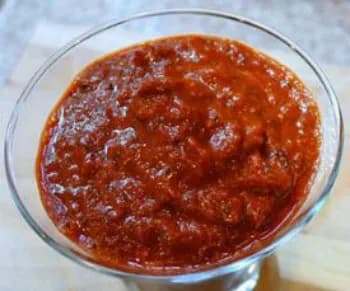
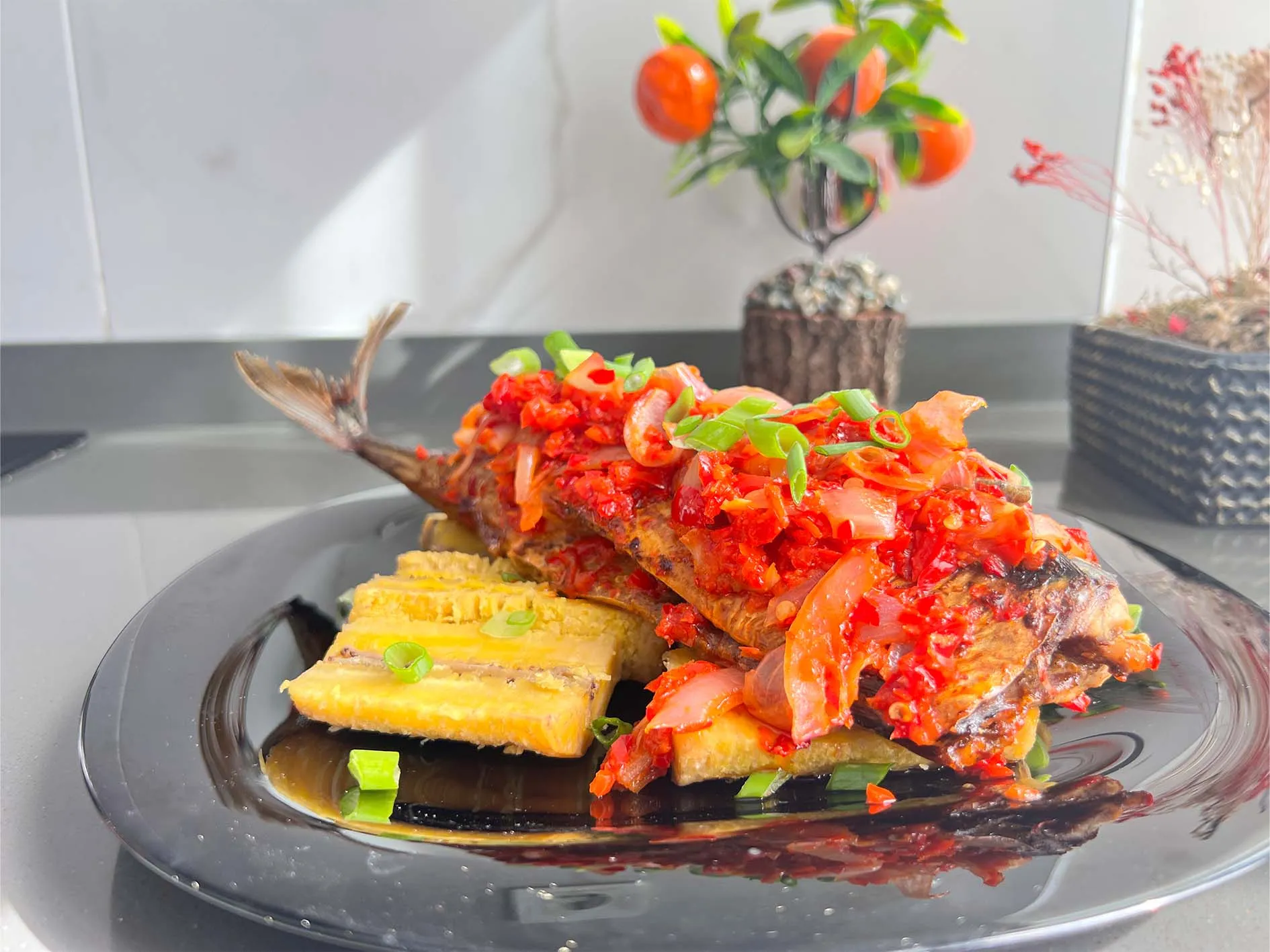
Shito is Ghana's dark chilli condiment, and it is one of the few West African sauces that keeps for months. Dried shrimp, ground smoked fish, chilli, onion, ginger and garlic are cooked down slowly in a large quantity of oil until the whole thing turns nearly black, and the oil that rises to the top is what preserves it.
The name is simply the Ga word for pepper. It is made differently in every region and village, and it comes coarse or smooth, medium or extremely hot, depending on the household. What does not change is the smokiness, which comes from ground smoked fish and dried shrimp rather than from any smoking of the sauce itself. That combination has been compared to Malaysian sambal belacan, which works on the same principle of dried seafood cooked into chilli paste.
It goes with almost everything: waakye, kenkey, plain rice, fried plantain, yam, beans. Ghanaians abroad travel with jars of it. Its keeping quality is the practical reason it exists in the quantities it does, since a batch made once will sit in the cupboard for two or three months with the oil layer intact, and in the fridge after that.
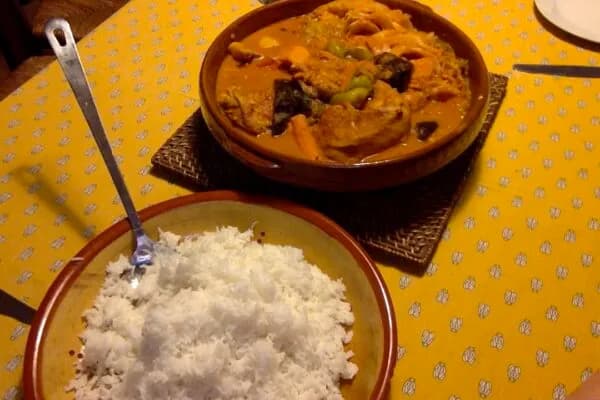
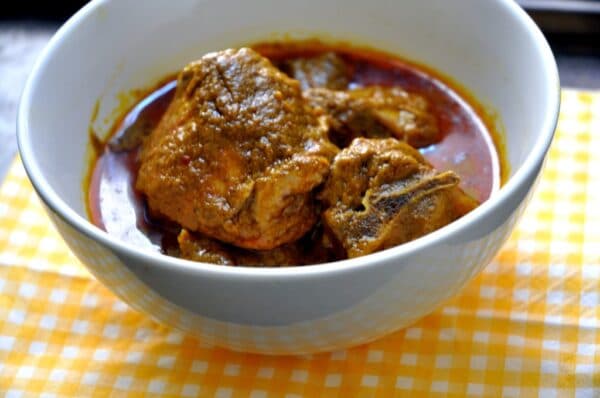
Bunny chow is a hollowed loaf of white bread filled with curry, and it comes from the Indian community of Durban in KwaZulu-Natal. The bread is the bowl, the plate and the cutlery, and it is eaten by tearing pieces off the hollowed lid to scoop with.
Its history is tied directly to apartheid. The most widely repeated account holds that it developed as a way to sell food to Black customers who were barred from eating in certain restaurants: the bread served as the container, so nothing had to be handed back. It was cheap, portable, filling enough for a day's work, and needed no crockery, which made it well suited to the indentured Indian labourers brought to work the sugarcane fields of KwaZulu-Natal.
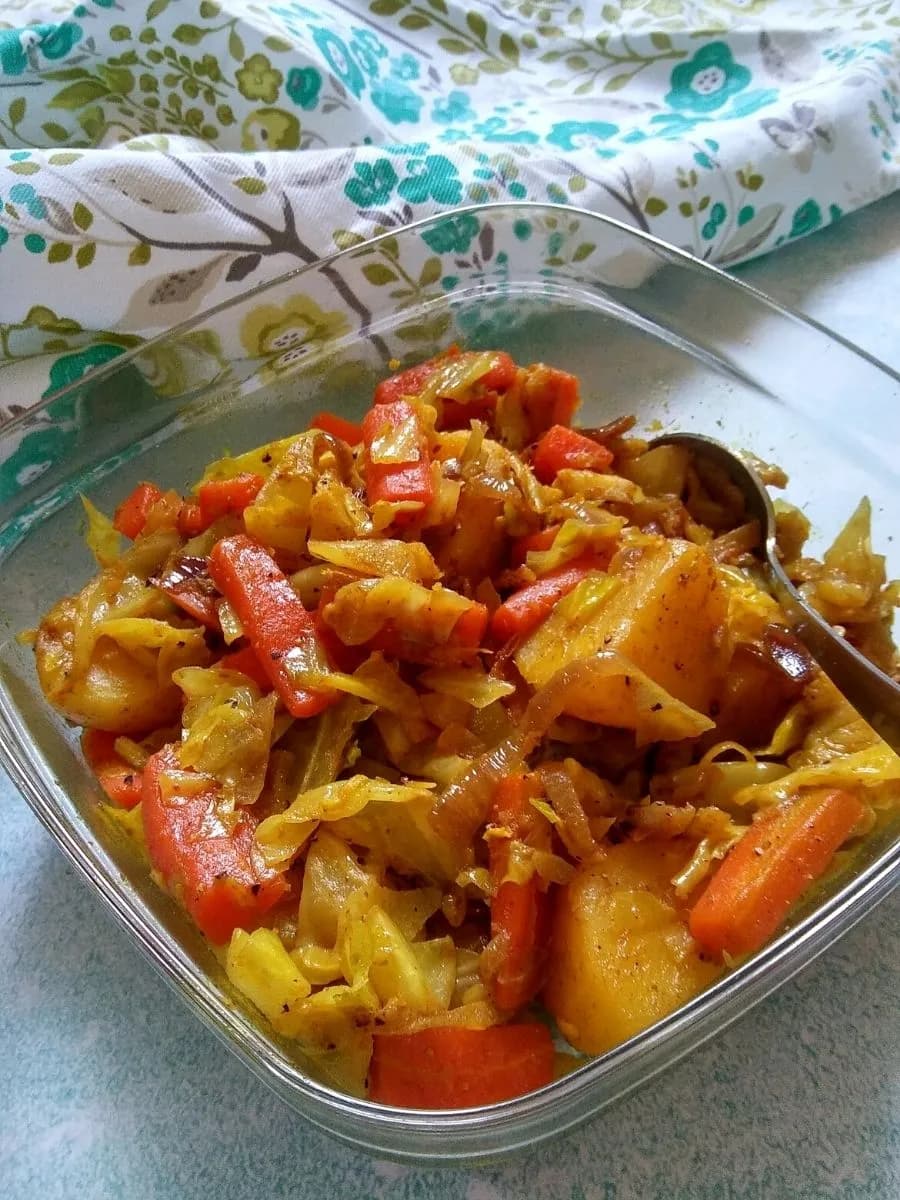
The name is generally traced to banya chow. Banya was an older term for the Indian trading community in Durban and chow is slang for food. Accounts of the origin do differ and none is settled. The filling is a Durban curry, aromatic with curry leaves, cardamom and cinnamon, made with chickpeas and potatoes and with or without meat, and mutton is the version Durban is best known for.
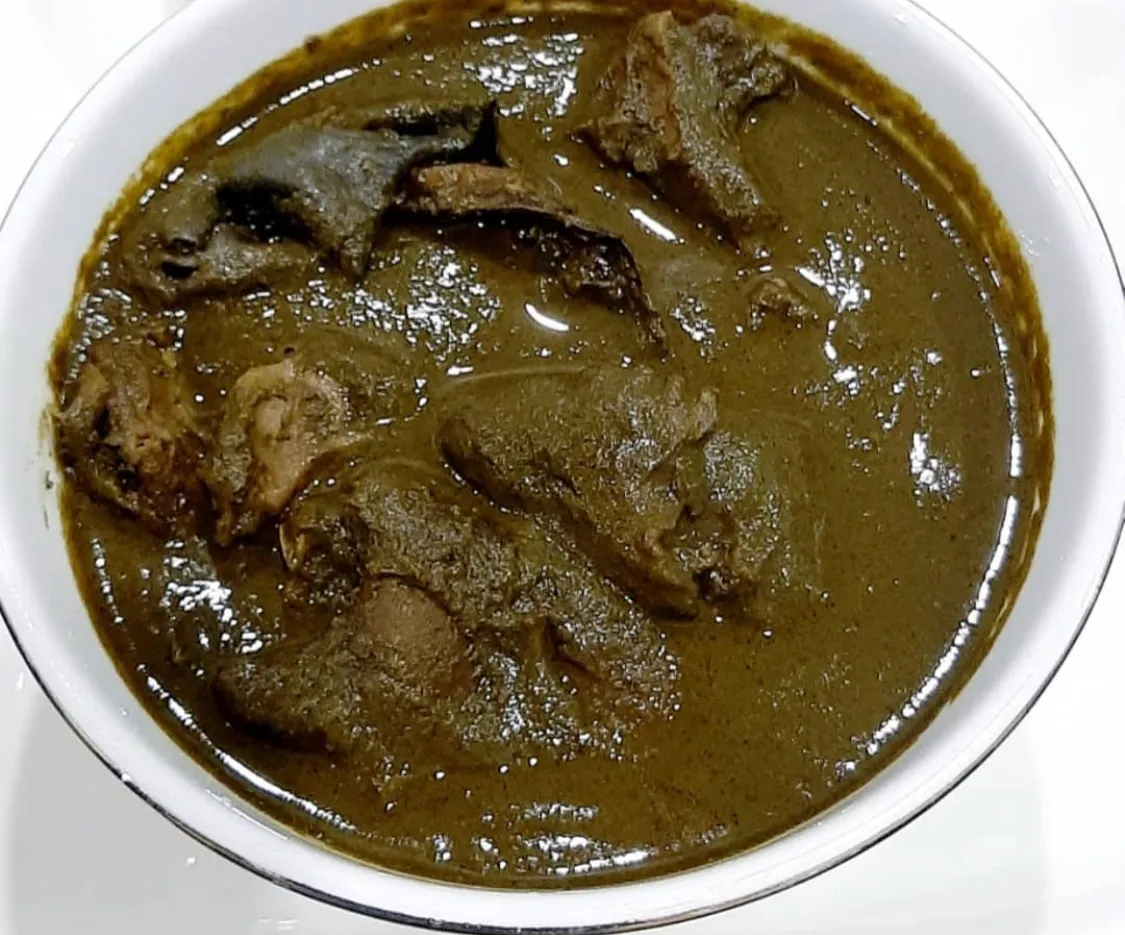
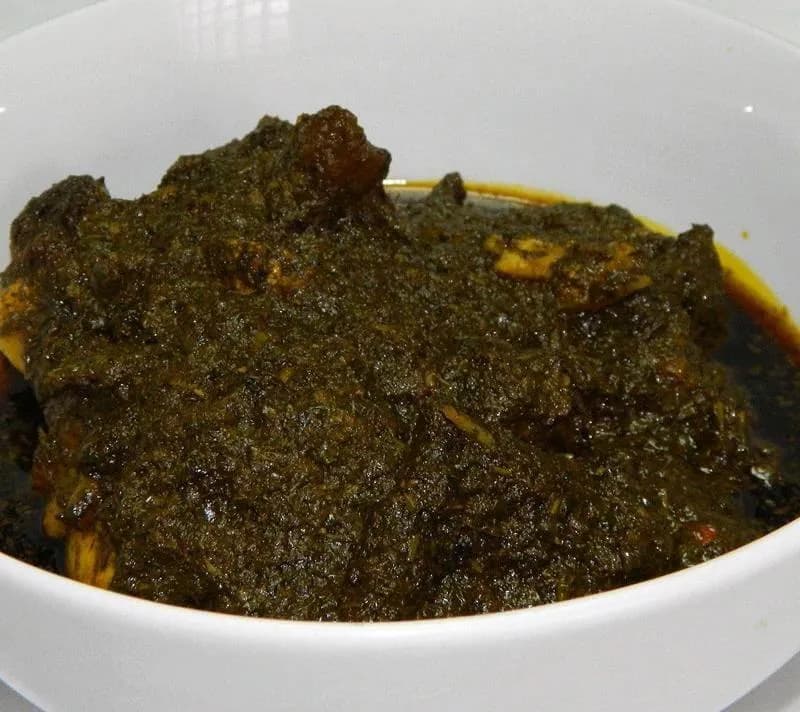
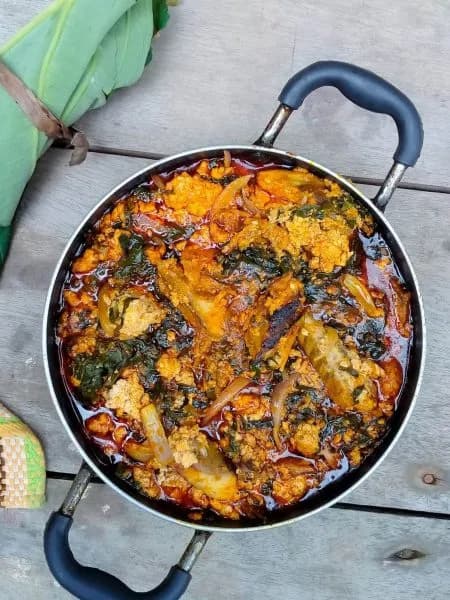
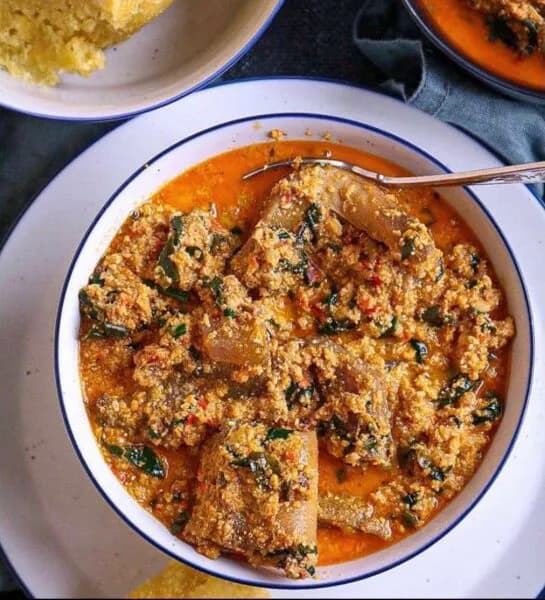
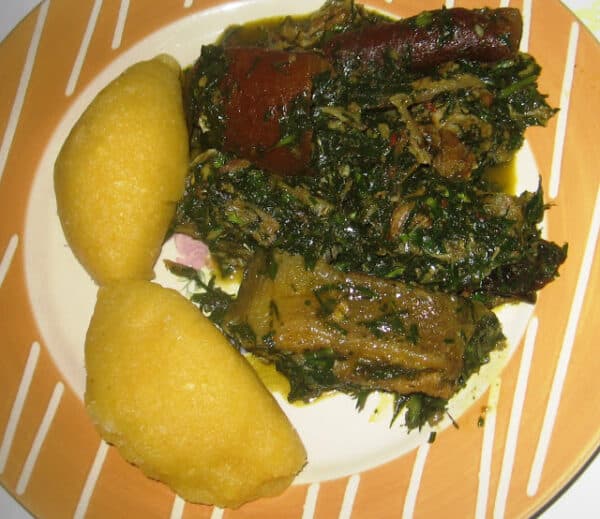
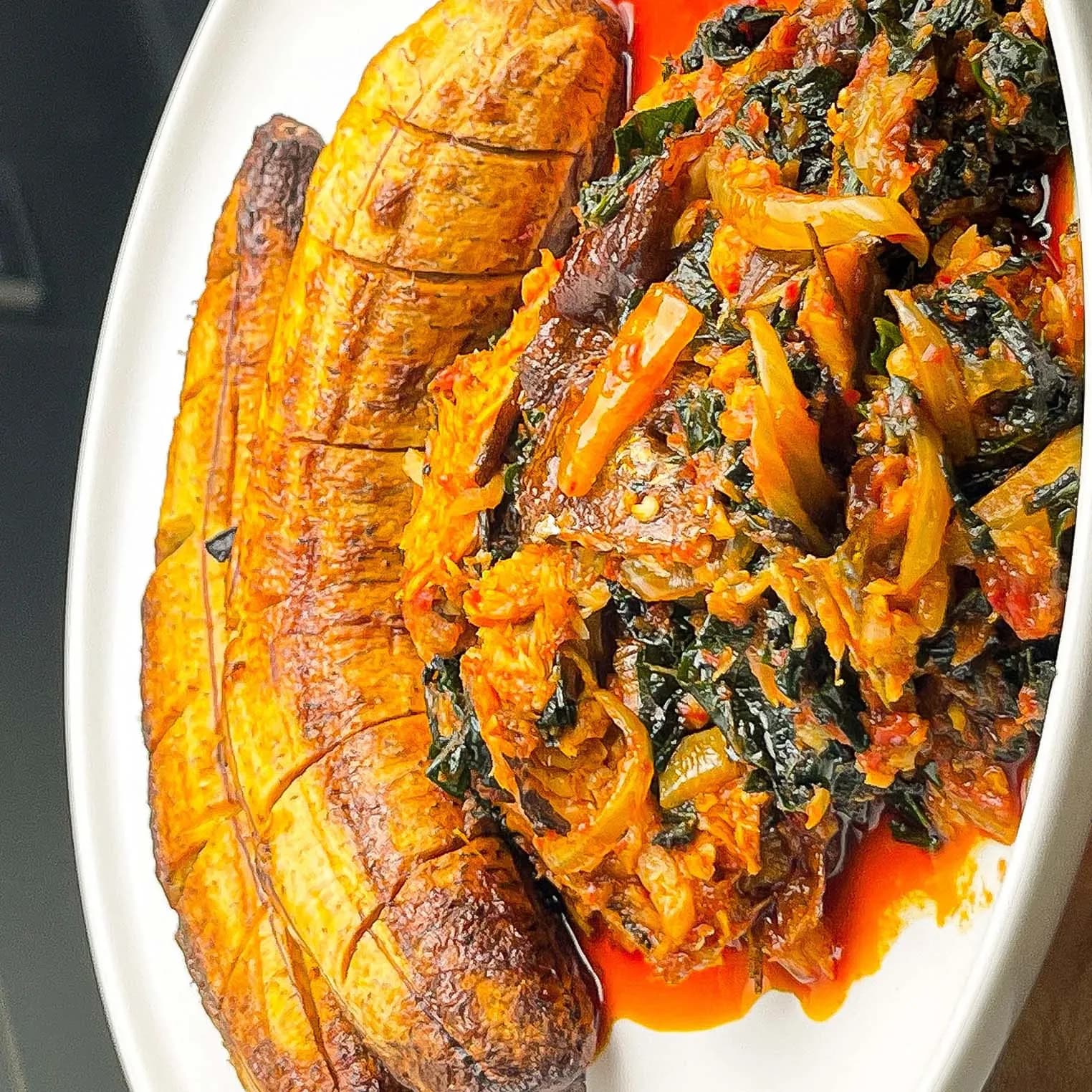
Afang soup belongs to the Efik and Ibibio people of Cross River and Akwa Ibom in southeastern Nigeria, and it is built on two vegetables that do quite different jobs.
Afang, okazi to the Igbo, and known botanically as Gnetum africanum, is a tough, wiry forest leaf with a faintly bitter edge. It is sliced extremely finely, almost shredded, because whole it would be unpleasant to eat. Waterleaf is the counterweight: soft, quick to wilt, and full of moisture, which is what gives the soup its body without much added liquid.
The pairing is the point, and it is what separates afang from edikang ikong, the other great vegetable soup of the same region. Edikang ikong uses waterleaf and ugu, the pumpkin leaf, and reads as sweeter and greener. Afang uses waterleaf and okazi, and carries that characteristic bitterness. People from the region can tell them apart instantly, and the leaf is the whole distinction.
Around the vegetables sits an assortment that scales with the household budget, beef, shaki, dried and fresh fish, periwinkle, crayfish, palm oil, pepper. It is a soup that has long been read as a marker of a generous table, and it is served with any of the swallows.
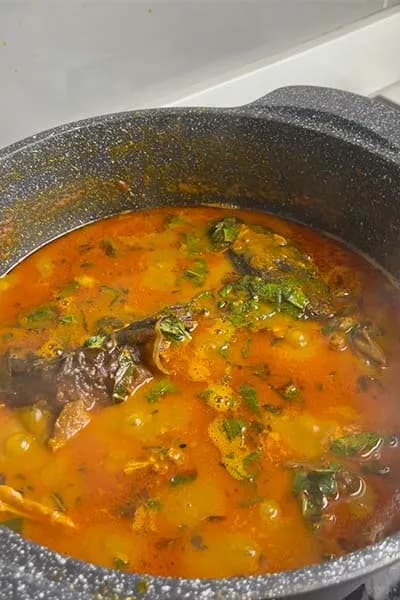
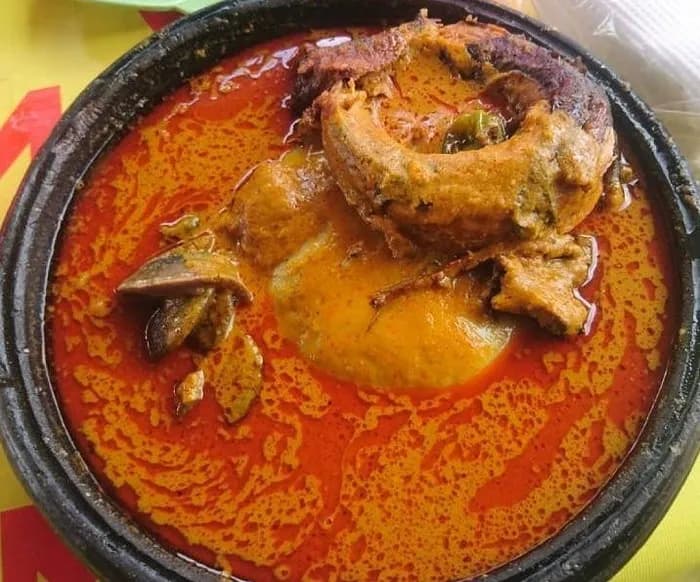
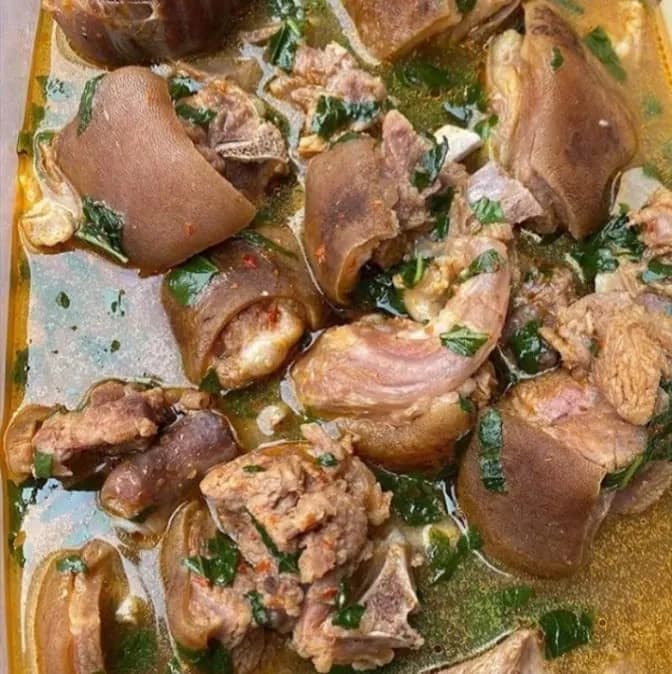
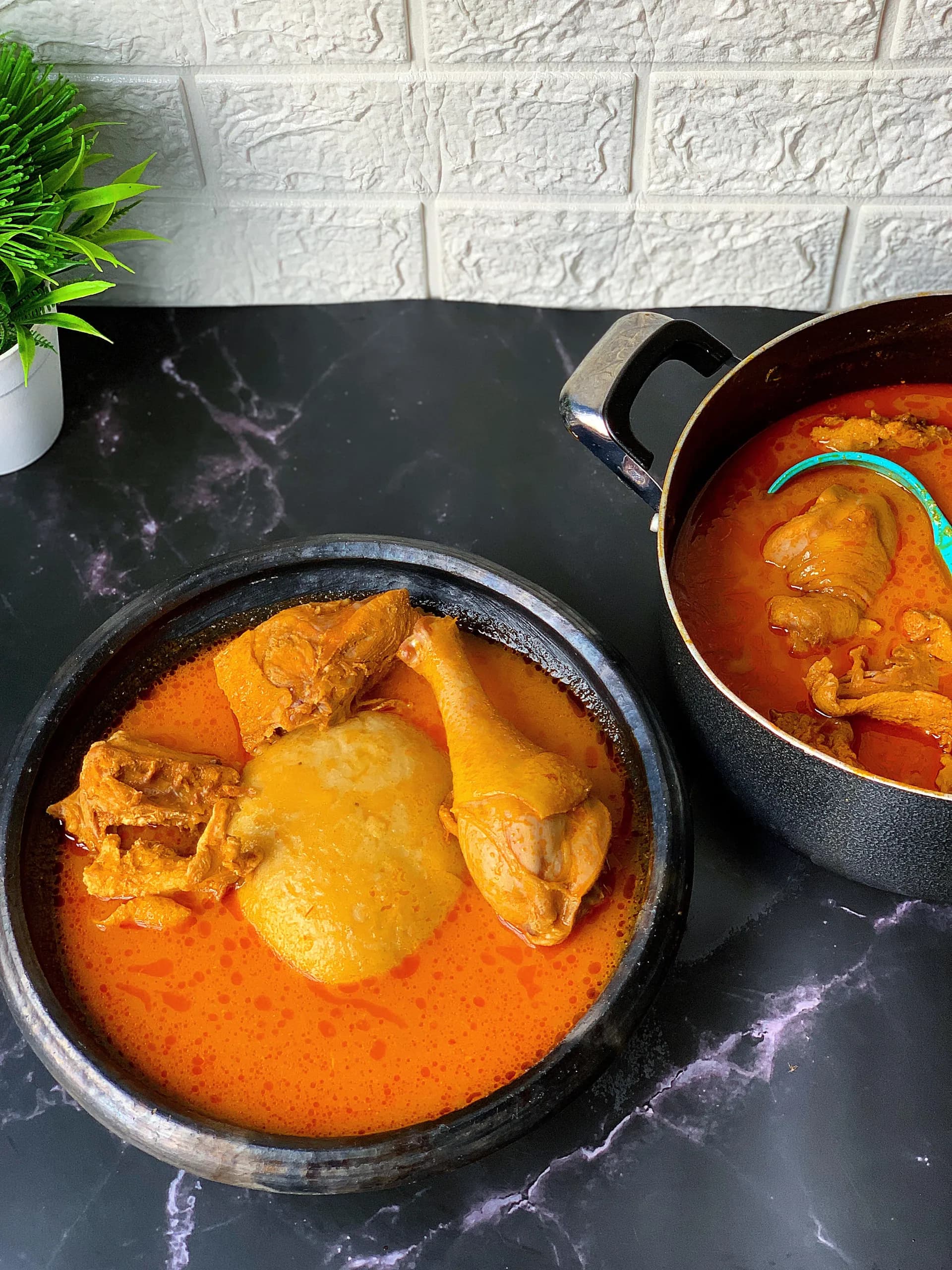
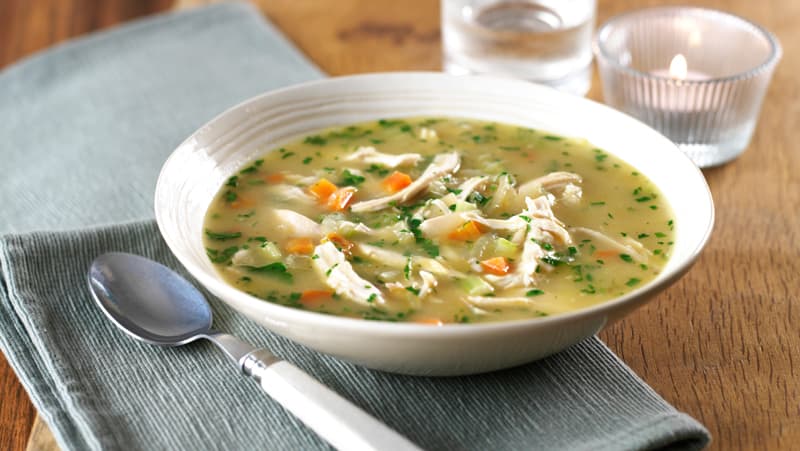
Light soup is one of Ghana's most eaten soups, and the name is descriptive rather than dismissive. It carries no palm oil, no groundnut paste and no thickener, so what remains is a clear, hot, deeply flavoured broth built on tomato, onion, ginger and habanero, with the chicken cooked in it rather than added to it.
That absence is what defines it against the country's other soups. Palm nut soup and groundnut soup are both rich and heavy; light soup is the counterweight, and Ghanaians reach for it when they want something restorative. It has a widespread reputation as the soup given to people who are unwell and to women after childbirth, which reflects both its clarity and its heat.
Fufu is the standard partner, and the combination of light soup and fufu is the one most often named when Ghanaians are asked about their national dish. It is served at restaurants and at events more than it is made casually at home, partly because pounding fufu is work. The technique that matters is the steaming of the seasoned chicken before any water goes in, which builds the stock the soup is made of.