Nous utilisons des cookies essentiels au fonctionnement du site. Nous aimerions aussi déposer des cookies de mesure d’audience et des cookies publicitaires, uniquement avec votre accord. Vous pouvez choisir séparément pour chacun. Lire notre politique relative aux cookies
Loading
Recettes
Parcourez les archives par pays, par plat et par temps de cuisson.
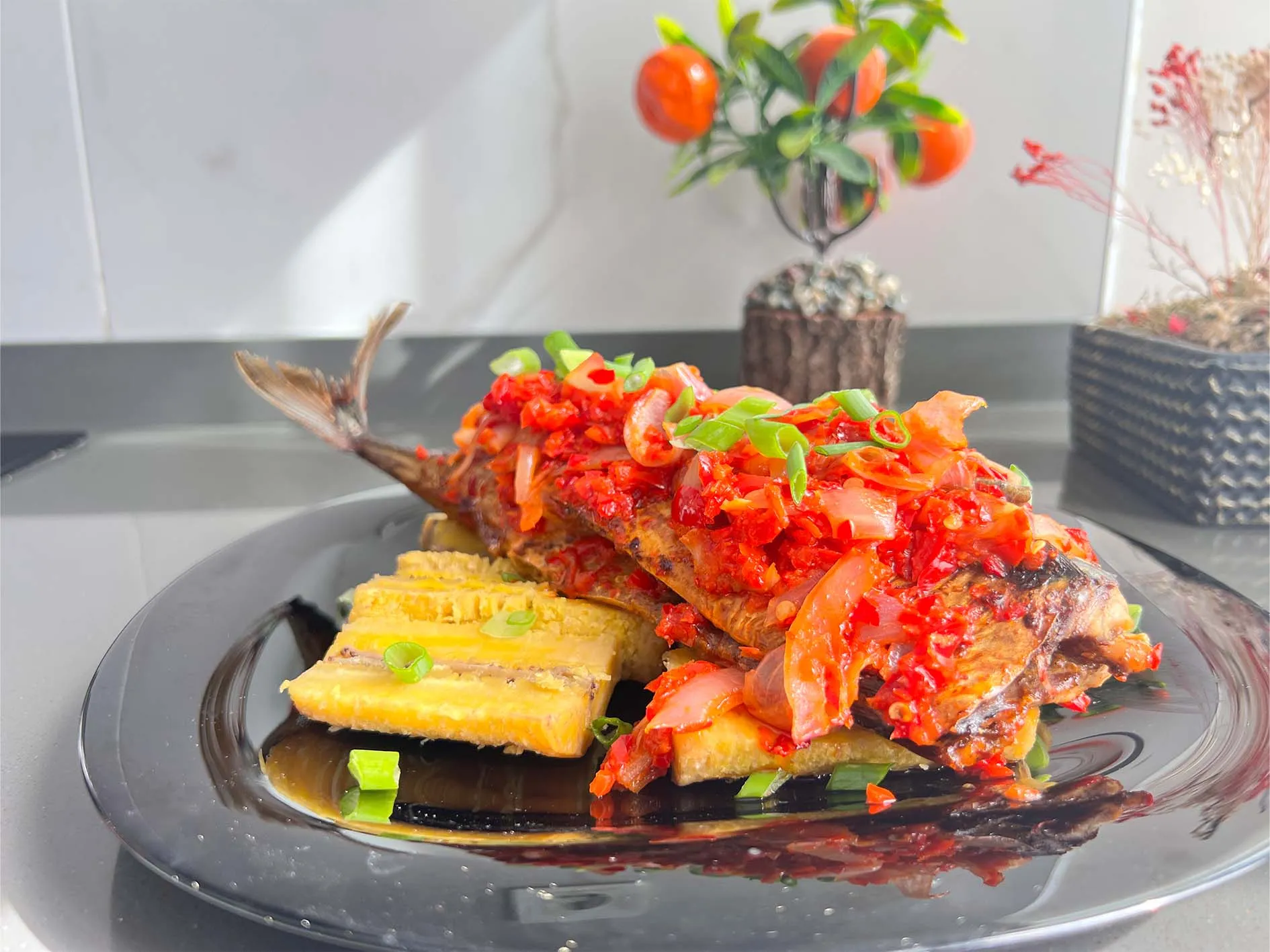
Whole mackerel is seasoned and grilled, then folded into a fried pepper and onion sauce. It is a Nigerian everyday dish, quick enough for a weeknight and substantial enough to stand as the main event, usually served with plantain, yam or rice.
The structure is the familiar Nigerian one: tatashe, the sweet red bell pepper that provides colour and body, and scotch bonnet, which provides the heat, fried down in oil with onion until the raw edge is gone. What makes this version specific is that the fish is grilled separately rather than stewed in the sauce. Grilling firms mackerel up and gives it colour and a smoky edge, and folding it in at the very end keeps it in recognisable pieces instead of breaking it apart through a long cook.
Mackerel is an oily fish, which is why it suits this treatment. It holds together under direct heat, it does not dry out the way a lean white fish would, and its strong flavour stands up to scotch bonnet and Cameroon pepper rather than disappearing under them. Cameroon pepper, dried, ground scotch bonnet, is the marker of West African rather than generic pepper cooking here.
The source's weight-loss framing has not been carried across.
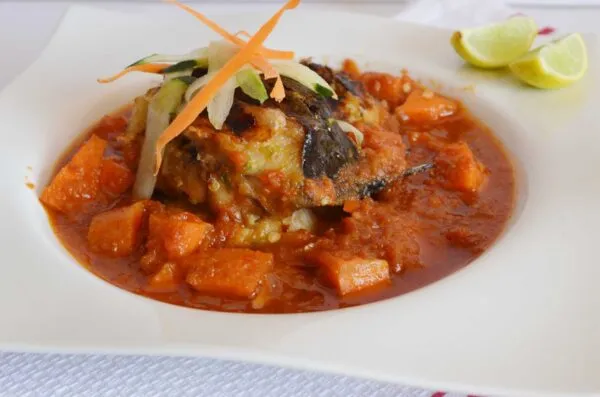
Bamia is a stew of lamb, okra and tomato, and the name is simply the Arabic word for okra, which tells you where the emphasis lies.
It is eaten across an enormous area: all the Arab countries, Anatolia and Turkey, Greece, Afghanistan and Iran, with regional variations at every point. In Egypt it is a household staple and particularly associated with Ramadan, where it appears regularly on iftar tables.
The construction is straightforward. Lamb is browned and stewed with onion, garlic and tomato, seasoned with coriander and cardamom, and okra is added to cook in the sauce. It is often finished in the oven in a clay dish, which is worth doing if you have one, the even, enclosed heat suits it.
The okra question dominates how people feel about the dish. Okra releases a mucilaginous liquid when cut and cooked in liquid, which thickens the stew. Some cuisines prize this; others go to considerable lengths to avoid it. Using whole small okra rather than sliced, and not overworking it, keeps it to a minimum.
Small young pods are much better than large ones, which turn woody.
Fish marinated in chermoula, the North African herb, garlic and spice paste, then grilled or baked. Chermoula is used across Morocco, Algeria and Tunisia, so no single country has been assigned to this page.
Chermoula is essentially a marinade built around parsley and coriander in roughly equal measure, with garlic, cumin, paprika, lemon and olive oil. That green colour is the signature and it is also a warning: chermoula is at its best made fresh and used within a day or two, because the herbs darken and dull as they oxidise. Regional versions diverge from there, saffron in Morocco, more chilli in Tunisia, preserved lemon in some Moroccan households, but the parsley, coriander, garlic and cumin core holds everywhere.
Its main job is fish, and the pairing is not arbitrary. Cumin and paprika stand up to oily fish without overwhelming white fish, and the acidity of the lemon does the work that a squeeze of lemon at the table would do, only from the inside.
The one thing to watch is marinating time. Thirty minutes to an hour is what this recipe calls for and that is right; several hours in an acidic marinade begins to cure the fish rather than season it, which changes the texture in a way you probably do not want.
A related page on this site covers braised snapper with chimichurri, which is a South American parallel to the same idea.
Alaskan king crab legs, steamed briefly and served with melted butter and lemon. There is no African connection here and none is claimed: king crab is a cold-water North Pacific species fished off Alaska and the Russian Far East, and this is the standard American way of serving it.
The single most useful thing to know is that king crab legs are sold already cooked. They are steamed aboard the boat or on the pier immediately after they are caught, then frozen, because crab meat spoils very quickly once the animal dies. What you are doing at home is reheating, not cooking, and that is why every instruction here is measured in a few minutes rather than tens of them. Treat them like a raw ingredient and you will get rubbery, stringy meat.
The source is right to steer away from submerging them in water, which waterlogs the meat and washes out the flavour that the initial cooking sealed in. Steaming and a foil-wrapped spell in the oven both work because they warm the meat through without soaking it.
Africa has a long coastline and a serious crab tradition of its own, Ghanaian akotonshi, stuffed crab served in the shell, is on this site, but it is built around warm-water species, and king crab is not one of them.