Nous utilisons des cookies essentiels au fonctionnement du site. Nous aimerions aussi déposer des cookies de mesure d’audience et des cookies publicitaires, uniquement avec votre accord. Vous pouvez choisir séparément pour chacun. Lire notre politique relative aux cookies
Loading
Recettes
Parcourez les archives par pays, par plat et par temps de cuisson.
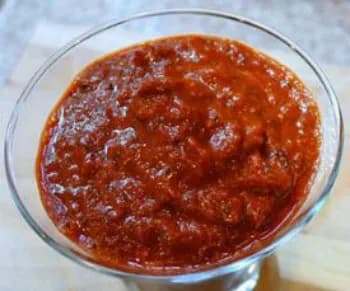
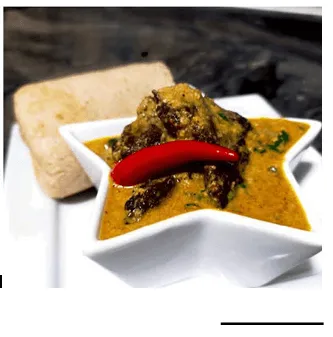
Pepper sauce is the West African condiment: blended hot pepper cooked down in oil or water until thick, spooned onto anything that needs lifting. It goes with puff puff, grilled meat, fish and eggs, and there is scarcely a dish it is not served alongside somewhere in the region.
What distinguishes it from a hot sauce elsewhere is what it does not have. There is no vinegar, no fermentation and usually no sugar. The base is pepper, salt, oil and often a stock cube, and the texture is thick and coarse rather than pourable. Recipes vary with the cook, but hot pepper is the constant, and habanero and scotch bonnet are the usual choices.
Heat is adjustable and worth adjusting. Most West African pepper sauces are fierce, and this one uses three habaneros against four bell peppers, which is moderate by regional standards. Deseeding the habaneros, using fewer, or leaving them out entirely all work. The other choice is water or oil: water reduces away and gives a lighter sauce that keeps about a week; oil floats to the top when the sauce is done and seals it, which keeps it considerably longer. No country is named, and the sauce belongs to the whole region rather than to one.
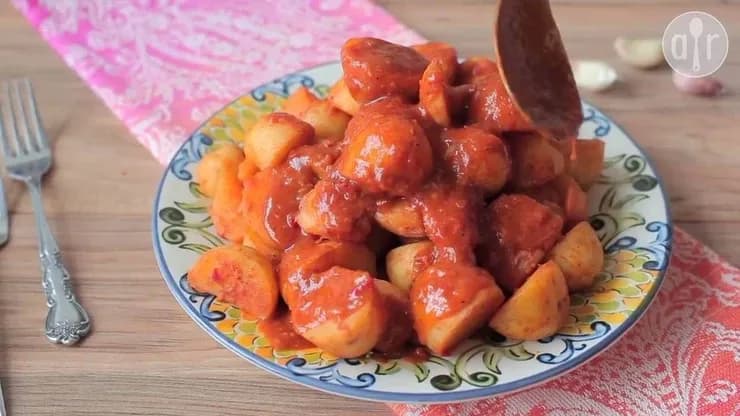
Chtitha batata is the Algerian potato stew, and it is built on dersa. Dersa is a paste of garlic and chilli ground in a mortar with cumin, paprika, black pepper and cayenne, and it is the starting point for a whole family of Algerian dishes, chtitha among them.
The technique is straightforward and the order matters. The dersa is fried first until fragrant, which is what opens up the spices, and the potatoes go in and are turned through it so every surface is coated before any liquid arrives. Tomato paste follows, then just enough water to cover, and it cooks until the potatoes are soft and the sauce has thickened around them.
It is vegan as written and eaten as a main course on its own terms, not as a compromise, which is unusual for a stew of this kind. Meat can go into the sauce and often does, and chickpeas are a common addition that the source's prose mentions though the recipe itself does not include them. It keeps four days refrigerated and reheats well, and the flavour improves overnight as the dersa works into the potatoes.
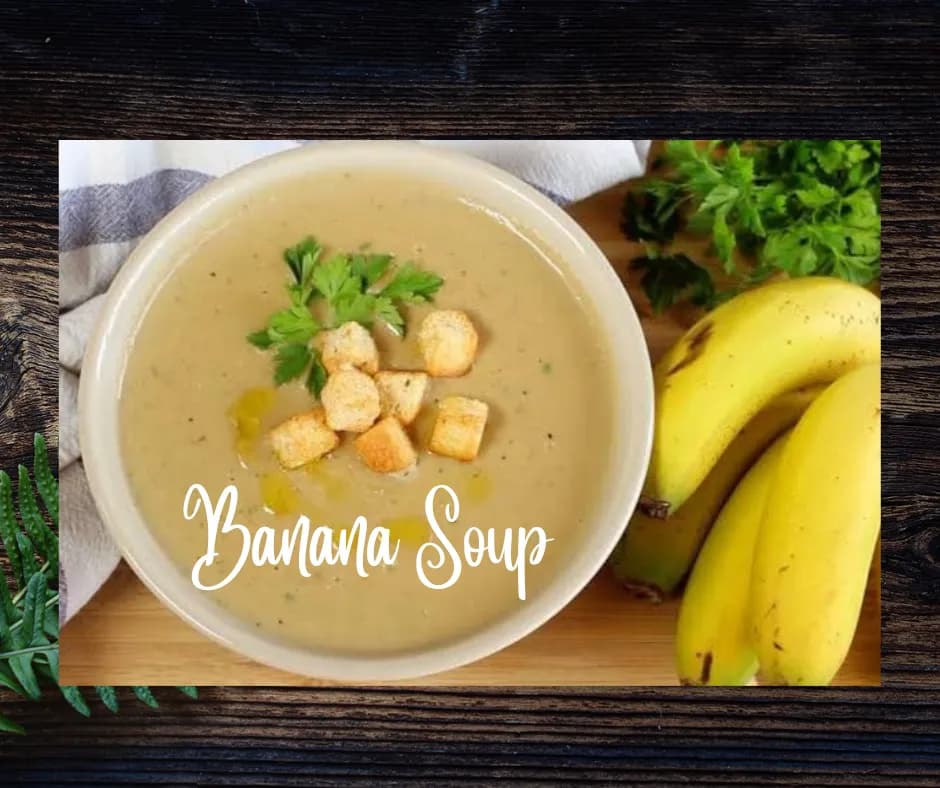
Bananas and their cooking relatives are among the most important foods in Africa's Great Lakes region and across its humid tropical belt. In Uganda, Rwanda, Burundi, eastern DR Congo and parts of Tanzania and Kenya, the plant is a staple rather than a fruit: green cooking bananas are steamed, mashed, worked into stews and eaten daily, and the sweet ripe banana is only one use among many.
That distinction between cooking banana and ripe fruit matters for placing this recipe. It uses ripe bananas, blended smooth with coconut milk and finished with curry powder and turmeric, which puts it closer to the spiced coconut cooking of the Swahili coast than to the green banana dishes of the interior. The pairing of coconut milk with warm spice is genuinely East African coastal; the blended sweet banana base is not a documented preparation from any specific tradition.
This is best understood as a contemporary dish rather than an inherited one. It uses African ingredients and an East African coastal flavour logic, but no country, community or lineage can honestly be attached to it on the evidence available. What it does well is show what ripe banana does under savoury treatment, which is a legitimate thing for a recipe to do without claiming a heritage it does not have.
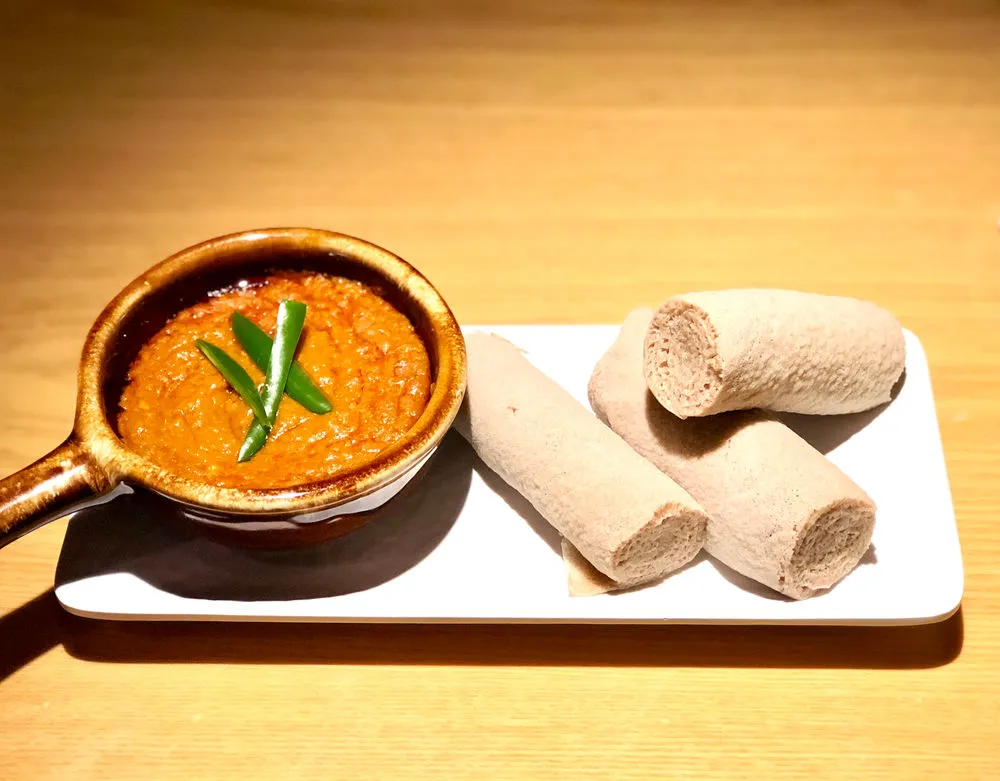
Shiro wat is ground chickpea stew, and it is among the most eaten dishes in Ethiopia and Eritrea. Onion, garlic, tomato and berbere are cooked down in oil, chickpea flour is whisked in, and the result thickens to something between a thick gravy and a puree, smooth enough to spread and eaten with injera.
Its position has a great deal to do with the religious calendar. Ethiopian Orthodox practice includes a very large number of fasting days, on which no meat, eggs or dairy are eaten, and shiro contains none of them. It is standard on Wednesdays and Fridays, through the eight weeks of Tsom, the Great Lent, and it is eaten during Ramadan by Ethiopian and Eritrean Muslims too. That is a dish serving two religions in one country without modification.
It is also cheap and quick, which explains the rest of its reach. Shiro powder, sold ready mixed with the spices already in it, is available across Ethiopia and increasingly abroad, in two kinds: mitten shiro, which is red and carries berbere, and netch shiro, which is white and mild. The dish takes different forms by consistency and name: shiro fessess is runny and served over injera with chillies, shiro tegamino is thick and cooked in an earthenware pot until it bubbles and caramelises at the base, and shiro fit fit shreds injera through it for breakfast.
Les mentions alimentaires sont fournies par les contributeurs à titre indicatif. Elles ne sont pas vérifiées par AFN et dépendent des produits que vous achetez. En cas d’allergie grave, vérifiez vous-même chaque ingrédient. Cuisine, allergies et votre propre jugement