Nous utilisons des cookies essentiels au fonctionnement du site. Nous aimerions aussi déposer des cookies de mesure d’audience et des cookies publicitaires, uniquement avec votre accord. Vous pouvez choisir séparément pour chacun. Lire notre politique relative aux cookies
Loading
Recettes
Parcourez les archives par pays, par plat et par temps de cuisson.
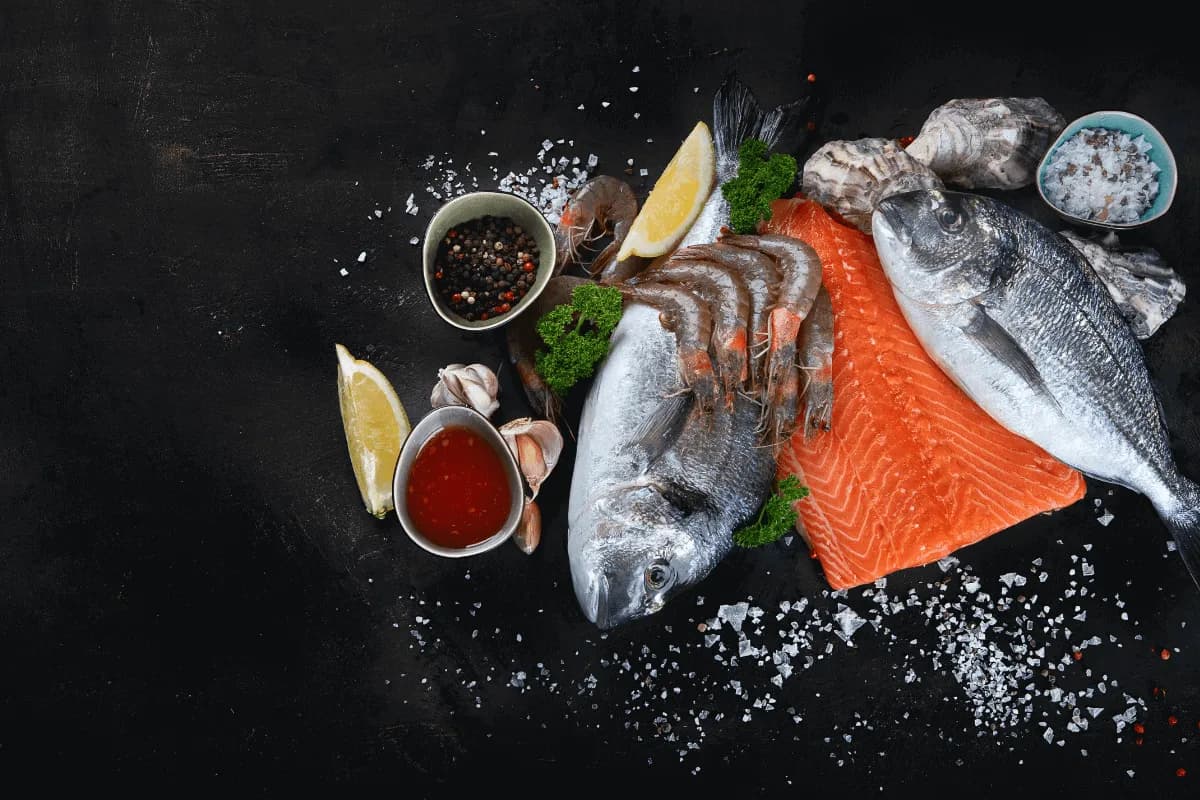
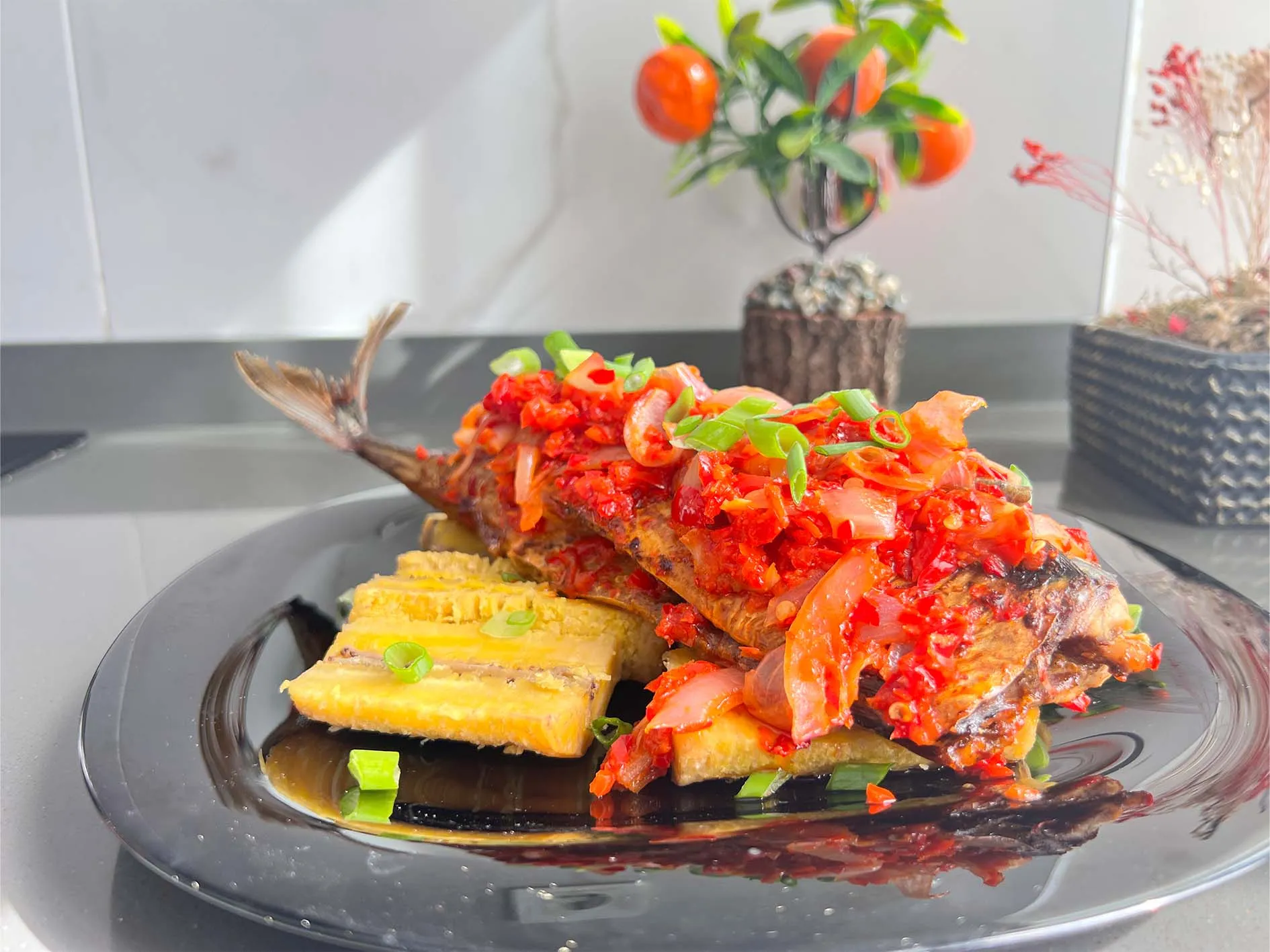
Fish marinated in chermoula, the North African herb, garlic and spice paste, then grilled or baked. Chermoula is used across Morocco, Algeria and Tunisia, so no single country has been assigned to this page.
Chermoula is essentially a marinade built around parsley and coriander in roughly equal measure, with garlic, cumin, paprika, lemon and olive oil. That green colour is the signature and it is also a warning: chermoula is at its best made fresh and used within a day or two, because the herbs darken and dull as they oxidise. Regional versions diverge from there, saffron in Morocco, more chilli in Tunisia, preserved lemon in some Moroccan households, but the parsley, coriander, garlic and cumin core holds everywhere.
Its main job is fish, and the pairing is not arbitrary. Cumin and paprika stand up to oily fish without overwhelming white fish, and the acidity of the lemon does the work that a squeeze of lemon at the table would do, only from the inside.
The one thing to watch is marinating time. Thirty minutes to an hour is what this recipe calls for and that is right; several hours in an acidic marinade begins to cure the fish rather than season it, which changes the texture in a way you probably do not want.
A related page on this site covers braised snapper with chimichurri, which is a South American parallel to the same idea.
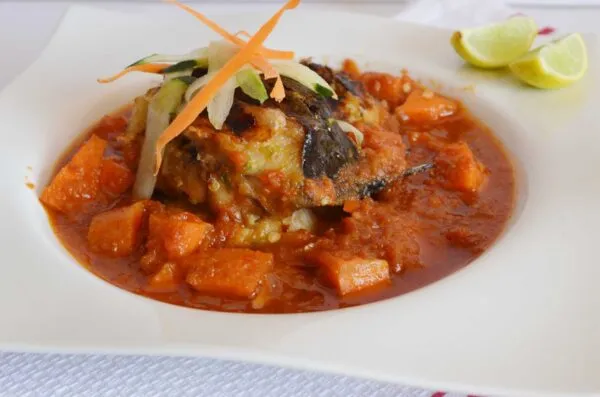
Whole guinea fowl cooked slowly in orange and apple juice with garlic and pepper, then browned in a hot oven, cooled, carved and served cold. The source places it in Ivory Coast.
Guinea fowl is West African, and that is the useful thing to know here. The bird is native to the region, its English name comes from the Guinea coast, and it was carried to Europe by Portuguese traders in the sixteenth century, where French and Italian producers have since become among the largest in the world. So a guinea fowl recipe from Ivory Coast is the bird in its home rather than an import.
It cooks differently from chicken and the difference is fat. Guinea fowl carries roughly half as much, and it is a slightly smaller bird, so it dries out easily. This recipe answers that directly: it is poached slowly in a large quantity of liquid for an hour and a half or more before it ever meets dry heat, and the browning at the end is brief. That order is the whole design, and reversing it would produce something tough.
Serving it cold is a genuine choice rather than a leftovers strategy. Cold poultry with fruit and salad is a summer and celebration format, and the source suggests Sunday lunch or a small Christmas dinner.
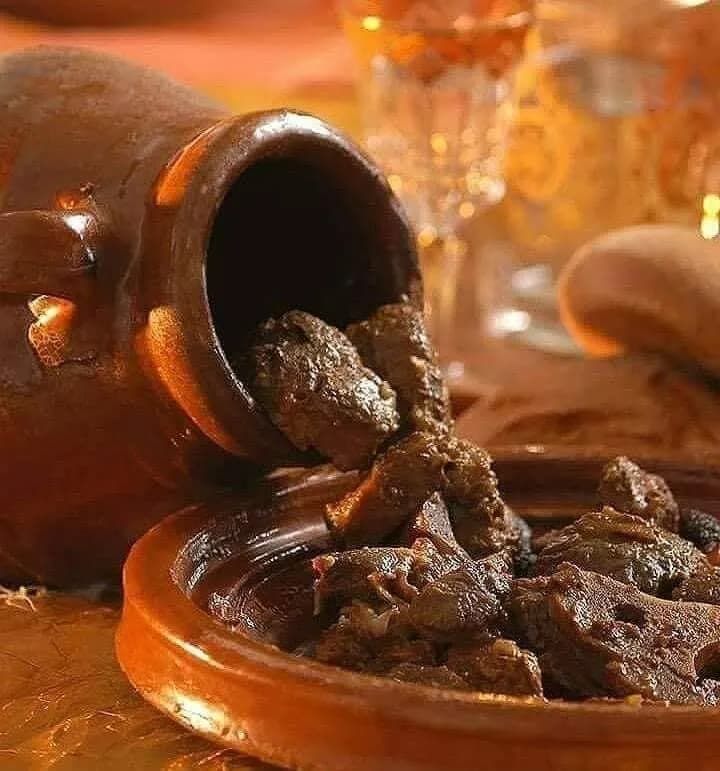
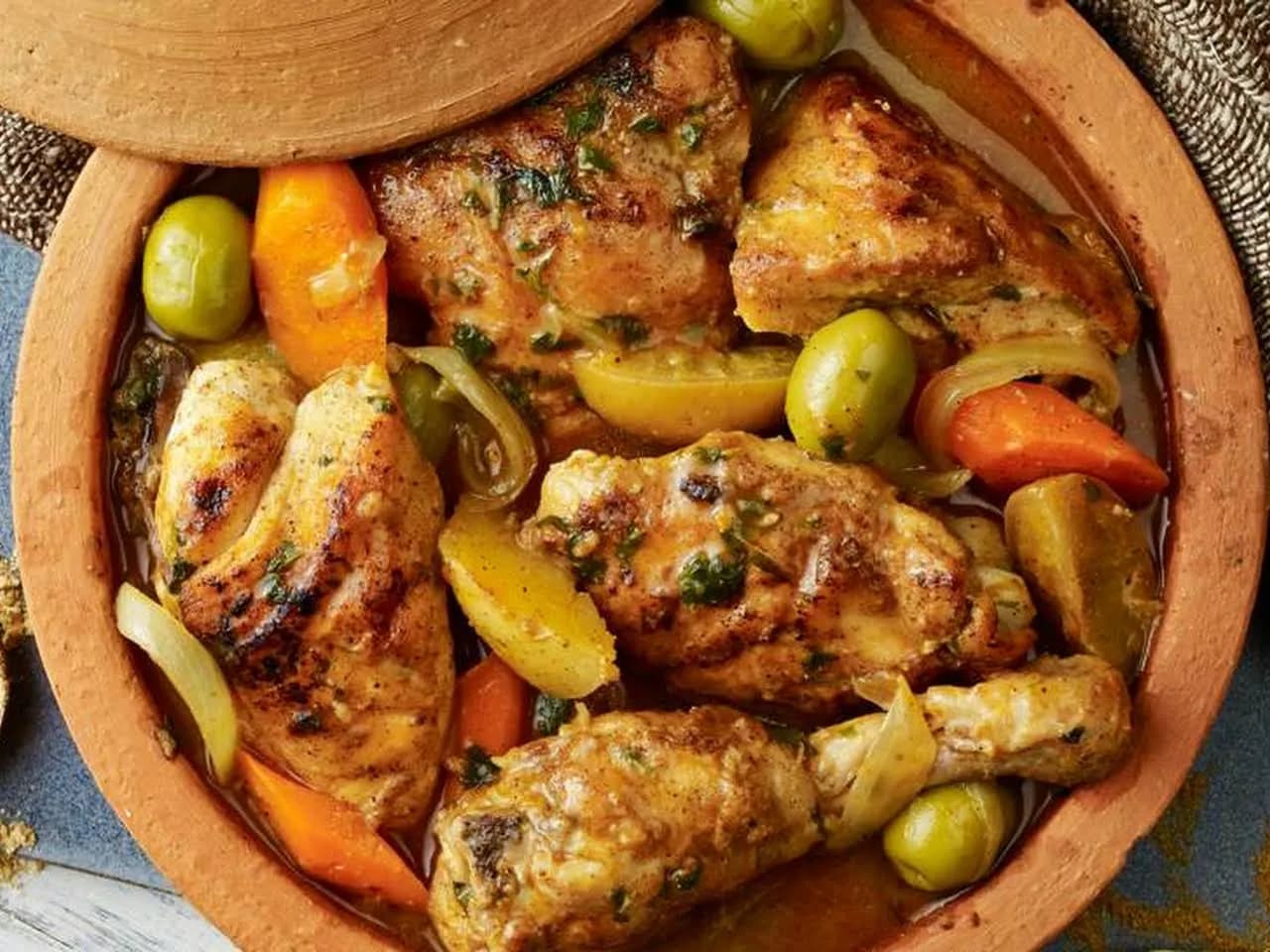
A tagine is both a conical earthenware pot and the slow-cooked stew made in it. It is North African, Moroccan and Algerian above all, and no single country is claimed.
**This page had no recipe card at all in the source: no ingredients and no method.** Both have been reconstructed from what its article describes, and that is flagged.
The pot is the reason the dish works. The wide shallow base sits over low heat while the tall cone above it collects rising steam, condenses it on the cool inner surface and returns it to the food. That means a tagine cooks in very little liquid over a long time without drying out, and the flavour concentrates rather than diluting. A heavy casserole with a tight lid approximates it.
The variations are enormous, and the source lists them well: lamb, beef, chicken or fish; dried fruit and nuts in some, fresh herbs, olives and preserved lemon in others. Ginger, cumin, turmeric, cinnamon and saffron are the common spices. Berber tagine is distinguished by the vegetables arranged around the meat rather than mixed through.
One important note the source gets right: what Tunisians call a tajine is not this at all. Tunisian tajine is a baked egg dish closer to an Italian frittata, and it has its own page here.
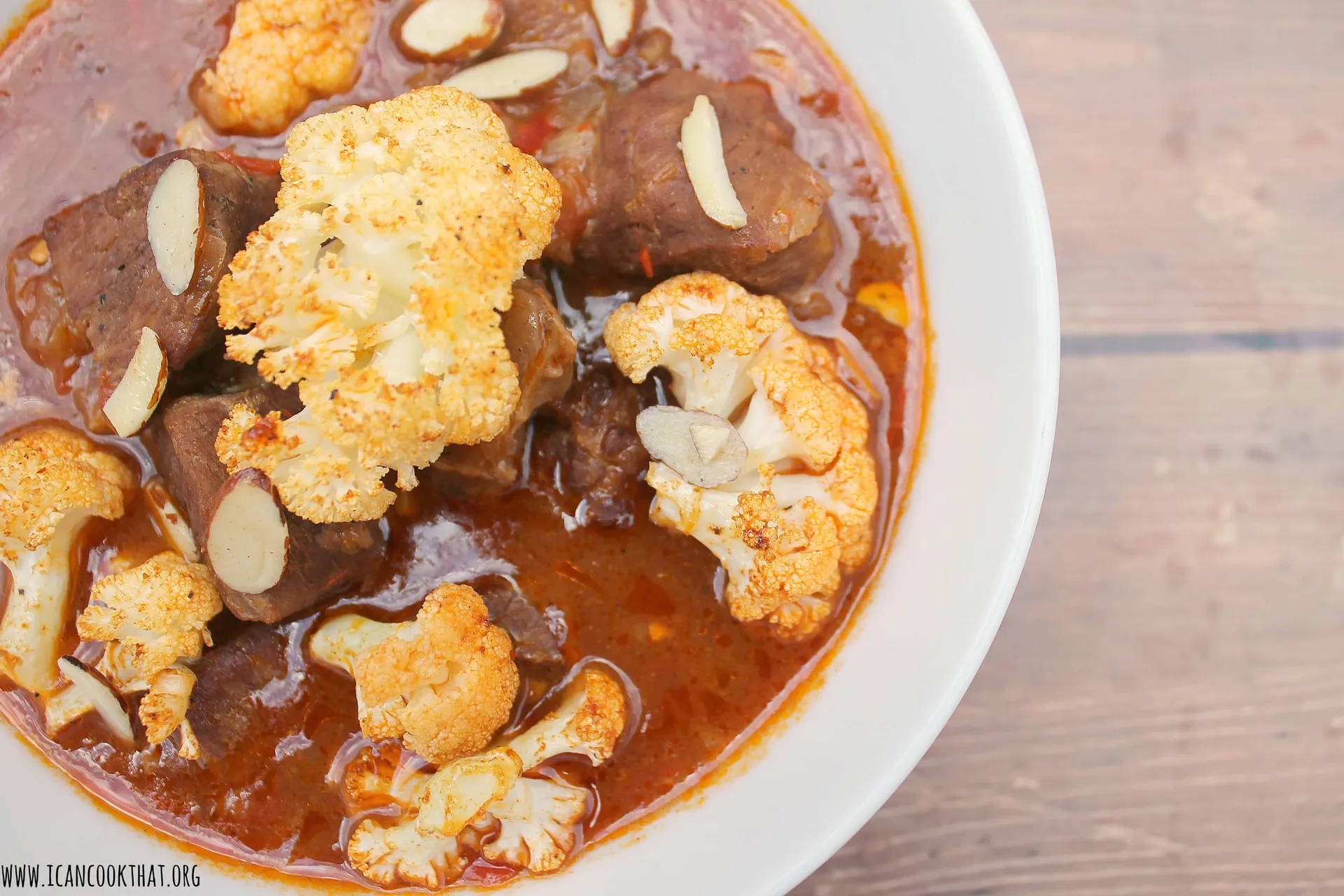
Lamb shoulder browned and cooked slowly with tomato, cumin and cinnamon, finished with harissa and dates, and topped with charred cauliflower and toasted almonds. No country is named, but the flavour vocabulary is unambiguously North African.
**It contains almonds, which the title gives no indication of.**
Harissa, dates, cumin and cinnamon in a lamb stew is a Maghrebi combination, Tunisian in the case of harissa specifically, which is Tunisia's national condiment. The dates are doing what dried fruit does throughout North African cooking: providing a sweetness that balances the chilli rather than making the dish sweet. That savoury-sweet axis is one of the defining characteristics of the region's cooking, and it runs through tagines, pastilla and couscous alike.
The cauliflower is treated separately and that is the smartest thing in the recipe. Rather than being cooked in the stew, where it would go soft and grey, it is tossed in smoked paprika butter and charred under a grill, then scattered over at the end. It arrives with texture and colour intact.
The white wine is not North African and is worth flagging for anyone avoiding alcohol; it cooks off, but it is there.
The source's extended nutritional discussion of cauliflower has not been carried across.
Les mentions alimentaires sont fournies par les contributeurs à titre indicatif. Elles ne sont pas vérifiées par AFN et dépendent des produits que vous achetez. En cas d’allergie grave, vérifiez vous-même chaque ingrédient. Cuisine, allergies et votre propre jugement