Nous utilisons des cookies essentiels au fonctionnement du site. Nous aimerions aussi déposer des cookies de mesure d’audience et des cookies publicitaires, uniquement avec votre accord. Vous pouvez choisir séparément pour chacun. Lire notre politique relative aux cookies

Loading
Recettes
Parcourez les archives par pays, par plat et par temps de cuisson.
Vetkoek is a yeasted dough, flattened by hand and deep-fried until it is crisp outside and soft as bread inside. The Afrikaans name translates literally as fat cake, and the isiZulu and isiXhosa name is amagwinya. It is one of the most widely eaten things in South Africa.
Its lineage is Dutch. Fried yeast dough came to the Cape with Dutch settlers, and vetkoek belongs to the same broad family as the Dutch oliebol, the Caribbean johnnycake and Mexican sopaipillas. What happened to it afterwards is what makes it South African: it became township food and street food, sold from stalls and windows across the country, and its usual filling, curried beef mince, is itself a product of the Cape's Indian and Cape Malay influence.
It is eaten both ways round. Split and stuffed with curried mince, cheese, polony, tinned fish or slaw, it is lunch. Split and spread with syrup, honey or jam, it is a sweet snack with tea. Neither version is more authentic than the other.
Note that this page covers plain vetkoek. The filled version with beef mince curry has a separate page on this site, and the two are meant to complement rather than replace each other.
Beetroot pancakes are ordinary pancakes with cooked beetroot blended into the batter, which turns them deep pink and adds an earthy sweetness.
The beetroot does two things. It colours the batter dramatically, which is most of the appeal and the main reason the recipe exists for children. And it contributes moisture and a mild natural sweetness, so the pancakes need less sugar than a plain batter would.
They are made in the ordinary way, blended, rested briefly, cooked on a moderately hot pan, and the technique holds no surprises. Cooking them slightly slower than plain pancakes helps, because the extra moisture from the beetroot means the middle needs a little longer while the outside is already colouring.
Served with fresh fruit or berries on top, which is the usual suggestion, they make a breakfast that looks considerably more elaborate than it is.
**Filed as Worldwide**, the source describes it as a Continental recipe, and it makes no African claim. The page is kept and reclassified rather than removed.
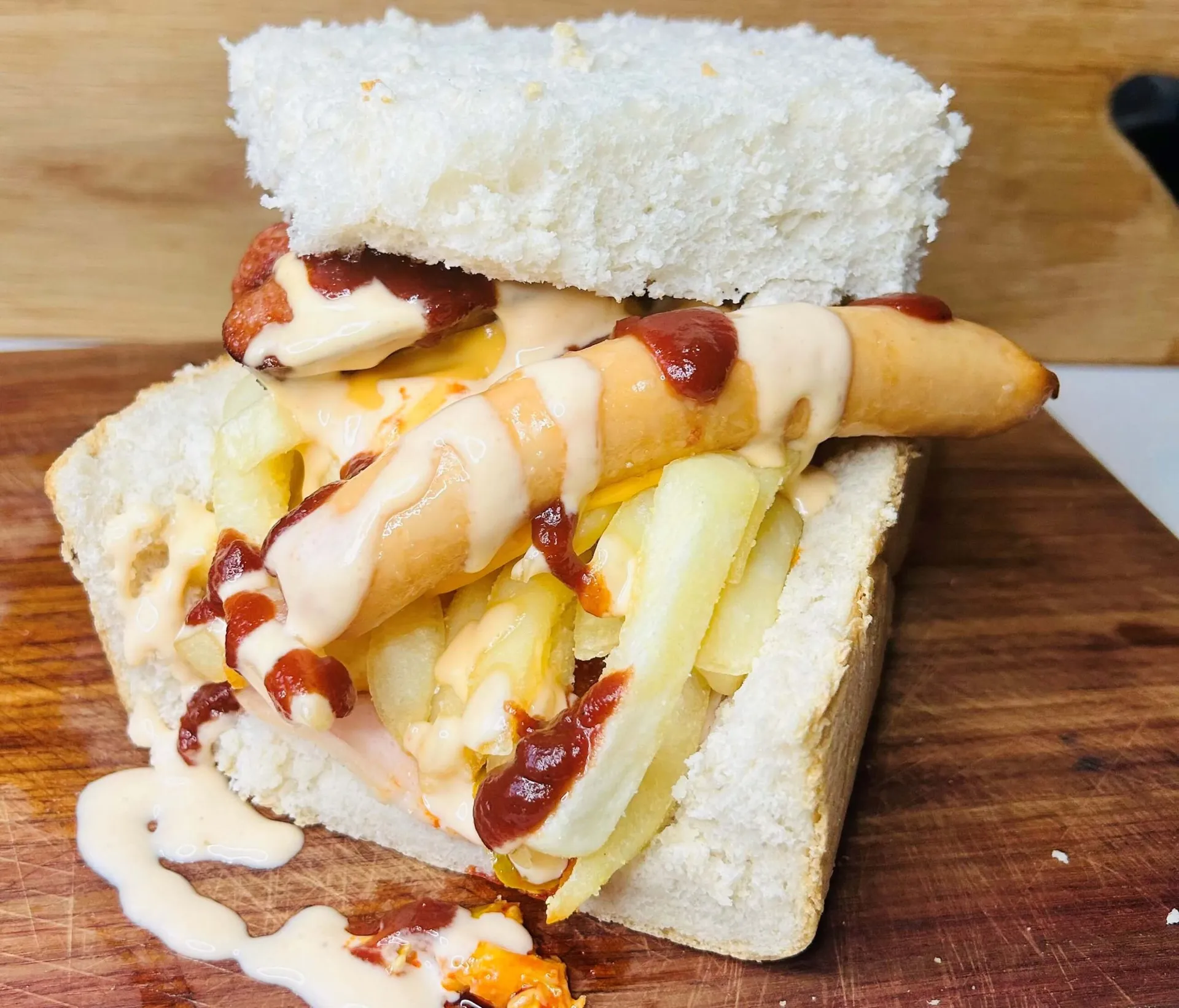
A kota is a quarter loaf of bread, hollowed out and packed with fried food. The word is township English for quarter, and that is the whole description: bread cut in four, the soft centre pulled out, and the cavity filled with chips, polony, russians, viennas, cheese, egg, atchar and sauce, then capped with the bread that was removed.
It belongs to the townships of Gauteng, where it is sold from small takeaway windows and eaten in the hand without a plate. Kota shops compete on what they will fit into a quarter loaf, and the size of the fill is a large part of the reputation. It is cheap, it is a complete meal, and it is built for people who need to eat between one thing and the next.
Atchar is what makes it South African rather than generically stuffed bread. The pickled green mango relish, oily and sour and hot, came to South Africa through Indian indenture and cuts the fried starch that dominates everything else in the cavity. Kota is often described as a version of bunny chow, and the two are related without being the same: bunny chow is Durban Indian, a hollowed loaf filled with curry, and kota is a Gauteng township form filled with fried items. They share an ancestor and are not interchangeable.
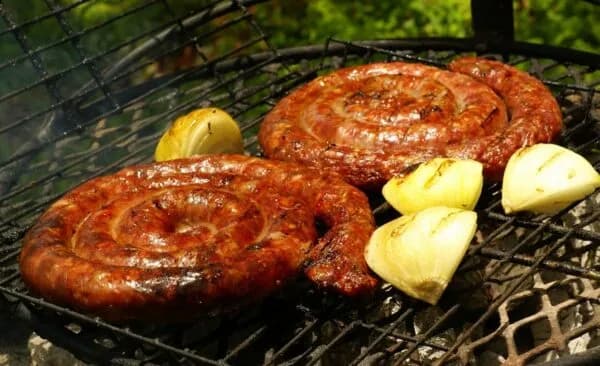
Boerewors is South Africa's sausage and one of the few foods in the world whose composition is set in law. Regulation requires at least 90 percent meat and caps the fat, which means anything sold under the name has to be the real thing. That is an unusual amount of legislative attention for a sausage and a reasonable measure of what it means to the country.
It is coarsely minced beef, often with pork or lamb, seasoned with coriander seed, black pepper, nutmeg, cloves and allspice, bound with vinegar and filled into a natural casing in one continuous spiral. The coriander is the note people recognise. The spiral is not decorative: boerewors is grilled whole in its coil and cut only after cooking, because the casing holds the juices and cutting it first dries the sausage out.
Its setting is the braai, and the braai is not a quick barbecue. It is an afternoon or an evening built around constructing a wood or charcoal fire and waiting for it to reach the right heat, during which a good deal of talking and drinking happens. When the braai master declares the fire ready, the meat takes half an hour and everything else has to be ready. For South Africans abroad, boerewors is the food most often named as the one they cannot get, which is why so many of them learn to make it.