Nous utilisons des cookies essentiels au fonctionnement du site. Nous aimerions aussi déposer des cookies de mesure d’audience et des cookies publicitaires, uniquement avec votre accord. Vous pouvez choisir séparément pour chacun. Lire notre politique relative aux cookies

Loading
Recettes
Parcourez les archives par pays, par plat et par temps de cuisson.
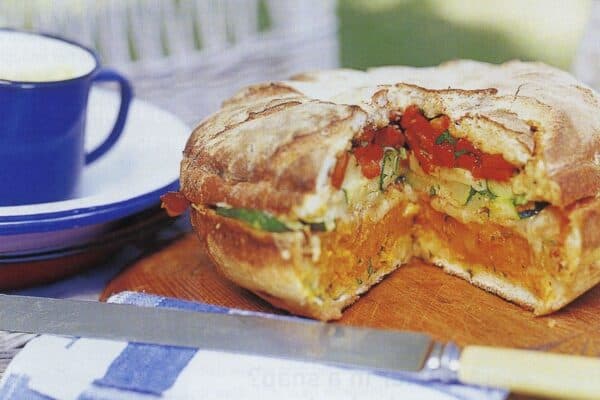
Picnic bread is a South African savoury quick bread, heavy with cheese, spring onion and bacon, bound with egg, and made to be eaten cold in a slice with nothing on it.
The category matters. It is a quick bread, raised chemically rather than with yeast, which means no proving and no kneading. Everything is mixed and baked. That is much of why it exists: it is a bread that can be made in an evening for the next day without planning.
Its association is with food carried away from home. It is described as an old recipe favoured by fishermen for their packed lunches and by schoolchildren, and the reasoning is visible in the recipe itself. It needs no butter because there is enough fat in it already. It holds together in a slice rather than crumbling. It does not dry out the way a plain loaf does. And it is dense enough that one slice is a meal rather than an accompaniment, which is exactly what you want on a boat or a long day out.
The texture is unusual for a bread. It is moist, almost pudding-like in the middle, without being heavy, and the cheese keeps it soft for days.
It is honest about what it is: nobody has ever pretended this is a low-fat recipe.
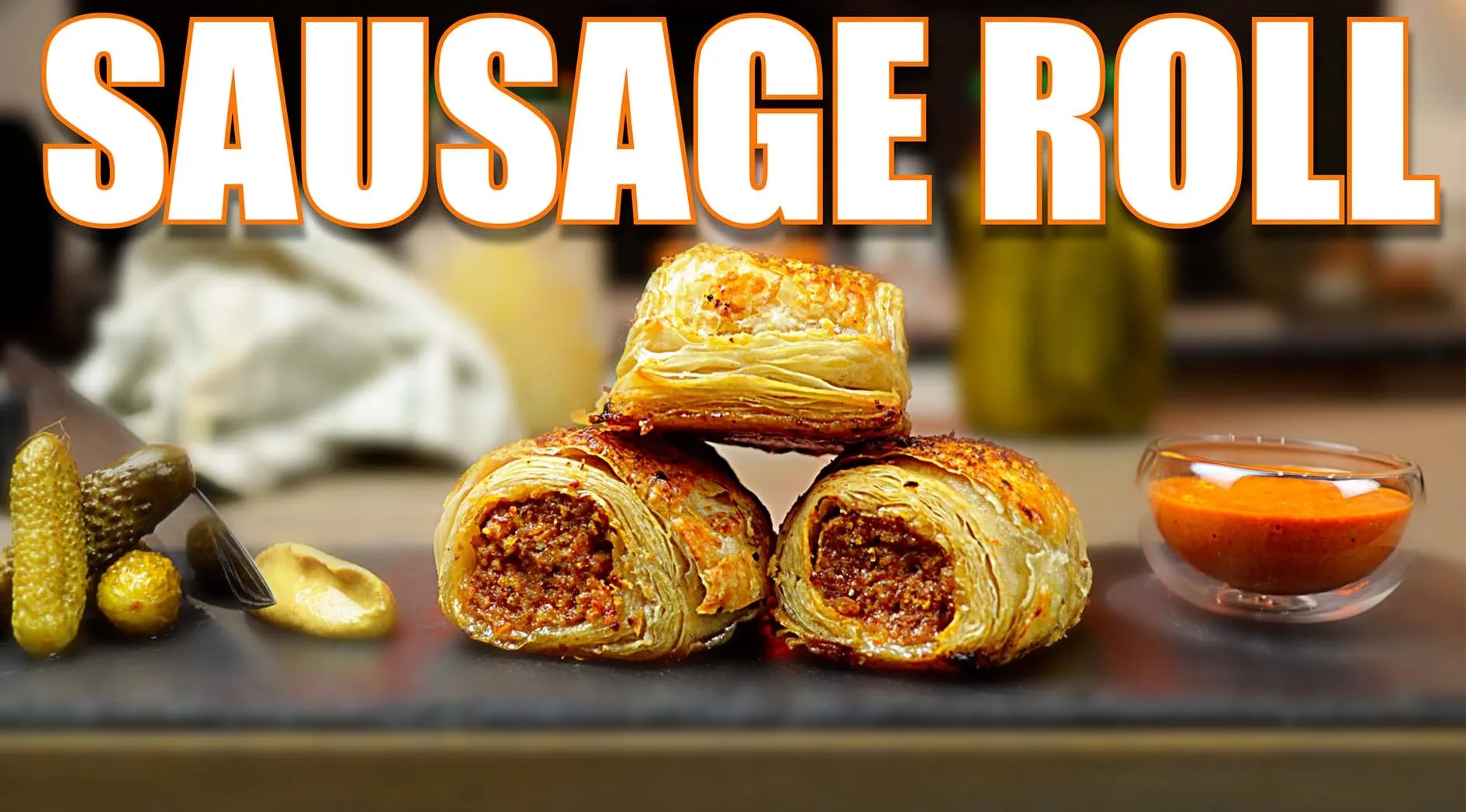
This is a British sausage roll carrying a Southern African sauce, and it is worth being precise about which part comes from where. The sausage roll itself, seasoned pork in puff pastry, is British. Peri peri is the contribution from Africa, and it is a substantial one.
Peri peri, also spelled piri piri, is the Swahili name for the African bird's eye chilli, a small and ferociously hot capsicum that grows wild across Mozambique, Angola and southern Africa. Portuguese traders encountered it in their African territories and built a sauce around it with garlic, lemon, vinegar and paprika, and that sauce travelled back through Portugal and outward again. Its association with grilled chicken in Mozambique and South Africa is where most people meet it.
So this is a fusion piece rather than a traditional dish of anywhere, and it makes no claim otherwise. It is also a genuinely demanding recipe: the pastry is laminated from scratch, which means rolling and folding butter into dough across several chilled stages, and that is the bulk of the work. Shop bought puff pastry produces a perfectly good sausage roll and removes about ninety minutes.
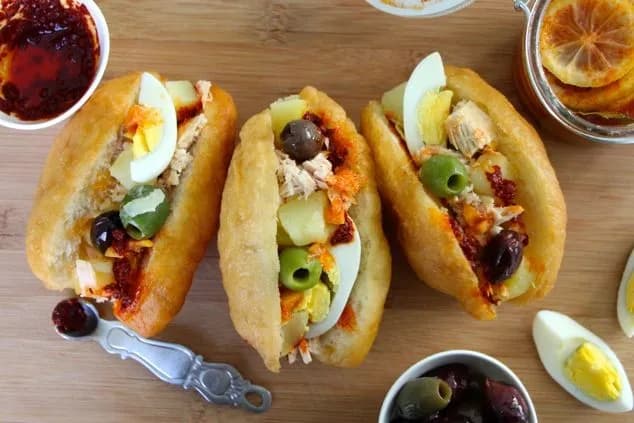
A fricassé is a small oval roll of enriched dough, deep-fried and then split and packed with tuna, potato, olives, egg and harissa. It is Tunisian street food, and it is one of the country's most recognisable things to eat.
The word does not mean what it means elsewhere. In French, a fricassée is a braise of meat in a white sauce; in Tunisia and its diaspora it means this sandwich and nothing else. That divergence is complete enough that searching the French term will not find you the Tunisian food.
The filling is the point and it is fixed by convention rather than by recipe: tuna in olive oil, cooked potato, black olives, egg and harissa, with slata méchouia, the grilled pepper and tomato salad, very often alongside. Capers and preserved lemon appear in some versions. What matters is that the bread is fried rather than baked, which gives a rich, slightly greasy roll that stands up to a wet filling.
**A significant gap in the source.** Its ingredient list contains only the dough, yeast, water, flour, egg, oil, salt. Not one of the filling ingredients it spends its article describing appears in it. The filling below has been reconstructed from that description and flagged.
**It contains eggs and fish.**
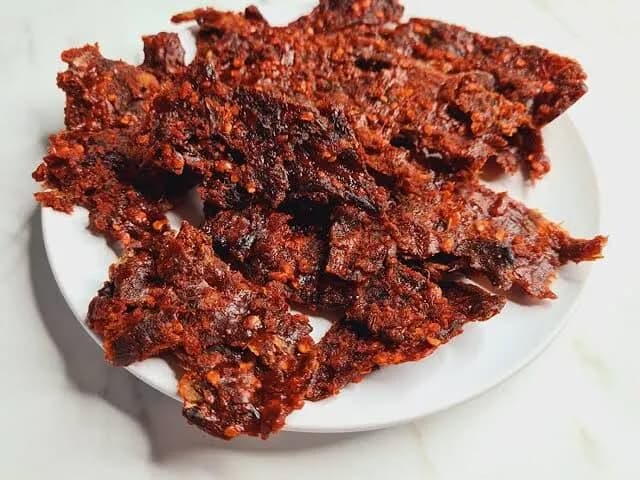
Kilishi is Northern Nigerian dried meat, and it is a considerably more deliberate thing than the jerky it is usually compared to. Beef is sliced thin enough to be translucent, dried, coated in a paste built on ground groundnuts and spices, dried again, and briefly finished over heat. The groundnut coating is what separates kilishi from every other dried meat in the world.
It is a preservation technology first. In the Sahel, where refrigeration was not available and the dry season is long, thin slicing and sun drying kept meat edible for months, and the spice paste added flavour while doing further preservation work. That the result is now sold as a delicacy rather than as survival food does not change what it was built for.
Kilishi is Hausa, sold in markets across the north and increasingly across the whole of Nigeria and among the diaspora, where it travels well precisely because it was designed to. It is eaten as a snack rather than as part of a meal, torn into pieces, often with a cold drink. The heat level varies by maker, and the yaji spice logic that runs through northern Nigerian cooking, the same groundnut and pepper base used on suya, is visible in it.