Nous utilisons des cookies essentiels au fonctionnement du site. Nous aimerions aussi déposer des cookies de mesure d’audience et des cookies publicitaires, uniquement avec votre accord. Vous pouvez choisir séparément pour chacun. Lire notre politique relative aux cookies

Loading
Recettes
Parcourez les archives par pays, par plat et par temps de cuisson.
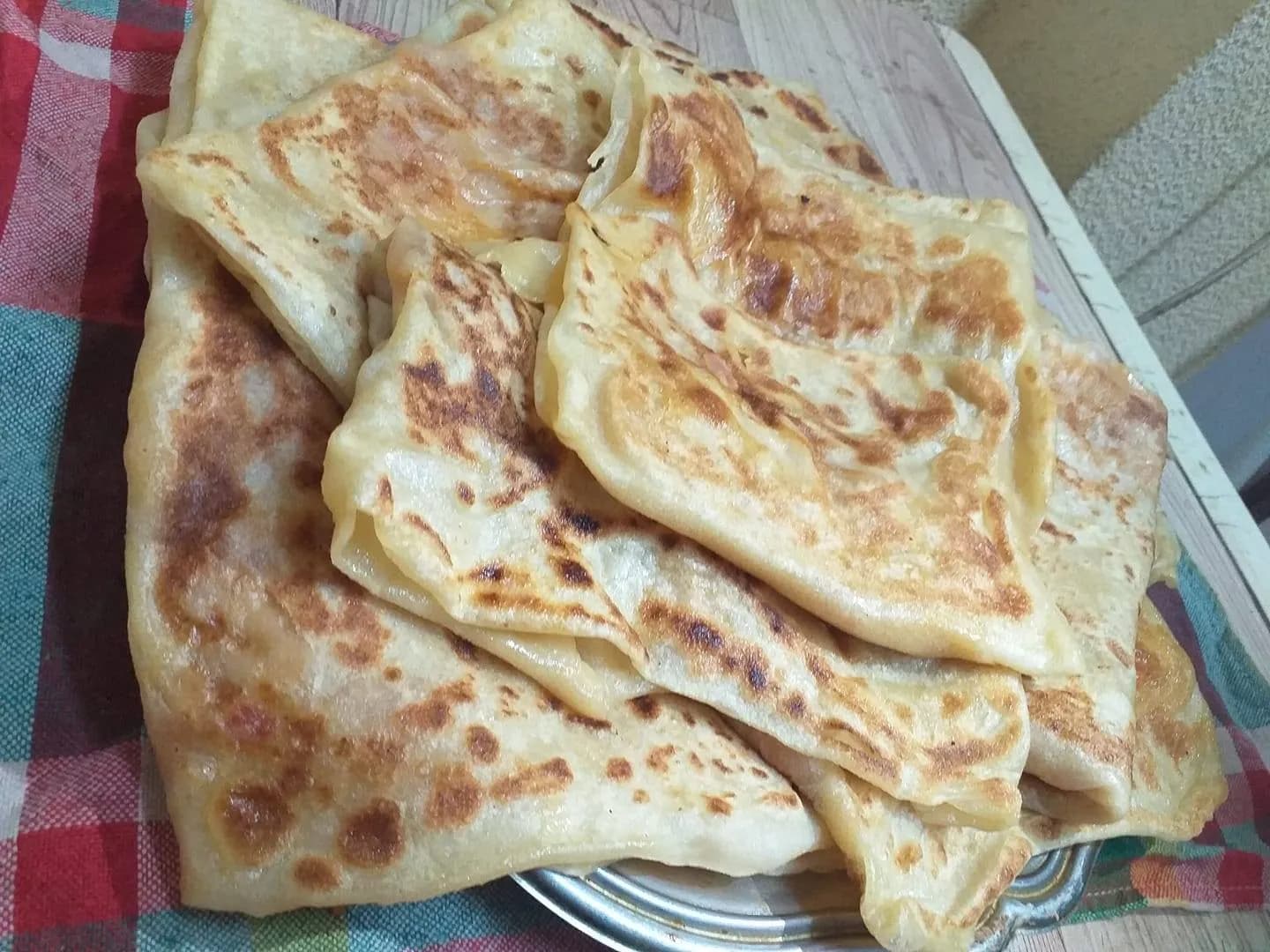
Mhajab is a stuffed North African flatbread, and the technique is what makes it. A soft dough is stretched out until it is thin enough to see through, folded in from the sides and then from the top and bottom into a square parcel around a filling, and cooked flat on a griddle. The folding creates the layers, and the layers are the dish.
It belongs to Algeria and Morocco and is closely related to the Moroccan msemen and rghaif, which use the same stretch and fold method without a filling. Mhajab is street food and it is household food for special occasions, which is a combination that usually indicates something that takes skill but not money.
The filling is conventionally a cooked mixture of onion, tomato and pepper, sometimes with meat, and the version here uses beef with potato and carrot. Vegetable fillings are as common as meat ones. It is eaten on its own, or served alongside couscous, harira and salads with mint tea. Cooked on a griddle it comes out crisp outside and soft within; baked it is softer throughout and takes longer, which is the trade the source lays out honestly.
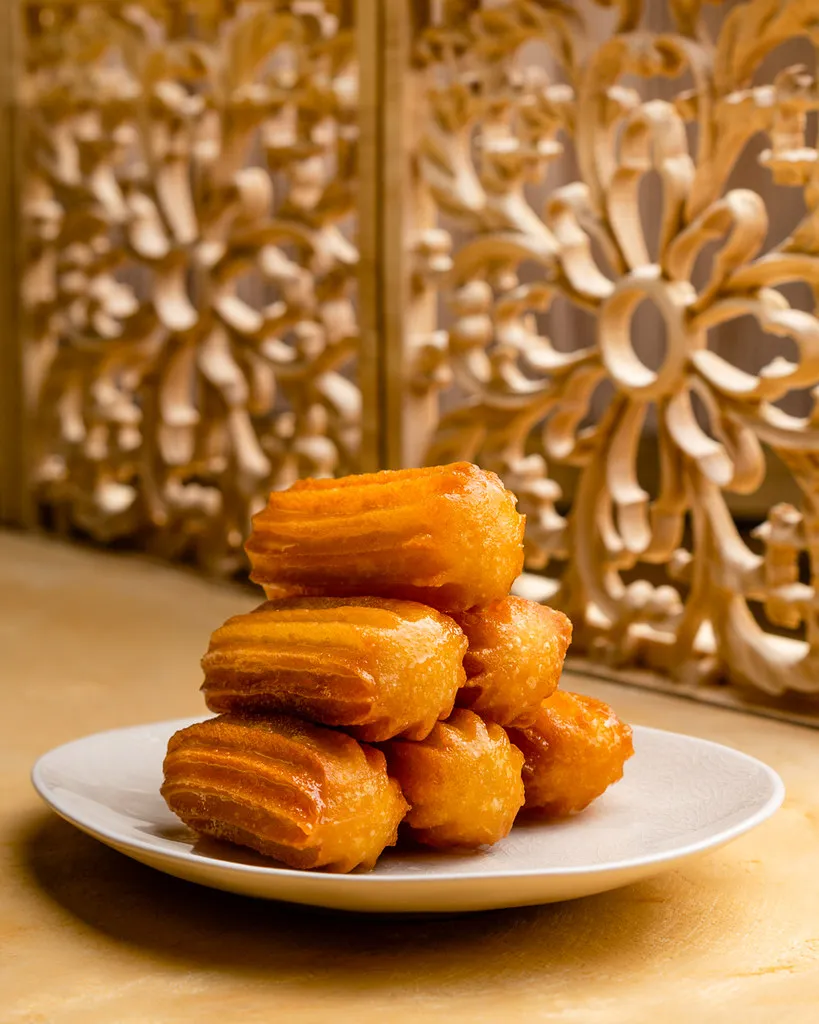
Balah el sham is fried choux pastry soaked in syrup, and it is one of the desserts Egyptians most associate with childhood. It is piped into short lengths through a star nozzle, fried until golden and ridged, then dropped into cool sugar syrup, which seeps into every groove.
The name translates from Arabic as Levant dates, and it contains no dates at all. It is called that for its size and shape, and Sham for the Levant region where it originated. It is eaten across much of the Middle East and in parts of Eastern Europe under other names, and the closest familiar comparison is churros, with one important difference: churros are rolled in cinnamon sugar, while balah el sham is submerged in syrup.
Choux is the technique, and it is the same pastry used for éclairs and profiteroles. Flour is cooked into hot liquid until it forms a ball and turns glossy, then eggs are beaten in off the heat, one at a time. What is unusual here is that it is fried rather than baked, which gives a crisp ridged shell around a hollow, airy centre. It is often split and filled with cream, custard, mascarpone, chocolate or nuts, and pistachios on top are standard. It can be eaten hot or cold.
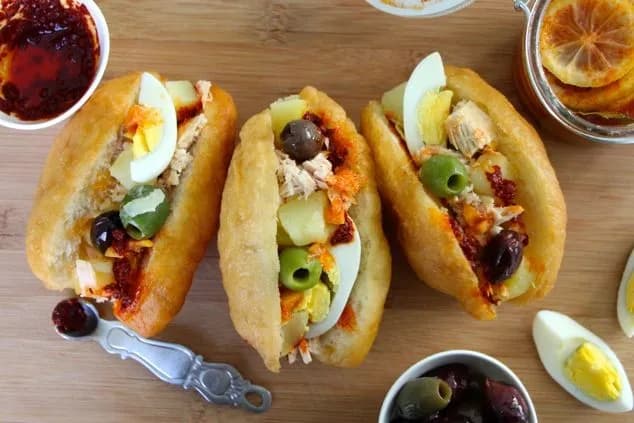
A fricassé is a small oval roll of enriched dough, deep-fried and then split and packed with tuna, potato, olives, egg and harissa. It is Tunisian street food, and it is one of the country's most recognisable things to eat.
The word does not mean what it means elsewhere. In French, a fricassée is a braise of meat in a white sauce; in Tunisia and its diaspora it means this sandwich and nothing else. That divergence is complete enough that searching the French term will not find you the Tunisian food.
The filling is the point and it is fixed by convention rather than by recipe: tuna in olive oil, cooked potato, black olives, egg and harissa, with slata méchouia, the grilled pepper and tomato salad, very often alongside. Capers and preserved lemon appear in some versions. What matters is that the bread is fried rather than baked, which gives a rich, slightly greasy roll that stands up to a wet filling.
**A significant gap in the source.** Its ingredient list contains only the dough, yeast, water, flour, egg, oil, salt. Not one of the filling ingredients it spends its article describing appears in it. The filling below has been reconstructed from that description and flagged.
**It contains eggs and fish.**