Nous utilisons des cookies essentiels au fonctionnement du site. Nous aimerions aussi déposer des cookies de mesure d’audience et des cookies publicitaires, uniquement avec votre accord. Vous pouvez choisir séparément pour chacun. Lire notre politique relative aux cookies
Loading
Recettes
Parcourez les archives par pays, par plat et par temps de cuisson.
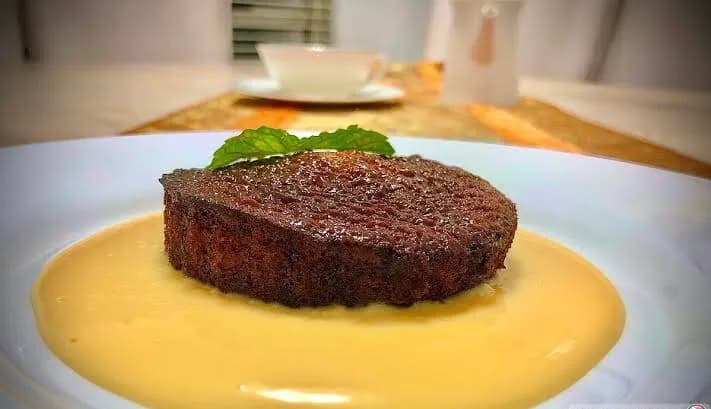
Malva pudding is a spongy baked pudding with apricot jam in the batter, drenched in a hot cream and butter sauce the moment it leaves the oven. It is South African, of Cape Dutch origin, and it is one of the country's best-known desserts.
The sauce is the point. A hot pudding absorbs a hot liquid readily, and pouring the cream, butter and sugar mixture over the pudding straight from the oven is what turns a plain sponge into malva pudding. The source is right that it should be moistened rather than swimming, the sauce should soak in, not pool.
Three ingredients are doing more than they appear to. Apricot jam gives both moisture and a faint fruit note that is characteristic of the dish. Vinegar provides the acid that bicarbonate of soda needs to react with, since there is no other acid in the batter. And the small quantity of butter is deliberate, malva pudding is not a rich batter, because the richness arrives afterwards in the sauce.
The name is unresolved. It is often said to come from the Afrikaans for marshmallow, describing the texture, and sometimes from malvasia wine. Neither is established, and both have been recorded as claims.
A chocolate version exists on this site as a separate page.
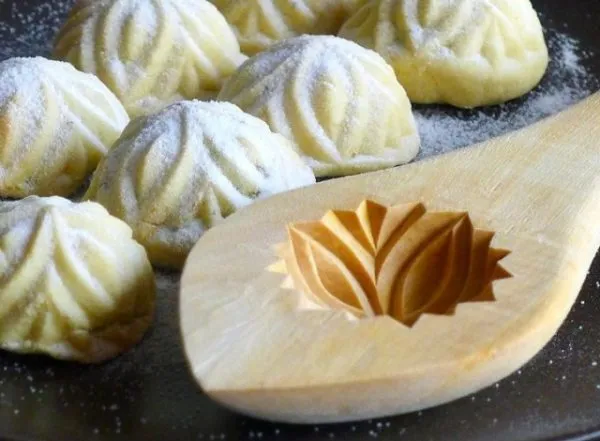
Maamoul are semolina cookies filled with a sweet paste, walnuts here, though dates and pistachios are equally traditional, pressed into a carved mould and dusted with icing sugar. They are Levantine in origin, strongly associated with Lebanon, and eaten across the Middle East and North Africa.
**They contain walnuts, which the title gives no indication of.**
**This page had no recipe card in the source.** The ingredients and method below are reconstructed from its article, and that is flagged.
Two things distinguish maamoul from an ordinary filled cookie. The dough is semolina rather than flour, worked with boiling water and fat, and then rested for at least an hour, often overnight. That rest lets the semolina hydrate fully, and without it the cookies are gritty. The second is the mould: carved wooden moulds called tabi press a pattern into each cookie, and traditionally the pattern indicates the filling, so you can tell dates from walnuts from pistachios without breaking one open.
They are festival food. Maamoul is made for Eid al-Fitr, for Easter and for Purim, by Muslim, Christian and Jewish families respectively across the Levant, one of the more striking examples of a single food crossing all three.
The source's method contains a typo, calling for groundnuts where the ingredient list specifies walnuts.
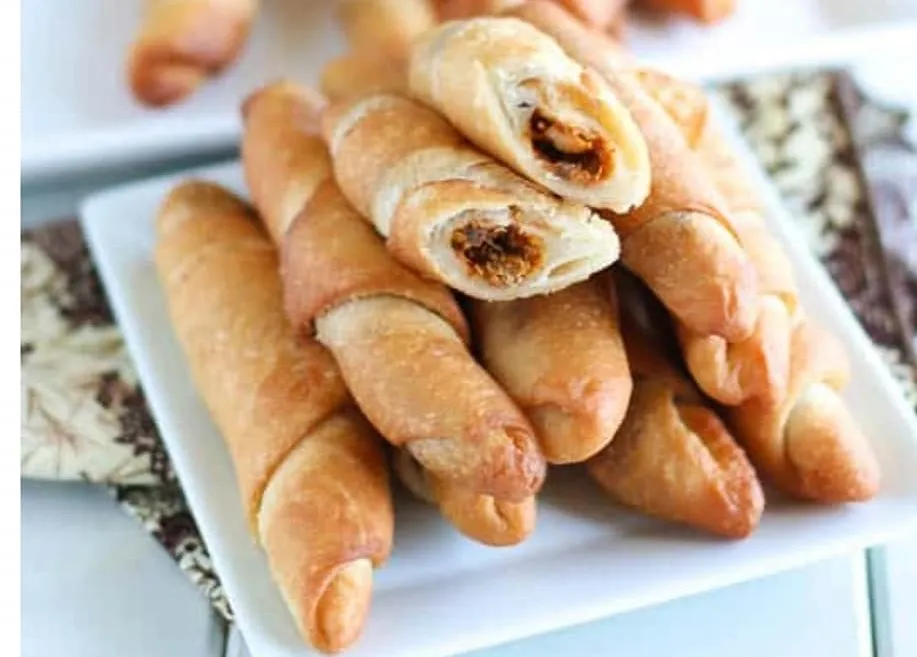
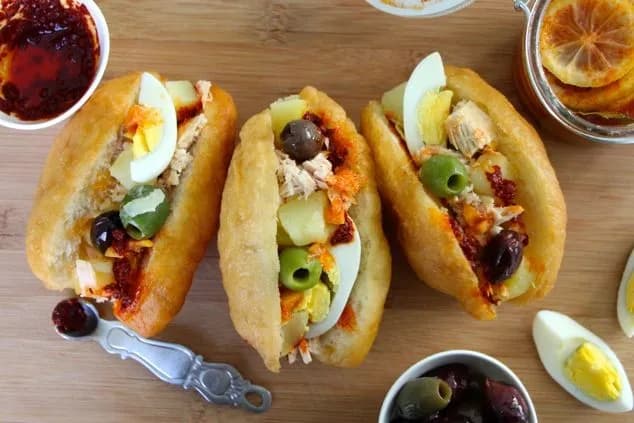
A fricassé is a small oval roll of enriched dough, deep-fried and then split and packed with tuna, potato, olives, egg and harissa. It is Tunisian street food, and it is one of the country's most recognisable things to eat.
The word does not mean what it means elsewhere. In French, a fricassée is a braise of meat in a white sauce; in Tunisia and its diaspora it means this sandwich and nothing else. That divergence is complete enough that searching the French term will not find you the Tunisian food.
The filling is the point and it is fixed by convention rather than by recipe: tuna in olive oil, cooked potato, black olives, egg and harissa, with slata méchouia, the grilled pepper and tomato salad, very often alongside. Capers and preserved lemon appear in some versions. What matters is that the bread is fried rather than baked, which gives a rich, slightly greasy roll that stands up to a wet filling.
**A significant gap in the source.** Its ingredient list contains only the dough, yeast, water, flour, egg, oil, salt. Not one of the filling ingredients it spends its article describing appears in it. The filling below has been reconstructed from that description and flagged.
**It contains eggs and fish.**
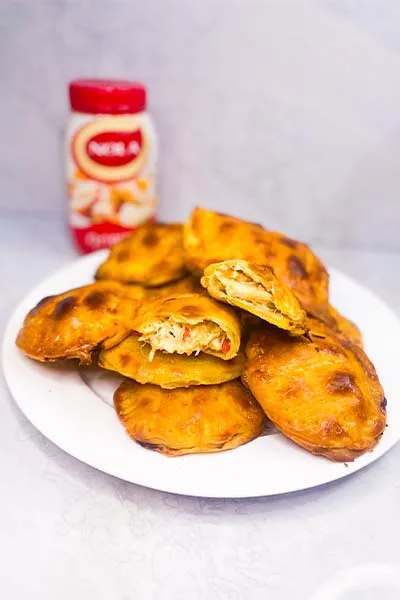
The Nigerian egg roll is a whole hard cooked egg wrapped in a slightly sweet dough and deep fried, and it has nothing to do with the Chinese egg roll beyond the name. The closest comparison is a Scotch egg, with dough in place of sausage meat, and the resemblance ends at the structure.
It is street food and travel food. Egg rolls are sold from glass cases at bus stops, from hawkers' trays in traffic, and from the small kiosks that cluster around Lagos offices, and they exist because they solve a specific problem: something substantial, cheap and self contained that can be eaten with one hand in a stationary car. Anyone who has spent time in Lagos traffic understands the appeal without further explanation.
The dough is what makes it Nigerian rather than generic. Flour, baking powder, sugar, margarine and nutmeg produce something between a bread and a cake, faintly sweet against the plain salted egg inside, and that sweet and savoury combination is a Nigerian snack signature that also runs through buns, puff puff and chin chin. It is eaten with tea, fruit juice or chilled zobo, and it is substantial enough that people eat it as breakfast or lunch rather than as a snack.