Balah El Sham
4.04 out of 5, 1 ratings50 min


Cookies sur African Food Network
Nous utilisons des cookies essentiels au fonctionnement du site. Nous aimerions aussi déposer des cookies de mesure d’audience et des cookies publicitaires, uniquement avec votre accord. Vous pouvez choisir séparément pour chacun. Lire notre politique relative aux cookies

Parcourez les archives par pays, par plat et par temps de cuisson.
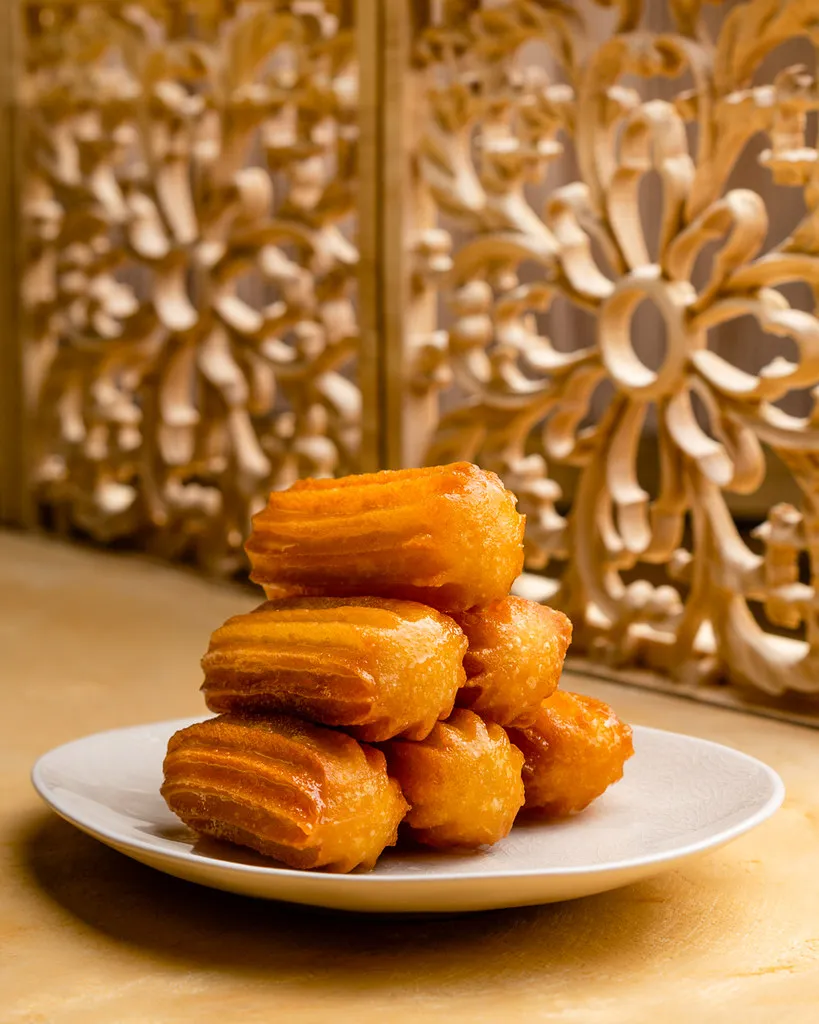
Balah el sham is fried choux pastry soaked in syrup, and it is one of the desserts Egyptians most associate with childhood. It is piped into short lengths through a star nozzle, fried until golden and ridged, then dropped into cool sugar syrup, which seeps into every groove. The name translates from Arabic as Levant dates, and it contains no dates at all. It is called that for its size and shape, and Sham for the Levant region where it originated. It is eaten across much of the Middle East and in parts of Eastern Europe under other names, and the closest familiar comparison is churros, with one important difference: churros are rolled in cinnamon sugar, while balah el sham is submerged in syrup. Choux is the technique, and it is the same pastry used for éclairs and profiteroles. Flour is cooked into hot liquid until it forms a ball and turns glossy, then eggs are beaten in off the heat, one at a time. What is unusual here is that it is fried rather than baked, which gives a crisp ridged shell around a hollow, airy centre. It is often split and filled with cream, custard, mascarpone, chocolate or nuts, and pistachios on top are standard. It can be eaten hot or cold.
Les mieux notées
50 minMediumEgypt
Recette de FoodChef · Africook
Rien ici pour le moment
Tout effacer