Nous utilisons des cookies essentiels au fonctionnement du site. Nous aimerions aussi déposer des cookies de mesure d’audience et des cookies publicitaires, uniquement avec votre accord. Vous pouvez choisir séparément pour chacun. Lire notre politique relative aux cookies

Loading
Recettes
Parcourez les archives par pays, par plat et par temps de cuisson.
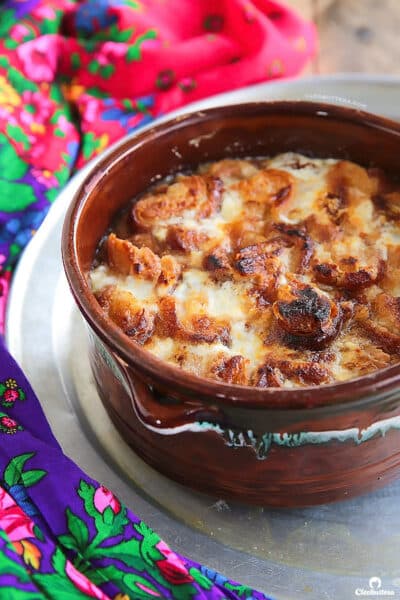
Om Ali is Egypt's most beloved dessert, a warm, sweet pudding made from torn pieces of puff pastry or bread baked in sweetened milk with nuts, coconut, and raisins until golden and bubbling. It sits somewhere between a bread pudding and a milk-soaked pastry and manages to be simultaneously comforting and festive. The dish is a fixture of Egyptian restaurants, home celebrations, and Ramadan gatherings, where it is often served in communal baking dishes at the end of a large meal. Despite its simplicity, Om Ali manages to taste luxurious, the puff pastry creates layered, crispy edges while the centre remains soft and creamy with the absorbed milk.
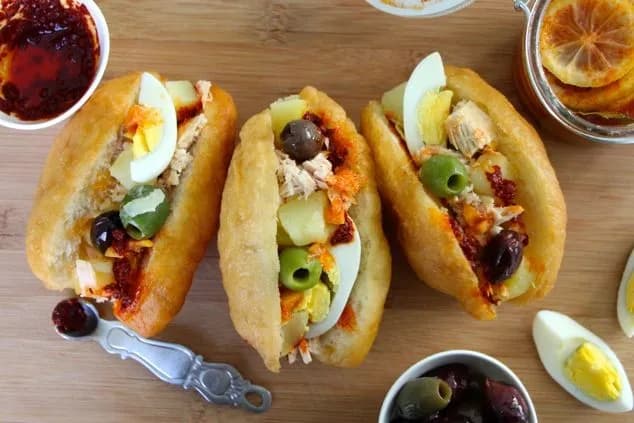
A fricassé is a small oval roll of enriched dough, deep-fried and then split and packed with tuna, potato, olives, egg and harissa. It is Tunisian street food, and it is one of the country's most recognisable things to eat.
The word does not mean what it means elsewhere. In French, a fricassée is a braise of meat in a white sauce; in Tunisia and its diaspora it means this sandwich and nothing else. That divergence is complete enough that searching the French term will not find you the Tunisian food.
The filling is the point and it is fixed by convention rather than by recipe: tuna in olive oil, cooked potato, black olives, egg and harissa, with slata méchouia, the grilled pepper and tomato salad, very often alongside. Capers and preserved lemon appear in some versions. What matters is that the bread is fried rather than baked, which gives a rich, slightly greasy roll that stands up to a wet filling.
**A significant gap in the source.** Its ingredient list contains only the dough, yeast, water, flour, egg, oil, salt. Not one of the filling ingredients it spends its article describing appears in it. The filling below has been reconstructed from that description and flagged.
**It contains eggs and fish.**
Ghorayebah is the Egyptian butter cookie, made with ghee and almost nothing else, and its whole character is texture. It is barely sweet, pale to the point of being off-white, and it disintegrates the moment it is bitten.
Four ingredients make it: ghee, icing sugar, flour and a little vanilla, with baking powder for a very slight lift. The classic Egyptian version is flavoured with nothing beyond the ghee itself, which is the point of it. Elsewhere in the Arab world, in Syria and Lebanon particularly, it is flavoured with orange blossom and rose water, is slightly crunchier, and is pronounced graybeh. It also goes by ghraybeh and ghoraybeh.
The comparison usually made is shortbread without the crunch, and that is fair as far as it goes. What ghorayebah has that shortbread does not is a fine, almost powdery crumb and a smooth finish with a faintly fuzzy outer surface. Two things produce it: ghee rather than butter, which contains no water, and a very low oven that dries the cookie without colouring it. It must not brown. A clove pressed into the centre of each is the traditional finish.
Pastilla is the Moroccan dish that most confounds people who meet it for the first time: shredded spiced poultry and toasted sweetened almonds, layered inside buttered pastry and dusted with icing sugar and cinnamon. Savoury and sweet are not separated but deliberately built into the same mouthful.
It is celebration food. Pastilla appears at weddings, at Eid, and when a household wants to demonstrate hospitality to a guest, and the effort involved is part of the message. Historically it was made with pigeon; chicken is now standard, and the shift is one of availability rather than taste.
The dish is known by both names. Bastila and pastilla are the same word under different regional pronunciations and are used interchangeably in Morocco. Its regional forms diverge considerably: Fes makes a lamb version, coastal Essaouira a seafood one with prawns and fish, and Atlas households work dried fruit in for extra sweetness.
Two notes on this particular version. Its ingredient list names both phyllo dough and filo sheets, which are the same thing under two spellings. And it gives no oven temperature, deferring to whatever is printed on the pastry packet. A hot oven is what the method needs, and the figure is given below. There are a lot of almonds here, which matters for anyone with a tree nut allergy.