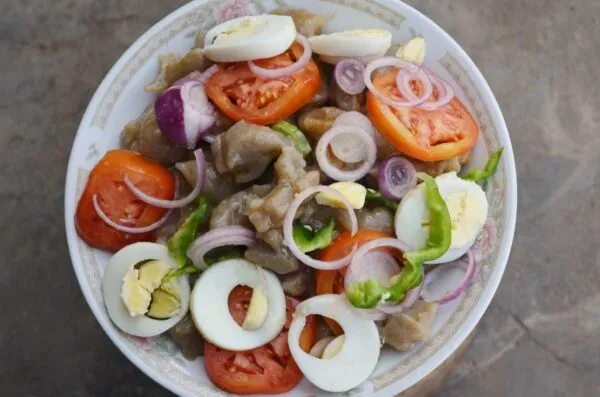
Danwake Assorted
4.04 out of 5, 3 ratings45 min


Cookies sur African Food Network
Nous utilisons des cookies essentiels au fonctionnement du site. Nous aimerions aussi déposer des cookies de mesure d’audience et des cookies publicitaires, uniquement avec votre accord. Vous pouvez choisir séparément pour chacun. Lire notre politique relative aux cookies
Parcourez les archives par pays, par plat et par temps de cuisson.
Danwake is a Northern Nigerian dish of small dumplings made from bean flour and ground baobab leaf, then cooled and dressed with oil and pepper. The dumplings are pale green from the kuka, soft and slightly springy, and they are eaten in quantity rather than as a delicate portion. Its origin is given as Niger, and it has been adopted so completely across Northern Nigeria that it now reads as a staple of the region rather than an import from it. The flour blend varies from one part of the north to another, which means there is no single correct danwake and households treat the mix as something to have an opinion about. Traditionally it is eaten as danwake da mai da yaji, which is Hausa for danwake with oil and pepper, and that is the whole dish in its plain form. The eating method is part of the memory people carry of it: children pick up a single ball with a broomstick, swirl it in the oil and pepper, and eat it that way, one at a time. A fork is the modern substitute and is more hygienic, which is not the same as saying it is better. The assorted version here carries egg, tomato, onion and bell pepper alongside the base.
Les mieux notées
45 minEasyNigeria
Recette de Maryam · Africook
Rien ici pour le moment
Tout effacer
Les mentions alimentaires sont fournies par les contributeurs à titre indicatif. Elles ne sont pas vérifiées par AFN et dépendent des produits que vous achetez. En cas d’allergie grave, vérifiez vous-même chaque ingrédient. Cuisine, allergies et votre propre jugement