
Ivorian Jollof Rice
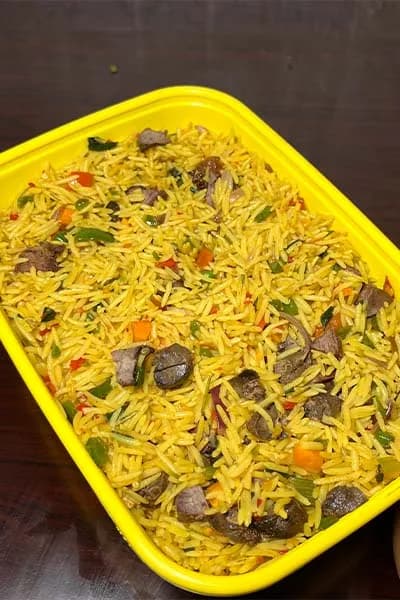
Ivorian jollof is the Francophone entry in a dish the Anglophone countries argue about most loudly. It carries the same tomato base as its neighbours and seasons it with curry powder, thyme, ginger, garlic and scotch bonnet, and it commonly cooks the cabbage and carrots in the pot with the rice rather than serving them separately. Côte d'Ivoire calls it jollof, and the wider Francophone West African name for the family is riz gras, meaning fat rice. That name describes the method accurately: rice cooked in an oil rich tomato broth until it takes all of it up. In Côte d'Ivoire the dish belongs to the same occasions it does everywhere else in the region, which is to say weddings, funerals, naming ceremonies and any gathering that expects to feed a crowd from one pot. The origin is not seriously disputed by anyone who looks into it. Jollof descends from the rice tradition of the Senegambian coast, associated with the Jolof polity that held parts of present day Senegal and the Gambia between roughly 1350 and 1549, in a region documented as the Rice Coast for the grains grown along the Senegal River. One account traces its spread through the Djula traders of the Mali empire. Neither Nigeria nor Ghana invented it, which neither country lets get in the way of the argument.
Côte d'Ivoire1 hrCuisine228