Nous utilisons des cookies essentiels au fonctionnement du site. Nous aimerions aussi déposer des cookies de mesure d’audience et des cookies publicitaires, uniquement avec votre accord. Vous pouvez choisir séparément pour chacun. Lire notre politique relative aux cookies

Loading
Recettes
Parcourez les archives par pays, par plat et par temps de cuisson.
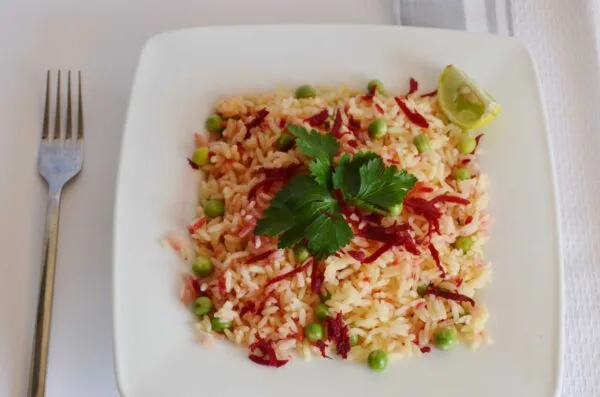
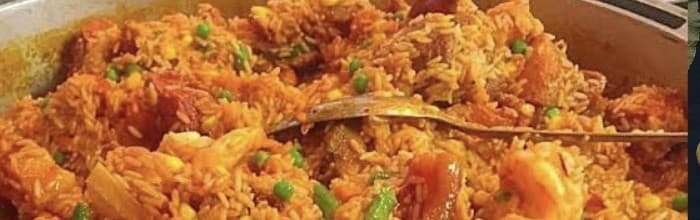
Coconut fried rice is rice cooked in coconut milk and stock rather than water, then combined with fried vegetables. It is made across an enormous range of countries, from the Indian subcontinent through Southeast Asia to South and Central America, East and West Africa, the Caribbean and Oceania, which is why no single country is claimed for it.
In Nigeria it is a party dish, and the version here reads that way: turmeric for colour, cabbage and mixed vegetables, habanero, and hotdog sausages as an optional addition, which is a distinctly Nigerian party-food touch. It sits alongside jollof rice and fried rice on the same table.
The name is slightly misleading, and the source acknowledges it. This is rice cooked in coconut milk rather than fried rice in the strict sense: the coconut milk and stock are absorbed during cooking, and the vegetables are fried separately and folded through at the end. That order matters. Cooking the rice in the coconut milk is what gets the flavour into every grain, and frying the vegetables separately keeps them from going soft in the liquid. The frozen vegetables need to be thawed and patted dry, or their water thins the whole thing.
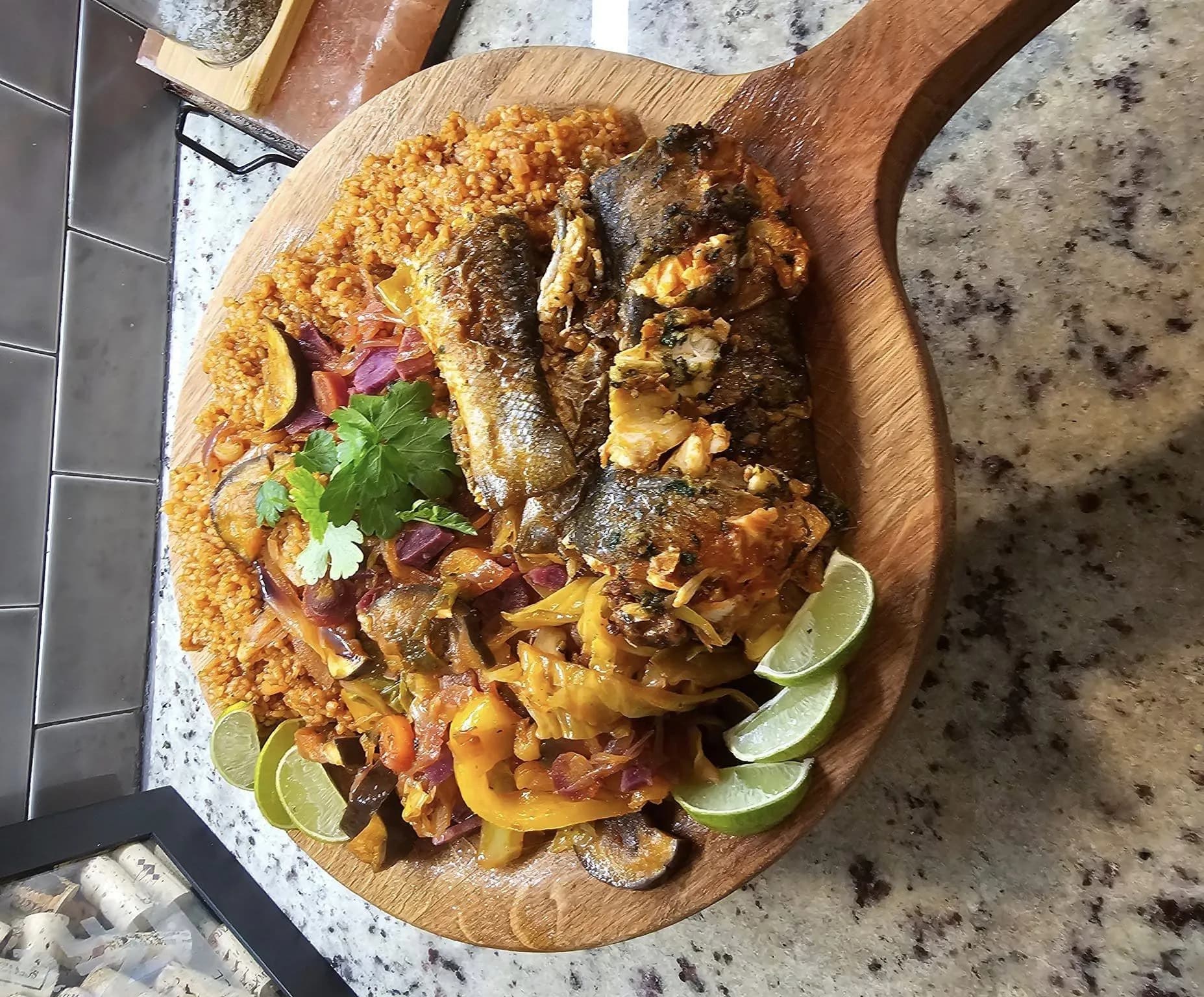
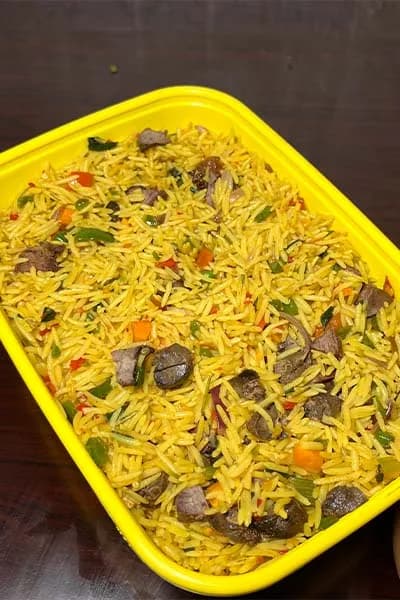
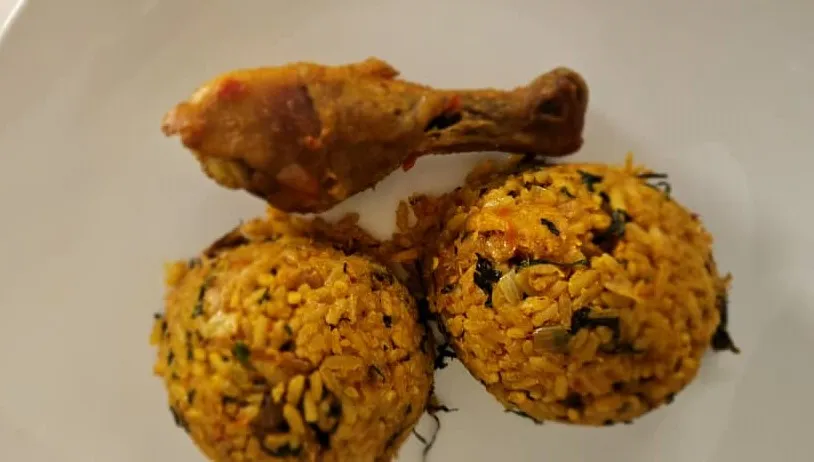
Native jollof is a distinct dish from the jollof most people know, and the difference is palm oil. Where party jollof is built on a reduced tomato and pepper base and comes out orange-red, native jollof is built on palm oil with locust beans, dried fish, crayfish and cow skin, and comes out darker, heavier and far more savoury.
It belongs to southeastern Nigeria and has its own names there. Among the Efik it is iwuk edesi, sometimes simply called palm oil rice. Igbo households make closely related versions. It is not a variation on party jollof so much as a separate tradition that happens to share the word.
The ingredients that define it are the ones that define southeastern cooking generally: iru or locust beans for their fermented depth, ground crayfish, dried and smoked fish, and ponmo, the cow skin cooked until soft. Scent leaf, the Nigerian basil, goes in at the very end. There is no tomato at all in this version, which is what separates it most sharply from what people expect when they hear jollof, and it is served with grilled local chicken rather than the fried chicken that accompanies the party version.
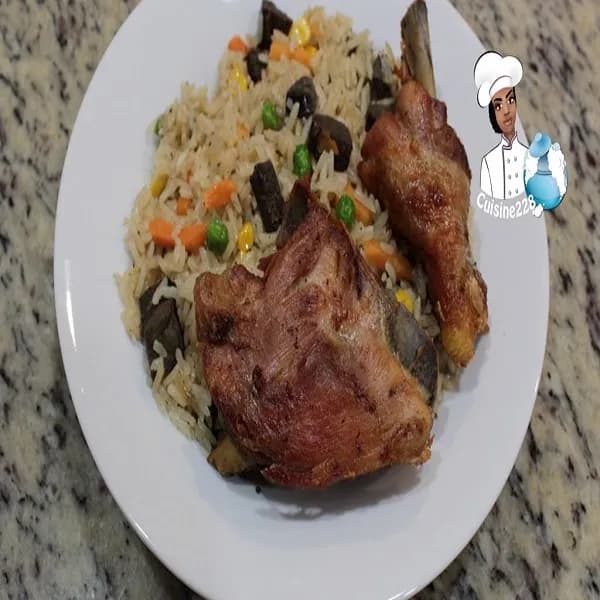
Cooked rice bound with minced liver, onion and egg, rolled into balls, crumbed and deep-fried. The contributor learned it from their grandmother in Ivory Coast.
The dish belongs to a very widely distributed family, the fried rice croquette. Italian arancini, Middle Eastern kibbeh, Nigerian rice balls and this all work on the same principle: a starch cooked, cooled, bound with something rich and shaped, then fried so the outside crisps around a soft interior. The cooling is not optional in any of them. Warm rice does not hold its shape and the balls collapse in the oil.
Offal is the other thing worth taking seriously. Liver and other variety meats are used across West African cooking as good ingredients rather than as economies, kilishi, dambu, gizdodo and asun all belong to the same attitude. Liver in particular is soft enough to bind rice without any additional fat, which is exactly why it works here.
Two practical notes. The double coating, breadcrumbs then egg wash, is the reverse of the usual order, and the source may have it backwards; the conventional sequence is flour, egg, then crumbs.
The source's nutritional inventory has not been carried across.
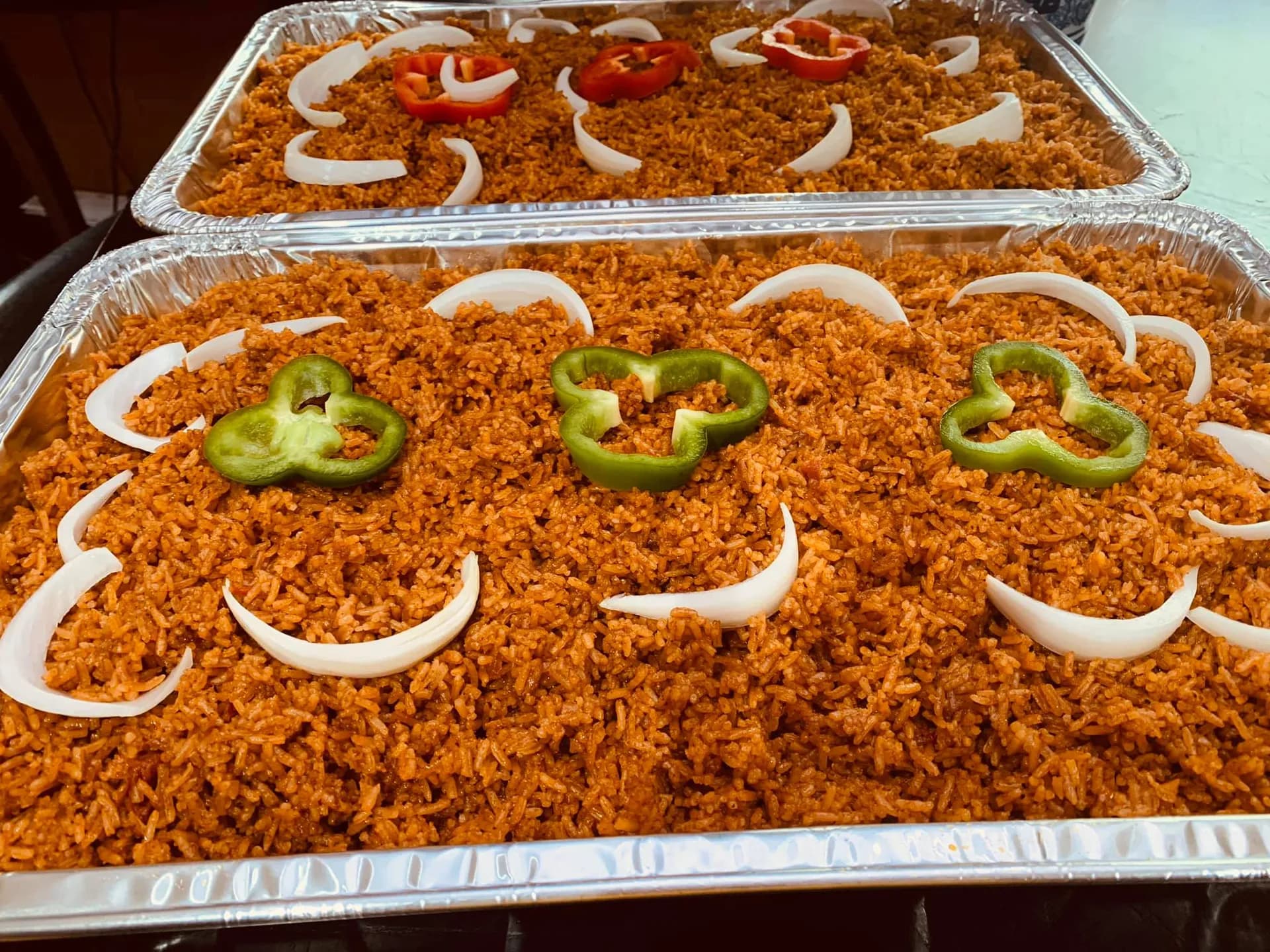
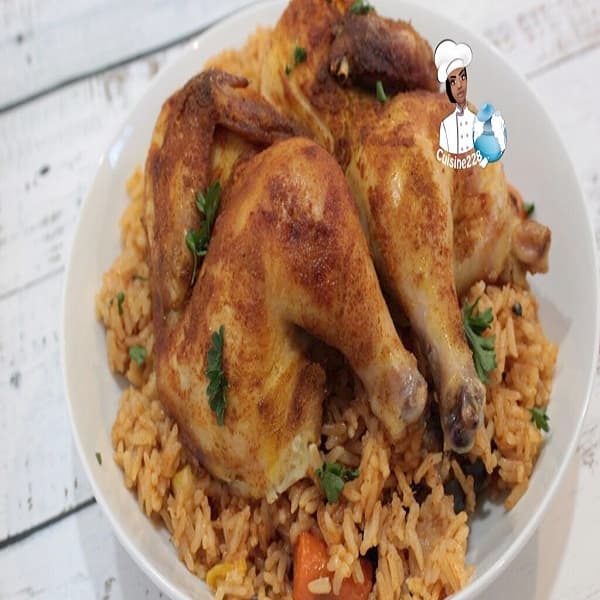
Oven-baked jollof takes the standard West African one-pot and moves it into the oven, where the heat surrounds the dish rather than coming from below.
The reason to bother is practical. Stovetop jollof burns from the base, and getting it right means managing heat carefully, too high and the bottom catches badly, too low and the rice steams unevenly. In an oven the heat is even, the rice cooks through without attention, and the pot cannot scorch in the same way. For anyone who has ruined jollof on a hob, that is a real argument.
What you trade away is the smoky note. That flavour comes precisely from the bottom of the pot catching slightly, and an oven does not give it. Cooks who want both build the base on the hob and finish in the oven.
Everything else is unchanged: the same reduced tomato, red pepper, onion and chilli base, the same long-grain parboiled rice, the same rule about not stirring once it is covered.
It scales well, which makes it useful for cooking for numbers.