Nous utilisons des cookies essentiels au fonctionnement du site. Nous aimerions aussi déposer des cookies de mesure d’audience et des cookies publicitaires, uniquement avec votre accord. Vous pouvez choisir séparément pour chacun. Lire notre politique relative aux cookies
Loading
Recettes
Parcourez les archives par pays, par plat et par temps de cuisson.
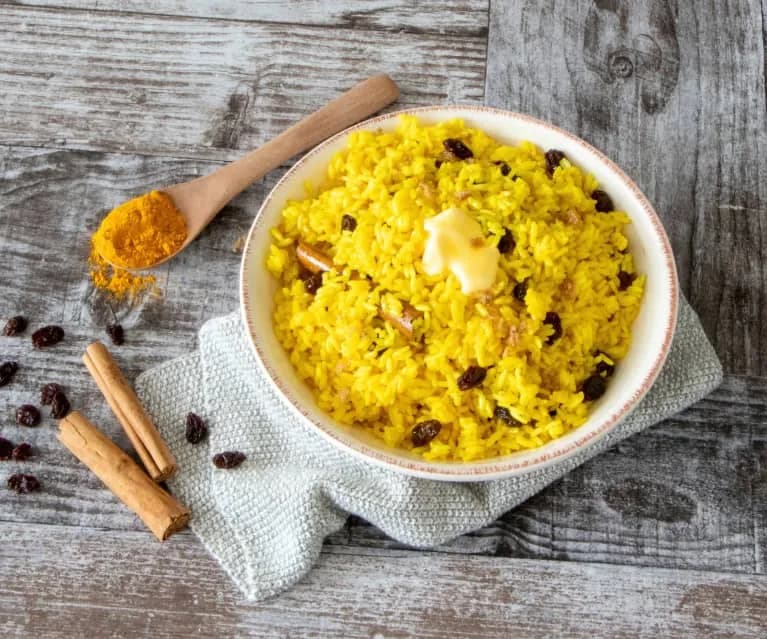
Rice cooked with turmeric, cinnamon, raisins and sugar into a sweet golden side dish. It is South African, from the Cape Malay tradition, and it is served alongside savoury curries and meat.
Sweet rice as a savoury accompaniment is the thing to understand. Cape Malay yellow rice contains sugar, raisins and cinnamon, and it goes with curry, bobotie and roast meat, the sweetness is deliberately set against savoury and spiced food rather than served as a dessert. That contrast runs right through Cape Malay cooking and it is the same instinct behind bobotie's fruit chutney and the apricot jam in pickled fish.
The community it comes from was formed by people brought to the Cape from Southeast Asia as slaves and political exiles by the Dutch from the seventeenth century onwards, and the dish is one of many that carries that history directly. Related yellow rices exist across the world, nasi kuning in Indonesia, kaha buth in Sri Lanka, and the family resemblance is not coincidental.
Turmeric is what colours it. Saffron is used in more expensive versions and annatto elsewhere.
**A significant problem with this page.** Its ingredient list merges two separate recipes, a yellow rice and a marinated roast chicken, into one list, and its method covers both. Only the rice belongs here.
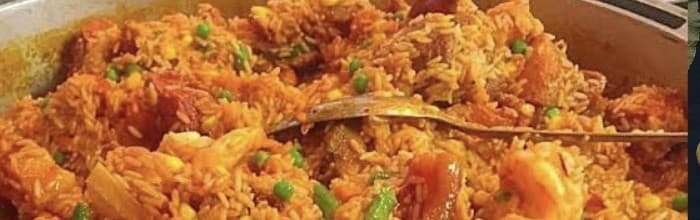
Jollof rice is the best-known dish in West Africa and the one most argued over. Rice is cooked in a base of blended tomato, red pepper, onion and chilli until it takes the colour and flavour all the way through, not rice with sauce on it, but rice that has become the sauce.
Its origins are traced to the Senegambian region and the Wolof, or Jolof, Empire, which from the fourteenth century covered parts of present-day Senegal, the Gambia and Mauritania, and where rice was grown. The ancestor dish is thiéboudienne, the Senegalese one-pot of rice, fish and vegetables. The name jollof carries the empire's own name with it.
From there it spread and diverged. Nigerian jollof leans on long-grain rice and a heavily reduced pepper base, often with a deliberate smokiness from the bottom of the pot. Ghanaian jollof commonly uses aromatic rice and a different spice balance. Senegalese thieboudienne remains its own dish. Sierra Leone, Liberia, Cameroon, Togo and the Gambia all have versions.
The rivalry between the Nigerian and Ghanaian claims is genuine, loud and largely affectionate, and it has done more to carry the dish internationally than any amount of promotion.
Whatever the version, it is not a side dish. Jollof is the centre of the table.
Jollof rice belongs to the whole of West Africa, and every country that claims it claims it as its own. The Liberian version sits inside that family without being anyone's copy. It is a tomato rice, built on long grain parboiled grains, sweetened by onion and sweet pepper, sharpened with garlic and ginger, and carrying a smokiness that Liberian cooks treat as the mark of a pot done properly.
Rice is the centre of the Liberian diet rather than an accompaniment to it, and a one pot rice that can be built around whatever protein a household has, or around no protein at all, earns its place in an everyday kitchen as readily as at a gathering. It feeds a room from a single vessel, which is part of why it survives.
Across West Africa the jollof pot is argued over with genuine feeling, and the loudest of those arguments runs between Nigeria and Ghana. Liberia is rarely named in that particular fight. That says less about the quality of the Liberian pot than about who is holding the microphone.
Pilau is the spiced rice of the East African coast: rice cooked with cumin, cardamom, cloves, cinnamon and turmeric until every grain carries the spice. It is celebration food across Kenya, Tanzania, Uganda and Zanzibar, made for weddings, for Eid, and whenever a guest of consequence arrives.
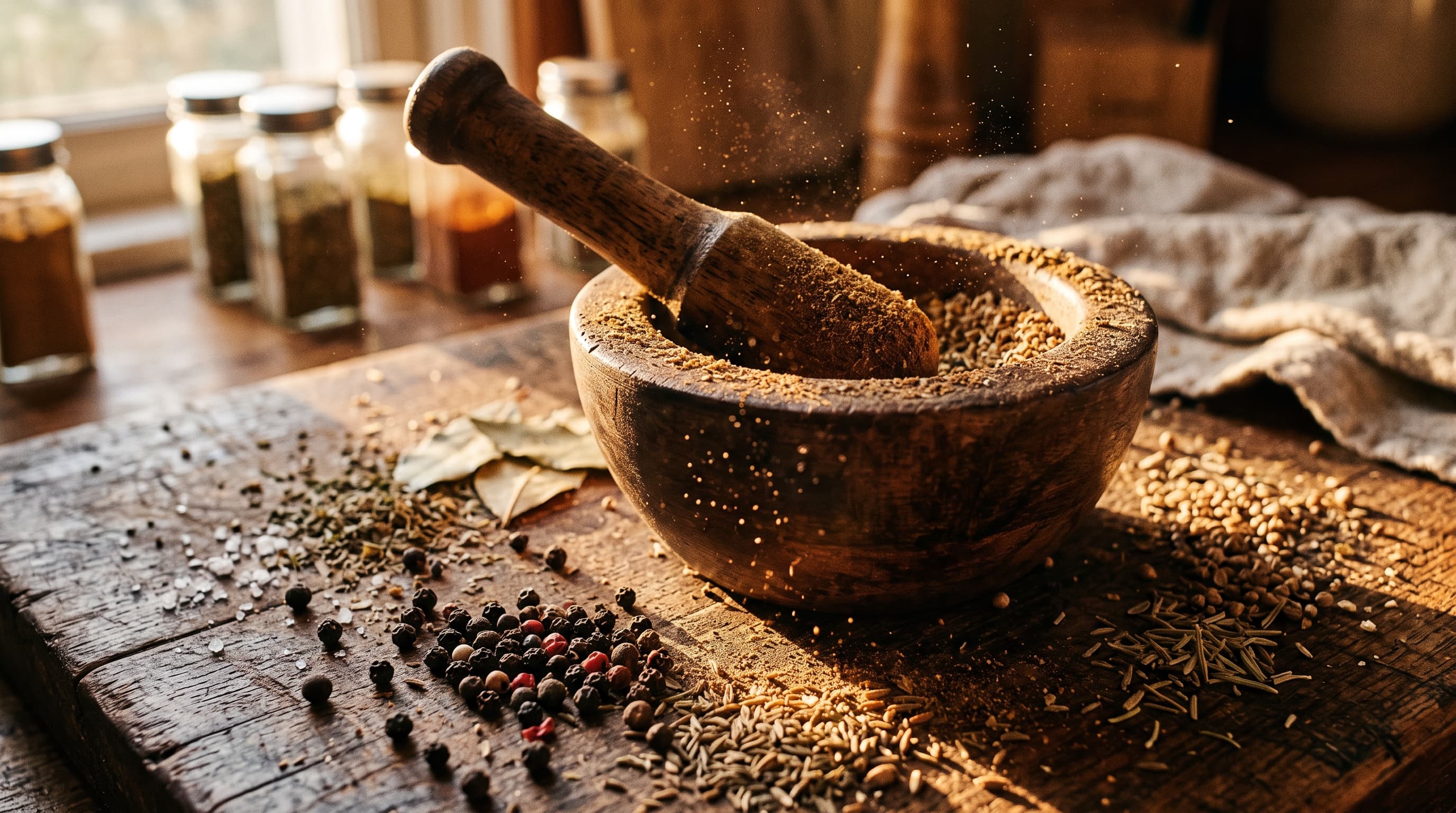
It reached the Swahili coast through centuries of Indian Ocean trade, and the family it belongs to runs from Persian polow through Central Asian plov to South Asian pulao. The East African version is milder than the Indian one and does not use curry, which is the distinction the source draws and it is a fair one. The defining spice mix has its own name, pilau masala, and there is a recipe for it on this site.
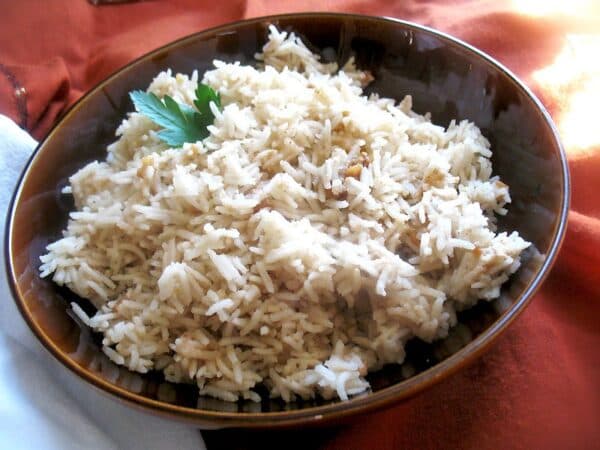
An important note about this page. Its written description is of a full pilau: caramelised beef, potatoes, tomatoes and pilau masala simmered in meat stock. The recipe card attached to it is something else entirely, a plain spiced rice with no meat, no potatoes and no stock. The recipe below follows the card, since that is the actual recipe on the page, and the result is a good vegetarian side dish. It is not, however, the celebratory beef pilau the description promises.
Browning the onions properly is the step that matters most in either version.