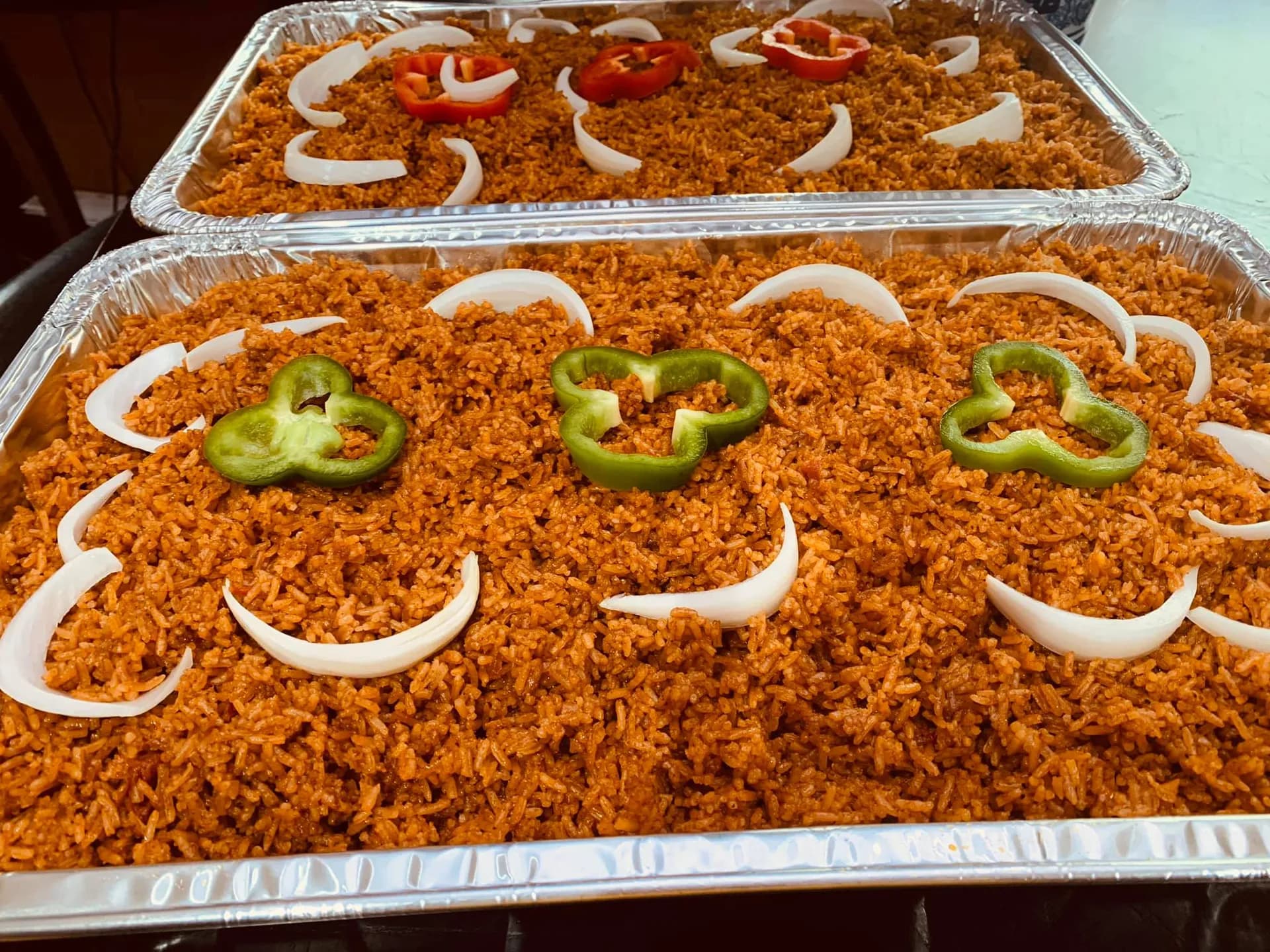
Ghana Jollof Rice
5.05 out of 5, 2 ratings1 hr 20 min


Cookies sur African Food Network
Nous utilisons des cookies essentiels au fonctionnement du site. Nous aimerions aussi déposer des cookies de mesure d’audience et des cookies publicitaires, uniquement avec votre accord. Vous pouvez choisir séparément pour chacun. Lire notre politique relative aux cookies

Parcourez les archives par pays, par plat et par temps de cuisson.
Ghanaian jollof rice is defined against its rivals as much as on its own terms, and Ghanaians are entirely comfortable with that. It is a tomato based rice, aromatic rather than fiery, seasoned with curry powder, garlic and ginger, and cooked in basmati. Every one of those choices is a position in an argument. The rice is the clearest one. Ghanaians use basmati, which stays separate and perfumed and carries the aromatics; Nigerians use long grain parboiled, which absorbs the tomato base and takes on the smoke. Neither is a mistake. They produce genuinely different dishes that share a name, and the preference in each country is consistent enough to be a national marker. The jollof rivalry between Ghana and Nigeria is the continent's most famous culinary argument, conducted on social media, at dinner tables and in the press with an intensity that has very little to do with rice and a great deal to do with two confident countries enjoying themselves. The honest position on the origin is that the dish descends from the Senegambian rice tradition rather than from either country. The honest position on which is better is that both are right within their own tradition, and Ghanaians serve theirs at every social gathering and celebration that matters.
Les mieux notées
1 hr 20 minMediumGhana
Recette de Debby · Africook
Rien ici pour le moment
Tout effacer