Nous utilisons des cookies essentiels au fonctionnement du site. Nous aimerions aussi déposer des cookies de mesure d’audience et des cookies publicitaires, uniquement avec votre accord. Vous pouvez choisir séparément pour chacun. Lire notre politique relative aux cookies
Loading
Recettes
Parcourez les archives par pays, par plat et par temps de cuisson.
Pilau is the spiced rice of the East African coast: rice cooked with cumin, cardamom, cloves, cinnamon and turmeric until every grain carries the spice. It is celebration food across Kenya, Tanzania, Uganda and Zanzibar, made for weddings, for Eid, and whenever a guest of consequence arrives.
It reached the Swahili coast through centuries of Indian Ocean trade, and the family it belongs to runs from Persian polow through Central Asian plov to South Asian pulao. The East African version is milder than the Indian one and does not use curry, which is the distinction the source draws and it is a fair one. The defining spice mix has its own name, pilau masala, and there is a recipe for it on this site.
An important note about this page. Its written description is of a full pilau: caramelised beef, potatoes, tomatoes and pilau masala simmered in meat stock. The recipe card attached to it is something else entirely, a plain spiced rice with no meat, no potatoes and no stock. The recipe below follows the card, since that is the actual recipe on the page, and the result is a good vegetarian side dish. It is not, however, the celebratory beef pilau the description promises.
Browning the onions properly is the step that matters most in either version.
Caribbean rice is a one-pot rice dish with meat, vegetables and fried ripe plantain, coloured and sweetened with browning. It is Caribbean rather than African, and the source is clear that it is neither jollof nor fried rice but something else again.
The African connection is real and historical. Caribbean cooking is a mixture of African, Creole, Amerindian, European, Latin American, South Asian, Middle Eastern and Chinese influences, layered over centuries by the people who arrived there, many of them forcibly. Rice cooked in one pot with meat and seasoning is a technique that came across the Atlantic with enslaved West Africans, and it is the same lineage that produced jollof.
Browning is the ingredient that marks it out. It is a dark caramelised sugar syrup used across the Caribbean for colour and a faint bitterness, and it is what gives the rice its deep brown appearance. The Spanish contribution during and after 1493 brought coconut, chickpeas, coriander, aubergine, onion and garlic into the region's cooking, and most Caribbean rice dishes carry some of that. This entry sits in the Worldwide Recipes collection with its URL unchanged.
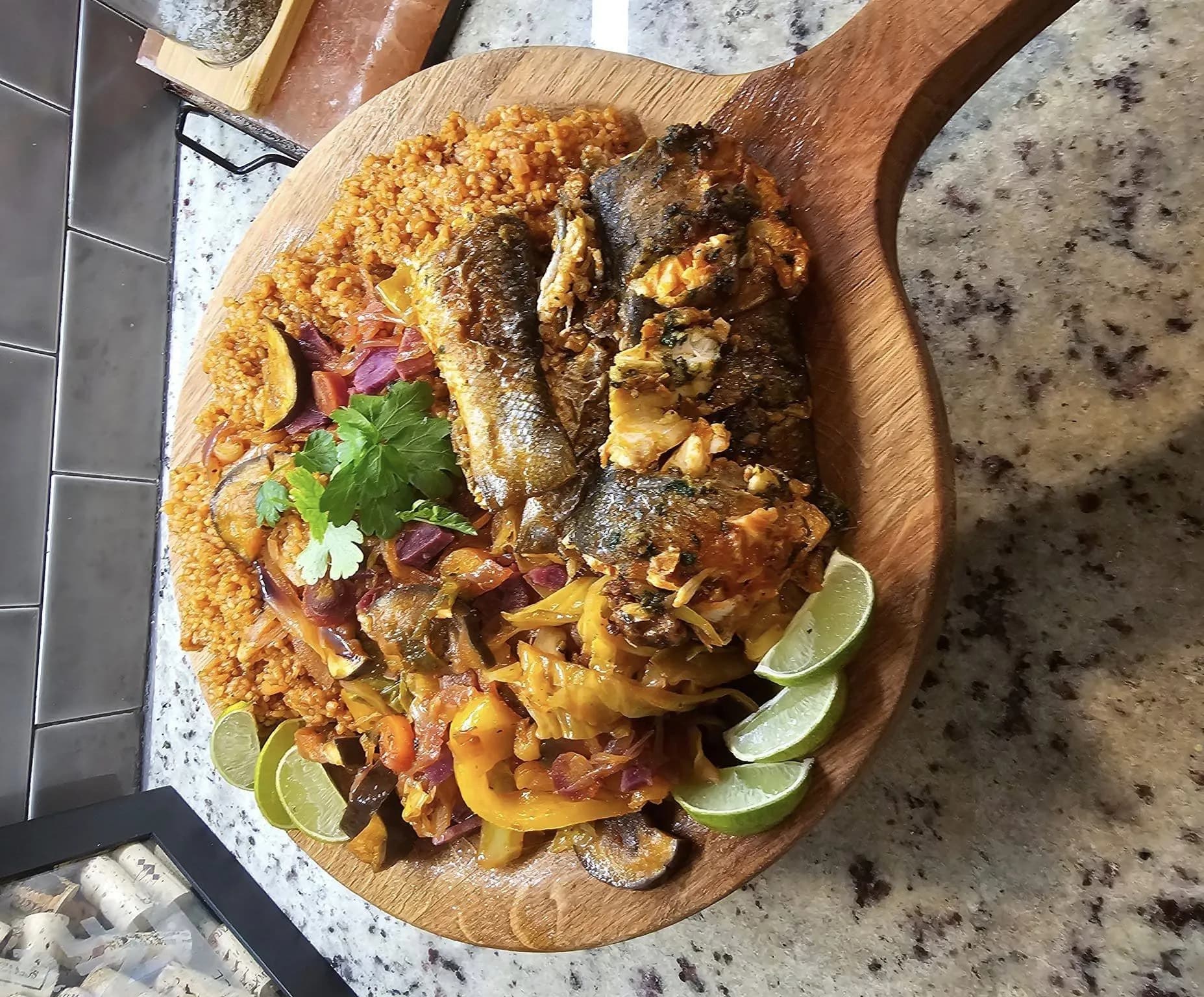
Thieboudienne is the national dish of Senegal and the origin point of the rice tradition that spread along the whole West African coast. The name is Wolof and means rice and fish, which understates it considerably: the dish involves a stuffed whole fish, a long braise of tomato and vegetables, and a rice cooked in the liquid all of that produced.
Its history reaches the modern table through oral tradition rather than through documents, and it carries more than one account. One attributes the dish to the city of Saint-Louis in the nineteenth century, where a version known as thieboudienne Penda Mbaye was prepared. Another holds that it emerged in a colonial governor's kitchen when rice was substituted for barley during a shortage. Senegalese tradition names Penda Mbaye, and that named attribution matters in Senegal, where the dish is held as an inheritance with an author rather than an anonymous custom.
It is eaten from a large communal platter, each person working the section in front of them, and it is what opens a significant family lunch. Its relatives are everywhere: riz gras in Côte d'Ivoire and Guinea, jollof rice across Anglophone West Africa, and Savannah red rice in the American South, which many hold was carried there and adapted by Creole cooks.
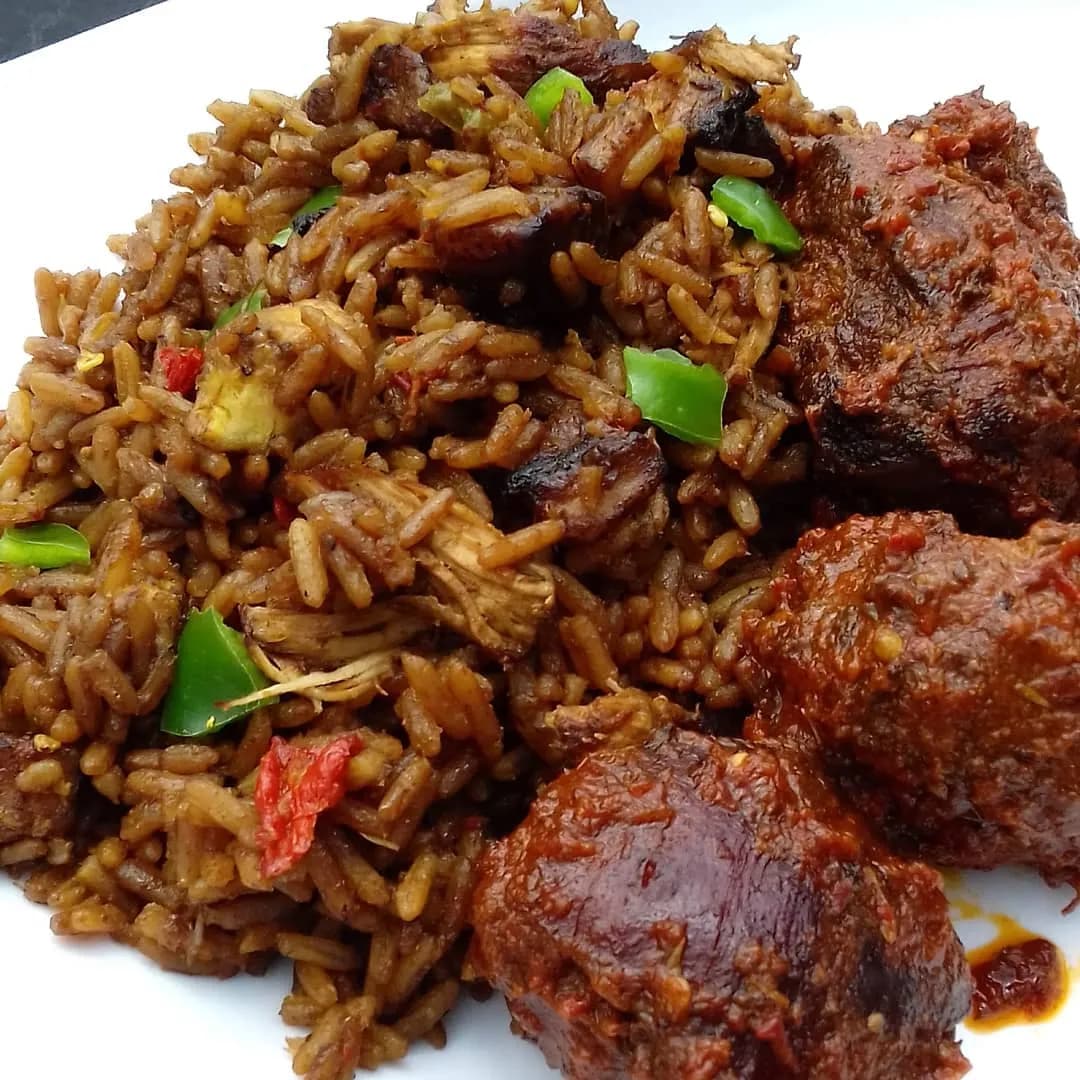
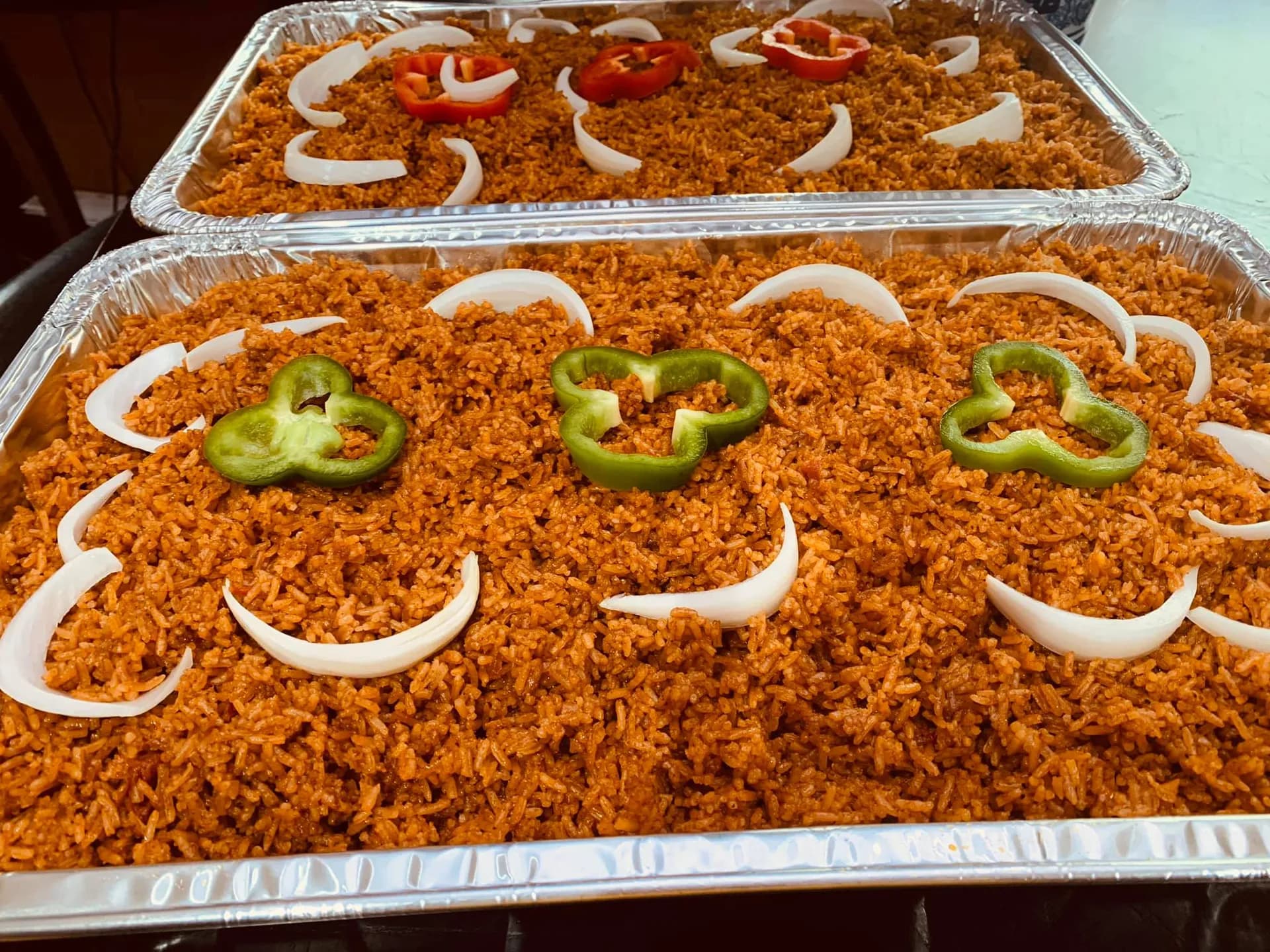
Jollof rice belongs to the whole of West Africa, and every country that claims it claims it as its own. The Liberian version sits inside that family without being anyone's copy. It is a tomato rice, built on long grain parboiled grains, sweetened by onion and sweet pepper, sharpened with garlic and ginger, and carrying a smokiness that Liberian cooks treat as the mark of a pot done properly.
Rice is the centre of the Liberian diet rather than an accompaniment to it, and a one pot rice that can be built around whatever protein a household has, or around no protein at all, earns its place in an everyday kitchen as readily as at a gathering. It feeds a room from a single vessel, which is part of why it survives.
Across West Africa the jollof pot is argued over with genuine feeling, and the loudest of those arguments runs between Nigeria and Ghana. Liberia is rarely named in that particular fight. That says less about the quality of the Liberian pot than about who is holding the microphone.