

Nous utilisons des cookies essentiels au fonctionnement du site. Nous aimerions aussi déposer des cookies de mesure d’audience et des cookies publicitaires, uniquement avec votre accord. Vous pouvez choisir séparément pour chacun. Lire notre politique relative aux cookies

Loading
Recettes
Parcourez les archives par pays, par plat et par temps de cuisson.
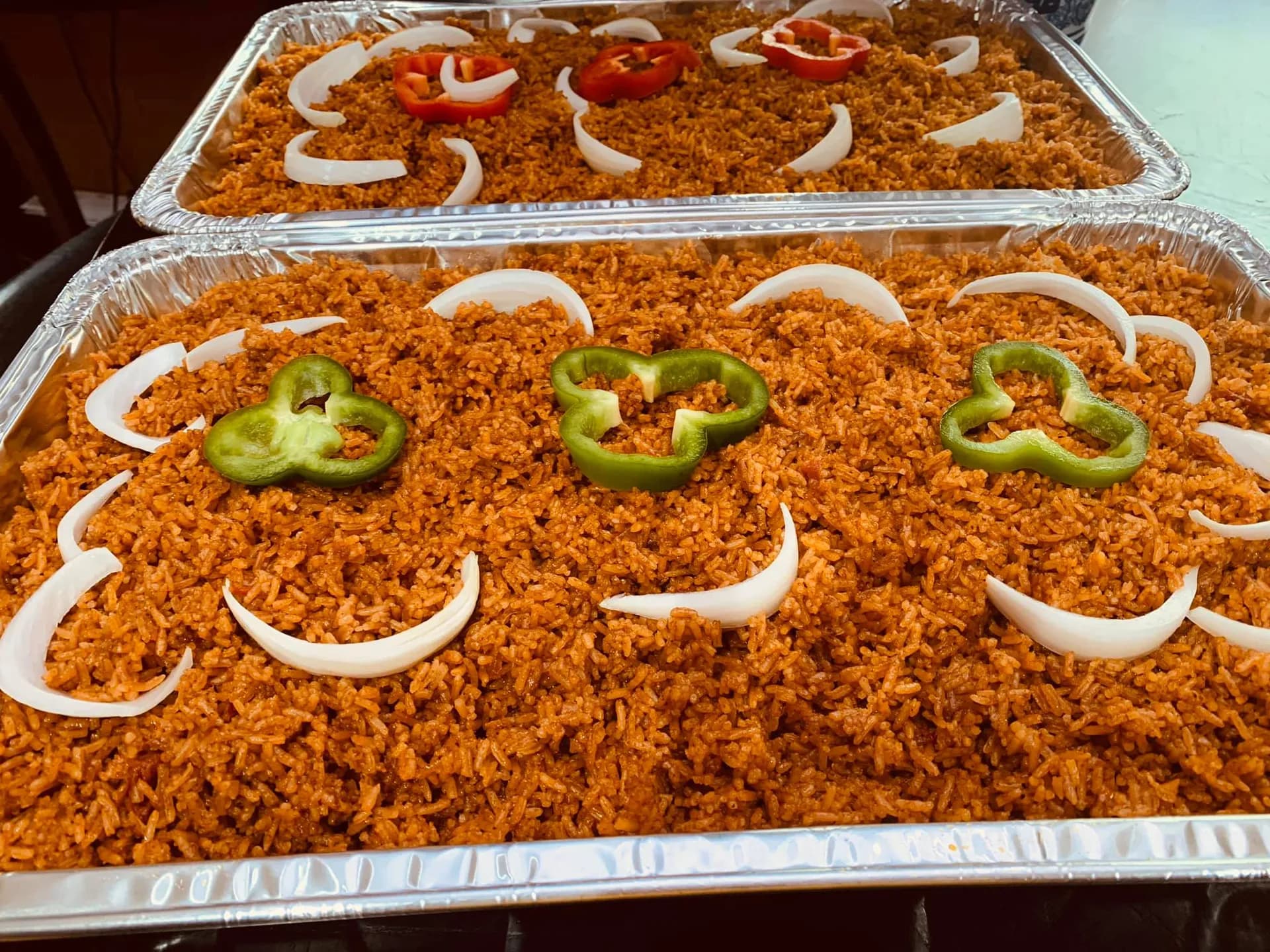
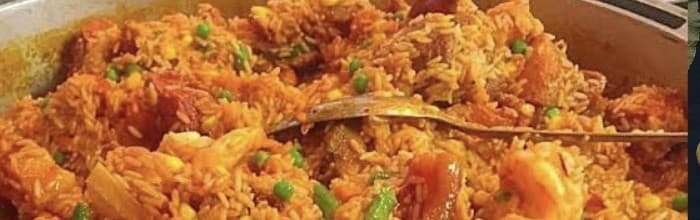
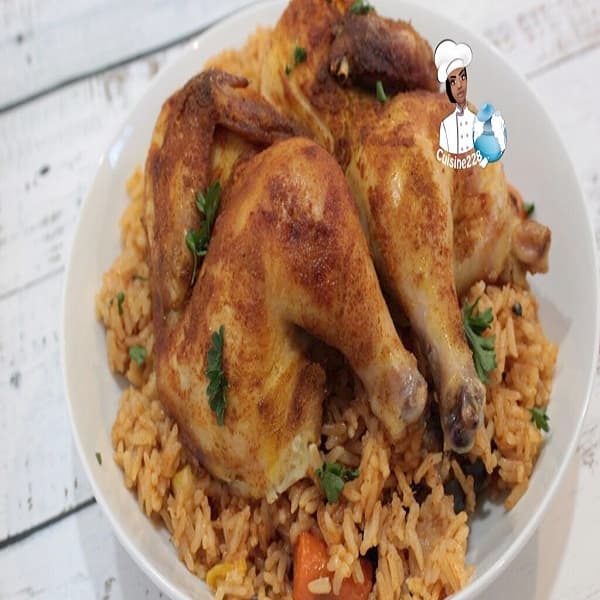
Ghanaian jollof rice is defined against its rivals as much as on its own terms, and Ghanaians are entirely comfortable with that. It is a tomato based rice, aromatic rather than fiery, seasoned with curry powder, garlic and ginger, and cooked in basmati. Every one of those choices is a position in an argument.
The rice is the clearest one. Ghanaians use basmati, which stays separate and perfumed and carries the aromatics; Nigerians use long grain parboiled, which absorbs the tomato base and takes on the smoke. Neither is a mistake. They produce genuinely different dishes that share a name, and the preference in each country is consistent enough to be a national marker.
The jollof rivalry between Ghana and Nigeria is the continent's most famous culinary argument, conducted on social media, at dinner tables and in the press with an intensity that has very little to do with rice and a great deal to do with two confident countries enjoying themselves. The honest position on the origin is that the dish descends from the Senegambian rice tradition rather than from either country. The honest position on which is better is that both are right within their own tradition, and Ghanaians serve theirs at every social gathering and celebration that matters.
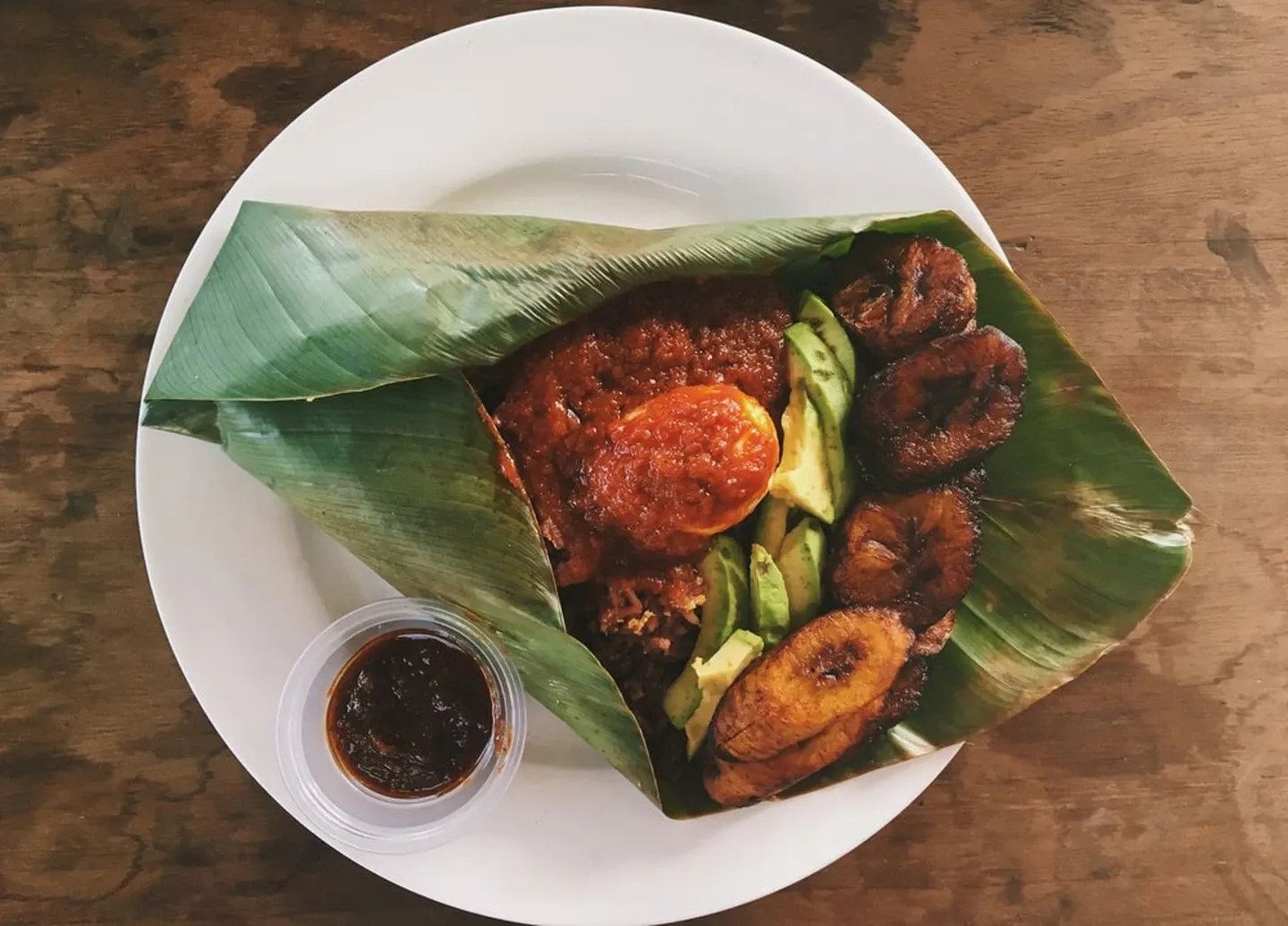
Waakye is rice and beans cooked together with dried millet or sorghum stalk leaves, which leach a deep reddish brown into the grain and give the dish both its colour and its name. It is Ghana's most loved street breakfast, and in Accra and Kumasi the waakye seller is a neighbourhood institution whose location is known, whose quality is debated and whose loyalty is genuinely held.
Sellers begin before dawn and often sell out by mid morning. The dish is bought wrapped in leaves and assembled to the customer's specification from a wide spread of accompaniments: shito, the dark Ghanaian pepper and fish sauce, gari, egg, spaghetti known as talia, fried plantain, avocado, salad, stew and fried fish or meat. A full waakye plate is substantial enough to carry someone through a working day, which is precisely what it is for.
The waakye leaf is the ingredient that cannot be substituted. It is the dried leaf sheath of a West African sorghum, called poporo oka in Yoruba and adako in Togo, and it functions as a colourant rather than a flavouring, with the quantity used determining how deep the colour runs. Black eyed beans are traditional and jasmine rice is the Ghanaian preference. The dish is eaten across West Africa under other names, as wanke in Lagos and ayimolou in Togo.
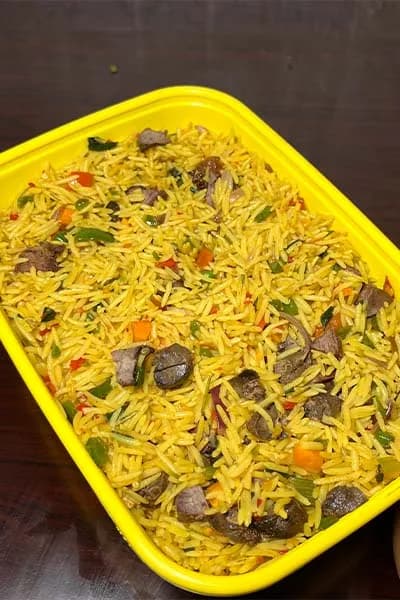
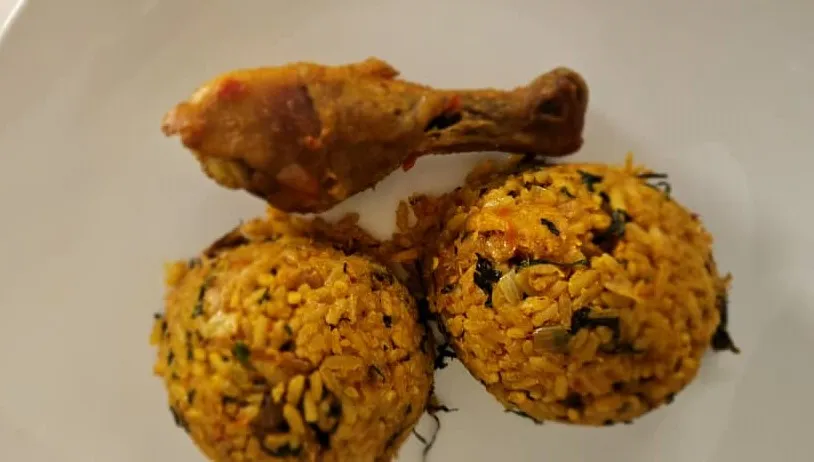
Cooked rice bound with minced liver, onion and egg, rolled into balls, crumbed and deep-fried. The contributor learned it from their grandmother in Ivory Coast.
The dish belongs to a very widely distributed family, the fried rice croquette. Italian arancini, Middle Eastern kibbeh, Nigerian rice balls and this all work on the same principle: a starch cooked, cooled, bound with something rich and shaped, then fried so the outside crisps around a soft interior. The cooling is not optional in any of them. Warm rice does not hold its shape and the balls collapse in the oil.
Offal is the other thing worth taking seriously. Liver and other variety meats are used across West African cooking as good ingredients rather than as economies, kilishi, dambu, gizdodo and asun all belong to the same attitude. Liver in particular is soft enough to bind rice without any additional fat, which is exactly why it works here.
Two practical notes. The double coating, breadcrumbs then egg wash, is the reverse of the usual order, and the source may have it backwards; the conventional sequence is flour, egg, then crumbs.
The source's nutritional inventory has not been carried across.
Coconut fried rice is rice cooked in coconut milk and stock rather than water, then combined with fried vegetables. It is made across an enormous range of countries, from the Indian subcontinent through Southeast Asia to South and Central America, East and West Africa, the Caribbean and Oceania, which is why no single country is claimed for it.
In Nigeria it is a party dish, and the version here reads that way: turmeric for colour, cabbage and mixed vegetables, habanero, and hotdog sausages as an optional addition, which is a distinctly Nigerian party-food touch. It sits alongside jollof rice and fried rice on the same table.
The name is slightly misleading, and the source acknowledges it. This is rice cooked in coconut milk rather than fried rice in the strict sense: the coconut milk and stock are absorbed during cooking, and the vegetables are fried separately and folded through at the end. That order matters. Cooking the rice in the coconut milk is what gets the flavour into every grain, and frying the vegetables separately keeps them from going soft in the liquid. The frozen vegetables need to be thawed and patted dry, or their water thins the whole thing.