Nous utilisons des cookies essentiels au fonctionnement du site. Nous aimerions aussi déposer des cookies de mesure d’audience et des cookies publicitaires, uniquement avec votre accord. Vous pouvez choisir séparément pour chacun. Lire notre politique relative aux cookies
Loading
Recettes
Parcourez les archives par pays, par plat et par temps de cuisson.
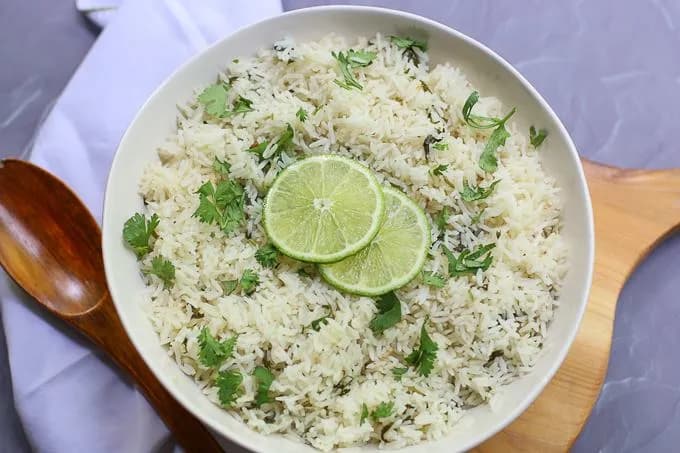
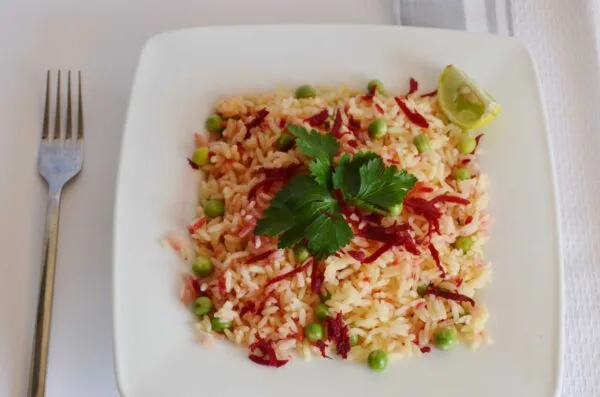
Coconut rice made in a rice cooker: rinsed long grain rice, a tin of coconut milk, water, oil and salt, with peas and carrots folded in at the end. No country is named and the dish belongs to many, which is why none is claimed here.
Coconut rice is genuinely pan-regional. It is made across West Africa, East Africa, the Caribbean, Southeast Asia, South America and Oceania, and it takes a different form in each: Nigerian coconut rice carries pepper and vegetables, Jamaican rice and peas uses kidney beans and thyme, Thai khao man gai poaches chicken over it, and Indonesian nasi uduk is scented with lemongrass and pandan.
Two practical notes about this version. There is a discrepancy in the source: its ingredient list and its method give different quantities of water, and the method names sugar and turmeric that never appear in the ingredients. The ratio here follows the ingredient list. The other point is the one the source is right about: leave it alone while it cooks. Agitating rice releases starch and turns it gluey, and in a rice cooker there is no reason to lift the lid at all until it switches to warm.
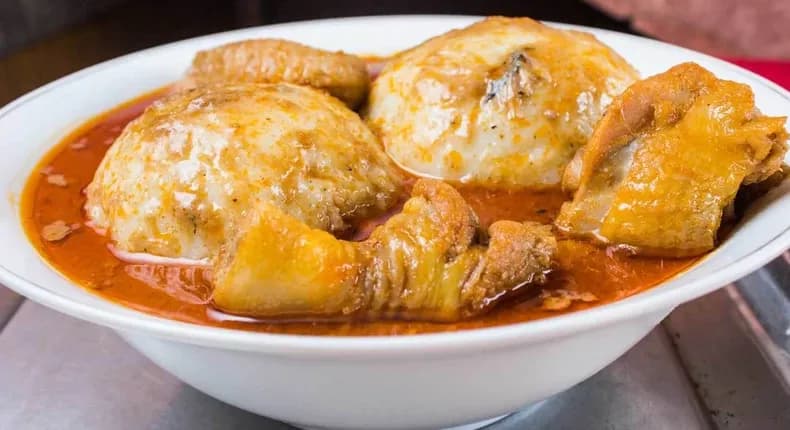
Omo tuo is the Ghanaian rice ball, made by cooking soft rice well past the point of doneness and then mashing it until the grains give up their structure and bind into a smooth dough that can be shaped by hand.
It is Sunday food. Omo tuo is strongly associated with Sunday lunch in Ghanaian households and with the soups that accompany it, principally nkatenkwan, the peanut soup, and abenkwan, the palm nut soup. It is eaten by pinching off a piece of the ball and using it to scoop, and it is not eaten with cutlery.
The same preparation exists in northern Nigeria and Niger as tuwo shinkafa, where it belongs to the Hausa tuwo family of grain swallows and is eaten with an entirely different set of soups: miyan kuka, miyan taushe, miyan wake. The technique is effectively identical and the two are best understood as one method with two national traditions around it. What separates them is what goes beside them on the plate, and in Ghana that means groundnut and palm nut soup rather than baobab leaf and pumpkin.
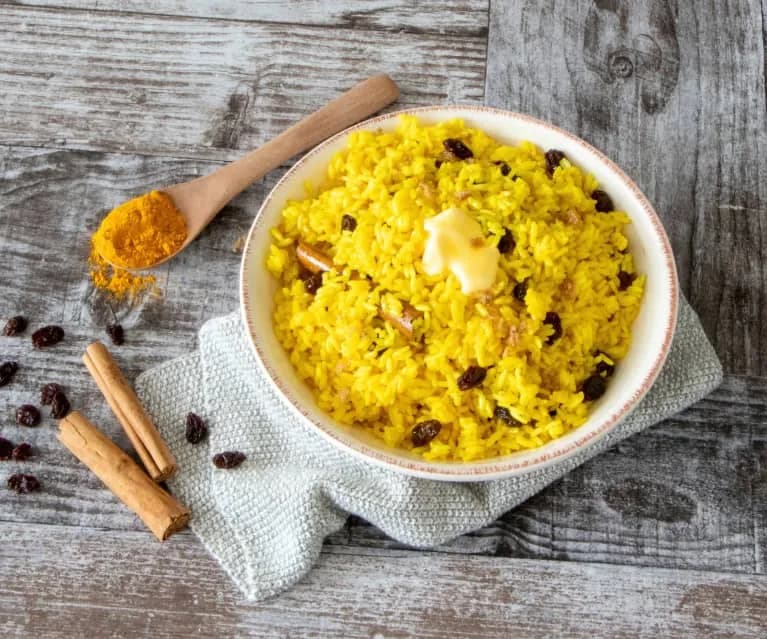
Rice cooked with turmeric, cinnamon, raisins and sugar into a sweet golden side dish. It is South African, from the Cape Malay tradition, and it is served alongside savoury curries and meat.
Sweet rice as a savoury accompaniment is the thing to understand. Cape Malay yellow rice contains sugar, raisins and cinnamon, and it goes with curry, bobotie and roast meat, the sweetness is deliberately set against savoury and spiced food rather than served as a dessert. That contrast runs right through Cape Malay cooking and it is the same instinct behind bobotie's fruit chutney and the apricot jam in pickled fish.
The community it comes from was formed by people brought to the Cape from Southeast Asia as slaves and political exiles by the Dutch from the seventeenth century onwards, and the dish is one of many that carries that history directly. Related yellow rices exist across the world, nasi kuning in Indonesia, kaha buth in Sri Lanka, and the family resemblance is not coincidental.
Turmeric is what colours it. Saffron is used in more expensive versions and annatto elsewhere.
**A significant problem with this page.** Its ingredient list merges two separate recipes, a yellow rice and a marinated roast chicken, into one list, and its method covers both. Only the rice belongs here.
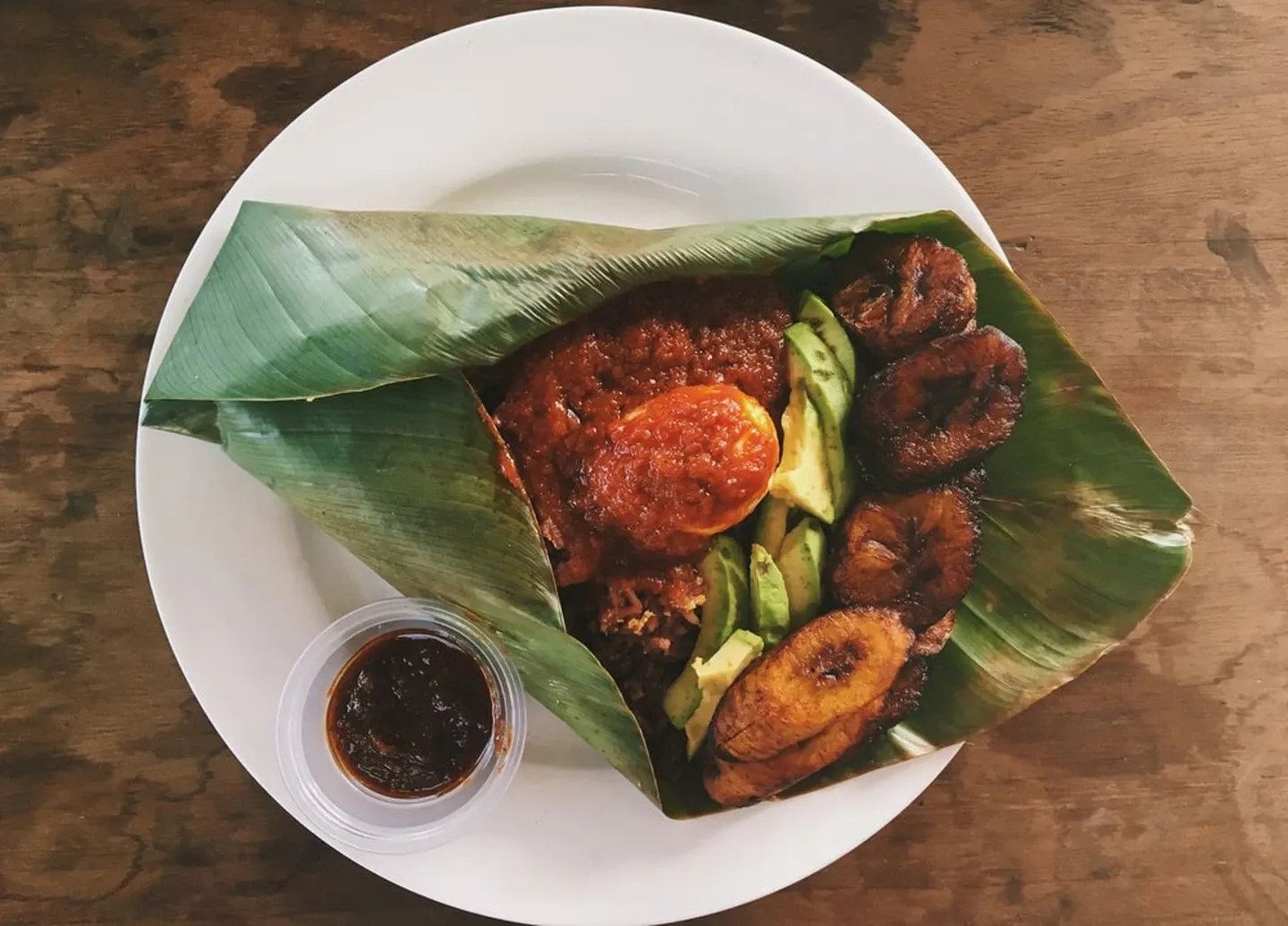
Pilau is the spiced rice of the East African coast: rice cooked with cumin, cardamom, cloves, cinnamon and turmeric until every grain carries the spice. It is celebration food across Kenya, Tanzania, Uganda and Zanzibar, made for weddings, for Eid, and whenever a guest of consequence arrives.
It reached the Swahili coast through centuries of Indian Ocean trade, and the family it belongs to runs from Persian polow through Central Asian plov to South Asian pulao. The East African version is milder than the Indian one and does not use curry, which is the distinction the source draws and it is a fair one. The defining spice mix has its own name, pilau masala, and there is a recipe for it on this site.
An important note about this page. Its written description is of a full pilau: caramelised beef, potatoes, tomatoes and pilau masala simmered in meat stock. The recipe card attached to it is something else entirely, a plain spiced rice with no meat, no potatoes and no stock. The recipe below follows the card, since that is the actual recipe on the page, and the result is a good vegetarian side dish. It is not, however, the celebratory beef pilau the description promises.
Browning the onions properly is the step that matters most in either version.
Les mentions alimentaires sont fournies par les contributeurs à titre indicatif. Elles ne sont pas vérifiées par AFN et dépendent des produits que vous achetez. En cas d’allergie grave, vérifiez vous-même chaque ingrédient. Cuisine, allergies et votre propre jugement