Tanjia Marrakchia
4.34.33 out of 5, 3 ratings5 hr 20 min


Cookies sur African Food Network
Nous utilisons des cookies essentiels au fonctionnement du site. Nous aimerions aussi déposer des cookies de mesure d’audience et des cookies publicitaires, uniquement avec votre accord. Vous pouvez choisir séparément pour chacun. Lire notre politique relative aux cookies
Parcourez les archives par pays, par plat et par temps de cuisson.
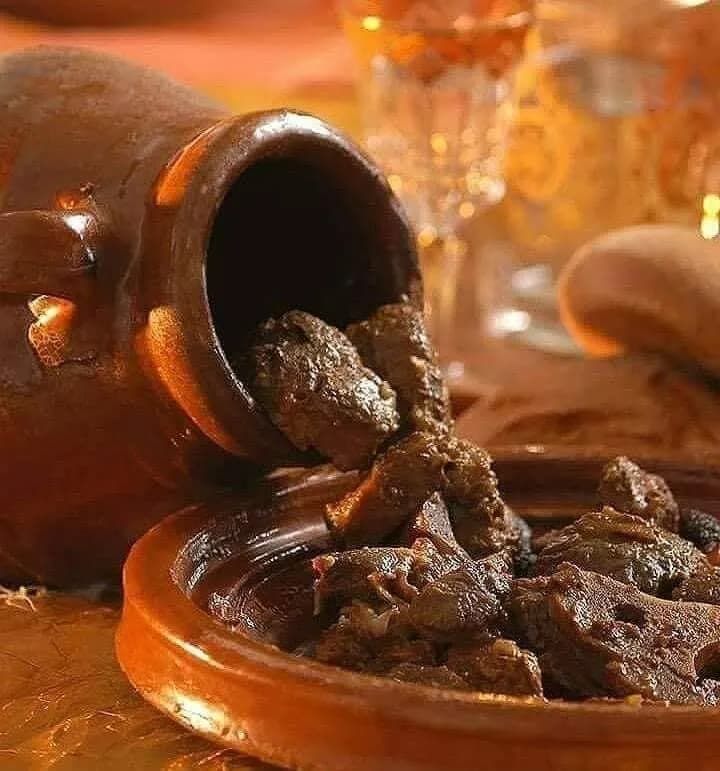
Tanjia Marrakchia belongs to Marrakech specifically, and it is named after the pot rather than the food. The tanjia is a tall, narrow clay urn with a small neck, and the dish cannot properly be separated from it: meat, spices and a little water go in, the neck is sealed with parchment and clay, and the whole vessel is buried in the embers of a hammam furnace to cook for hours. That cooking method is the reason it exists. The hammam, the public bathhouse, kept a wood fire burning to heat its water, and the ashes were free heat available to anyone who brought a pot. Labourers and workers would leave a tanjia with the furnace attendant in the morning and collect it cooked at the end of the day, which made it food for men working away from a kitchen. It is still called the bachelor's dish in Marrakech for that reason, though it now appears at celebrations, religious occasions and family gatherings as well. Beef or lamb is standard, with cumin, ginger, saffron, turmeric and paprika, and preserved lemon and olives in some households. Without a hammam the substitute is a very low oven over several hours, which gets the tenderness but not the smoke.
Les mieux notées
5 hr 20 minMediumMorocco
Recette de Debby · Africook
Rien ici pour le moment
Tout effacer
Les mentions alimentaires sont fournies par les contributeurs à titre indicatif. Elles ne sont pas vérifiées par AFN et dépendent des produits que vous achetez. En cas d’allergie grave, vérifiez vous-même chaque ingrédient. Cuisine, allergies et votre propre jugement