Nous utilisons des cookies essentiels au fonctionnement du site. Nous aimerions aussi déposer des cookies de mesure d’audience et des cookies publicitaires, uniquement avec votre accord. Vous pouvez choisir séparément pour chacun. Lire notre politique relative aux cookies

Loading
Recettes
Parcourez les archives par pays, par plat et par temps de cuisson.
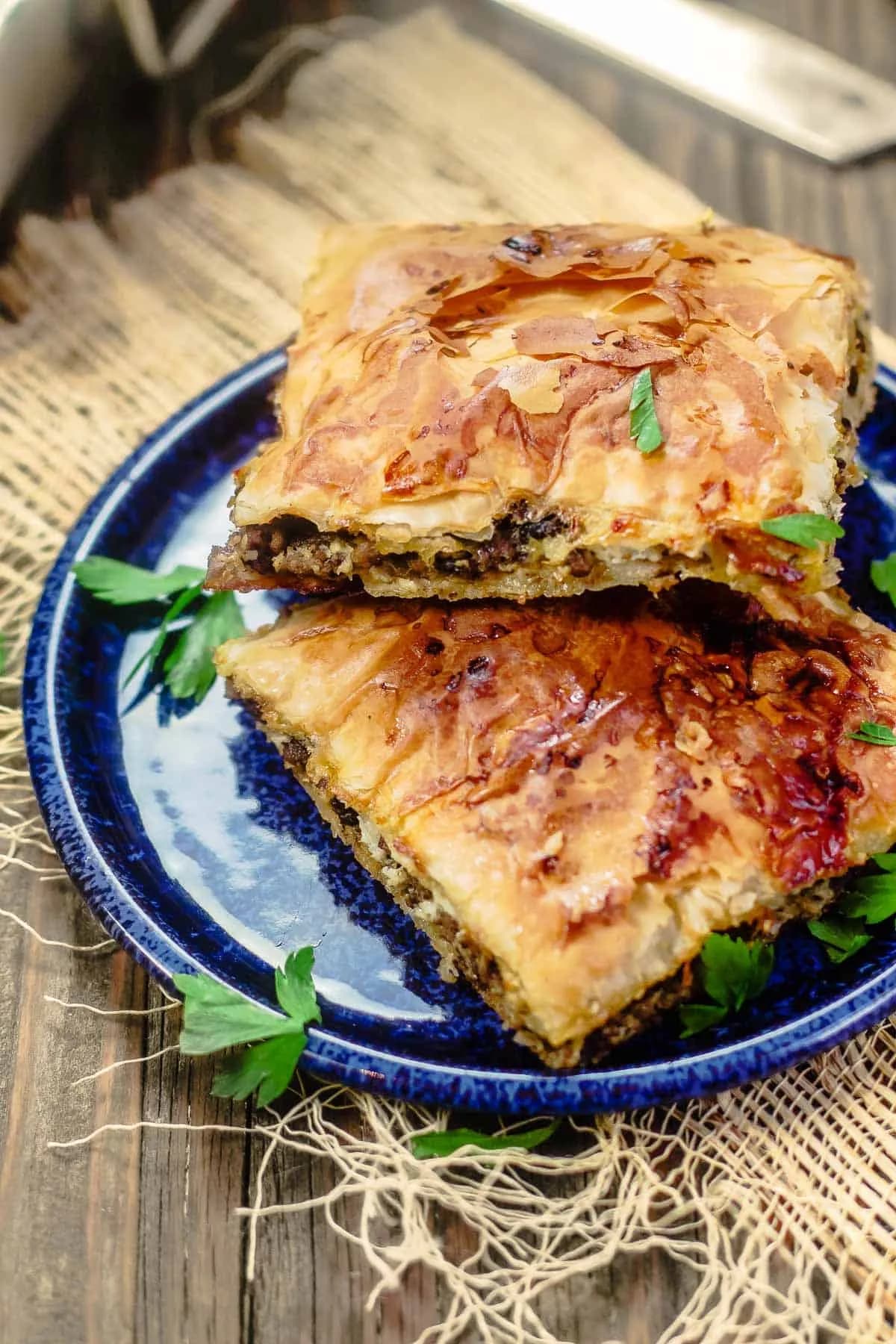
Gollash is a Sudanese pie of spiced minced beef between many layers of filo, with a milk and egg custard poured over the top before it bakes. It is a fixture of Sudanese restaurants and a dish people make for guests.
The name is confusing and worth clearing up straight away: gollash has nothing whatever to do with Hungarian goulash, the paprika beef stew. The words are similar and the source itself slips between the two spellings, but they are unrelated dishes. Gollash is a layered pie.
Two things make it what it is. The first is restraint in the filling. The meat is seasoned lightly, allspice, cinnamon, garlic, salt and pepper, deliberately, so the beef itself comes through rather than being buried, which is the opposite of how most spiced mince fillings are treated. The second is the custard poured over the assembled pie before baking, which soaks down between the top layers and sets, giving a soft, savoury layer under the crisp filo.
Cutting the pie before it bakes rather than after is the technique that makes it servable. Filo that has been baked whole shatters when you try to cut it.
The source's ingredient list is badly scrambled and has been rebuilt from its method.
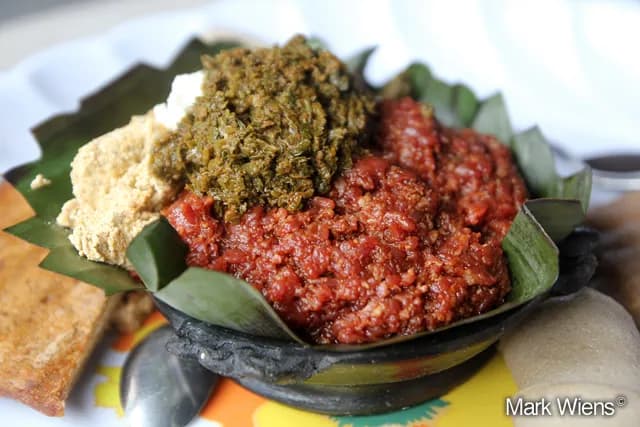
Kitfo is very finely minced raw beef, warmed through with spiced clarified butter and chilli. The name says what it is: kitfo comes from the Amharic for chopping finely. It is Ethiopian and Eritrean, and it is celebration food, a dish for major holidays, weddings and family occasions rather than an ordinary weeknight.
Two things define it. The first is niter kibbeh, the clarified butter infused with garlic, ginger, cardamom, fenugreek and other spices, which is what carries flavour into meat that is never exposed to direct heat. The second is mitmita, the fierce Ethiopian chilli blend built on pili-pili peppers with cardamom, cloves and salt. Both are what separate kitfo from any other steak tartare.
Doneness has its own vocabulary, and the names matter because they are what you order by. Tere kitfo is fully raw. Leb leb is warmed just enough to melt the butter through it. Yebesele is taken further still. Gored gored, which is on this site as its own recipe, is the closely related dish where the beef is cut into cubes rather than minced, same tradition, different knife work, noticeably different in the mouth.
It is served with injera, and usually alongside gomen, the collard greens, and ayib, the fresh Ethiopian cheese, whose mildness is there to answer the heat.
Fish marinated briefly in lime, garlic and cayenne, then fried. The name is Swahili and means exactly what the dish is, samaki is fish, kukaanga is frying, and it is eaten across East Africa. No single country is claimed.
**This page had no recipe card in the source.** The ingredients and method below are reconstructed from its article, and that is flagged.
It is roadside food. Fried fish is sold at food stands along the coast and inland across Tanzania, Kenya and Uganda, and it is deliberately simple: four seasonings and a hot pan. That plainness is the point, the fish is doing the work, which is why it suits whole fresh fish rather than fillets.
The one technique that matters is drying the fish after marinating. Lime juice draws water to the surface, and a wet fish put into hot oil steams, spits and refuses to brown. Patting it dry with kitchen paper immediately before frying is what gives you a crisp exterior.
The marinating time is short by design. Twenty to thirty minutes seasons the fish; leaving it in citrus for hours would begin to cure it.
Sukuma wiki and rice or ugali are the standard accompaniments.
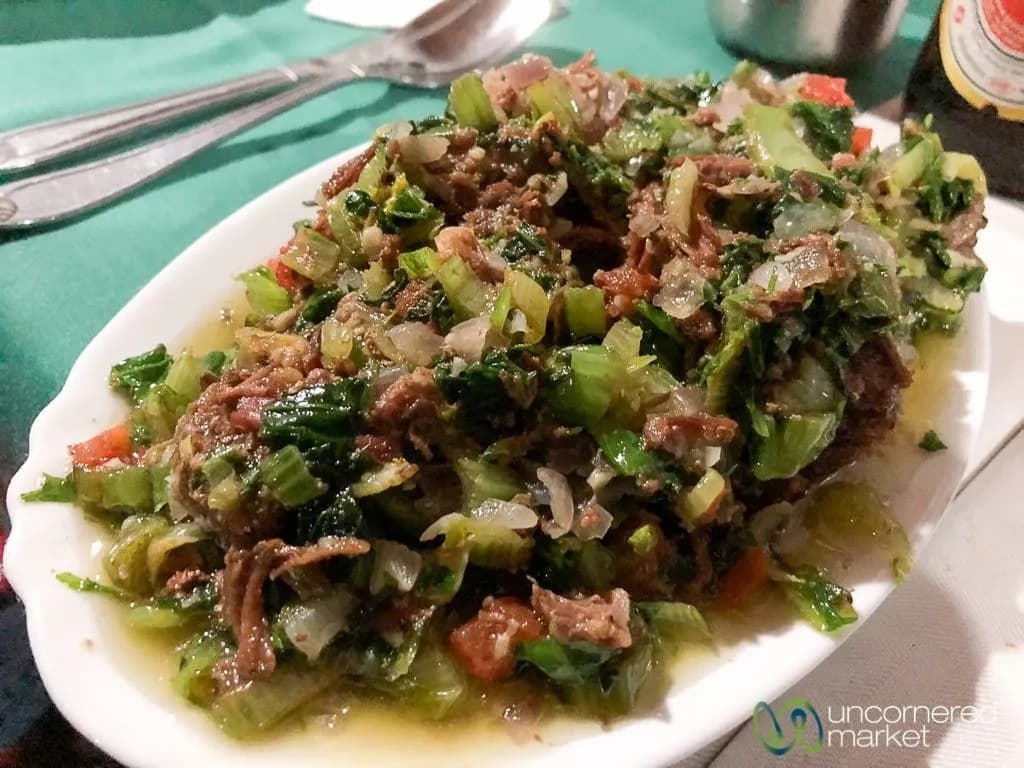
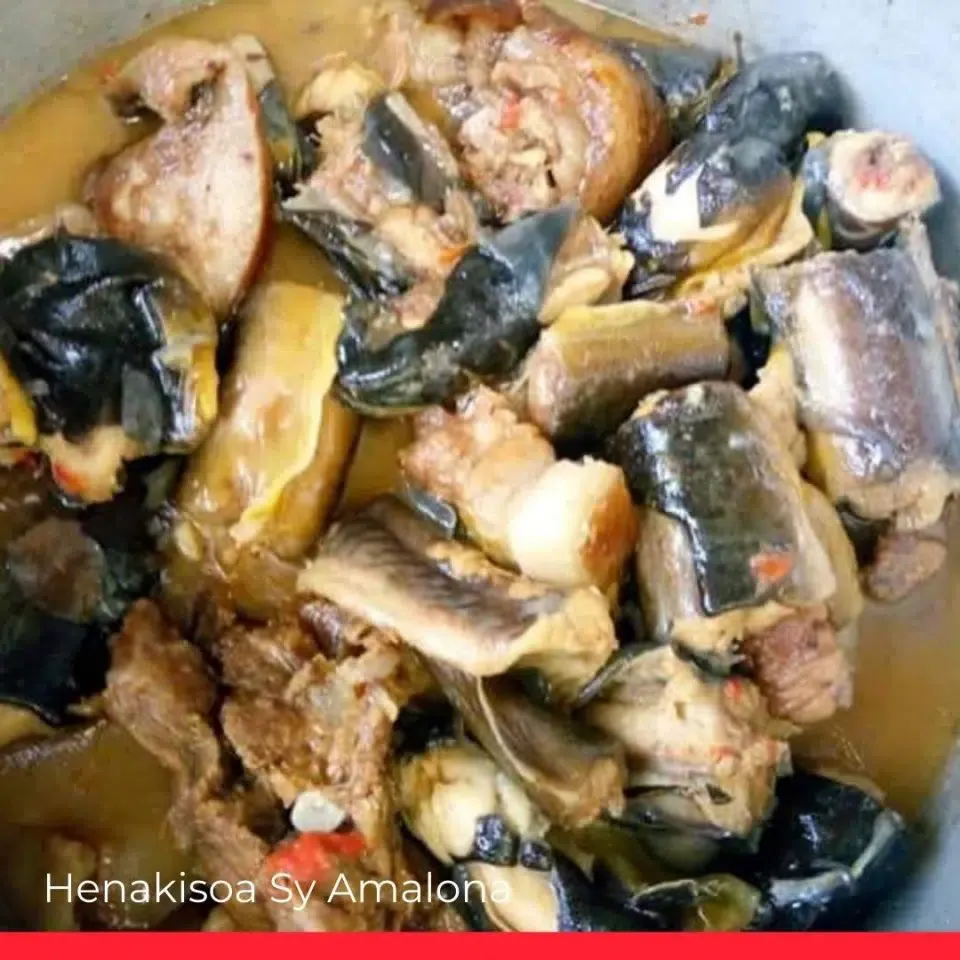
Pork browned and cooked slowly with ravitoto, pounded cassava leaves, until the meat is tender and the greens have collapsed into a dense, dark mass. It is Malagasy, and it is close to a national dish.
The page needs an immediate correction. Its title, henakisoa sy amalona, means pork with eel, and that dish is real: one of the seven royal dishes of the Merina highlands, and genuinely divisive in Madagascar, since some communities do not eat pork and the pairing of pork with fish is unusual. **But the recipe attached to this page contains no eel.** It is pork with ravitoto, which is a different and far more common dish, and the source's own prose drifts into describing that one instead. The recipe here follows the ingredients, and the title has been changed to name what is actually made. The URL is unchanged.
Ravitoto is worth knowing about. Cassava leaves are pounded, traditionally in a wooden mortar, and the pounding is the defining step, giving the name, then cooked long and slow. Cassava leaves must be thoroughly cooked, as the raw leaf is toxic. Tinned or frozen ravitoto sold at African grocers has already been processed.
Ravitoto sy henakisoa is commonly described as Madagascar's national dish, though the Merina royal tradition holds otherwise.