Nous utilisons des cookies essentiels au fonctionnement du site. Nous aimerions aussi déposer des cookies de mesure d’audience et des cookies publicitaires, uniquement avec votre accord. Vous pouvez choisir séparément pour chacun. Lire notre politique relative aux cookies
Loading
Recettes
Parcourez les archives par pays, par plat et par temps de cuisson.
Alkubus is a Hausa steamed wheat bread from Northern Nigeria, plain by design and made to be eaten with something else. It is soft, faintly sour from the yeast, and it holds its shape well enough to be cut into rounds or wedges.
Its role on the plate is the role bread plays across the north: the thing that carries the soup. Alkubus is eaten most often with miyan taushe, the pumpkin and groundnut soup, and it also goes with agushi soup, vegetable soup, cabbage stew or a plain tomato sauce. That pairing with miyan taushe is the one Northern Nigerians name first.
There are two ways to make it and they produce different things. Baked in a greased pan and topped with carrot and onion, it is a loaf to be cut and eaten in slices. Portioned into wrappers and steamed over boiling water, it comes out softer and denser, closer to a dumpling, and that is the method the recipe here follows. Steaming rather than baking runs through a great deal of Hausa cooking, from dambu to danwake to masa, and alkubus belongs to that family more than it does to any oven tradition.
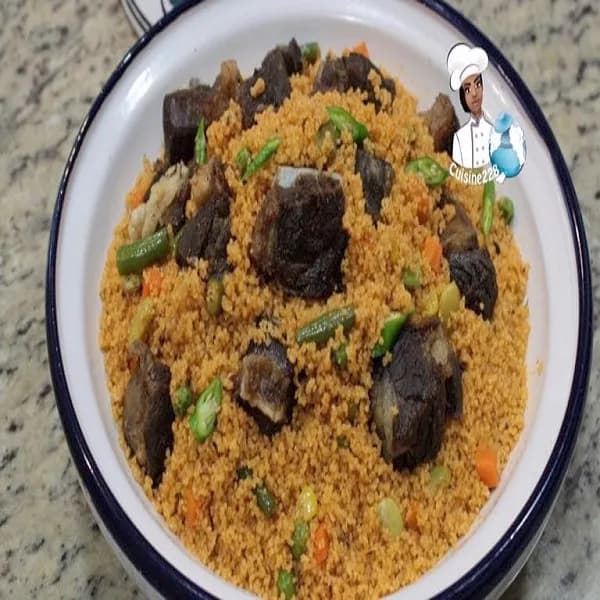
Jollof couscous applies the jollof method to North African couscous, and it sits at the meeting point of two quite separate West and North African traditions. The tomato and pepper base is built as it would be for jollof rice; the grain is steamed couscous rather than long grain rice.
Couscous itself is North African, rolled from semolina and traditionally steamed several times in a couscoussier until it is light and separate rather than gummy. In Morocco, Algeria and Tunisia it is served with a spiced vegetable stew and meat, which is a different proposition entirely from what happens here. Its texture is often compared to attiéké, the fermented cassava of Côte d'Ivoire, though the two share only appearance.
Jollof itself is contested territory between Nigeria, Ghana, Senegal and beyond, and applying it to couscous is a modern move rather than an inherited one. The source attributes this version to Senegal, which is where the jollof tradition originates in the thieboudienne of the Wolof people, though the framing in the original text is Nigerian. It is quick food, twenty minutes from start to finish, and it is honest about being an adaptation.
A salmon steak seasoned with Cajun spice and paprika, then cooked in butter until the outside colours and the inside stays just short of firm. No country is claimed and none applies: pan-searing is a technique rather than a tradition, and salmon is a cold-water North Atlantic and Pacific fish with no African tradition attached to it.
The contributor is South African, and the Cajun seasoning is the giveaway that this is a contemporary home-cooking recipe rather than an inherited one. Cajun spice blends are Louisiana in origin and reached South African kitchens through the same route as most global pantry seasonings.
There is one technical point worth stating clearly, because the source gets it slightly wrong. It has you melt the butter over low heat, then sear. Searing needs high heat, and butter alone burns before it gets there, because its milk solids scorch well below searing temperature. A neutral oil to start, with butter added towards the end for flavour and basting, is the standard way round this. Left as written, you will steam the fish rather than sear it.
This page carries the traffic on this dish, so it is the one being kept even though its slug ends in a duplicate suffix.
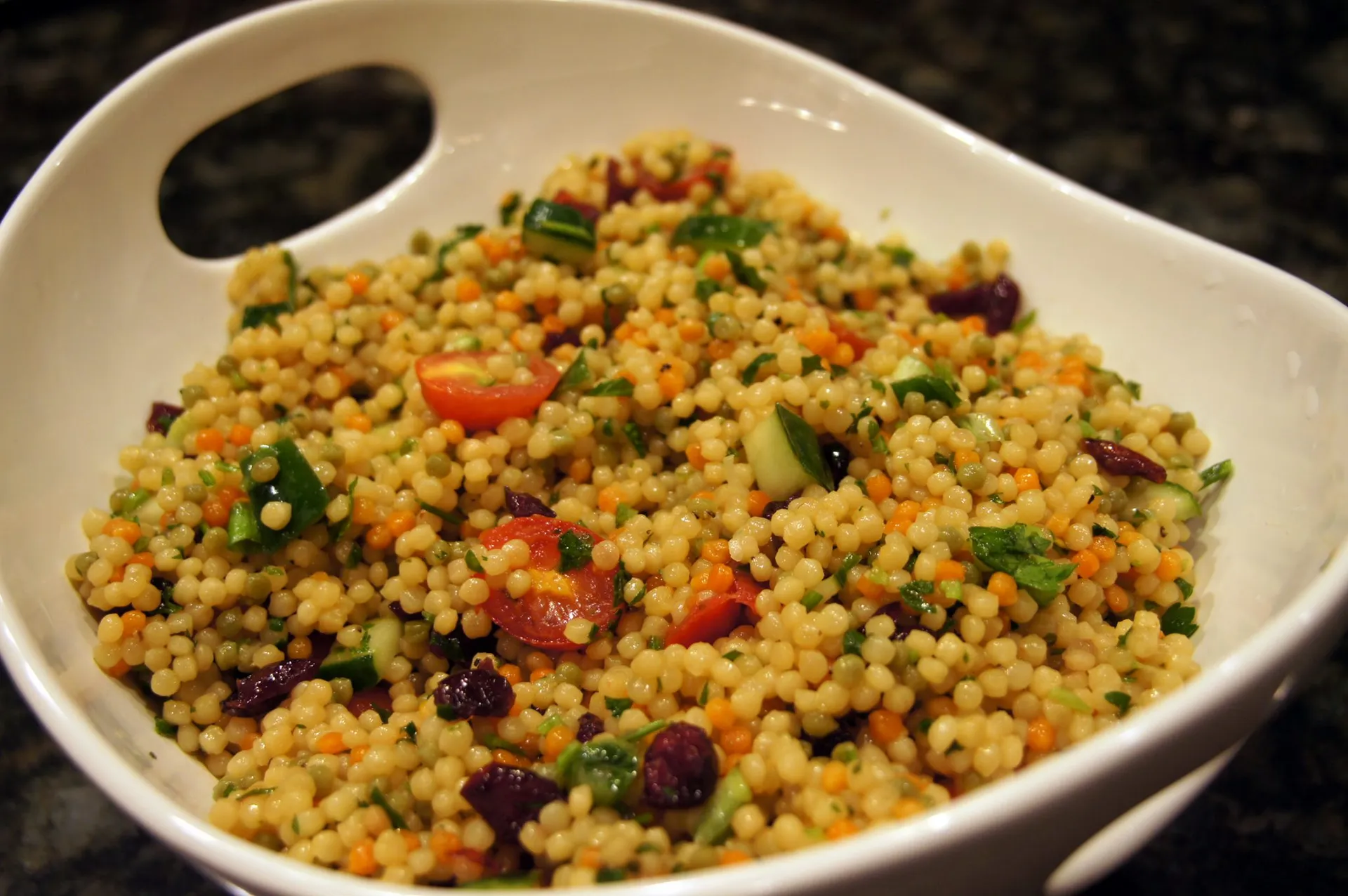
How to prepare instant couscous: boiling water or stock poured over, covered, left to steam, then fluffed. This is a technique page for a staple ingredient rather than a recipe for a dish, and it is filed as such.
Couscous is North African, specifically Berber in origin, and it is a staple across Morocco, Algeria, Tunisia and Libya. Its status was recognised by UNESCO in 2020, when the knowledge and practices around couscous were inscribed on the Representative List of the Intangible Cultural Heritage of Humanity in a joint submission by Algeria, Mauritania, Morocco and Tunisia.
It is not a grain, despite looking like one. Couscous is pasta, durum wheat semolina moistened, rolled into tiny granules and dried. Three sizes are common: Moroccan, the smallest; Israeli or pearl couscous, about the size of peppercorns; and Lebanese, the largest.
The traditional method has nothing to do with pouring boiling water on. Couscous is steamed, usually more than once, in the upper chamber of a couscoussier over a stew whose vapours flavour it as it cooks. That is how it is made for a proper meal in North Africa and the results are much lighter.
Almost all couscous sold in supermarkets is pre-steamed and dried, which is why the rehydration method here works.