Nous utilisons des cookies essentiels au fonctionnement du site. Nous aimerions aussi déposer des cookies de mesure d’audience et des cookies publicitaires, uniquement avec votre accord. Vous pouvez choisir séparément pour chacun. Lire notre politique relative aux cookies
Loading
Recettes
Parcourez les archives par pays, par plat et par temps de cuisson.
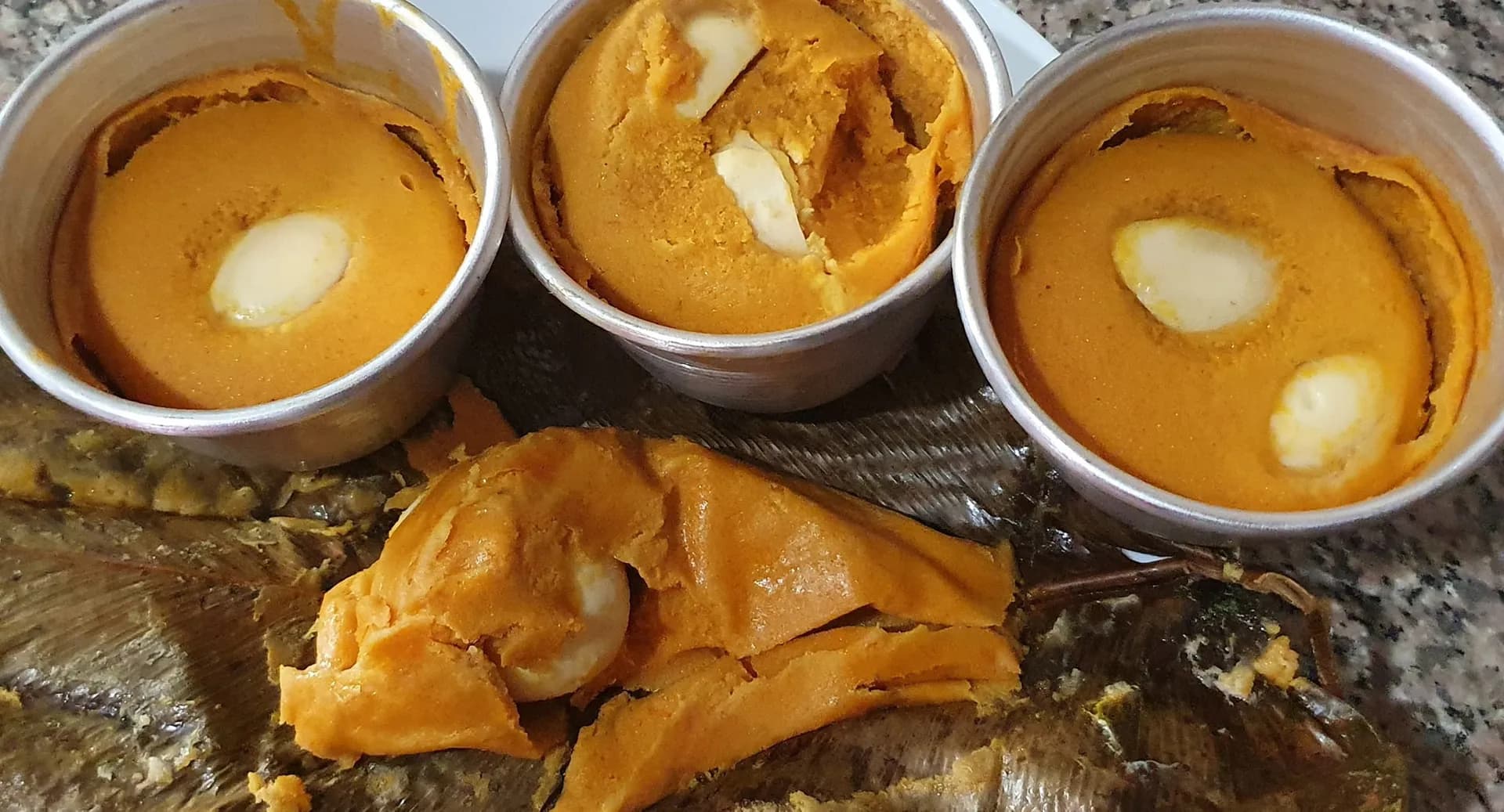
Moi moi is steamed bean pudding, and it is among the small group of Nigerian dishes that turn up everywhere: at breakfast, at parties, at weddings, in lunchboxes, beside jollof rice, and on its own. Black eyed peas or brown beans are soaked, peeled, blended with pepper and onion, seasoned, and steamed until they set.
The peeling is what most people underestimate. The bean skins have to come off before blending, because they are what stands between a smooth moi moi and a gritty one, and the quality of the blend decides the texture of the finished dish more than any other single factor. Nigerian markets have heavy duty commercial mills for exactly this reason, and home blenders often cannot manage it.
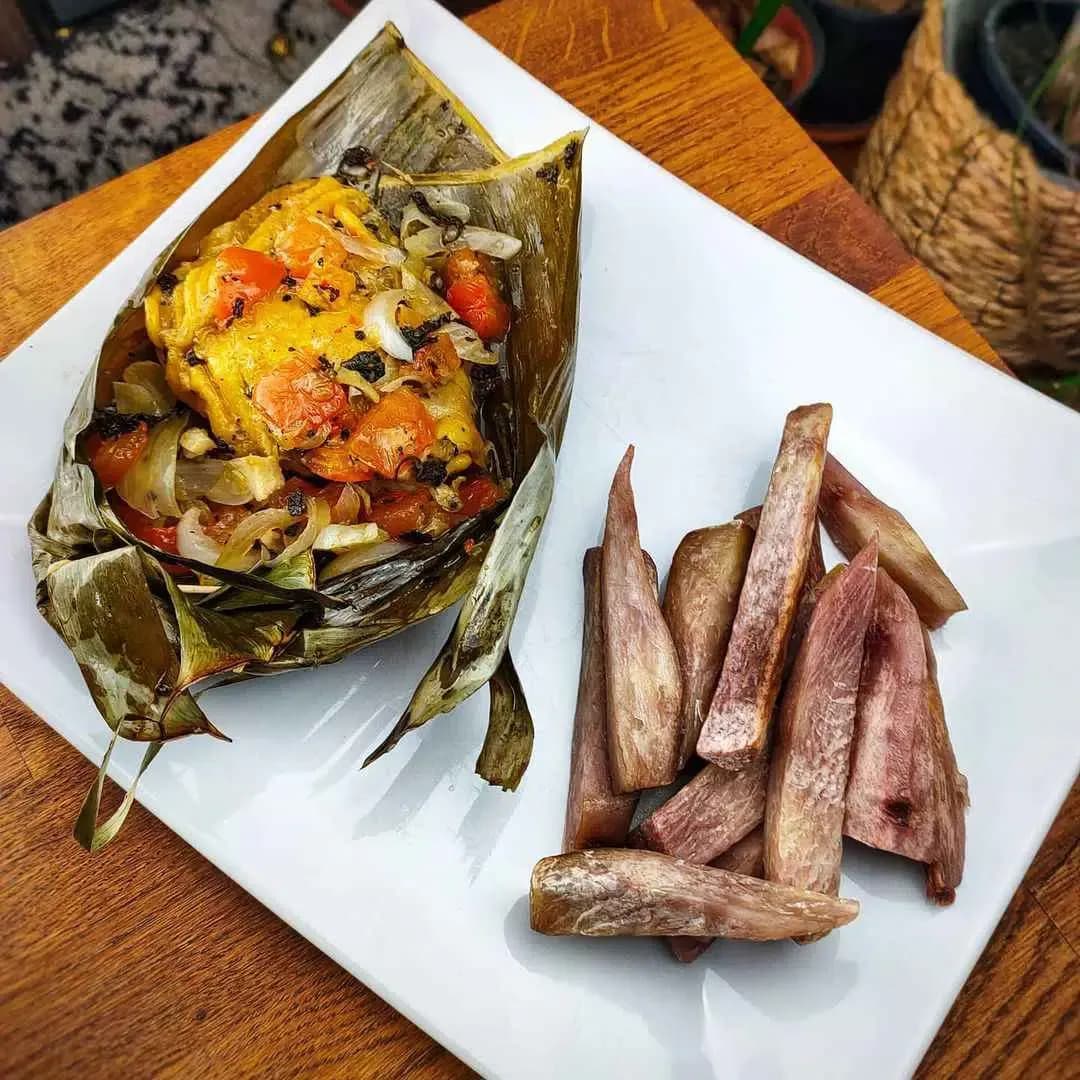
What it is steamed in changes the result and the name. Uma leaves, from Thaumatococcus daniellii, give the best flavour and cook fastest; banana leaves are the common alternative; aluminium foil and heatproof containers are the modern route. Nutmeg is the ingredient people leave out and then wonder why their moi moi does not taste like the one at the party. Egg, corned beef or bone marrow goes into the middle, and moi moi appears as a side to jollof and fried rice, as breakfast with pap or bread, and as a meal in itself.
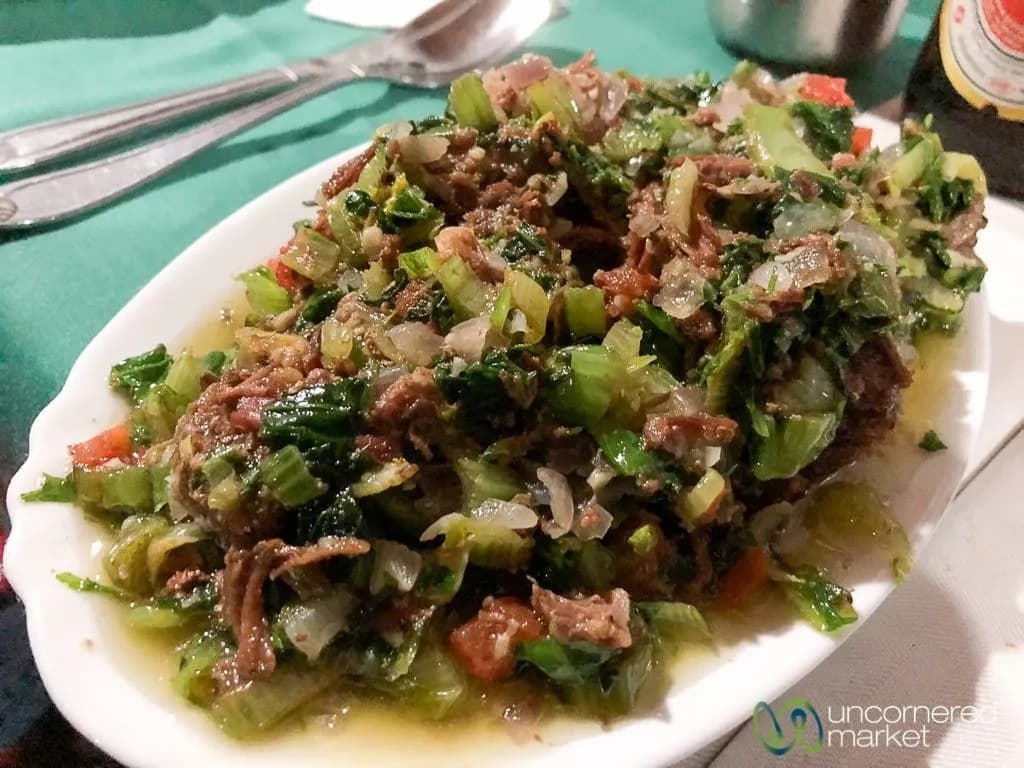
Abom, written abomu here, is the simpler of the two main Ghanaian cocoyam leaf preparations. Where the tomato based kontomire stew is thickened with ground melon seed and cooked in a pot, abom is steamed leaves ground in an asanka with onion, pepper and ginger, finished with hot palm oil poured over the top. It is closer to a relish than to a stew.
The asanka is the tool that defines it. The ridged earthenware bowl grinds rather than purees, and everything in an abom passes through it: the aromatics first, then the salted fish, then the greens, each stage mashed into the last. That produces a coarse, uneven texture that a blender cannot reproduce and that Ghanaians would notice immediately.
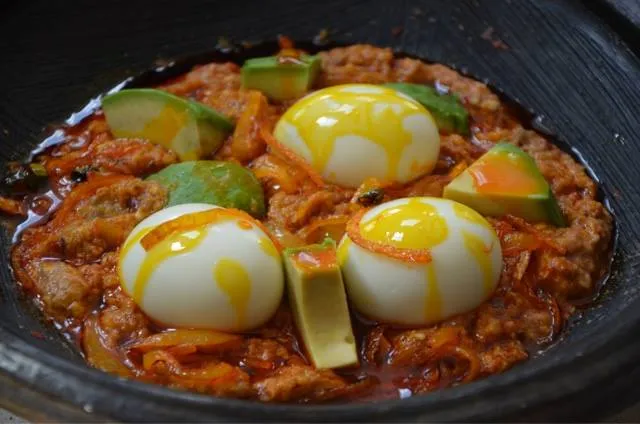
It is Asante food particularly, and it is assembled rather than cooked in the ordinary sense. Plantain, egg, avocado and several kinds of fish, koobi, kakro, smoked mackerel and smoked turkey, go onto the plate around the greens, and hot palm oil is ladled over at the end. Kontomire is the proper leaf. Ghanaians abroad substitute spinach, which the source acknowledges directly, and the result is milder and softer than the cocoyam leaf gives.
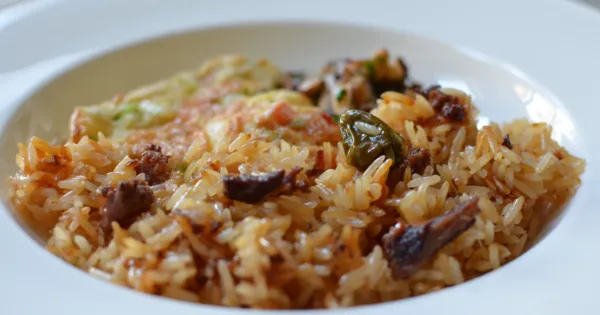
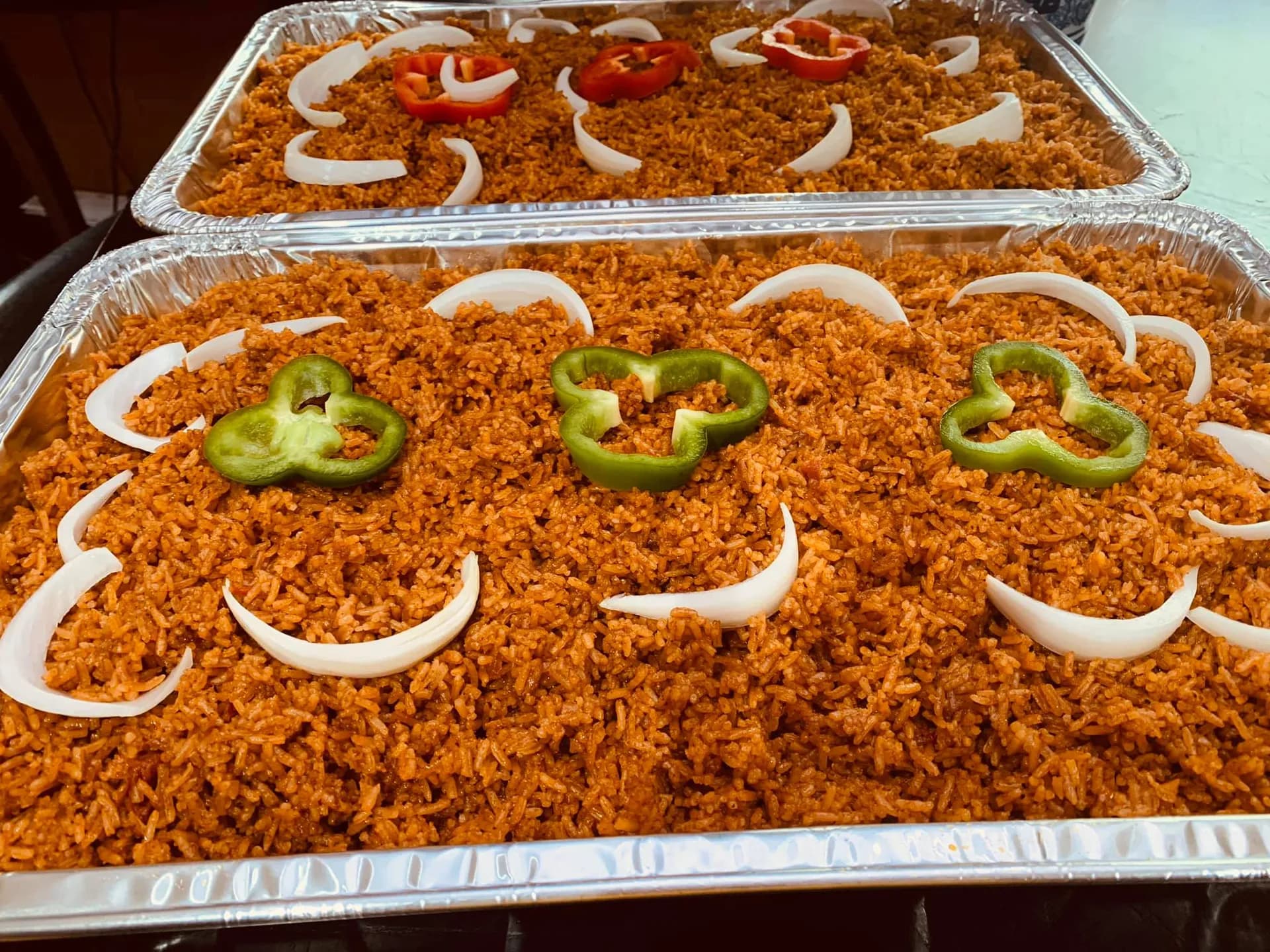
Ghanaian jollof rice is defined against its rivals as much as on its own terms, and Ghanaians are entirely comfortable with that. It is a tomato based rice, aromatic rather than fiery, seasoned with curry powder, garlic and ginger, and cooked in basmati. Every one of those choices is a position in an argument.
The rice is the clearest one. Ghanaians use basmati, which stays separate and perfumed and carries the aromatics; Nigerians use long grain parboiled, which absorbs the tomato base and takes on the smoke. Neither is a mistake. They produce genuinely different dishes that share a name, and the preference in each country is consistent enough to be a national marker.
The jollof rivalry between Ghana and Nigeria is the continent's most famous culinary argument, conducted on social media, at dinner tables and in the press with an intensity that has very little to do with rice and a great deal to do with two confident countries enjoying themselves. The honest position on the origin is that the dish descends from the Senegambian rice tradition rather than from either country. The honest position on which is better is that both are right within their own tradition, and Ghanaians serve theirs at every social gathering and celebration that matters.
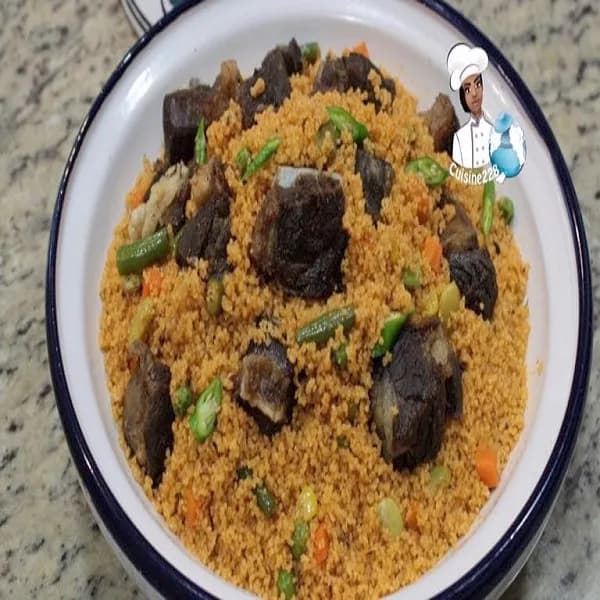
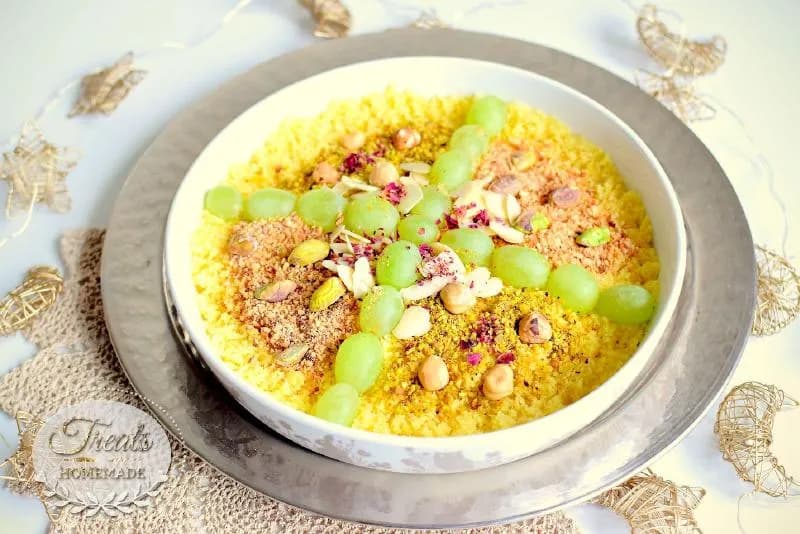
Couscous is the national dish of Tunisia, and it is also the national dish of Algeria, Morocco, Mauritania and Libya, which tells you something about how the Maghreb understands itself. The same steamed semolina appears across all five countries under names that shift with the language: kousksi in Tunisia, taam or kesksu in Algeria, seksu in Morocco, and cuscusu in Sicily, where it crossed the water.
The Tunisian version is distinguished by its heat and its colour. Harissa goes into the broth rather than being offered alongside it, and the finished couscous runs orange to deep red depending on how much broth and harissa it has taken up. Caraway is the other Tunisian signature, appearing in a quantity that Moroccan and Algerian couscous would not use.
What goes with it depends on the coast. In Sfax and the other coastal cities, couscous is made with fish. Inland it more often carries lamb, sometimes with dried fruit. Turnip, carrot, courgette, potato, pumpkin and chickpeas are the usual vegetables, cooked in the broth and removed as each becomes ready. The word itself is traced either to the Arabic kaskasa, to pound small, or the Amazigh seksu, meaning rounded or well rolled, and both derivations describe the grain rather than the dish.