Nous utilisons des cookies essentiels au fonctionnement du site. Nous aimerions aussi déposer des cookies de mesure d’audience et des cookies publicitaires, uniquement avec votre accord. Vous pouvez choisir séparément pour chacun. Lire notre politique relative aux cookies
Loading
Recettes
Parcourez les archives par pays, par plat et par temps de cuisson.
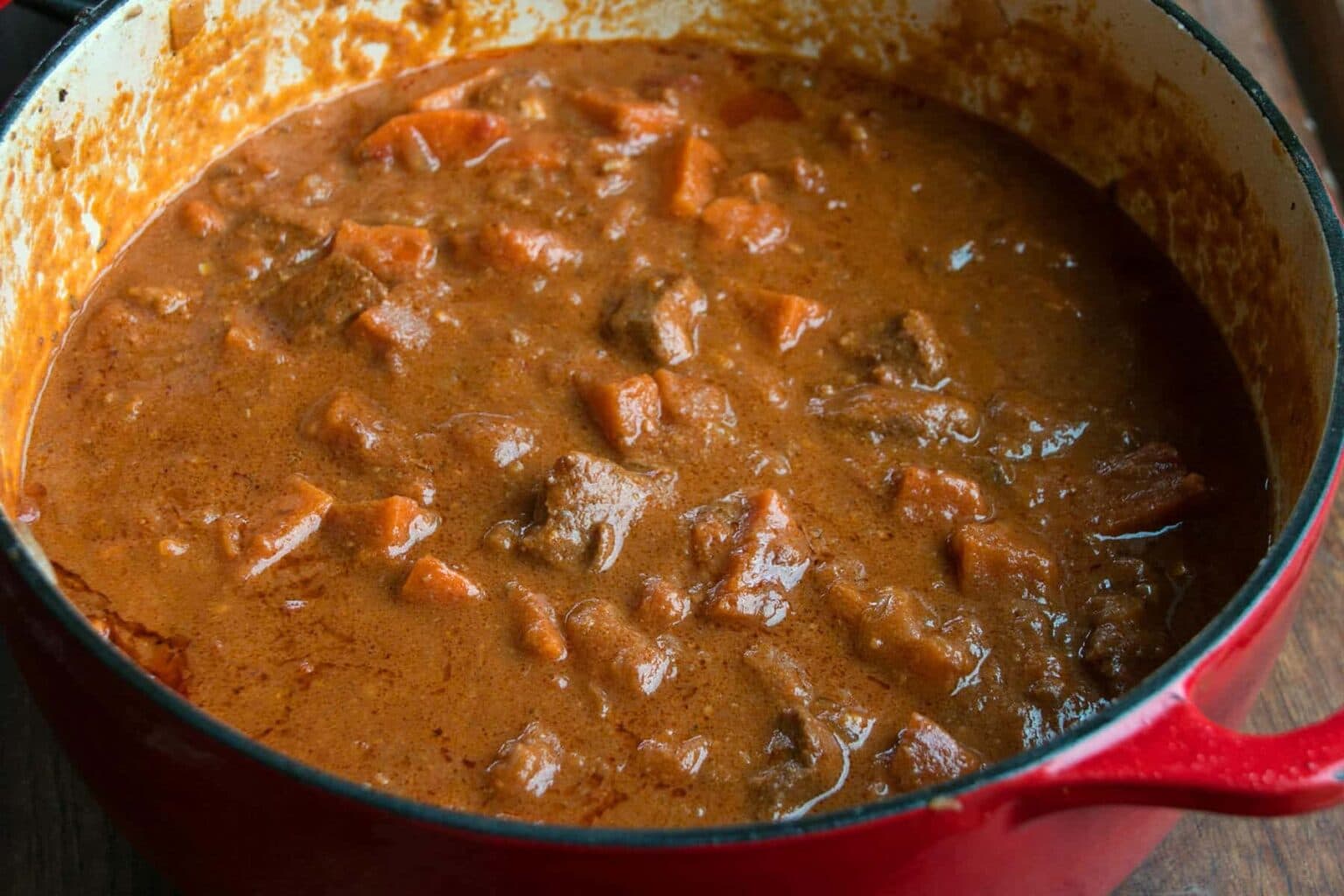
Dried white beans cooked until tender, then finished with red onion and sliced tomatoes into a thick, soupy stew. It is Malagasy, and it is served everywhere on the island.
It is laoka, which is the useful word here. In Malagasy eating, rice is the meal and laoka is whatever accompanies it, the thing that goes on top of, or beside, a large plate of rice. Tsaramaso is one of the most popular laoka in the country, and it is eaten as a matter of course rather than as an occasion dish.
It is very often not vegetarian. Zebu meat, the humped cattle that are central to Malagasy life, makes it hen'omby sy tsaramaso, and pork makes it tsaramaso sy henakisoa. The shank is the cut the source recommends. This version is the plain one, which is also widely eaten.
The technique in the recipe is worth noting: the beans are cooked separately in water, seasoned only at the end, and a cup of their cooking liquid is kept back. That liquid is what the finished stew is loosened with, and it carries starch and flavour that plain water would not.
The source compares it to cassoulet, which is a reasonable shorthand, beans and meat cooked long and slow, though the seasoning is entirely different.
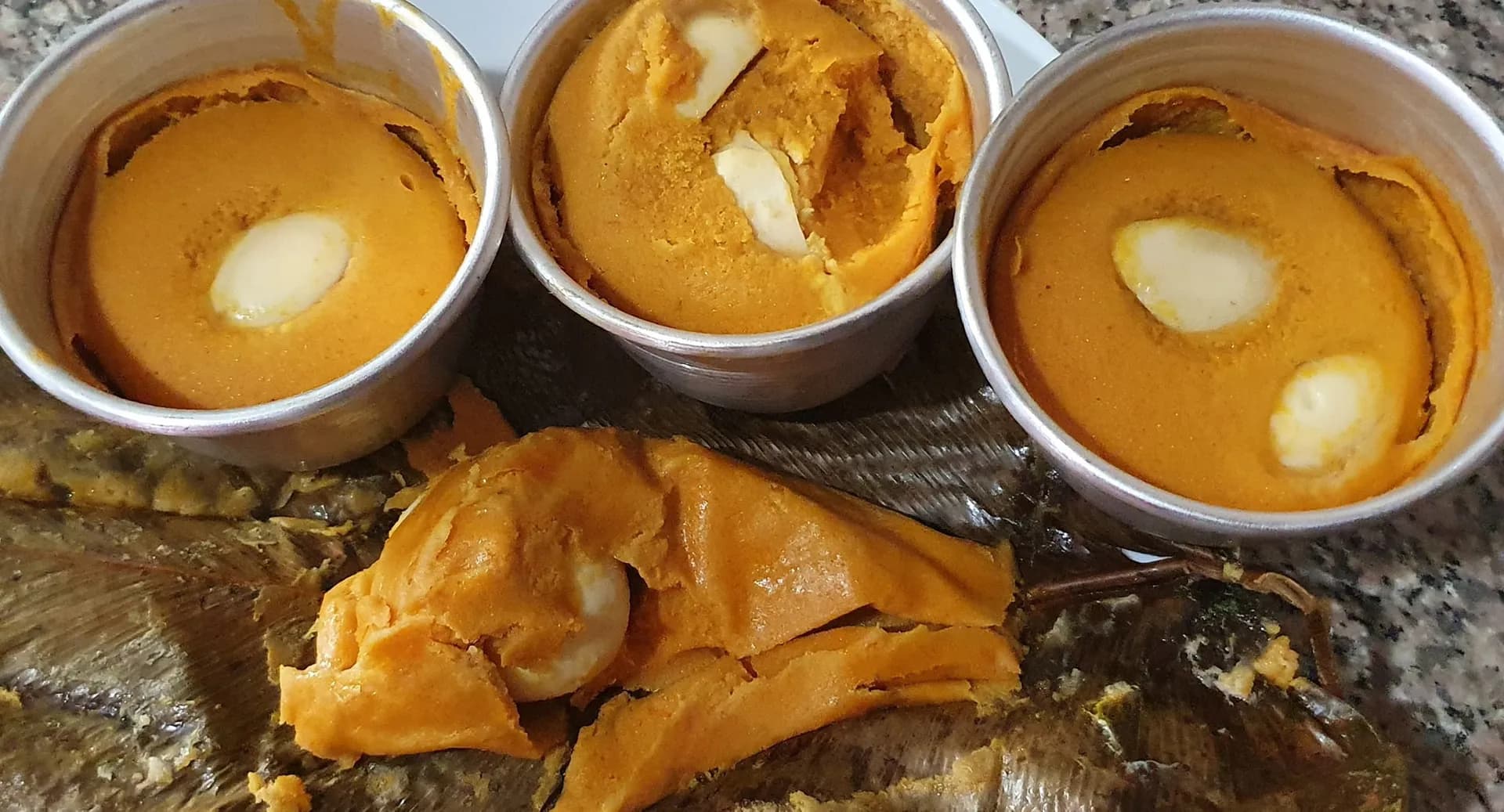
Moi moi is steamed bean pudding, and it is among the small group of Nigerian dishes that turn up everywhere: at breakfast, at parties, at weddings, in lunchboxes, beside jollof rice, and on its own. Black eyed peas or brown beans are soaked, peeled, blended with pepper and onion, seasoned, and steamed until they set.
The peeling is what most people underestimate. The bean skins have to come off before blending, because they are what stands between a smooth moi moi and a gritty one, and the quality of the blend decides the texture of the finished dish more than any other single factor. Nigerian markets have heavy duty commercial mills for exactly this reason, and home blenders often cannot manage it.
What it is steamed in changes the result and the name. Uma leaves, from Thaumatococcus daniellii, give the best flavour and cook fastest; banana leaves are the common alternative; aluminium foil and heatproof containers are the modern route. Nutmeg is the ingredient people leave out and then wonder why their moi moi does not taste like the one at the party. Egg, corned beef or bone marrow goes into the middle, and moi moi appears as a side to jollof and fried rice, as breakfast with pap or bread, and as a meal in itself.
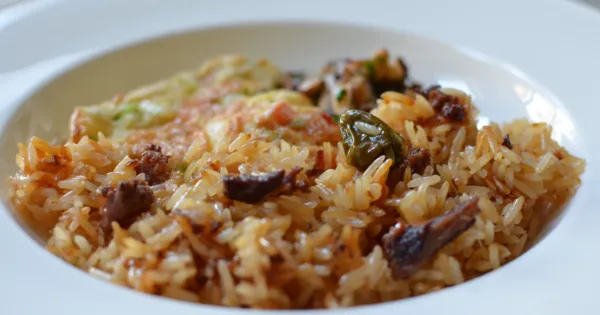
Angwa moo is oiled rice, and the Akan name says it plainly. Onions are browned in oil, rice goes in and is fried briefly, then water is added and the whole thing cooks together. The result is golden, faintly sweet from the caramelised onion, and unlike fried rice in one important respect: the rice is raw when it enters the oil rather than cooked and cooled.
Ghanaians treat it as the emergency dish, and they are cheerful about saying so. It is what a child cooks when a parent is not home, what a young man living alone makes because it needs almost nothing, and what gets made when there is no time and no plan. That does not make it lesser. The browning of the onion is doing real work, and a well made angwa moo has a depth that its ingredient list does not predict.
The traditional accompaniment is ground pepper made in an earthenware asanka, with tinned sardines or fried eggs alongside, and that combination is the version most Ghanaians picture. The salted beef known as tolobeef, cured at home over two days, is the more considered addition. The crisp scorched layer at the bottom of the pot is prized and fought over, which is the case for rice dishes across the continent, and the way to get it is to let the rice finish in its own steam without stirring.
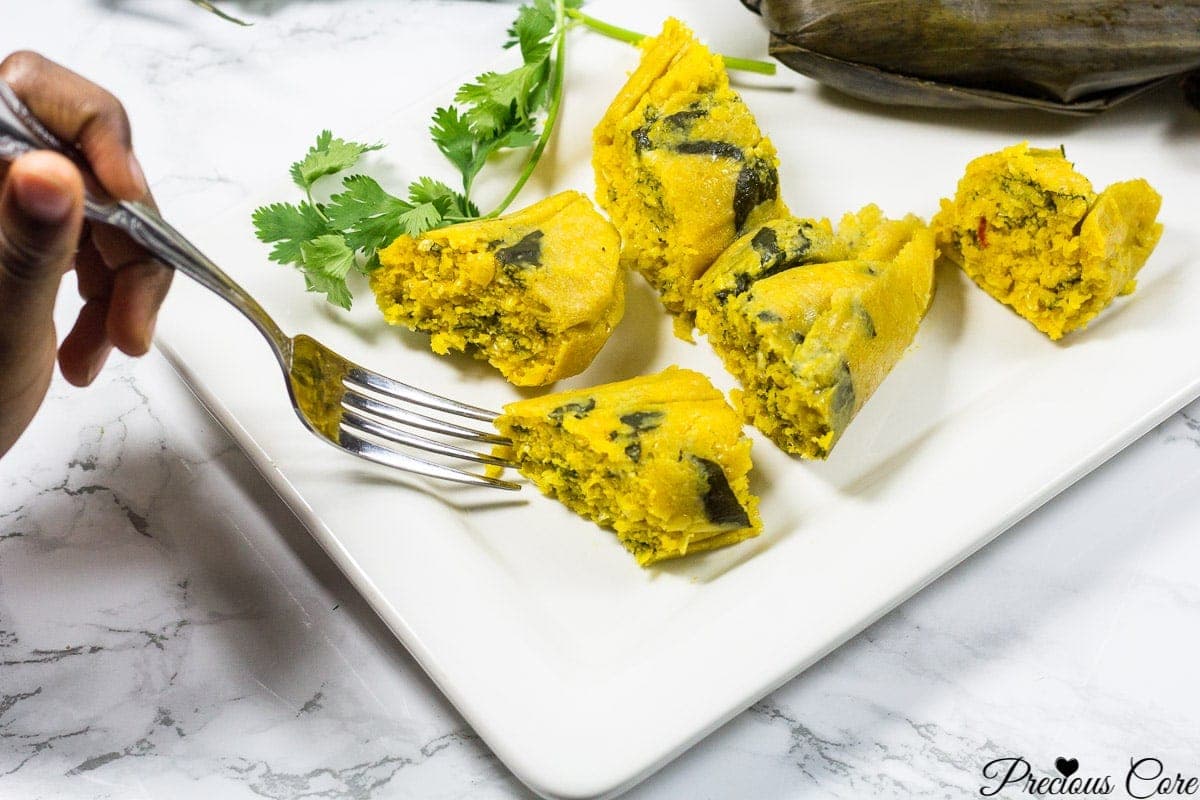
Koki corn is a Cameroonian steamed pudding made from ground fresh corn mixed with palm oil and greens, wrapped in banana leaves and steamed until it sets firm.
It is the corn version of a dish more commonly made with black-eyed peas. Koki beans, ground soaked beans treated the same way, is the better-known form, and the two are close relatives using the same technique on different staples. Both belong to a wider West and Central African family of leaf-wrapped steamed puddings that includes moi moi and abala.
The wrapping is not decorative. Banana leaves are warmed over a flame first, which makes them pliable enough to fold without splitting, and they hold the loose mixture in shape while it steams. They also contribute a faint grassy aroma that the pudding takes on.
Palm oil is heated before it goes in, which changes how it behaves in the mixture and gives the finished koki its deep orange colour.
Njama njama, huckleberry leaves, a Cameroonian staple green, or spinach is folded through.
It sets firm enough to slice and is eaten hot, on its own or with plantain.