

Nous utilisons des cookies essentiels au fonctionnement du site. Nous aimerions aussi déposer des cookies de mesure d’audience et des cookies publicitaires, uniquement avec votre accord. Vous pouvez choisir séparément pour chacun. Lire notre politique relative aux cookies
Loading
Recettes
Parcourez les archives par pays, par plat et par temps de cuisson.
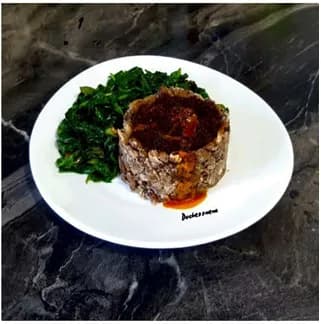
Black-eyed peas soaked, cooked until tender and seasoned with salt. That is the entire recipe, and it is deliberately so: this is the base that a great many Nigerian bean dishes are built from, and it is eaten plainly in its own right.
In Nigerian usage, beans without further qualification usually means black-eyed peas, ewa in Yoruba, agwa in Igbo, wake in Hausa. They are indigenous to West Africa, domesticated there thousands of years ago and carried to the Americas through the transatlantic slave trade, which is why they are as central to Southern American cooking as to Nigerian.
Eaten plainly, boiled beans go with a pepper sauce, fried plantain, fried yam or bread, and that combination, beans and bread, beans and dodo, is everyday food across the country. From this same pot come the more elaborate dishes: ewa agoyin with its dark fried pepper sauce, honey beans, beans porridge.
Two things in the method deserve keeping. Picking through dried beans for stones is not fussiness, small stones do get through commercial sorting and they break teeth. And salting only at the end is correct, because salt added early toughens the skins and lengthens the cooking considerably.
The source's extensive nutritional and weight-loss claims have not been carried across.
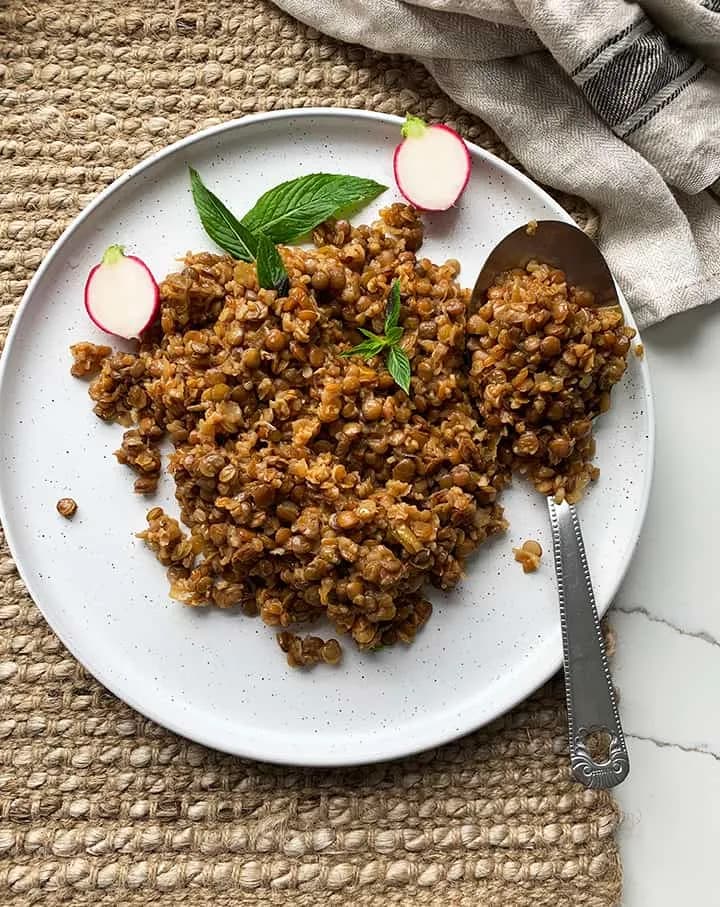
Mujadara is lentils and rice cooked together and topped with deeply caramelised onions, and the source names it a signature Middle Eastern dish. It belongs to the Levant rather than to Africa, and it sits in Worldwide Recipes for that reason.
The name is unflattering and accurate. In Arabic mujaddara means riddled with small holes, or pockmarked, and it describes the appearance of the lentils scattered through the rice. It is nicknamed the dish of the poor everywhere it is eaten, because it contains no meat and nothing expensive, and the source makes a fair comparison: mujadara is to the Middle East what couscous is to the Maghreb.
Its age is what makes attribution impossible. The first recorded recipe goes back centuries, and as the source observes, the older and simpler a dish is, the more cultures claim its paternity. What matters technically is the onions: they need to be fried until the edges genuinely curl and darken, and the flavoured oil they leave behind is poured into the pot without them, so the onions stay crisp on top rather than softening into the rice.
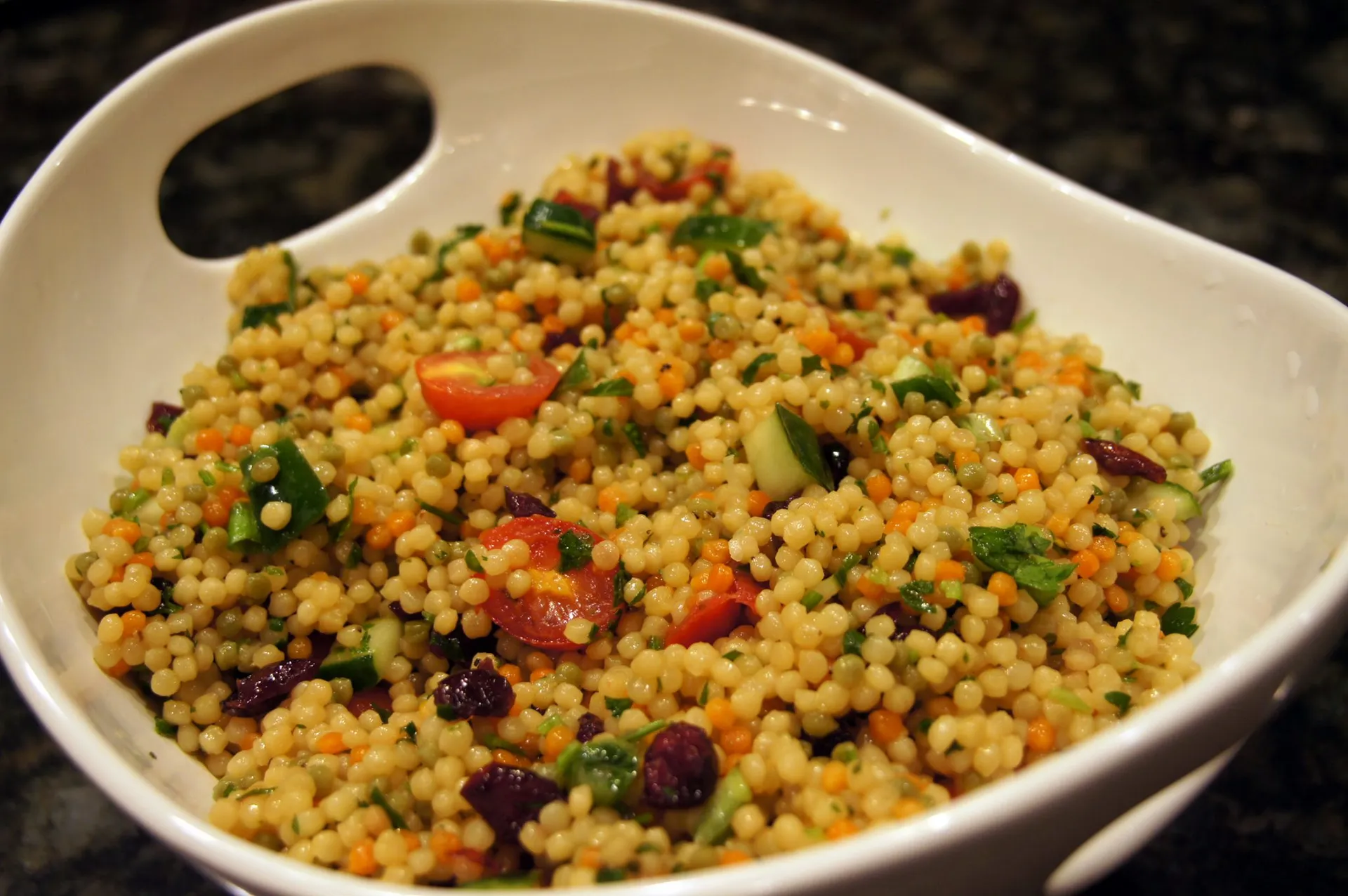
This is couscous with roasted vegetables, chickpeas, raisins and almonds, dressed with lemon, cumin and olive oil. It is a salad in the sense of being served at room temperature rather than a leafy one: the couscous is the bulk of it and the vegetables are folded through.
Couscous was first made by the Amazigh people of North Africa, who worked out how to turn wheat into fine granules, and it remains a staple across Morocco, Algeria, Tunisia and Libya. Moroccan couscous is the smallest of the common grades, finer than Israeli or Lebanese couscous, and it is what this recipe uses.
The technique is absorption rather than steaming. Hot broth is poured over the dry couscous, which has been tossed with olive oil and turmeric, and it is covered and left for five minutes. The raisins go in during that time so the residual heat plumps them. Traditional Moroccan couscous is steamed repeatedly in a couscoussier, which produces a lighter grain; this is the quick domestic method. The vegetables are roasted separately and folded in, which keeps them caramelised rather than steamed into the grain.
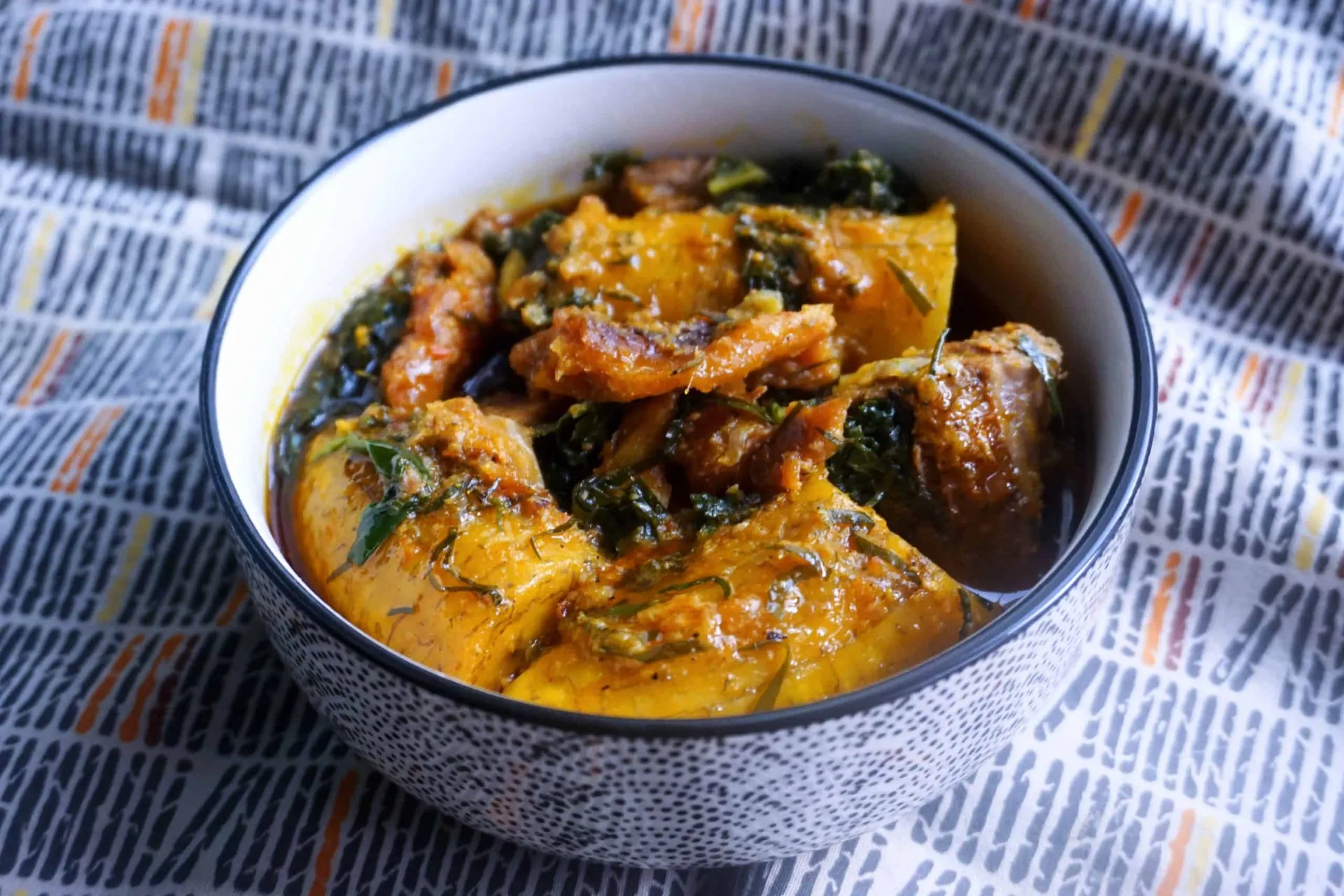
Garden egg stew is a West African palm oil stew built on garden eggs, the small white and green African aubergines that are nothing like the large purple ones sold in most supermarkets. They are firmer, more bitter and hold their shape, and they are eaten across Ghana and Nigeria both cooked and raw.
This version is a seafood one, with prawns, shrimp and smoked mackerel, and it departs from the plain garden egg stew in one further respect: a spoonful of peanut butter goes into the ground pepper base. That is not universal but it is a recognised West African move, giving body and a background richness that thickens the stew without flour.
What it is served with is the point. The stew is made to go with yam, plantain and cocoyam, all cooked plain, and the contributor is explicit that palm oil is what makes that combination work. Vegetable oil is possible and gives a different, lighter dish. The method also uses an air fryer to char the peppers, tomatoes and onion before grinding, which is a modern substitute for roasting them over an open flame, and it produces the same smokiness. Contains peanut.