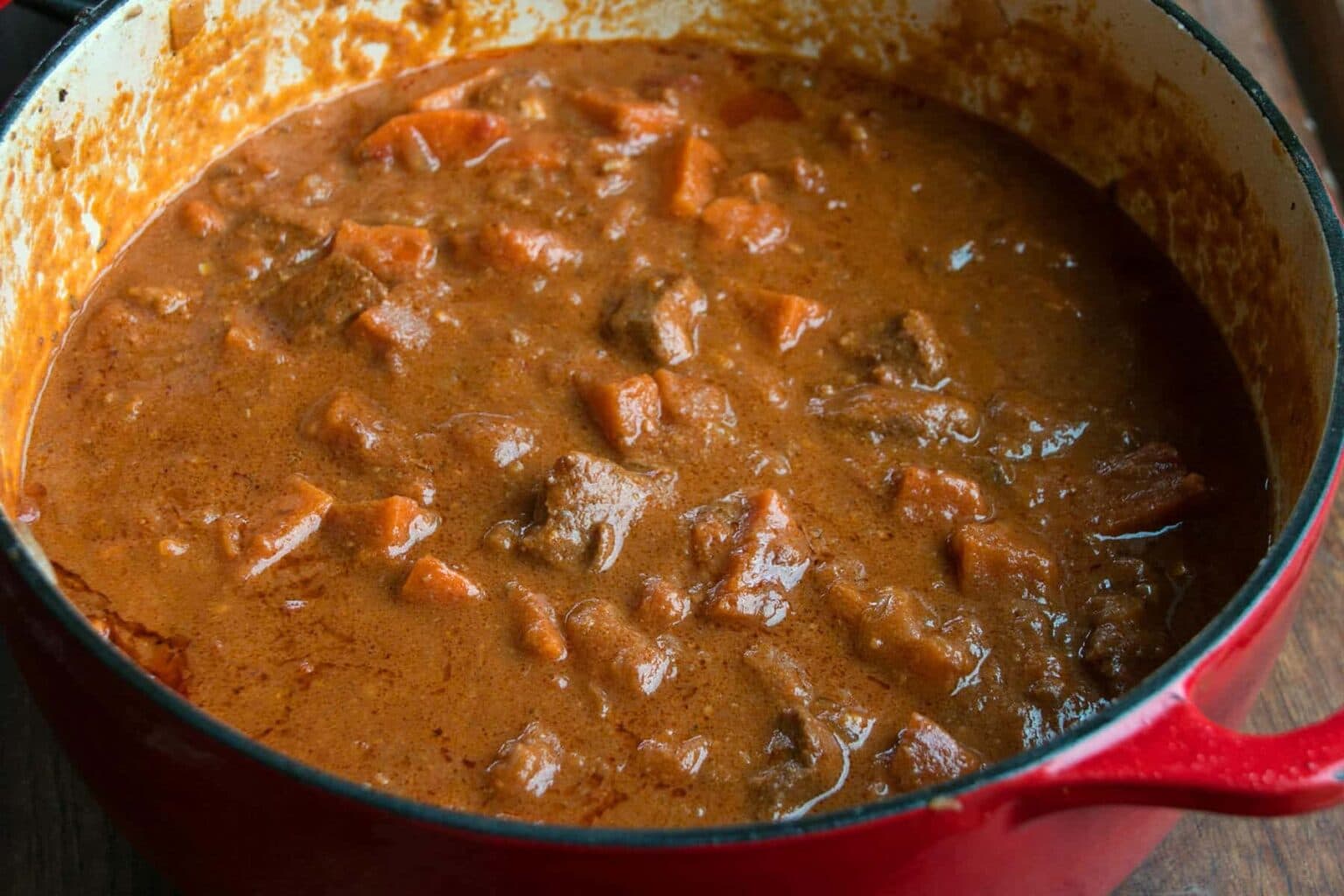
Domada (Gambian Peanut Stew)
4.74.67 out of 5, 3 ratings


Cookies sur African Food Network
Nous utilisons des cookies essentiels au fonctionnement du site. Nous aimerions aussi déposer des cookies de mesure d’audience et des cookies publicitaires, uniquement avec votre accord. Vous pouvez choisir séparément pour chacun. Lire notre politique relative aux cookies

Parcourez les archives par pays, par plat et par temps de cuisson.
Domada, also written Domoda, is Gambia's national dish and one of West Africa's most comforting stews, a rich, thick groundnut (peanut) based stew cooked with chicken or beef, tomatoes, sweet potato, and cabbage. The peanut paste dissolves into the broth as it cooks, creating a silky, deeply flavoured sauce that coats every piece of protein and vegetable in the pot. The dish belongs to the family of West African groundnut soups found across Senegal, Ghana, Nigeria, and Cameroon, but Domada has its own character, sweeter from the potato, more mellow than the spicier Ghanaian versions, and always generous in the quantity of groundnut used. In Gambia it is eaten at celebrations, family gatherings, and as everyday home cooking.
Les mieux notées
EasyPan-African · Gambia
Recette de Nympha · Africook
Rien ici pour le moment
