Nous utilisons des cookies essentiels au fonctionnement du site. Nous aimerions aussi déposer des cookies de mesure d’audience et des cookies publicitaires, uniquement avec votre accord. Vous pouvez choisir séparément pour chacun. Lire notre politique relative aux cookies
Loading
Recettes
Parcourez les archives par pays, par plat et par temps de cuisson.
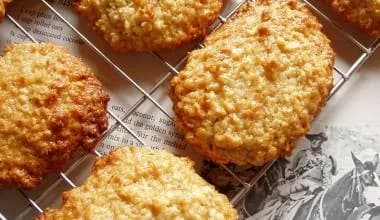
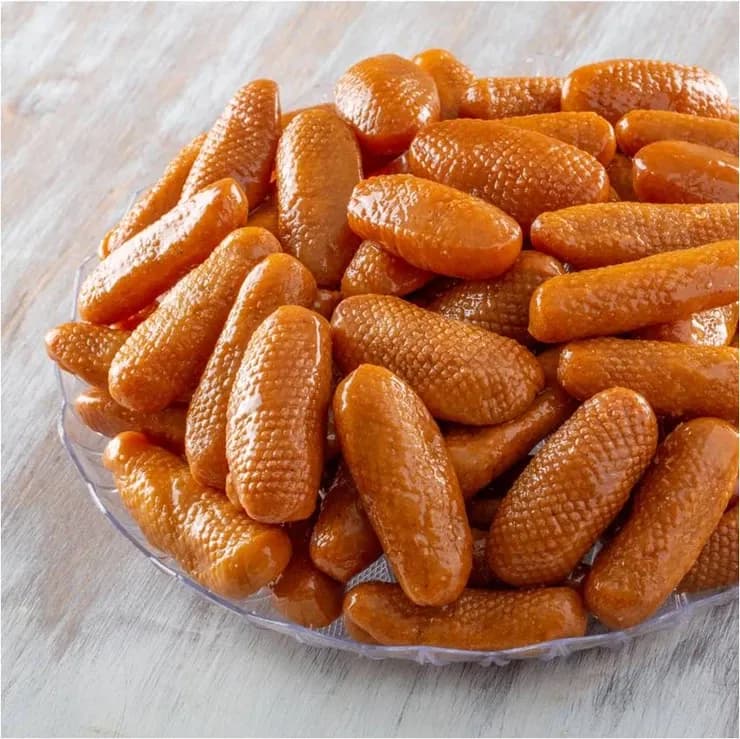
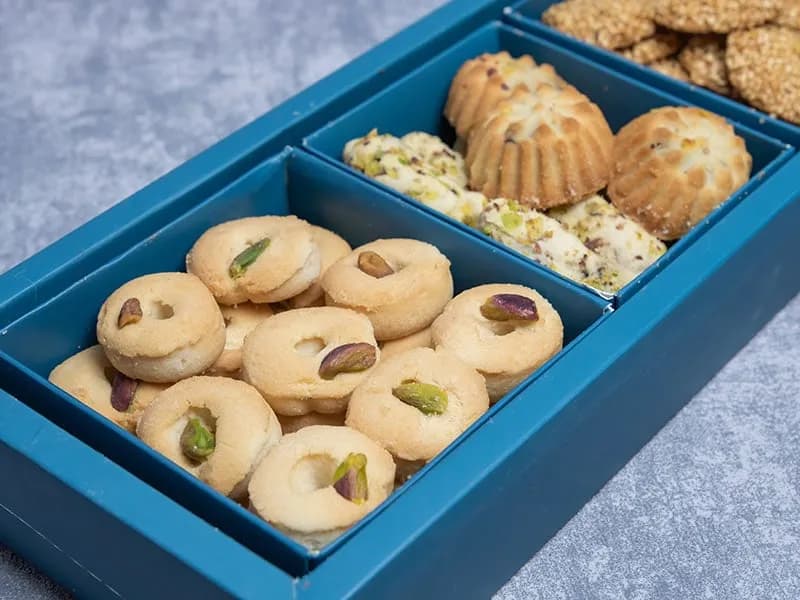
Makroud el louse is the almond version of makroud, and it is a genuinely different cookie from the one that name usually brings to mind. Ordinary makroud is a semolina pastry stuffed with date paste and deep-fried, then soaked in syrup. Makroud el louse has no semolina, no dates and no frying: it is ground almonds, sugar and egg, shaped, baked, dipped in an orange-flower syrup and rolled in icing sugar.
"Louse" is the Algerian word for almond, so the name simply distinguishes the almond one. Both are cut on the diagonal into the same lozenge shape, which is where the shared name comes from, makroud derives from the Arabic for something cut at an angle. The shape is the family resemblance; the ingredients are not.
Because there is no flour in the dough, this version is naturally gluten-free, which is unusual among North African pastries and is worth knowing if you need it. One caution: the source's own instructions send you to a floured work surface, which would undo that. Use icing sugar or a little extra ground almond instead.
These are keeping cookies. Sealed in a tin they hold for over a month, which is why they are made in quantity for Eid, Ramadan and weddings rather than a few at a time.
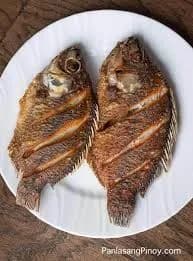
Whole tilapia scored, marinated in an oil-based spice mixture, oven-grilled, then coated in a fresh green pepper base and returned to the heat. The two-stage seasoning is what makes it, and it is a West African approach rather than a simple marinade.
The first stage is a dry-spice oil: vegetable oil with fish seasoning, white and black pepper, ginger, garlic, onion powder and lemon juice, worked into the cuts. The second is a green pepper base built in a food processor from green and red scotch bonnets, bell peppers, spinach, dill, coriander, ginger, garlic and onion, fried briefly in oil and then smeared over the part-cooked fish.
That green base is the interesting part. Blending leafy greens and fresh herbs into a pepper sauce is characteristic of Ghanaian and wider West African fish cookery, and it gives colour and a fresh, sharp finish that a marinade applied only at the start cannot. The scoring is not decorative either: two or three cuts on each side let both stages of seasoning reach the flesh rather than sitting on the skin. Tilapia is native to African fresh waters and is the fish most associated with Ghanaian grilling, usually eaten with banku.
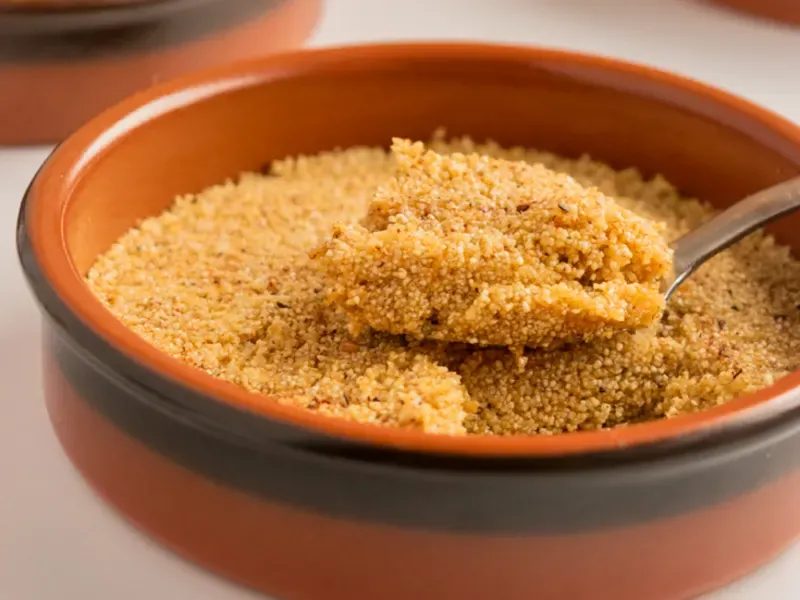
Tamina is semolina steamed, toasted until golden, and worked into warm honey and butter. It is Algerian, and it is made for occasions, engagements, weddings, baby showers and Mawlid, the birthday of the Prophet Muhammad.
The three ingredients carry meaning, and the source explains it well: semolina for sustenance, honey for the sweetness of love, butter for blessings. That symbolism is why tamina appears at the birth of a child in particular, offering it to guests is the Algerian way of announcing a new baby, which makes the dish a message as much as a dessert.
The toasting is the whole technique and it cannot be rushed. Semolina taken to a proper golden colour tastes nutty and complex; under-toasted, it tastes raw and pasty. It also burns from golden to black very quickly, so it needs constant movement over medium-low heat.
The steaming step is unusual and the source explains its own reasoning: it is a safety measure, in case the semolina has not been toasted thoroughly enough. Many recipes skip it and toast alone.
Economics have changed the ingredients. Margarine and sugar syrup now often replace butter and honey, which the source records without judgement.
One caution: it identifies tamina with bsisa, which is a different Tunisian and Libyan preparation.
Thick slices of brioche soaked in a sweetened egg, milk and cream custard, then baked with chocolate and butter. No country is claimed. French toast in one form or another is eaten across Europe and beyond, and it is considerably older than its English name, a version appears in Apicius, the Roman recipe collection, and it is known in France as pain perdu, lost bread, because its purpose was to rescue bread that had gone stale.
The bread choice is the substance of the recipe and the source is right about it. Brioche and challah are both enriched doughs, made with eggs and butter, which means they are structurally sturdier and can absorb a great deal of custard without collapsing. Plain sandwich bread turns to mush. Cutting the slices thick, around 2 cm, matters for the same reason.
Baking rather than pan-frying is the other decision here, and it solves a real problem. Thick slices fried in a pan brown on the outside long before the custard in the middle has set, which is why so much home-made French toast is soggy inside. The oven cooks it through evenly.
The method has a copy error worth noting: it refers to baguette slices twice, having specified brioche in the ingredients. Brioche is correct.