Nous utilisons des cookies essentiels au fonctionnement du site. Nous aimerions aussi déposer des cookies de mesure d’audience et des cookies publicitaires, uniquement avec votre accord. Vous pouvez choisir séparément pour chacun. Lire notre politique relative aux cookies
Loading
Recettes
Parcourez les archives par pays, par plat et par temps de cuisson.
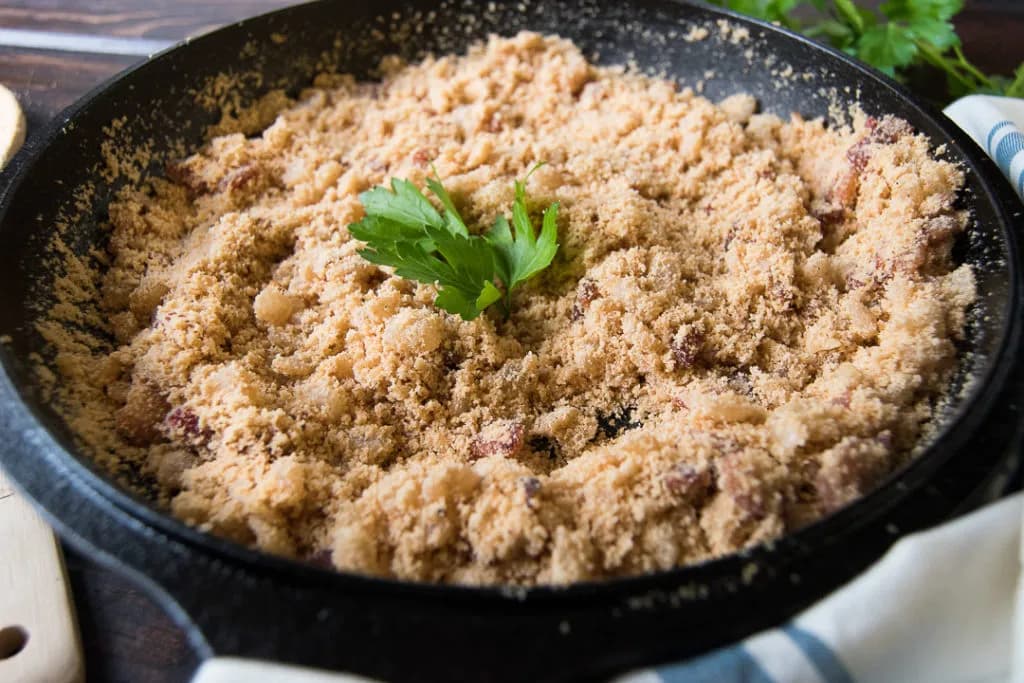
Farofa is cassava flour toasted in fat with onion, garlic and usually bacon, until it turns golden and sandy. It is Brazilian, and it appears on the table at almost every Brazilian meal that involves a stew or grilled meat.
Its job is texture. Brazilian cooking produces a great deal of rich, soupy food, feijoada above all, and farofa is scattered over it to absorb the liquid and give a dry, crunchy contrast. Eaten on its own it makes little sense; eaten over a wet dish it makes complete sense, and that is how it is used.
The African connection is direct and worth stating. Cassava is South American in origin, but the technique of toasting cassava meal into a dry accompaniment moved across the Atlantic in both directions with the transatlantic slave trade, and farofa's closest relatives are West African. Garri, the fermented and toasted cassava granules eaten across Nigeria, Ghana and Benin, is made by essentially the same process. Brazilian cooking, and Bahian cooking in particular, carries an enormous amount of West African influence, and farofa sits squarely in that history, which is precisely why it belongs in a Worldwide collection on an African food site rather than being simply foreign.
The method is short and the one instruction that matters is to keep it moving. Cassava flour burns quickly and unevenly.
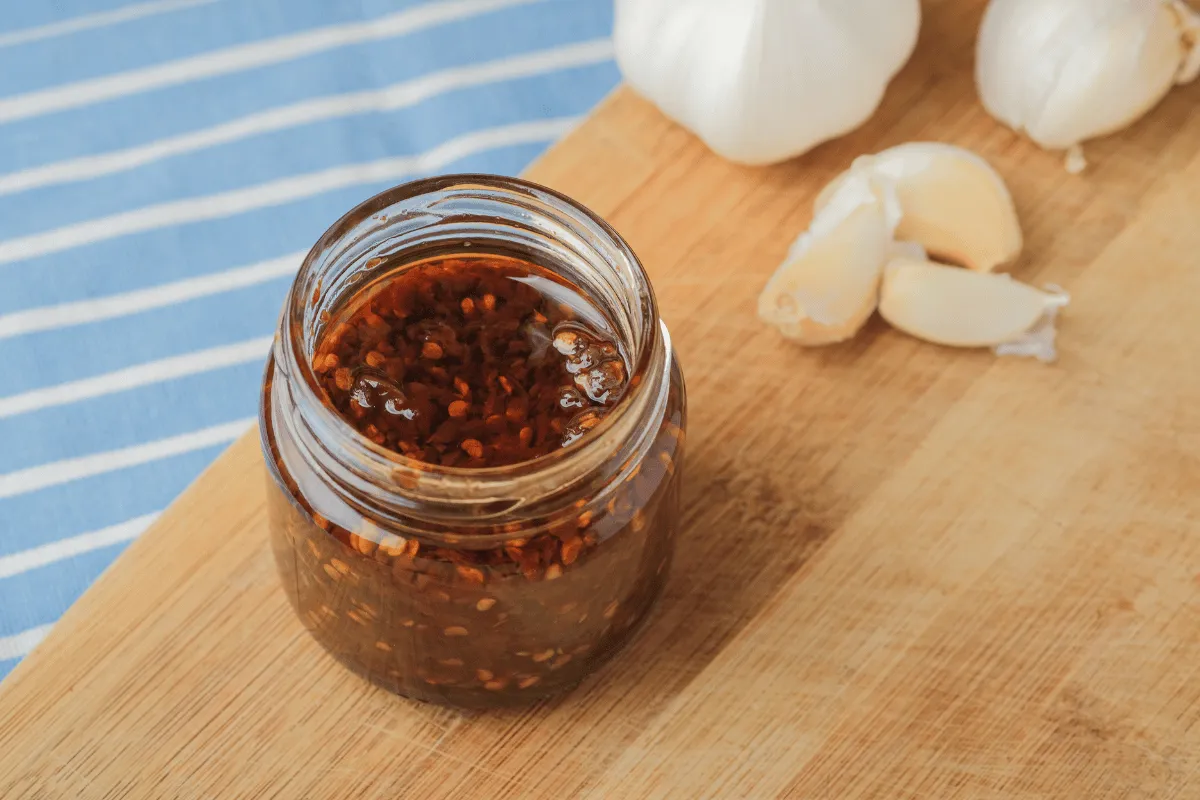
Hot oil poured over garlic and dried chilli, then strained. It is a condiment rather than a dish, and it belongs to East and Southeast Asian cooking, where versions of it are a kitchen staple.
The technique is the whole thing, and it hinges on a short window. Oil is heated until shimmering, taken off the heat, and the garlic goes in for ten to thirty seconds only. The residual heat is enough to draw the flavour out; any longer and the garlic burns, which happens fast and produces a bitterness that cannot be removed. Chilli flakes go in after, because they scorch even more readily.
Straining is the source's choice and it is a legitimate one, but it is worth knowing it is not the only approach. Chinese chilli crisp and many Southeast Asian versions deliberately keep the solids in, so you get texture as well as flavour. Straining gives you a clear, clean infused oil; leaving it gives you something to spoon over food. Both keep.
The flavour improves for a day or two as the oil continues to take on the garlic and chilli, so making it ahead is worthwhile.
It has a real African cousin worth mentioning. Ghanaian shito, the dark fried pepper sauce, works on the same principle of chilli cooked into oil, and it has its own recipe on this site.
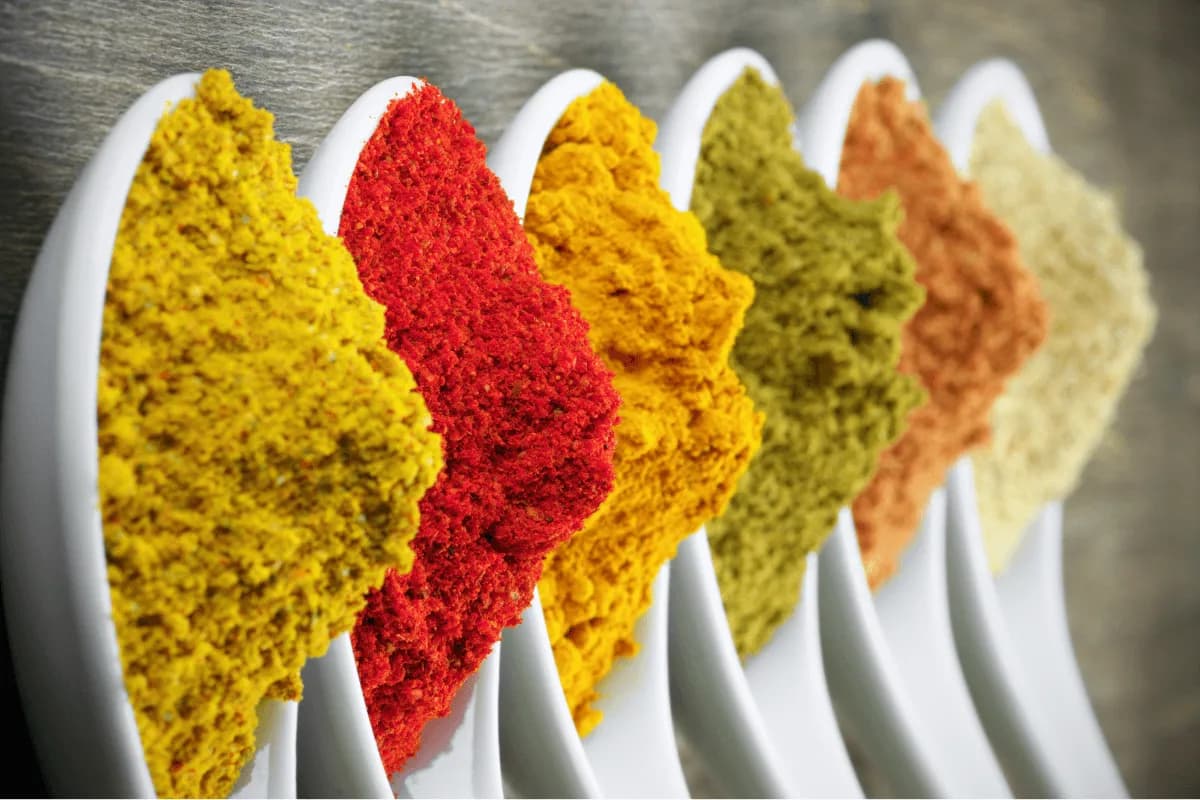
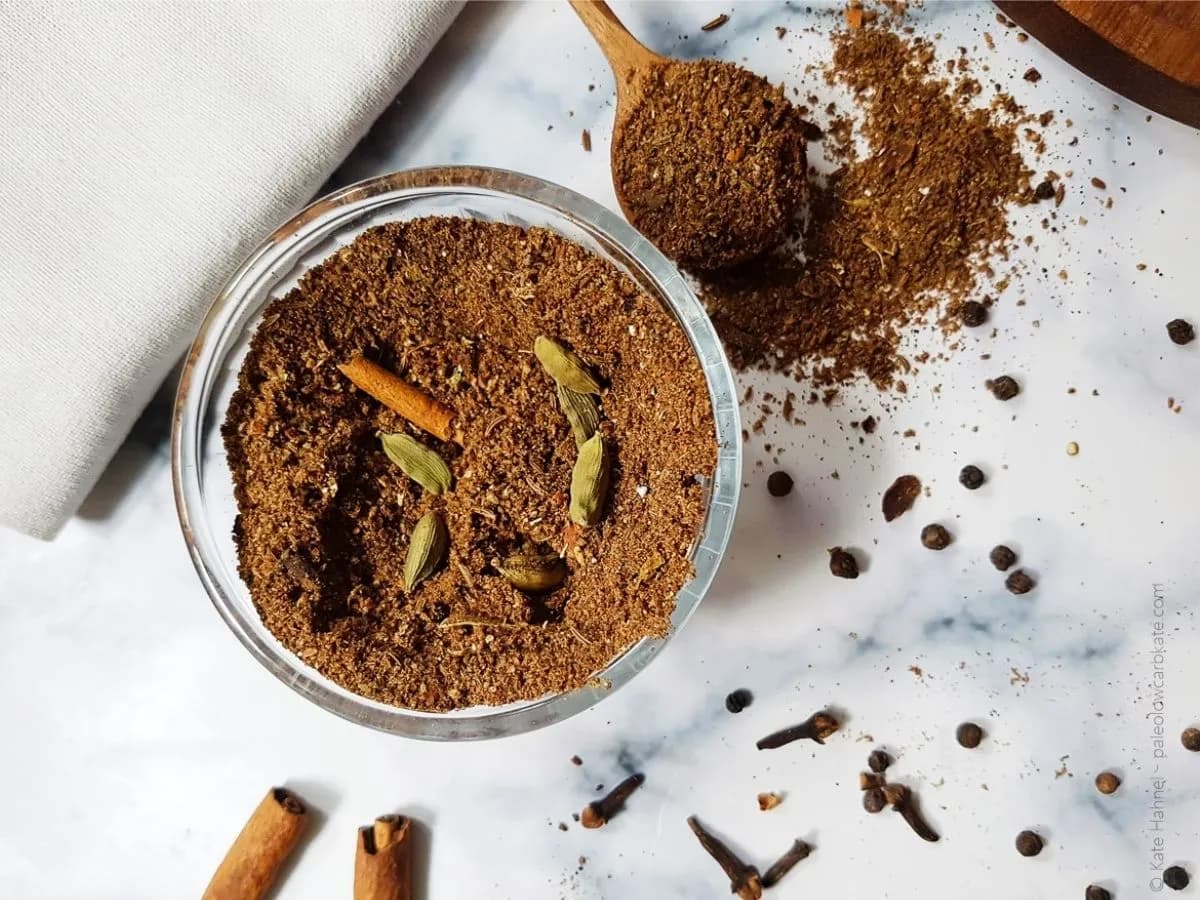
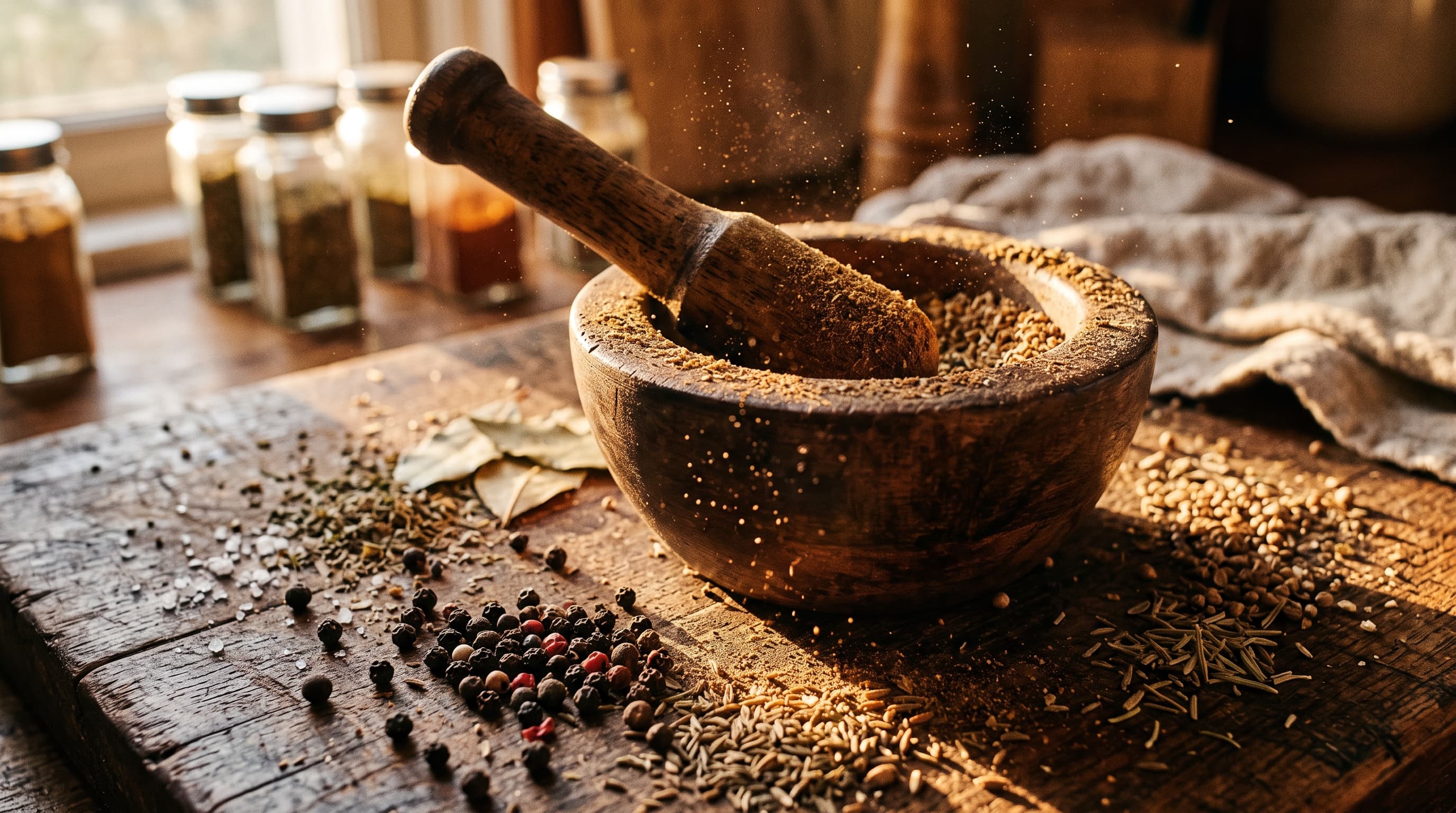
Pilau masala is the spice blend behind pilau, the spiced rice of the East African coast, and it is a short list of whole spices rather than a long one. Cumin, black peppercorns, cardamom, cloves and cinnamon are roasted briefly and ground, and that is the whole thing.
The blend belongs to the Swahili coast, where centuries of Indian Ocean trade brought spices from South and Southeast Asia into the cooking of Kenya, Tanzania and Zanzibar. Pilau itself is a relative of the pilaf and pulao found from Persia to India, adapted along the coast into something distinctly East African, and the masala is the point at which that trade history is most visible.
Whether to buy it or make it is the practical question. Pre-ground blends are widely sold and perfectly usable, but ground spices lose their volatile oils quickly, and the difference between a jar that has sat on a shelf for a year and spices roasted and ground the same day is not subtle. It requires no grinder: a mortar and pestle does the job, and the roasting step is what makes it worth doing at all, since brief heat opens up the aromatics before they are broken down.
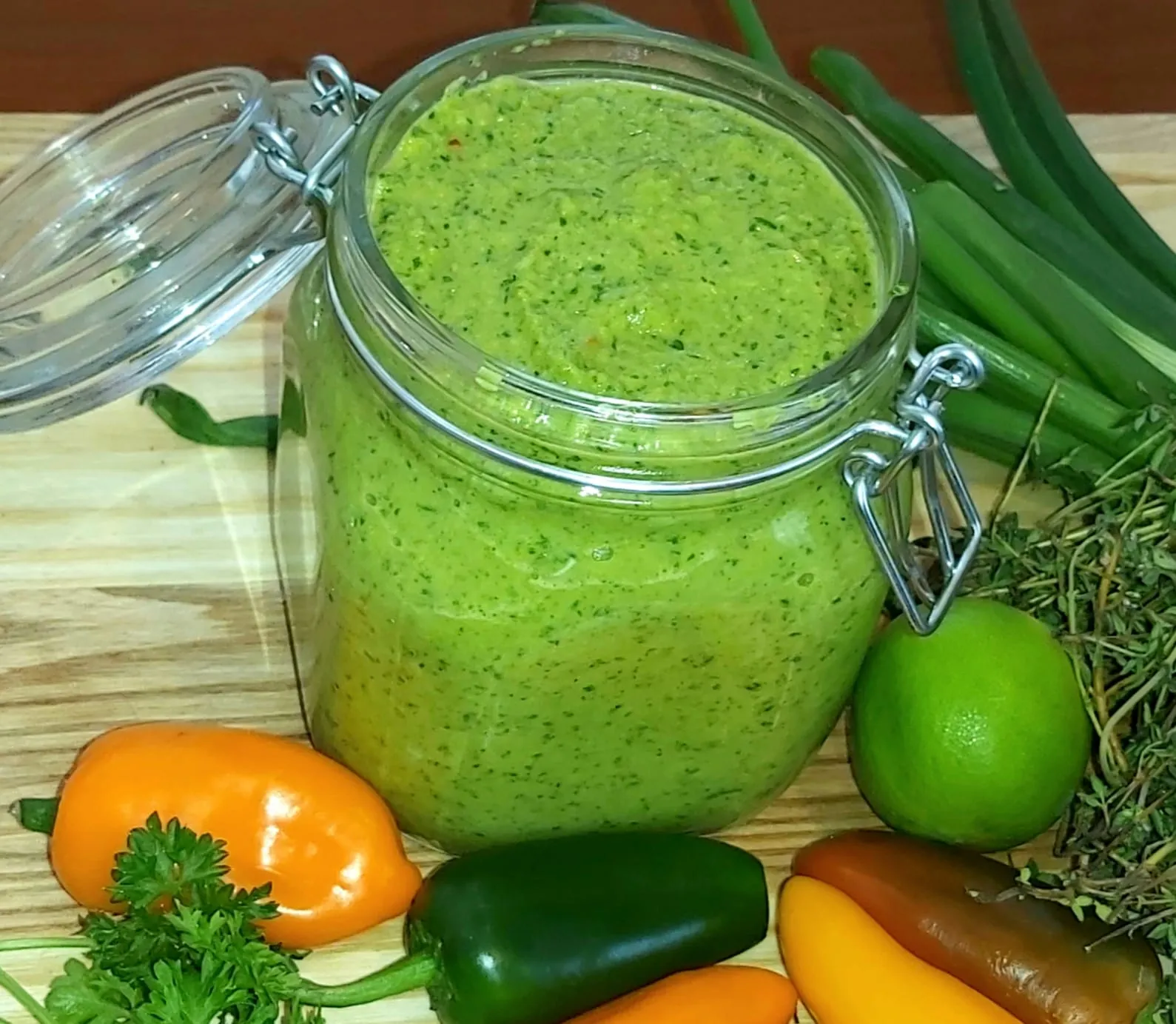
Green seasoning is a blended paste of fresh herbs, aromatics and chilli, used across the Caribbean as an all-purpose marinade and flavour base. Trinidad and Tobago is where it is most identified, and Guyana, Jamaica and the wider region all have versions.
The source describes it as known to the Caribbean and some parts of Africa, which is a fair way of putting it. Its home is the Caribbean. What it resembles in Africa is a family of green pastes that do similar work: Senegalese nokoss, Moroccan chermoula, and the blended pepper bases used across West Africa. Those are related in function rather than in origin, and green seasoning as it is made here is Caribbean.
It goes on everything: meat, seafood, grains, stews. Composition varies enormously by household and island, and the version here is a modest one built on parsley, coriander, celery, onion, garlic, scotch bonnet and thyme. Bigger versions include chive, culantro, pimento peppers and ginger. It keeps about a week refrigerated, and freezing it in ice cube trays is the standard way to hold a large batch, which is how most Caribbean kitchens handle it.