

Nous utilisons des cookies essentiels au fonctionnement du site. Nous aimerions aussi déposer des cookies de mesure d’audience et des cookies publicitaires, uniquement avec votre accord. Vous pouvez choisir séparément pour chacun. Lire notre politique relative aux cookies
Loading
Recettes
Parcourez les archives par pays, par plat et par temps de cuisson.
Turkey bacon strips cooked in an air fryer until crisp. No country is claimed; turkey bacon is an American product.
It behaves differently from pork bacon and the difference explains the method. Pork bacon renders a great deal of fat as it cooks, and that fat is what fries the meat, it is essentially cooking itself. Turkey bacon has far less fat, so it dries out rather than frying, and in a pan it tends to stick and to go from limp to leathery without passing through crisp. Circulating hot air handles it better: it dehydrates the surface evenly and crisps it without needing rendered fat to do the work.
That also means it needs watching. Six to eight minutes is the window in most machines, and the source is right that timing varies with thickness and with the machine. A minute too long and it is brittle.
Whether it is a healthier choice is a more complicated question than the source allows. Turkey bacon is lower in fat and calories than pork bacon, but it is comparably high in sodium and is still a processed meat. The claim has been left out.
Turkey is not African and neither is bacon in this form. Africa has its own cured and smoked meats, biltong, kilishi, dambu nama, all on this site.
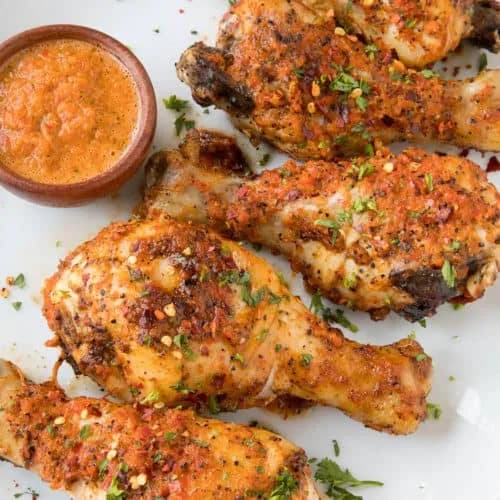
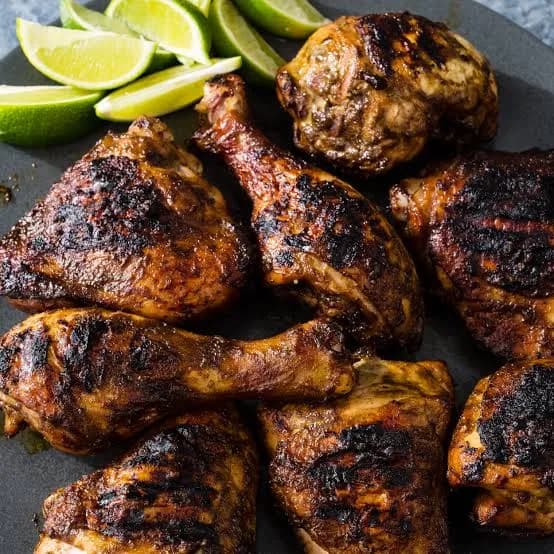
Tandoori chicken is chicken marinated in yoghurt and spices and roasted at very high heat in a tandoor, the cylindrical clay oven it takes its name from. The source states plainly that it originated in the Indian subcontinent, specifically the Punjab, and it sits in Worldwide Recipes under South Asian.
The tandoor is what the dish is built around. It runs far hotter than a domestic oven, which is how the chicken cooks fast enough to char on the outside while staying moist inside. Cooking it elsewhere means adapting, and Western kitchens grill or roast instead. This recipe uses a conventional oven, which the source acknowledges as an adaptation.
Two ingredients do the work. Yoghurt tenderises through its acid and lactic enzymes and keeps the meat moist, and garam masala provides the aroma. The food colouring in the ingredient list is worth knowing about: the characteristic red is achieved commercially with colouring rather than by any ingredient, and it can simply be left out with no effect on flavour. Tandoori chicken is also the foundation of butter chicken and several other cream-based curries.
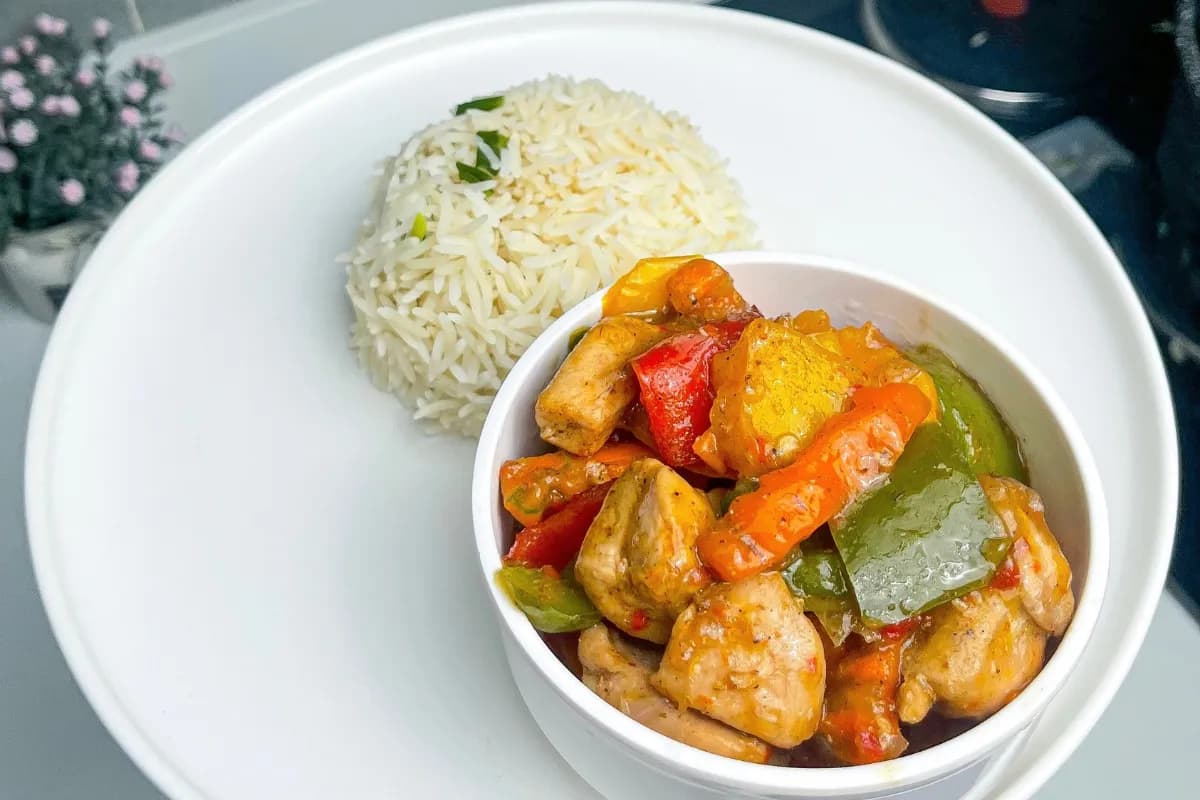
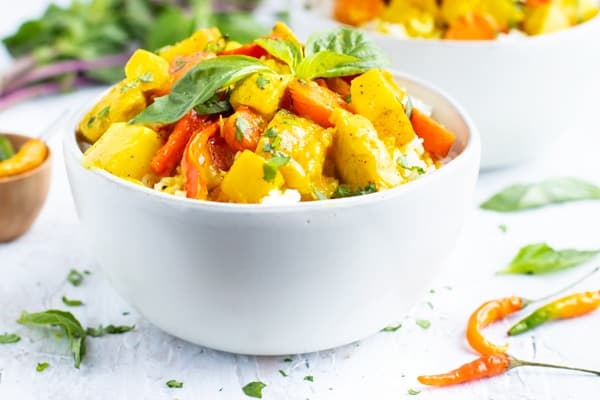
Coconut chicken curry is a one-pan dish of chicken simmered in coconut milk with a curry spice blend and whatever vegetables are to hand, broccoli, cabbage, peppers, potato, carrot.
The word curry is worth being precise about. It is not a single spice or a single dish. It comes from English usage during colonial rule in India, applied broadly to spiced saucy dishes, and it now covers an enormous range of unrelated cooking across South Asia, Southeast Asia, the Caribbean and East Africa. A curry powder sold in a jar is a blend, and the blends differ substantially between manufacturers and regions.
Coconut milk versions belong mainly to the coastal and tropical end of that range, southern India, Thailand, Malaysia, the Caribbean, and the Swahili coast of East Africa, where coconut is grown and used heavily.
This particular recipe is a general one rather than a regional tradition, which is its strength: it tolerates substitution well and is designed to be varied.
**Filed as Worldwide**, the recipe as written makes no specific national claim, so attributing it to any one cuisine would be inventing detail.
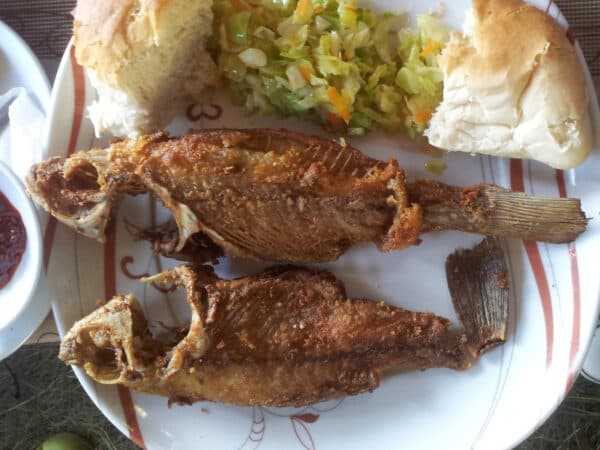
Firm white fish, floured and fried, then layered under a sweet-sour curried onion sauce and left in the fridge for at least a day before it is eaten. It is Cape Malay, it is South African, and in Cape Town it is inseparable from Easter.
The Cape Malay community descends from people brought to the Cape from Southeast Asia, largely from the Indonesian archipelago, as slaves and political exiles by the Dutch from the seventeenth century onwards. Their cooking is the origin of much of what is now considered characteristically Cape cuisine, and pickled fish belongs squarely to it, the turmeric, the coriander seed, the bay leaves and the sweet-sour balance are all markers of that lineage.
The Easter association is real but the explanations for it vary, and the dish is not exclusively Christian: it is eaten in Muslim Cape Malay households too, which is one of the reasons the "made for Good Friday" account is contested. Its practical origin is simpler. Vinegar and sugar preserve cooked fish for weeks without refrigeration, which mattered a great deal in the early colonial Cape.
It genuinely improves with time. A day in the fridge is the minimum; two or three is better, and it holds for several weeks. The source's nutritional claims have not been carried across.