Nous utilisons des cookies essentiels au fonctionnement du site. Nous aimerions aussi déposer des cookies de mesure d’audience et des cookies publicitaires, uniquement avec votre accord. Vous pouvez choisir séparément pour chacun. Lire notre politique relative aux cookies
Loading
Recettes
Parcourez les archives par pays, par plat et par temps de cuisson.
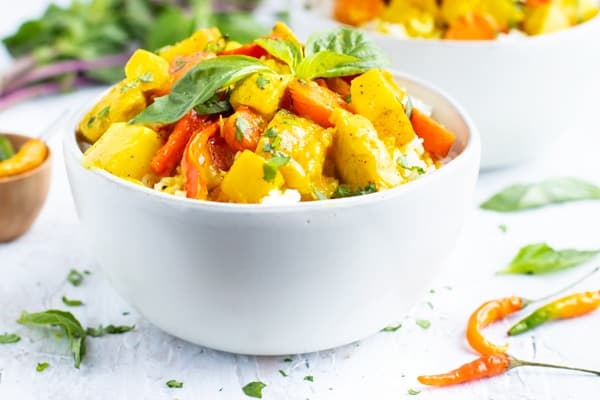
Coconut chicken curry is a one-pan dish of chicken simmered in coconut milk with a curry spice blend and whatever vegetables are to hand, broccoli, cabbage, peppers, potato, carrot.
The word curry is worth being precise about. It is not a single spice or a single dish. It comes from English usage during colonial rule in India, applied broadly to spiced saucy dishes, and it now covers an enormous range of unrelated cooking across South Asia, Southeast Asia, the Caribbean and East Africa. A curry powder sold in a jar is a blend, and the blends differ substantially between manufacturers and regions.
Coconut milk versions belong mainly to the coastal and tropical end of that range, southern India, Thailand, Malaysia, the Caribbean, and the Swahili coast of East Africa, where coconut is grown and used heavily.
This particular recipe is a general one rather than a regional tradition, which is its strength: it tolerates substitution well and is designed to be varied.
**Filed as Worldwide**, the recipe as written makes no specific national claim, so attributing it to any one cuisine would be inventing detail.
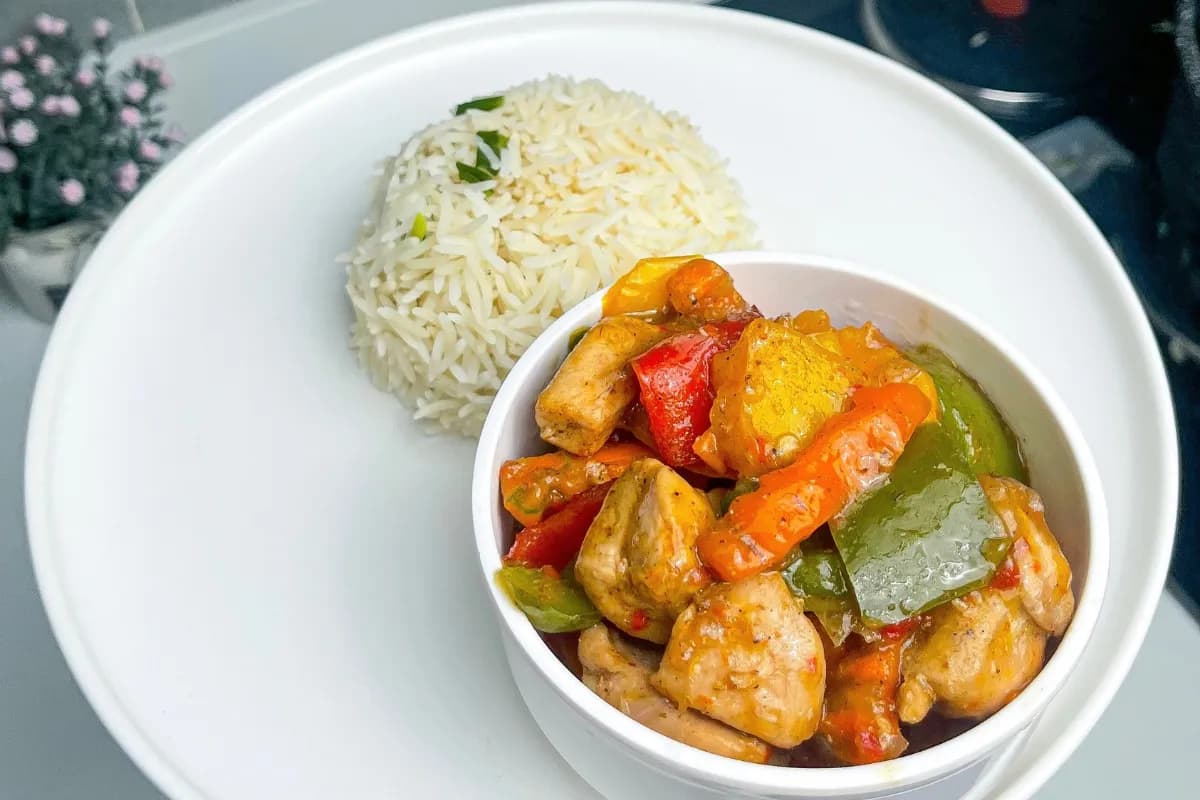
Baked Teriyaki Chicken is a straightforward oven-baked chicken dish coated in a sweet and savoury homemade teriyaki glaze made from soy sauce, sugar, garlic, and ginger. The sauce reduces and caramelises in the oven, creating a sticky, glossy coating that makes this one of the most satisfying and crowd-pleasing weeknight meals. This dish reflects the global reach of South African home cooking, where Japanese-inspired sauces and techniques have been adapted into everyday family meals alongside more traditional South African dishes. It is particularly popular for its ease and consistent results.
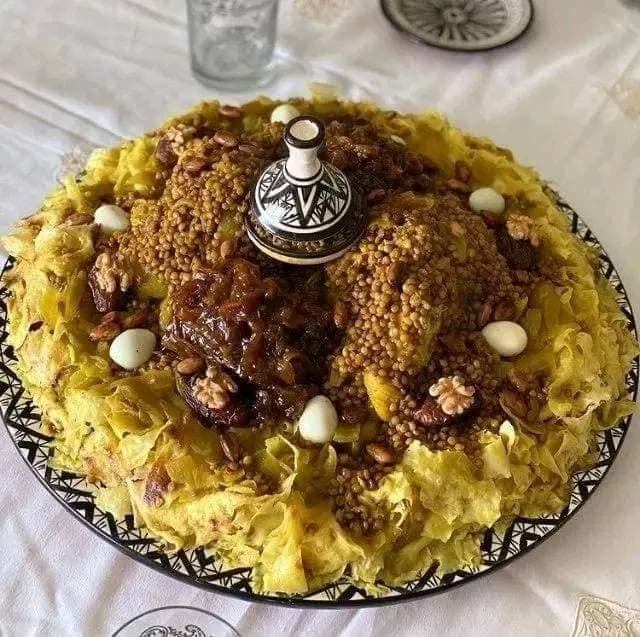
Rfissa is chicken and lentils stewed with onions in a broth heavy with fenugreek, ras el hanout and saffron, poured over a bed of shredded msemen or trid pastry. The pastry takes up the broth and becomes the base of the dish rather than an accompaniment to it, which is what distinguishes rfissa from a tagine served with bread.
It is a family dish above all else. Rfissa is what appears at reunions and at religious occasions, at what Moroccans call a zarda, and it is not a restaurant dish. Its most specific role is at childbirth: it is served to women who have recently given birth, traditionally on the third day, because fenugreek, lentils and the spice blend are held to support recovery and milk production. A dish with a fixed place in a family's most significant week carries a weight that a good stew does not.
The bed underneath it has its own vocabulary. Served over crumbled harcha it becomes rfissa medhoussa; over cubed bread it is treda. Moroccan households commonly buy the trid or msemen from a souk or a local bakery rather than making it, because the pastry is the slow part and the stew is not.
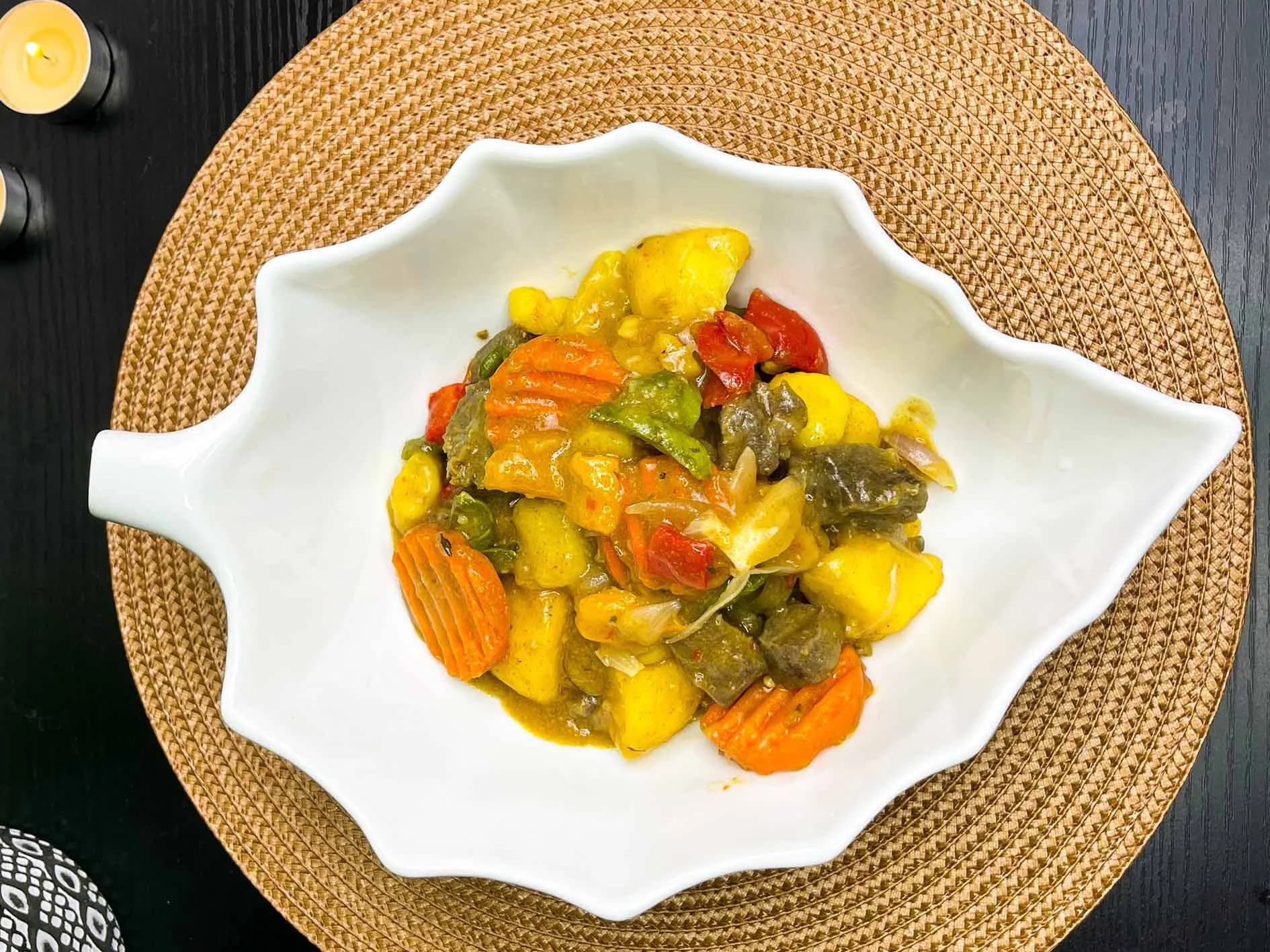
This is beef and potatoes cooked down in a seasoned sauce thickened with cornstarch, and the source names no country. Several details place it in a West African kitchen: seasoning powder, scotch bonnet, curry powder and the term Irish potatoes, which is the Nigerian and Ghanaian way of distinguishing the ordinary white potato from sweet potato and yam.
Coconut milk is offered as one of three options for the cooking liquid, alongside beef broth and plain water, and that choice changes the dish considerably. With coconut milk it reads closer to a Kenyan or Tanzanian coastal stew; with beef broth it is a straightforward brown stew. The source calls the result a curry sauce in one place, which reflects the curry powder rather than any Indian technique.
Sauce here means what it means across West Africa: something spooned over a starch rather than eaten as a soup. It is served with steamed rice or naan, or eaten on its own. The one thing worth adjusting is the timing. Ten minutes of cooking will not tenderise beef cut into bite sized pieces, and a proper braise of forty-five minutes or more is what this needs.