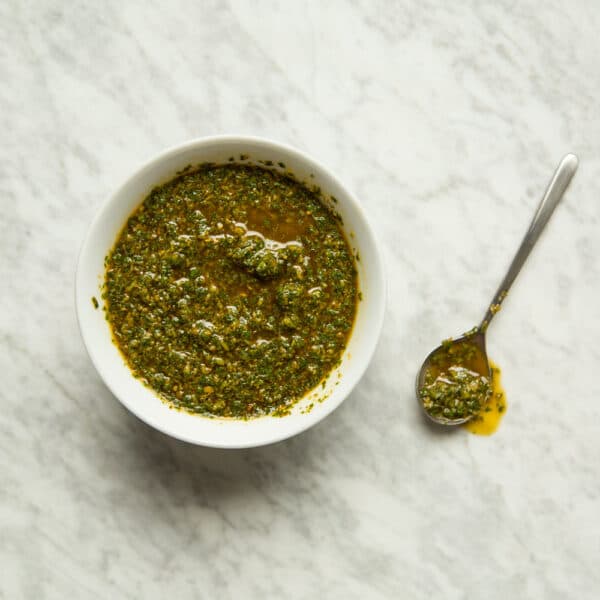
Lamb Chops, Chermoula & Rice
25 minMedium


Cookies sur African Food Network
Nous utilisons des cookies essentiels au fonctionnement du site. Nous aimerions aussi déposer des cookies de mesure d’audience et des cookies publicitaires, uniquement avec votre accord. Vous pouvez choisir séparément pour chacun. Lire notre politique relative aux cookies
Parcourez les archives par pays, par plat et par temps de cuisson.
Lamb chops with chermoula and yellow rice is Moroccan, grilled or roasted lamb served with a fresh herb sauce and turmeric-stained rice. Chermoula is the part worth knowing. It is a North African sauce and marinade built on fresh coriander and parsley, garlic, cumin, paprika, lemon and oil, and its name comes from the Arabic chermel, meaning to rub or to marinate. That etymology describes exactly how it is used: rubbed into meat or fish before cooking, and often served again alongside as a sauce. It is most associated with fish, where it is close to standard across Morocco and Algeria, but it works with lamb particularly well, the herbs and lemon cut through fat in a way that a heavier sauce would not. Lamb runs through Moroccan cooking at every level, from long slow tagines to chops straight off a grill, and this is at the fast end of that range. The rice is coloured and lightly perfumed with turmeric rather than saffron, which is the everyday choice, visually similar, entirely different in flavour and cost.
25 minMediumMorocco
Recette de FoodChef · Africook
Rien ici pour le moment
