Nous utilisons des cookies essentiels au fonctionnement du site. Nous aimerions aussi déposer des cookies de mesure d’audience et des cookies publicitaires, uniquement avec votre accord. Vous pouvez choisir séparément pour chacun. Lire notre politique relative aux cookies

Loading
Recettes
Parcourez les archives par pays, par plat et par temps de cuisson.
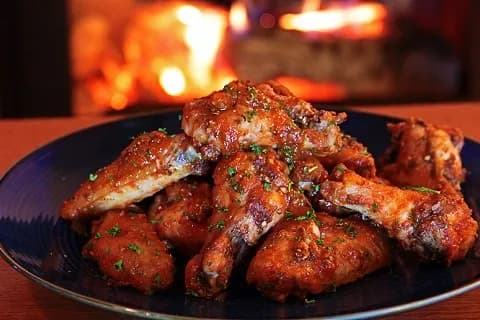
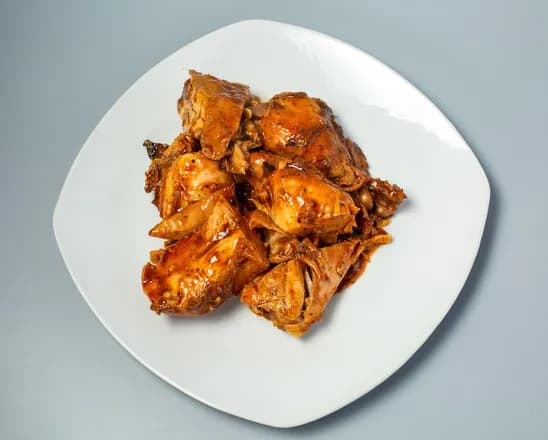
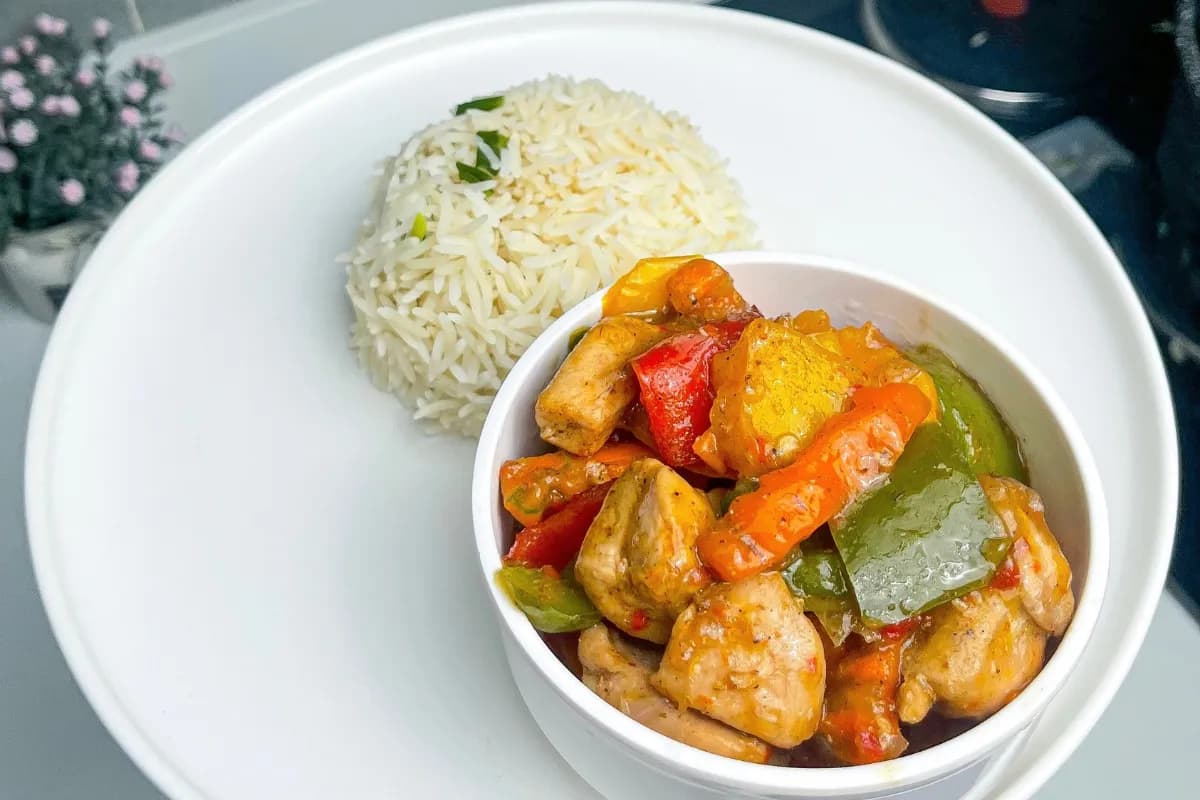
Grilled shito wings are chicken wings grilled and then coated in shito, Ghana's dark chilli sauce, and returned briefly to the heat so the sauce sets onto the skin. It is a modern preparation built on a traditional condiment rather than an inherited dish, and it is none the worse for that.
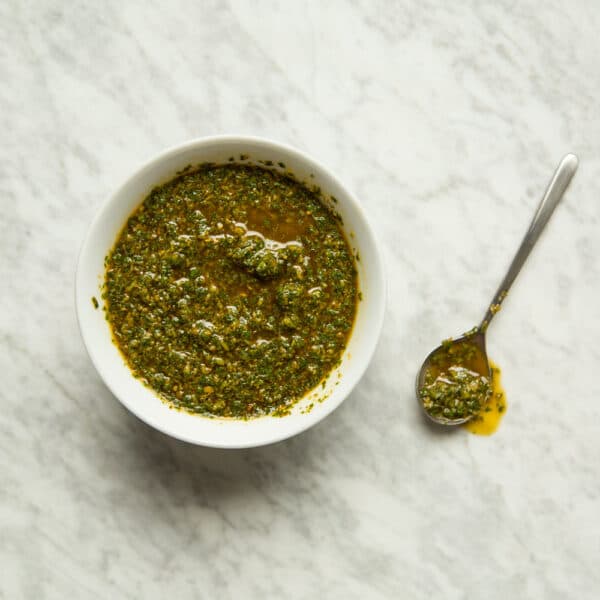
Shito is the whole point. The word is Ga, the language of Accra, and simply means pepper, though it has come to name the specific dark sauce made from dried fish, ground prawn, chilli, ginger, garlic and tomato cooked down in oil. Its smokiness and depth are what a plain grilled wing lacks, and glazing rather than marinating with it keeps that character intact.
The order matters. The wings are seasoned and marinated plainly first, with salt, oil, pepper, lime and soy, then grilled through, and only then coated in shito and given a short final spell at reduced heat. Shito applied at the start would burn long before the chicken cooked, since it is already a cooked, oily, sugar-free but solids-heavy sauce. Doing it this way gives a wing that is properly cooked underneath and lacquered on the outside.
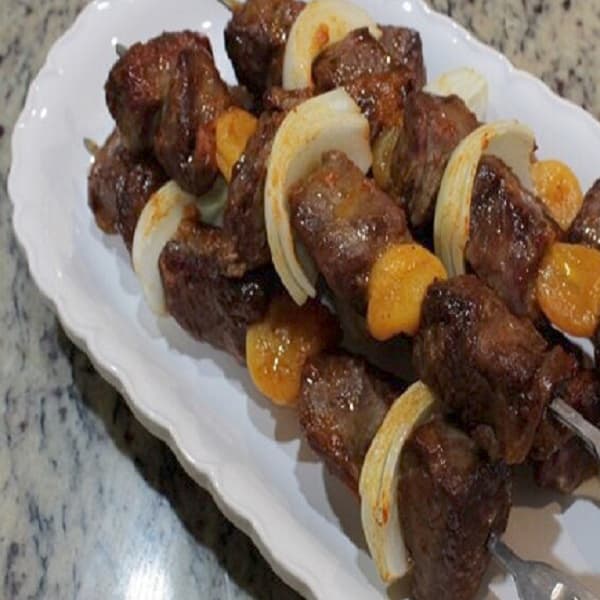
Kebab is a Middle Eastern preparation, and the source says so directly. Cut or ground meat cooked on a skewer over open flame is one of the oldest cooking methods there is, and the word and the technique both come from that region before spreading almost everywhere.
Mutton and lamb are the traditional meats. Regional versions use beef, goat, chicken or fish, and pork rarely, given religious constraints across much of the region where kebab originates. Not every kebab involves a skewer either: tas kebab is baked in a skillet or served as a stew, which shows how loosely the word travels.
Africa has a great deal of skewered grilled meat of its own, and this recipe is not it. Nigerian suya is coated in yaji, a peanut based spice blend. Sudanese agashe works the same way. Moroccan brochettes are marinated in cumin and paprika. Egyptian kofta is ground and shaped rather than cubed. This version is marinated in soy sauce, olive oil, oregano, garlic and lemon, which is a Mediterranean and Levantine profile, so it sits in the Worldwide Recipes collection rather than being presented as African.
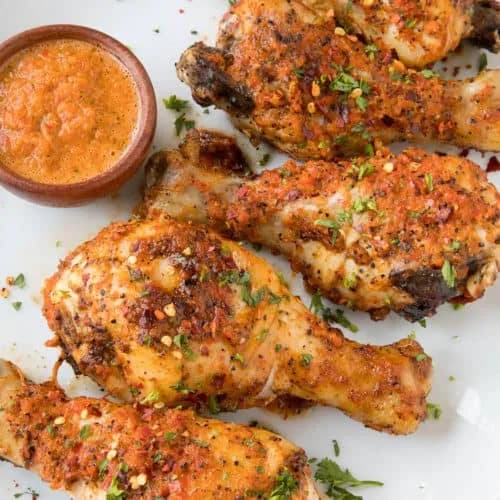
Suya is skewered meat coated in yaji, a dry peanut based spice blend, and it is the best known street food in Nigeria. It comes from the Hausa people of the north, where it is also called tsire, and it spread from there across West Africa. Sudan has a close relative in agashe.
Yaji is what makes it suya rather than grilled meat. The blend is built on ground peanut, usually in the form of kuli kuli crushed to a powder, with ginger, chilli, onion powder and other seasonings, and the peanut is what gives suya its particular nuttiness and the slightly gritty coating that clings to the meat. Meat without yaji is not suya, whatever else is done to it.
Beef and ram are the traditional cuts, along with kidney, liver and tripe, and chicken is the newer arrival that has become common. It is sold at night from roadside grills, cut on a board and handed over in newspaper with sliced raw onion, tomato and cabbage, and the raw onion alongside the hot spice is not a garnish but part of how it is eaten. The one thing worth knowing before making it is that yaji contains peanut, which matters to anyone with an allergy.
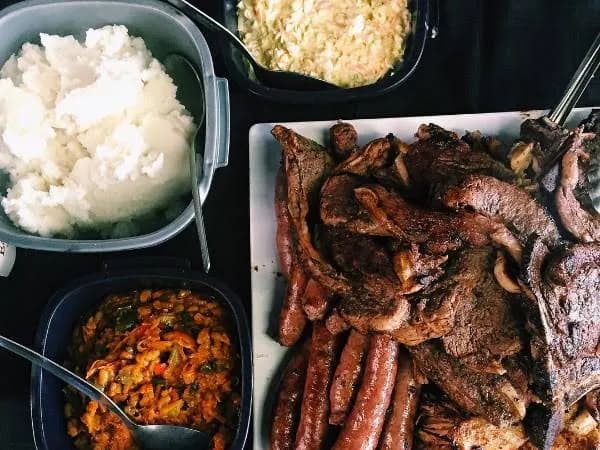
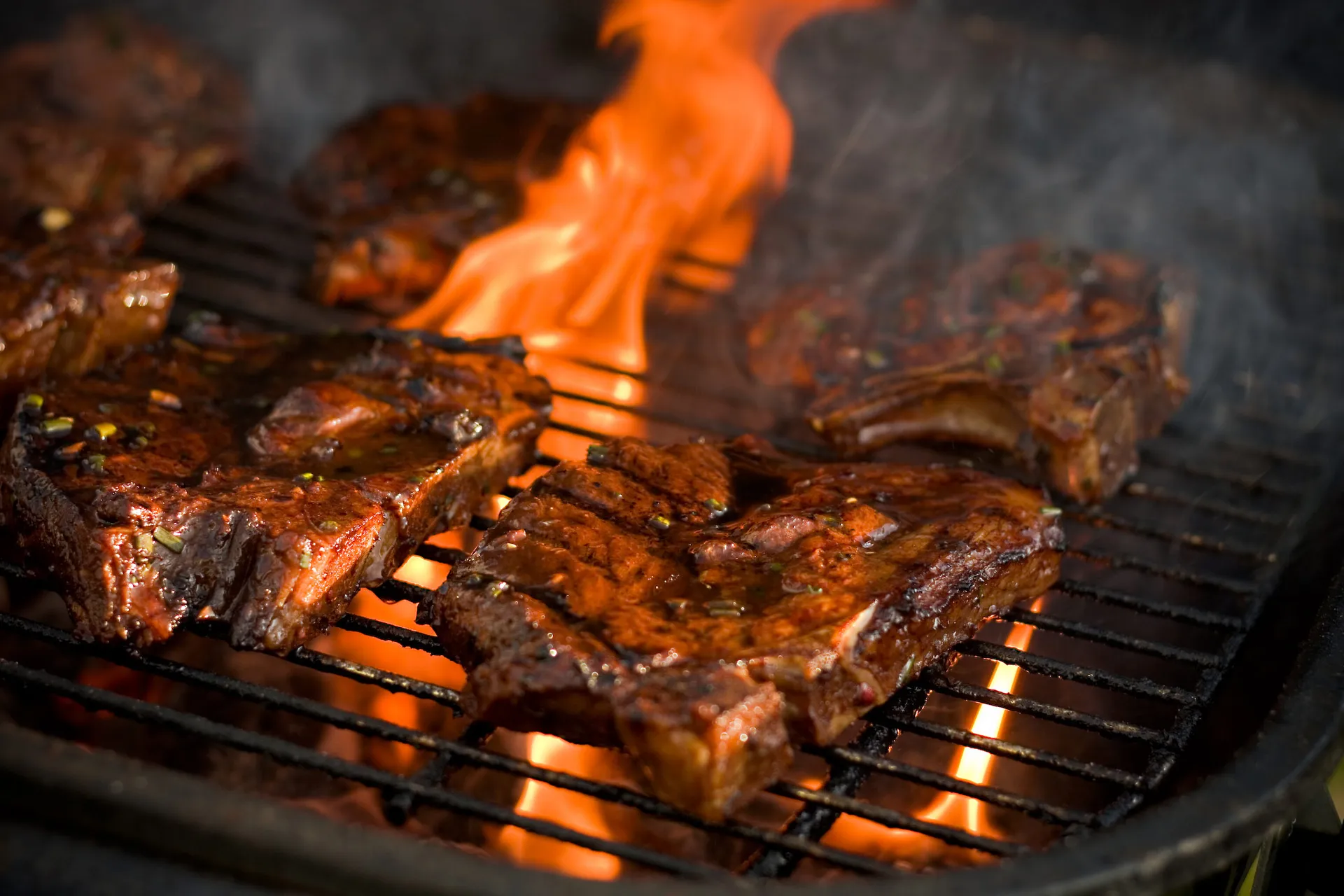
Pap en vleis is Afrikaans for porridge and meat, and the name describes the whole of it. Maize meal cooked to a smooth, firm mass, and grilled meat beside it. Two components, no sauce required, and a dish that the entire country recognises regardless of which language its household speaks.
Its natural setting is outdoors and social. Pap en vleis is what comes off a braai and what is served at a shisanyama, the grill and gathering place where meat is bought, cooked over open fire and eaten on site. The dish exists in the same space as the fire and the people standing around it, and eating it indoors at a table is possible but slightly beside the point.
Maize is the foundation of the South African diet, and pap is its most direct expression: nothing added, nothing disguised, judged entirely on texture. The meat is whatever the household or the grill has, and its variability is why the dish has stayed universal rather than becoming the property of any one community. A dish defined by two nouns leaves room for everyone's version.