Nous utilisons des cookies essentiels au fonctionnement du site. Nous aimerions aussi déposer des cookies de mesure d’audience et des cookies publicitaires, uniquement avec votre accord. Vous pouvez choisir séparément pour chacun. Lire notre politique relative aux cookies
Loading
Recettes
Parcourez les archives par pays, par plat et par temps de cuisson.
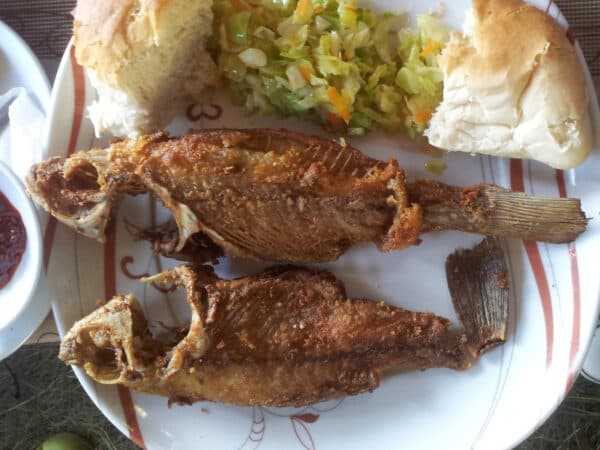
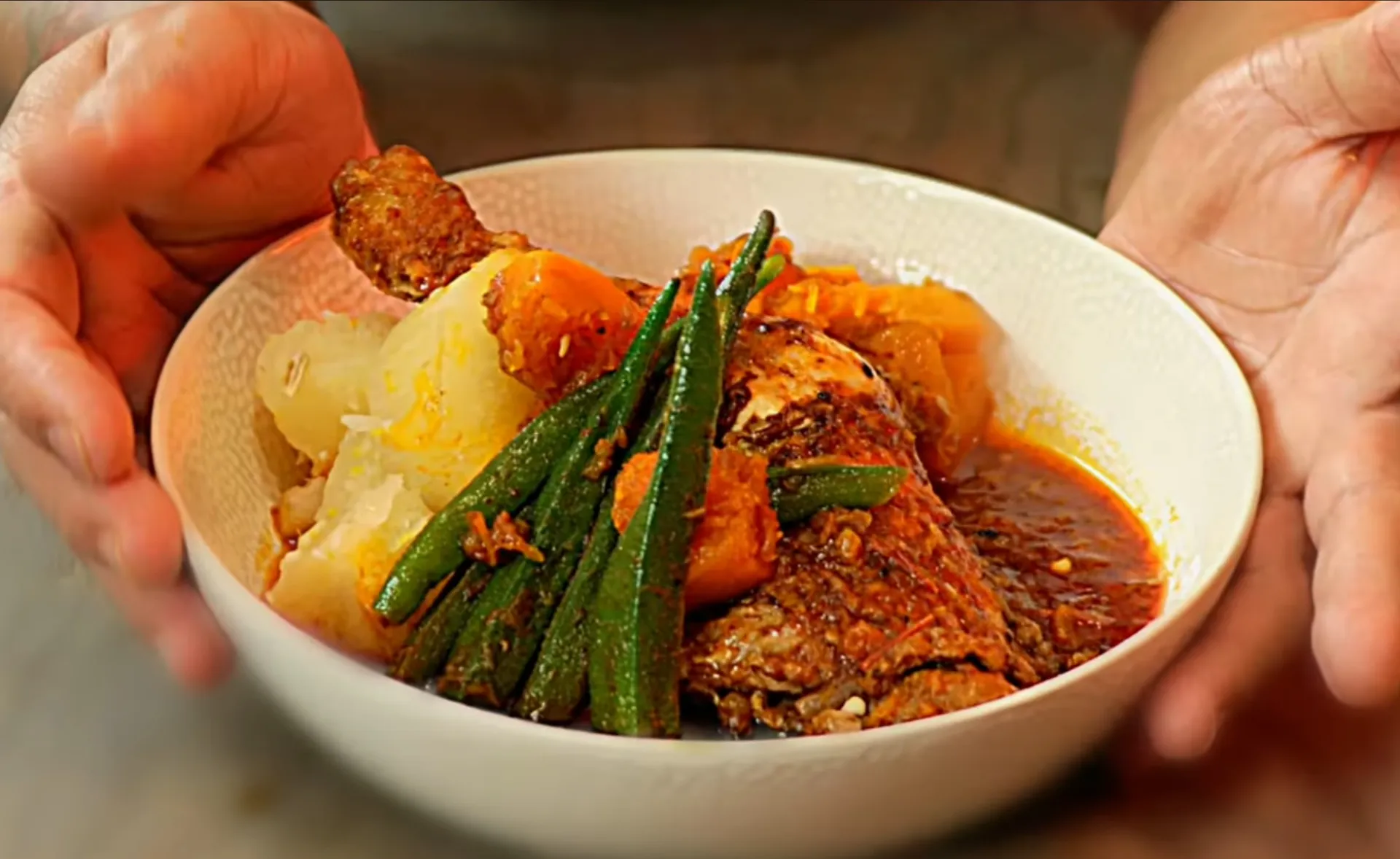
Mtuzi wa samaki is a Zanzibari fish curry, fish cooked in a spiced tomato and coconut sauce, and one of the clearest dishes to point at when explaining what Zanzibar's food actually is.
The island sat at the centre of Indian Ocean trade for centuries, and the spice routes running from India passed directly through it. Zanzibar became a spice producer in its own right, cloves above all, and the Indian influence on its cooking is not a borrowing but a component of it. Mtuzi wa samaki is built on that: cumin, coriander, turmeric and chilli applied to local fish and local coconut.
The name is Swahili, mtuzi is a sauce or stew, samaki is fish.
Firm white fish is what the dish wants, because it needs to hold together in the sauce. Kingfish and snapper are common on the island; anything firm works elsewhere.
It has spread from Zanzibar along the East African coast and is now cooked widely in coastal Kenya and Tanzania.
Served with rice or with chapati, both of which arrived by the same trade routes as the spices.
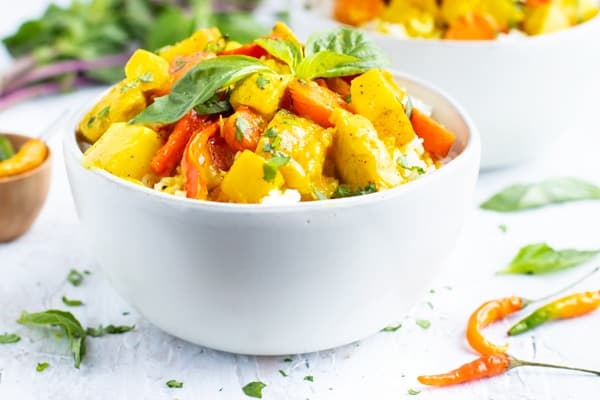
Coconut chicken curry is a one-pan dish of chicken simmered in coconut milk with a curry spice blend and whatever vegetables are to hand, broccoli, cabbage, peppers, potato, carrot.
The word curry is worth being precise about. It is not a single spice or a single dish. It comes from English usage during colonial rule in India, applied broadly to spiced saucy dishes, and it now covers an enormous range of unrelated cooking across South Asia, Southeast Asia, the Caribbean and East Africa. A curry powder sold in a jar is a blend, and the blends differ substantially between manufacturers and regions.
Coconut milk versions belong mainly to the coastal and tropical end of that range, southern India, Thailand, Malaysia, the Caribbean, and the Swahili coast of East Africa, where coconut is grown and used heavily.
This particular recipe is a general one rather than a regional tradition, which is its strength: it tolerates substitution well and is designed to be varied.
**Filed as Worldwide**, the recipe as written makes no specific national claim, so attributing it to any one cuisine would be inventing detail.
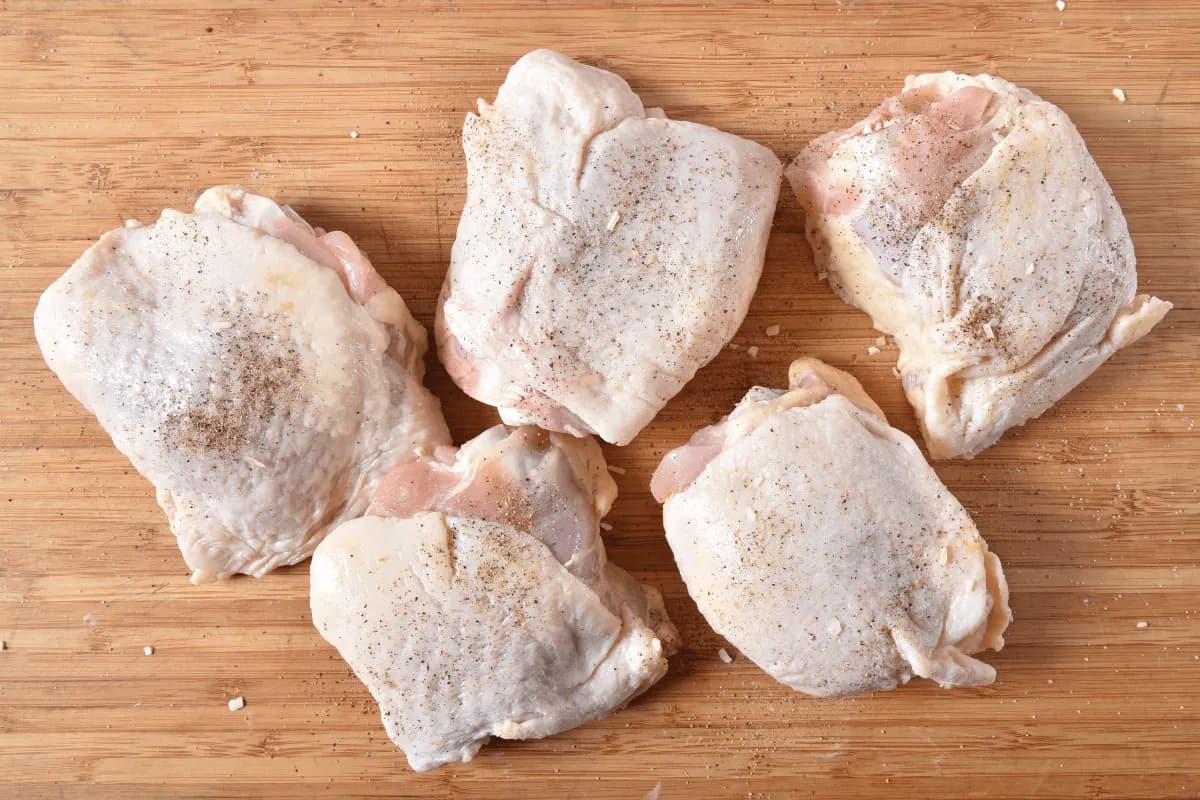
Muamba de galinha is the dish most often named as Angola's national one, and it earns the title by being the clearest single statement of what Angolan cooking is. Chicken marinated in garlic and paprika, seared in red palm oil, simmered with onion, tomato and hot pepper, thickened with okra and given body by squash.
The palm oil is not a background ingredient. It is what turns the stew the deep orange that muamba is recognised by, and it carries a specific flavour that no other fat provides. Angolans call it dendem or red oil, and a muamba made with anything else is a chicken stew rather than a muamba.
The name itself points somewhere older. Muamba refers to a family of dishes built on palm across Angola and the wider Congo basin, of which muamba de galinha is the chicken version and muamba de ginguba the groundnut one. The Portuguese in the name is only the galinha. It is eaten with funge, the cassava porridge, or with rice, and the version here serves it with cassava tossed in lemon and garlic, which is a contemporary treatment of a very old accompaniment.
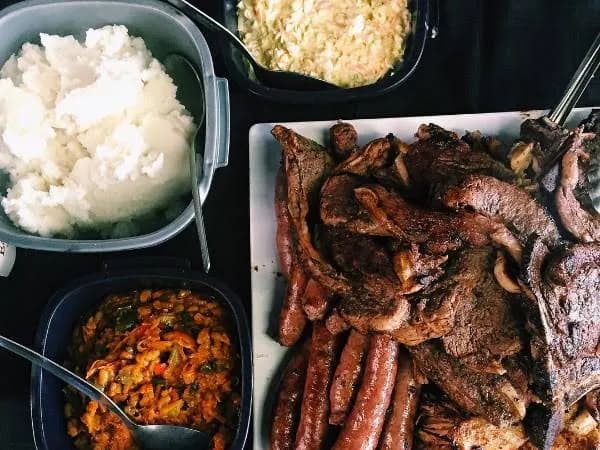
Pap en vleis is Afrikaans for porridge and meat, and the name describes the whole of it. Maize meal cooked to a smooth, firm mass, and grilled meat beside it. Two components, no sauce required, and a dish that the entire country recognises regardless of which language its household speaks.
Its natural setting is outdoors and social. Pap en vleis is what comes off a braai and what is served at a shisanyama, the grill and gathering place where meat is bought, cooked over open fire and eaten on site. The dish exists in the same space as the fire and the people standing around it, and eating it indoors at a table is possible but slightly beside the point.
Maize is the foundation of the South African diet, and pap is its most direct expression: nothing added, nothing disguised, judged entirely on texture. The meat is whatever the household or the grill has, and its variability is why the dish has stayed universal rather than becoming the property of any one community. A dish defined by two nouns leaves room for everyone's version.