Nous utilisons des cookies essentiels au fonctionnement du site. Nous aimerions aussi déposer des cookies de mesure d’audience et des cookies publicitaires, uniquement avec votre accord. Vous pouvez choisir séparément pour chacun. Lire notre politique relative aux cookies
Loading
Recettes
Parcourez les archives par pays, par plat et par temps de cuisson.
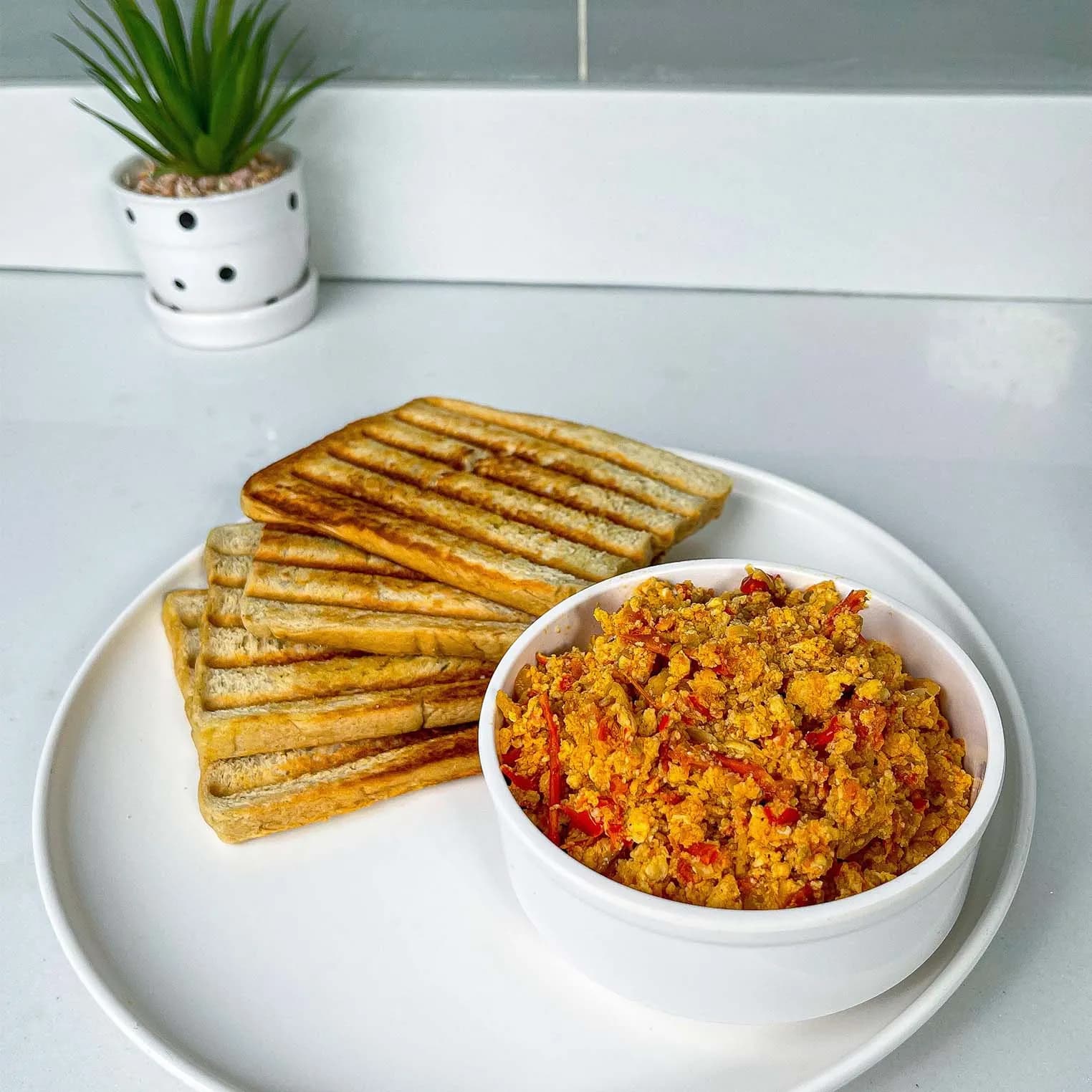
Egg sauce is a Nigerian breakfast staple: eggs cooked into a base of tomato, onion and scotch bonnet until scrambled through it. It is what plain yam is most often eaten with, and it is one of the fastest hot meals in the Nigerian repertoire.
What separates it from an omelette or from scrambled eggs is that the tomato base comes first. Onion and pepper are softened, tomatoes cooked down until they release their juices and soften, the seasoning goes in, and only then do the beaten eggs. The eggs are stirred through so the whole thing becomes one sauce rather than eggs with sauce on top.
Two ingredients in this version are worth noticing. Sesame oil in place of vegetable oil is unusual in a Nigerian kitchen and gives a distinctly nutty background, and curry powder alongside is a Nigerian habit rather than an Indian one. Both are the contributor's choices rather than the standard. Egg sauce is genuinely close to what is elsewhere called egg stew, and the two names are used for much the same dish across Nigeria and Ghana, with the difference usually being consistency rather than method.
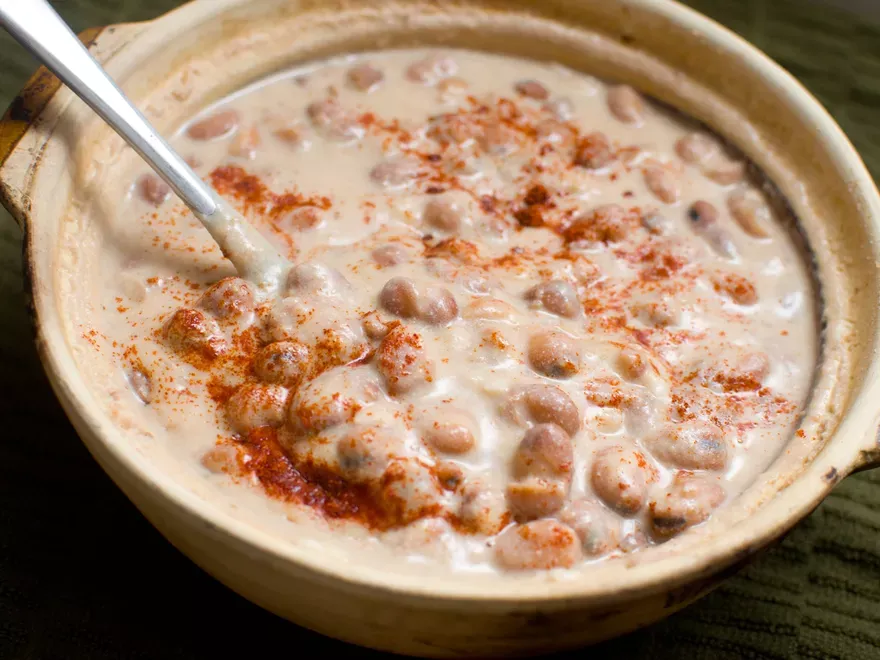
Ful medames is stewed fava beans dressed with olive oil, cumin, garlic and lemon, and it is Egypt's national dish. It is eaten at any hour, though breakfast is when it belongs most, and it is sold from carts across Cairo and Giza in the mornings.
Traditionally it is cooked and served in a large metal jug, the qedra, over a very long slow heat, often overnight, which is why street ful has a depth that a quick home version does not. What the beans are dressed with varies endlessly: parsley, onion, chilli, tomato, hard eggs, tahini.
Its versions across the region are worth knowing. In Somalia, fuul is a breakfast staple served with eggs and laxoox or canjeero flatbread, spiced with xawaash, the blend of cumin, coriander, cardamom, cloves, turmeric and more that makes it noticeably hotter than the Egyptian version. In Morocco it is bissara, made from fava beans and split green peas cooked with garlic, eaten especially in the north during cold weather. This particular recipe includes tahini, which is a Levantine addition rather than a classic Egyptian one, and it uses tinned beans rather than the overnight cook.
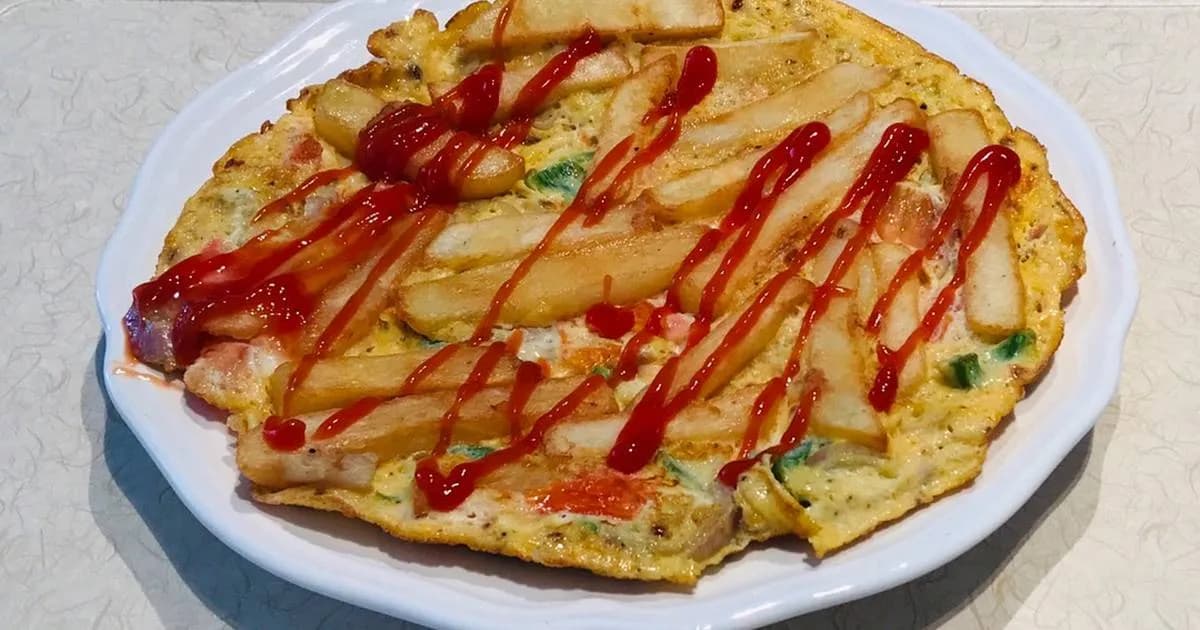
Chips mayai is chips set into an omelette and cooked as a single flat cake. The name is literal, chipsi is chips, mayai is eggs in Swahili, and it is one of the defining Tanzanian street foods, also known as zege.
It is sold from stalls across the country and cooked to order: fries already made, eggs beaten with chopped onion, tomato, green pepper and coriander, the two combined in a hot pan and turned once. Minced meat goes in where a heartier version is wanted. It arrives with kachumbari, the East African tomato and onion salad, and tomato sauce.
The comparison the source draws with Spanish tortilla is apt and worth thinking about, because the difference is instructive. A tortilla española uses potato sliced thin and cooked gently in oil until soft, folded into egg and set slowly into something dense and custardy. Chips mayai uses chips, already fried, already crisp, and cooks fast, so the potato keeps some of its structure and the egg stays lighter. Same two ingredients, entirely different results, and the potato cut is what does it.
It is eaten at any hour: breakfast, a late-night meal after drinking, or a snack in between. Nothing about it is formal.
Soft scrambled eggs with cheese and pesto between slices of buttered toast. No country is claimed and none applies, this is a breakfast sandwich in the general Western sense.
The contributor frames it as a family recipe passed down through several generations, and the one technique it carries is worth taking seriously, because it is the thing most people get wrong. Eggs are scrambled over medium-low heat, moved constantly, and taken off while they are still slightly looser than you want them. Residual heat finishes the job in the pan and again between the hot toast. Cooked over high heat, egg proteins tighten and squeeze out their water, which is why fast scrambled eggs end up rubbery and sitting in a puddle.
Milk is a matter of preference rather than technique. It loosens the curds and makes them milder, and plenty of cooks leave it out entirely for a richer result.
Egg sandwiches exist in one form or another almost everywhere, and Africa has its own, the Ugandan rolex, an omelette rolled inside a chapati, is on this site and is a genuinely different thing.
The source's calorie breakdown has not been carried across.