Nous utilisons des cookies essentiels au fonctionnement du site. Nous aimerions aussi déposer des cookies de mesure d’audience et des cookies publicitaires, uniquement avec votre accord. Vous pouvez choisir séparément pour chacun. Lire notre politique relative aux cookies
Loading
Recettes
Parcourez les archives par pays, par plat et par temps de cuisson.
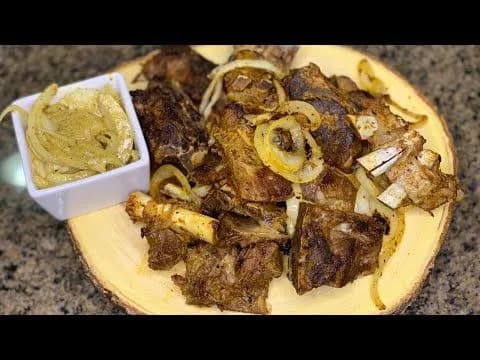
Dibi is Senegalese grilled lamb, sold from street stalls and wood-fired grills and served in bite sized pieces on paper with a mustard and onion sauce. It is one of the country's defining street foods and it is eaten with the fingers.
The same dish exists across the region under a different name. In Guinea and the Gambia it is called afra, and the format is the same: meat seasoned and grilled over wood, hacked into pieces, smothered in onions and served in a brown paper bag that catches the drippings. A French baguette turns it into a sandwich, which is how a great many people eat it.
The sauce is the Senegalese signature and it is the same mustard-and-onion base that carries chicken yassa. Onion is cooked down slowly in oil with grainy French mustard until soft and lightly browned, then loosened with water to a spoonable consistency. It is tangy rather than hot, and it cuts the fat of the grilled lamb. Attiéké, fried plantain or chips go alongside, and while dibi is filed as an appetizer it is substantial enough to be a whole meal, which is how it is usually eaten.
Meat bread is spiced minced meat baked in a yeasted dough, and the source places it squarely in Middle Eastern, Mediterranean and European cooking rather than African. It names three relatives: lahmacun in Turkey, arayes in Lebanon, and runza in the American Midwest.
Those three are not quite the same thing as each other, which is worth knowing. Lahmacun is a very thin round of dough spread with minced lamb and baked flat, folded to eat. Arayes is pitta stuffed with spiced meat and grilled or fried. Runza is a Midwestern American bread pocket filled with beef, cabbage and onion, brought by Volga German immigrants. The version here is closest to arayes in spirit and to a folded pasty in form: rounds of dough filled, sealed into half moons and baked.
The seasoning is Levantine, cumin, paprika and a little cinnamon with tomato and peppers, and the suggested accompaniments are yoghurt and tahini. North Africa has its own filled breads that this is not: Moroccan msemen and batbout, Tunisian brik, Egyptian hawawshi, which is minced spiced meat baked inside baladi bread and is the closest African equivalent. This entry sits in Worldwide Recipes with its URL unchanged.
Suya is not restricted to any one cut, and liver is among the most common of the alternatives. Kidney and tripe appear too, and the offal versions are cheaper, cook faster and carry the yaji spice differently from beef, which is a large part of why they have their own following rather than being a fallback.
Liver takes spice better than muscle meat does. It is soft, mineral and slightly sweet, and it absorbs the groundnut and pepper coating almost immediately rather than needing time to marinate. It also cooks in minutes, which suits the trade: a suya vendor working a roadside grill at night needs something that goes from raw to served while the customer waits.
The name changes across West Africa without the thing changing much. Suya in Nigeria, soya in Cameroon, chinchinga or sitsinga in Ghana, and brochettes in the Francophone countries. The spice blend, yaji, is what holds it together, and it has no fixed recipe: the composition varies by vendor and by region, and each is guarded. What is consistent is ground groundnut, chilli, ginger and garlic, and a heat level that varies from cook to cook while the intensity of flavour does not.
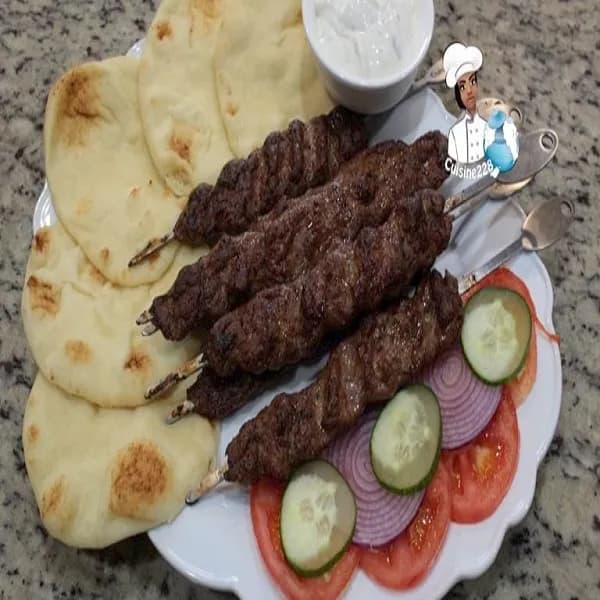
Kofta is minced meat, seasoned and shaped by hand, and it runs across an enormous stretch of the world: from the Balkans through Turkey, the Levant and Egypt, across the Arabian peninsula, into Central Asia and the Indian subcontinent, and along the North African coast. The Egyptian version is lamb or beef with onion, parsley, mint and a warm spice mix, moulded onto skewers and grilled.
Its written history is old. Recipes appear in the earliest surviving Arab cookbooks, where large ground lamb meatballs were glazed in saffron and egg yolk, a technique that later reached Europe and was known there as gilding or endoring. From the Arab world it travelled east, and nargisi kofta was served at the Mughal court in India.
In Egypt, kofta belongs to the grilled meat restaurants that exist in every town, where it is cooked alongside kebab, grilled chicken and tarb and served with rice, bread and salad. The distinction Egyptians draw between kofta and kebab is worth knowing: kebab is cubed meat on a skewer, kofta is minced meat shaped by hand. It is essentially sausage without a casing, and the comparison to a hamburger, sometimes made, misses that it is almost never served in bread.