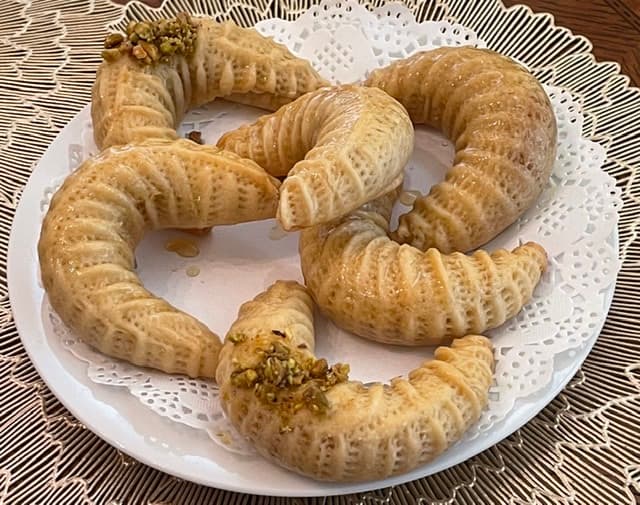
Tcharek M’saker
4.64.6 out of 5, 5 ratings


Cookies sur African Food Network
Nous utilisons des cookies essentiels au fonctionnement du site. Nous aimerions aussi déposer des cookies de mesure d’audience et des cookies publicitaires, uniquement avec votre accord. Vous pouvez choisir séparément pour chacun. Lire notre politique relative aux cookies
Parcourez les archives par pays, par plat et par temps de cuisson.
Tcharek M'saker are elegant crescent-shaped Algerian cookies made from ground almonds, sugar, orange blossom water, and egg, formed into half-moon shapes and baked until golden, then dusted generously with icing sugar while still warm. They are delicate, intensely almond-flavoured, and represent the refined sweet-making tradition of Algerian confectionery. The cookies appear at every Algerian celebration from Eid to weddings, arranged in neat rows on serving plates alongside tea. Their simplicity is deceptive, producing a product of considerable elegance from very few ingredients. The orange blossom water is essential, its floral perfume being the note that elevates them into something distinctly North African.
Les mieux notées
MediumPan-African
Recette de Blessing · Africook
Rien ici pour le moment
