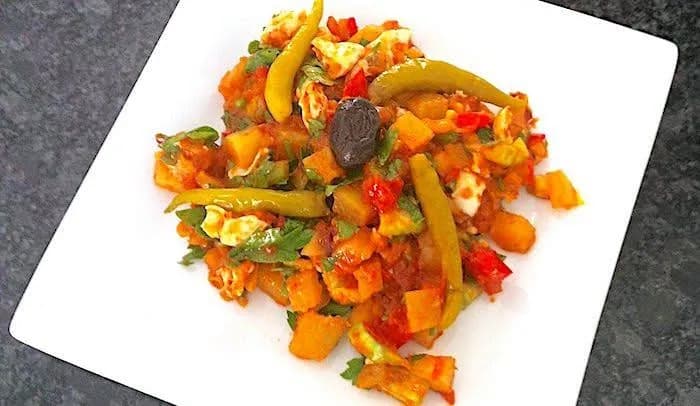
Kafteji
4.54.5 out of 5, 2 ratings50 min


Cookies sur African Food Network
Nous utilisons des cookies essentiels au fonctionnement du site. Nous aimerions aussi déposer des cookies de mesure d’audience et des cookies publicitaires, uniquement avec votre accord. Vous pouvez choisir séparément pour chacun. Lire notre politique relative aux cookies

Parcourez les archives par pays, par plat et par temps de cuisson.
Kafteji is Tunisian street food built on a single idea: fry a range of vegetables separately so each one is properly cooked, then chop them together and serve the result with bread. Potato, courgette, pepper, tomato and aubergine are the usual cast, and the chopping at the end is what makes it kafteji rather than a plate of fried vegetables. It is sold from small counters and casse-croûte shops across Tunisia and eaten at any hour, most often stuffed into bread as a sandwich. It is inexpensive, which is part of its identity: kafteji is what you eat when you want something substantial and hot without a restaurant. Fried egg is a common addition, and in many Tunisian versions it is the only protein. The version here includes ground beef or lamb, which puts it at one end of a range. Kafteji is frequently made entirely without meat, and the vegetable only preparation is at least as common in Tunisia as the meat version. Harissa, olives and a squeeze of lemon are the usual finishing touches, and the dish is eaten from a shared plate with bread as the utensil.
Les mieux notées
50 minEasyTunisia
Recette de Laila · Africook
Rien ici pour le moment